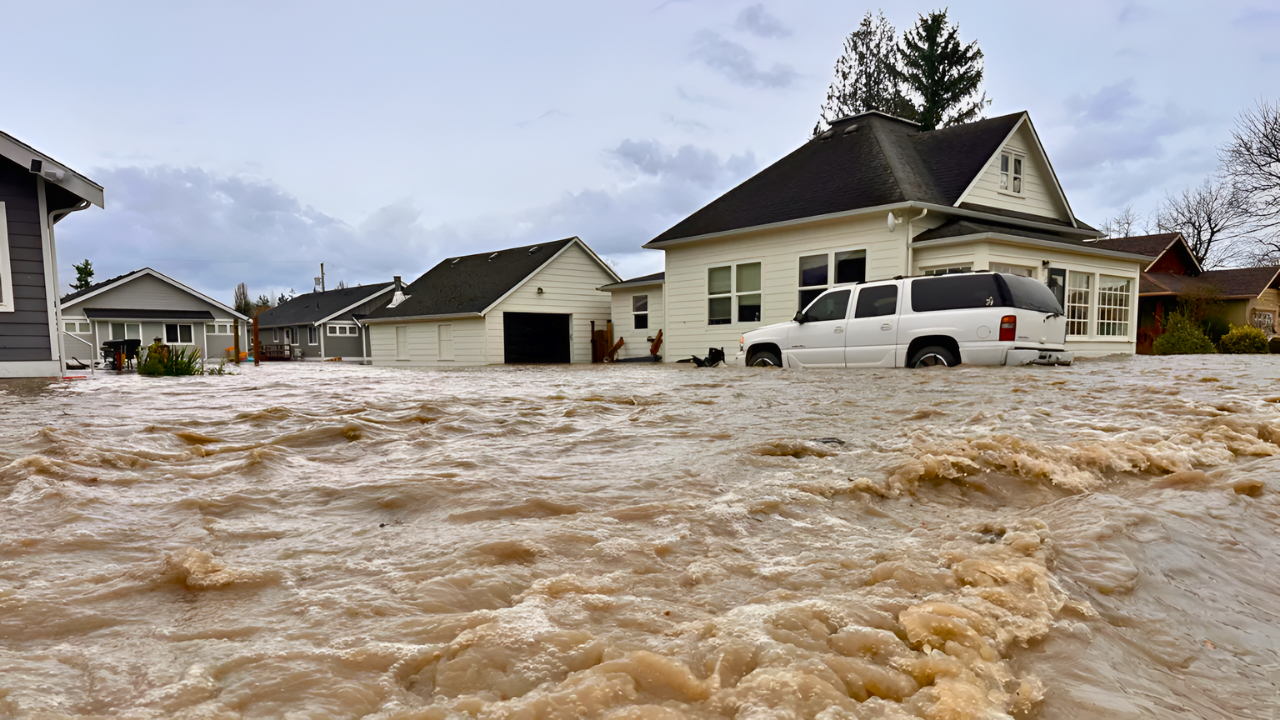
Heavy rain poured over roads in Skagit County, Washington, as emergency sirens blared through the night. The Skagit River surged to a record of an estimated 37.73 feet, flooding neighborhoods and cutting power to more than 350,000 customers. Evacuations swept through parts of Washington and Oregon, forcing thousands from their homes amid rising waters.
These floods stemmed from powerful atmospheric rivers, long bands of moisture from the Pacific, that stalled over the Pacific Northwest starting December 11. Back-to-back storms dumped rain on already soaked ground without a break. Rivers swelled rapidly because the soil couldn’t absorb more water, and there was nowhere for the excess to go. Forecasters warned early that the lack of pauses between systems would let floodwaters build fast across multiple river basins.
Urgent Evacuations and Rescue Efforts
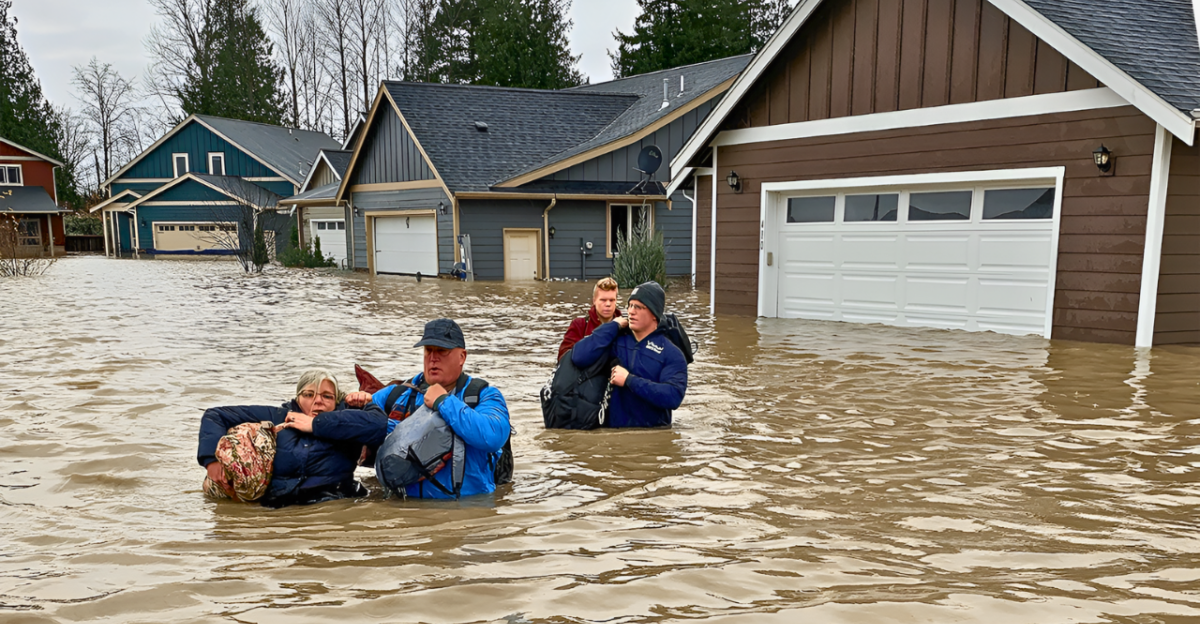
Officials issued “Move Now” alerts to over 25,000 people at the flood’s peak, part of more than 100,000 under evacuation orders in Washington and Oregon. Waters rose so quickly overnight that they sometimes overtook rescue operations, trapping buses on flooded roads. Days later, around 13,000 residents remained under advisories as rivers stayed high.
Rescuers pulled off more than 250 saves statewide, hauling people from rooftops, flooded cars, and dark, swamped houses. Tragically, one person drowned in Snohomish County after driving around road closures. Swift currents and floating debris kept dangers high, even as teams worked around the clock.
Widespread Damage to Homes, Farms, and Roads
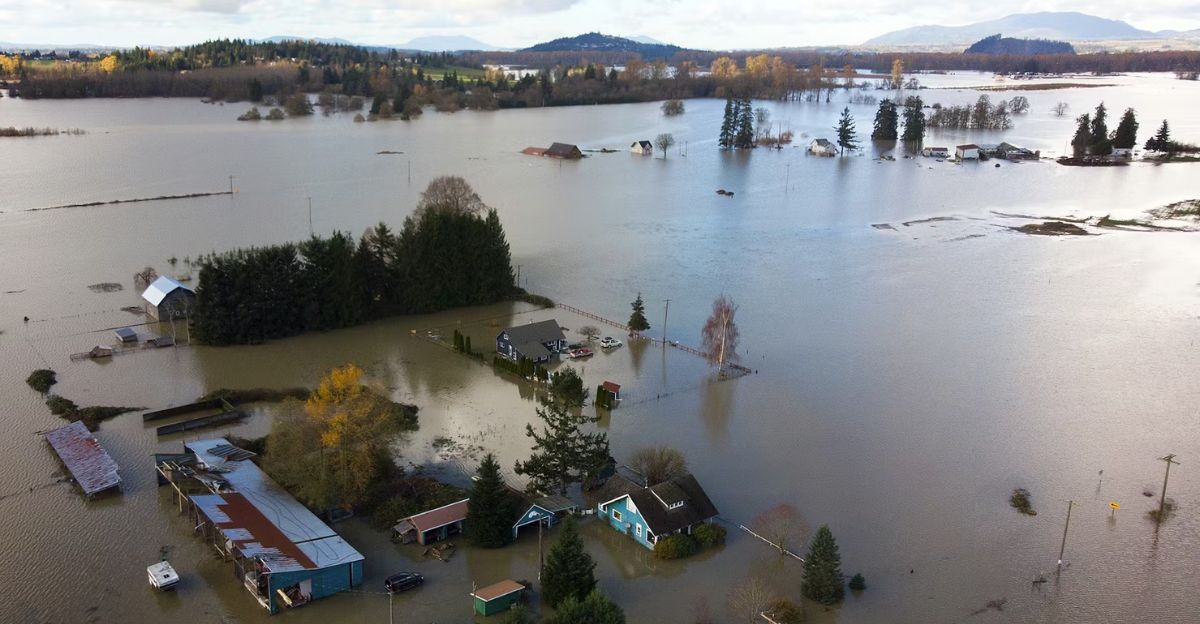
Rivers across Washington broke records: the Skagit topped its 1990 mark, while the Snoqualmie, Stillaguamish, Cedar, Green, White, Puyallup, Snohomish, and Nooksack all surged past flood levels. Highways crumbled, including vital Highway 2 through the mountains, which washed out and may stay closed for months. Landslides and strained levees isolated communities, and the Army Corps of Engineers took control of private dams to prevent collapses under the water pressure.
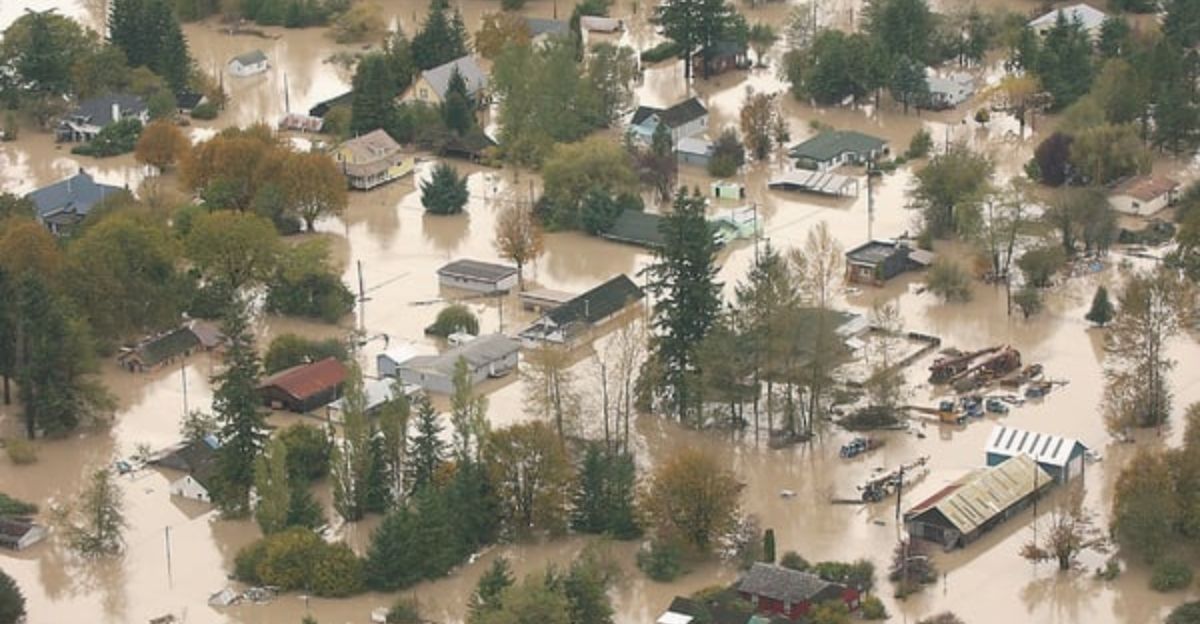
Around 50,000 homes sat in flood zones, many outside official FEMA maps and lacking insurance. Even a foot of water can cause hundreds of thousands in damage, leaving uninsured owners with huge repair bills and long displacements. Farms in Skagit County and the Snohomish Valley lost crops, livestock areas, equipment, and harvests to submerged fields. Small riverside businesses shut down as water invaded buildings, setting farmers and owners up for months of cleanup and lost income.
Power Failures, Health Risks, and Path Forward
High winds worsened the mess, hitting 112 mph in the Cascades and 50 to 70 mph in lowlands. They knocked down trees and power lines, leaving tens of thousands without electricity for days, even as cold weather set in. Blackouts disrupted heating, medical equipment, phones, and supplies.
Floods threatened drinking water, like Seattle’s Cedar River source, and left behind contaminated wells, broken septic systems, and mold growth. Health officials warned of breathing problems and diseases from dirty water, hitting seniors and vulnerable people hardest amid power issues for medications and care. The Washington National Guard deployed over 300 troops for evacuations and sandbagging, while Governor Ferguson freed $3.5 million in state aid and secured a federal disaster declaration for FEMA help across 16 counties.
These events exposed flaws in “100-year flood” labels, with places like Sumas hit again after 2021. Economic losses could reach hundreds of millions from wrecked farms, closed roads, and business halts, slowing supply chains and jobs. Uninsured families, farmers, and business owners face the worst, many drained from prior floods. As rivers stayed above flood stage into the next week, with another atmospheric river offshore, state leaders push for better flood maps, tougher infrastructure, wider insurance, and buyouts to build resilience against changing weather patterns.
Sources:
“National Guard Responds to Historic Flooding in Western Washington.” U.S. Army National Guard Official Statement, 22 Dec 2025.
How Skagit Valley Endured a Record Flood But Escaped Dire Predictions.” Seattle Times, 12 Dec 2025.
“Gov. Ferguson Issues Emergency Declaration Due to Heavy Flooding.” KNKX, 9 Dec 2025.