
Parenting costs are rising faster than wages: raising a child now averages $21,681 per year, a 19% increase since 2016. With the total 18-year cost nearing $389,000, families are making high-stakes decisions about where to live. ConsumerAffairs’ 2025 ranking evaluates all 50 states across affordability, safety, education, healthcare, and quality of life. The results show a national split: the safest, highest-quality states are increasingly the least affordable—forcing families to choose between financial security and childhood wellbeing.
The Northeast’s Unlikely Grip on Family Success

Seven of the top ten family-friendly states cluster in the Northeast/New England corridor, representing ~22 million families benefiting from low crime, strong schools, and stable institutions. But this dominance comes with a price: these states routinely score among the worst for affordability, with housing and childcare costs far above national averages. The 2025 rankings show that families are prioritizing long-term safety and education, even if it means absorbing substantial financial strain to secure those advantages.
10. Pennsylvania (Rank #10 Overall)

Pennsylvania enters the top ten through healthcare strength and targeted policy gains. With 147.4 pediatricians per 100,000 children and the sixth-lowest rate of missed preventive care (25.9%), the state’s child-health system outperforms many coastal peers. Under Governor Josh Shapiro, Pennsylvania doubled maternal mortality prevention funding and expanded telemedicine, boosting statewide access. While affordability and education balance out at mid-range levels, health outcomes and policy momentum give Pennsylvania families substantial long-term stability.
9. Massachusetts (Rank #9 Overall)

Massachusetts remains America’s #1 healthcare hub, offering 221 pediatricians per 100,000 children, excellent preventive-care rates, and the third-lowest infant mortality nationally. It also ranks #3 in education, reinforcing its reputation as a national leader in childhood wellbeing. Property crime remains low at 11 per 1,000 people. Despite its high cost of living and limited affordability, families who can manage the expenses gain unmatched access to top-tier medical care, elite schools, and robust community support systems.
8. Virginia (Rank #8 Overall)

Virginia earns its ranking through balanced strengths across education, healthcare access, and overall stability. It offers mid-Atlantic affordability while delivering schools and safety metrics comparable to higher-ranking Northeast states. The state’s blend of suburban, rural, and urban choices lets families tailor their lifestyle while maintaining strong upward mobility. Long-term public investment in education and safety contributes to its consistent performance. For families priced out of New England but seeking similar quality, Virginia is a compelling alternative.
7. Wyoming (Rank #7 Overall)

Wyoming is the only Western state to break the top ten—a notable disruption in a Northeast-heavy ranking. It boasts the second-lowest child poverty rate (6%), exceptional air quality (83% good-air days), and strong access to parks and natural spaces. Crime remains low, and affordability is significantly better than coastal leaders. Wyoming proves that high performance isn’t limited to densely populated states; its mix of safety, nature, and manageable costs makes it appealing to families seeking space and stability.
6. Connecticut (Rank #6 Overall)

Connecticut achieves the largest leap of 2025, surging from 25th to 6th. It now ranks #2 in education and #6 in healthcare, thanks to aggressive investments in school systems, expanded pediatric care, and improved public-health outreach. Only 23.1% of children miss preventive appointments—one of the lowest rates nationally. While affordability remains a challenge, Connecticut shows how fast targeted policy can reshape family outcomes, turning a mid-tier state into one of the strongest environments for children.
5. New York (Rank #5 Overall)

New York reenters the top tier by leveraging its vast healthcare network, improving education infrastructure, and offering diverse lifestyle options across rural, suburban, and urban communities. While affordability varies dramatically from Manhattan to upstate regions, families benefit from extensive early-childhood programs, world-class hospitals, and statewide safety improvements. New York’s ranking underscores that large states—with the right investments—can match or exceed smaller, traditionally family-focused states in key quality-of-life metrics.
4. Vermont (Rank #4 Overall)

Despite slipping a few spots, Vermont remains a quality-of-life powerhouse. It leads the nation in library density and maintains the second-highest parks-per-capita score, supporting strong community and outdoor engagement. Vermont excels in healthcare access too: just 2.6% of children are uninsured, and it has the lowest national rate of missed preventive care (20.7%). Though high living costs persist, families benefit from exceptional community resources, stable institutions, and a deep cultural emphasis on wellbeing.
3. Wisconsin (Rank #3 Overall)

Wisconsin rises to #3 by uniquely combining affordability with strong family infrastructure. It has the lowest food costs nationwide—about $352 per week—alongside low property crime and a 7% childhood poverty rate. Its schools perform well without the price pressures found in coastal high-ranking states. For middle-income families who want both stability and solvency, Wisconsin offers one of the country’s best cost-to-quality balances, standing out as an alternative to the expensive Northeast.
2. Maine (Rank #2 Overall)

Maine holds its #2 rank for the second consecutive year with a score of 66.85, backed by the lowest violent crime rate and lowest child poverty rate in the U.S. It ranks #1 in quality of life and #2 in safety, offering families exceptional stability. Affordability remains its main weakness (#35), even with a median household income of $90,730. But Maine is the only state to simultaneously lead in both low crime and child poverty reduction—a rare achievement.
1. New Hampshire (Rank #1 Overall)

New Hampshire claims the top spot for the first time, scoring 68.98 and ranking #1 in safety and #3 in quality of life. Yet it stands at #34 in affordability and #22 in education, revealing the state’s paradox: it offers one of America’s safest, most stable childhoods—but at a substantial cost. Families earning $100,000 still fall $2,000 short of covering basic needs due to annual costs of $129,768. The Granite State epitomizes the nation’s new reality: quality comes with a steep price.
The $2,000 Shortfall: Why the #1 State Still Breaks Budgets

The typical New Hampshire family faces a $29,768 annual affordability gap, which compounds to ~$536,000 over 18 years—far higher than the national average cost of raising a child. This gap illustrates the “safety premium” families are paying across top-ranked states: a trade-off where security, healthcare access, and quality of life outweigh financial feasibility. As living costs converge with those of California and New York, middle-class families face increasingly difficult decisions.
The “$40,000 Safety Premium” Families Now Pay

Across the Northeast, families pay an estimated $40,000+ extra over 18 years to access top-tier safety and education. This reflects the difference between national child-rearing costs and the higher cost structure in top-ranked states. As ConsumerAffairs researcher Jailyn Rodriguez notes, families here “benefit from lower crime rates and stronger access to quality education, health care and a higher quality of life.” Parents increasingly view safety as an investment with long-term returns—not a luxury.
The Northeast Paradox
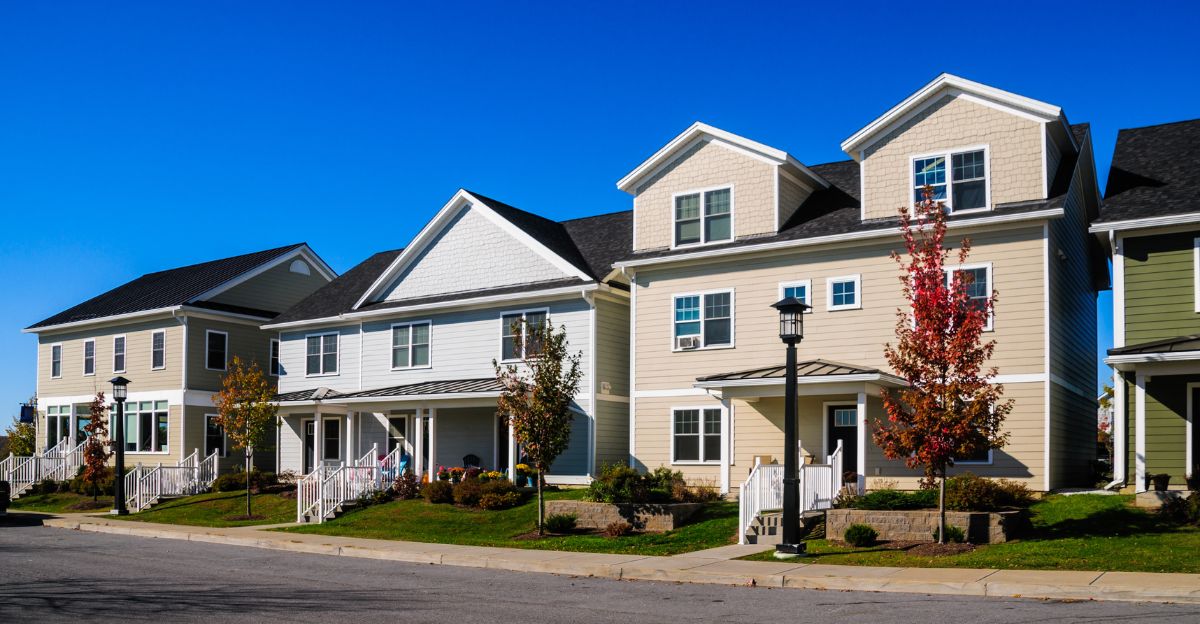
Despite dominating the rankings, the Northeast consistently performs poorly on affordability—none of its leaders crack the top 30. Housing, childcare, food, and transportation costs create what many describe as “quality poverty”: families get exceptional safety and education, yet struggle financially. New Hampshire’s affordability score of 55 is its lowest ever recorded. The 2025 results challenge conventional wisdom: the best childhoods in America now come bundled with some of its highest financial barriers.
The West and South’s Decline

The ten lowest-ranking states are all in the West or South, including Nevada, Alaska, Arizona, New Mexico, Louisiana, Texas, and California. These regions face intertwined challenges: higher living costs, weaker educational systems, and limited healthcare access. Even states with strong job markets or low taxes fall short in safety and quality-of-life measures. Families seeking stability increasingly migrate away from these areas, deepening the national divide between high-quality and low-quality state environments.
New Mexico’s Bold Childcare Bet

Although New Mexico currently ranks in the bottom ten, it enacted one of the most consequential family policies in U.S. history: universal no-cost childcare beginning November 1, 2025. This policy will save families up to $12,000 per child annually and could dramatically change its 2026 ranking. New Mexico offers a live example of how a single, well-targeted policy can alter a state’s family-friendliness trajectory within months, not years.
How ConsumerAffairs Calculated the Rankings

The ranking uses a five-category weighted system: Affordability (30 pts), Safety (25), Education (20), Healthcare (15), and Quality of Life (10). Data sources included the U.S. Census Bureau, CDC, Child Care Aware, the EPA, and NeighborhoodScout. This method reveals why states with affordability issues—like New Hampshire or Maine—can still outperform peers: safety and quality of life now weigh more heavily in how families evaluate long-term opportunity.
What Families Actually Care About

Nationally, families prioritize safety and education above all else—even affordability. But personal considerations matter: proximity to relatives, cultural fit, climate, career prospects, and community identity all shape decisions. A top-ranked state isn’t automatically the “right” state. Instead, these rankings act as a strategic foundation, helping families understand the strengths and weaknesses of each region while aligning choices with their specific financial realities and long-term goals.
Your Family’s Next Chapter

Whether you’re drawn to New Hampshire’s security, Maine’s stability, Wisconsin’s affordability, or Pennsylvania’s healthcare gains, the 2025 rankings offer a clear, data-driven compass. But intuition and personal priorities matter just as much as metrics. As regional disparities widen and parenting costs climb, understanding these state-by-state differences becomes essential. The best state for your family isn’t simply the highest-ranked—it’s the one that aligns with your values, resources, and vision for your children’s future.
Sources
ConsumerAffairs. “Best States to Raise a Family.” October 2025.
Pennsylvania Governor’s Office. “Pennsylvania Named One of the Best States to Raise a Family in 2025.” December 2025.
Moishes Moving. “Best States to Raise a Family in the USA (2026).” 2026.
Laconia Daily Sun. “New Hampshire Is No. 1 State to Raise a Family in 2025.” 2025.
SeacoastOnline. “Why a Report Ranked New Hampshire the Best State to Raise a Family.” October 2025.
News4Jax. “Typical Florida Household Needs 17 Years to Save for a 10% Home Down Payment, Study Finds.” December 2025.