
A quiet collapse reshapes American employment. Between now and 2033, roughly 250,000 to 500,000 jobs will vanish across 15 occupational categories. The Bureau of Labor Statistics has the data. This isn’t about robots stealing jobs wholesale—it’s about the systematic elimination of jobs through technology, shifting behavior, and economic forces.
Workers in declining fields have approximately nine years to pivot or face obsolescence. The timeline is urgent. The stakes are personal.
What Kills These Careers

Newsrooms are bleeding jobs because readers have migrated online. Bank tellers are vanishing because customers are using apps. Programmers face elimination because AI writes code. Postal workers become redundant as mail volumes crater.
The common thread isn’t one technology—it’s convergence. AI, automation, e-commerce, and digital transformation collide simultaneously across industries.
Why You Need to Read This Right Now

Career planning has never been riskier. Choose the wrong field, and you’re investing years and tens of thousands in education in a profession that is actively shrinking. But panic produces poor decisions.
What you need is clarity: which professions are dying, why, and what data actually shows versus what people fear. Some displacement is smaller than workers believe. Other declines are permanent. Armed with facts, you can make intelligent career choices and spot where growth actually exists.
1. Computer Programmers: 10% Decline

Programmers built the tools destroying programming jobs—the cruelest irony in tech. Employment is expected to decline by 10 percent by 2033, the steepest drop of any profession. In 12 months, programming employment crashed 27.5 percent to its lowest level since 1980.
ChatGPT and generative AI accelerated the timeline. Software developers designing solutions still experience 17 percent growth, but traditional programmers handling routine tasks face obsolescence.
2. Newsrooms: 26% Collapse Since 2008

Newsroom employment crashed 26 percent since 2008—approximately 30,000 jobs evaporated. Newspapers got hit hardest: a 57 percent decline from 71,000 to 31,000 positions. Digital outlets grew by 144 percent, but they couldn’t replace the traditional losses.
Journalists, editors, photographers, and videographers watched their careers dissolve over 16 relentless years. Pew Research confirms no reversal is coming.
3. Cashiers: 353,000 Jobs Gone

Cashiers face the most devastating job loss—353,000 positions are projected to disappear by 2033, representing 18 percent of all projected job losses in the economy. Self-checkout kiosks at Walmart and Target accelerated the timeline.
The collapse isn’t coming; it’s already here. Young workers entering retail step into a sector that is actively shrinking, offering fewer advancement opportunities. This systematically eliminates entry-level pathways that millions once used.
4. Bank Tellers: 30% Decline Since 2010

Bank tellers have experienced a devastating 30 percent decline in employment since 2010, with job postings dropping by almost two-thirds. Despite 340,000 remaining positions, digital banking, mobile apps, and ATMs have eliminated many of the tasks that humans previously performed. The
Bureau of Labor Statistics projects another 13 percent decline through 2034. Most troubling is that only 4 percent transition into higher-paying roles. Workers without degrees often find themselves in positions that are disappearing, with minimal upward mobility.
5. Retail Sales Workers: Zero Growth

Retail sales workers are expected to face zero-to-negative growth through 2033 as e-commerce continues to swallow up brick-and-mortar employment. The Bureau of Labor Statistics projects that retail trade will lose 364,800 employees by 2033.
Clothing stores suffered first—by 2018, online sales had captured 34 percent of apparel purchases. Retail salespersons decline 2.3 percent, while cashiers drop 3.8 percent. Millions compete for stagnant positions while automation eliminates entire functions.
6. Customer Service: 5% Decline

Customer service representatives are projected to face a 5 percent decline, resulting in 148,800 positions lost by 2033. Chatbots, AI systems, and self-service portals can handle routine inquiries more efficiently and cost-effectively than humans.
A 2022 Zendesk survey found 89 percent of customers prefer online answers over human contact. Employers listened. Despite 365,300 projected annual openings, most replace retiring workers rather than represent growth.
7. Postal Workers: 5% Decline

Postal service worker employment drops 5 percent through 2034—22,900 positions lost from a 500,000 workforce. Declining mail volumes, intelligent barcodes, and robotic handlers systematically reduced human needs. The United States Postal Service cut manual sorting roles by 22 percent since 2018 alone.
Americans have increasingly abandoned physical mail for digital communications and online bill payments. A career once offering federal job security and substantial benefits faces unprecedented contraction.
8. Administrative Assistants

Administrative support occupations represent the single most threatened white-collar category. The Bureau of Labor Statistics projects that the United States will shed over one million office and administrative support jobs by 2033.
Office clerks face a 6 percent decline—nearly 150,000 positions lost. A 2024 analysis suggests that secretaries and assistants could see a 9 percent reduction in their workforce by 2029.
9. Bookkeepers: 5% Decline

Bookkeeping and accounting are projected to decline by 5 percent through 2033 as cloud software and AI tax tools automate tasks previously performed by human accountants. QuickBooks and Xero handle small business accounting that once required full-time bookkeepers earning $40,000–$50,000 annually.
Artificial intelligence performs tax preparation more efficiently and cost-effectively than humans. This once-steady middle-class work accessible with a high school diploma faces systematic elimination by technology costing less than an annual salary.
10. Travel Agents: 2% Growth

Travel agents grow only 2 percent through 2034—slower than the overall economy. Expedia, Kayak, and Google Flights eliminated customer dependency on human agents entirely. Consumers book flights, hotels, and rental cars independently in minutes.
Historical projections showed a 5.7 percent decline as online booking displaced agents. Despite 7,100 annual job openings, most fill retiring worker positions, not new growth.
11. Dispatchers: Algorithms Eliminate Judgment

Dispatch roles are vanishing as automation software silently replaces human coordinators across industries. Uber and Lyft eliminated taxi dispatcher jobs—algorithms match drivers to passengers instantly. Delivery companies implement automated routing systems. Emergency services experiment with AI dispatch optimization.
Algorithms prove faster and cheaper than human judgment every time. Industry data shows rapid obsolescence across transportation, logistics, and emergency services.
12. Factory Workers: 1.7M Lost Since 2000
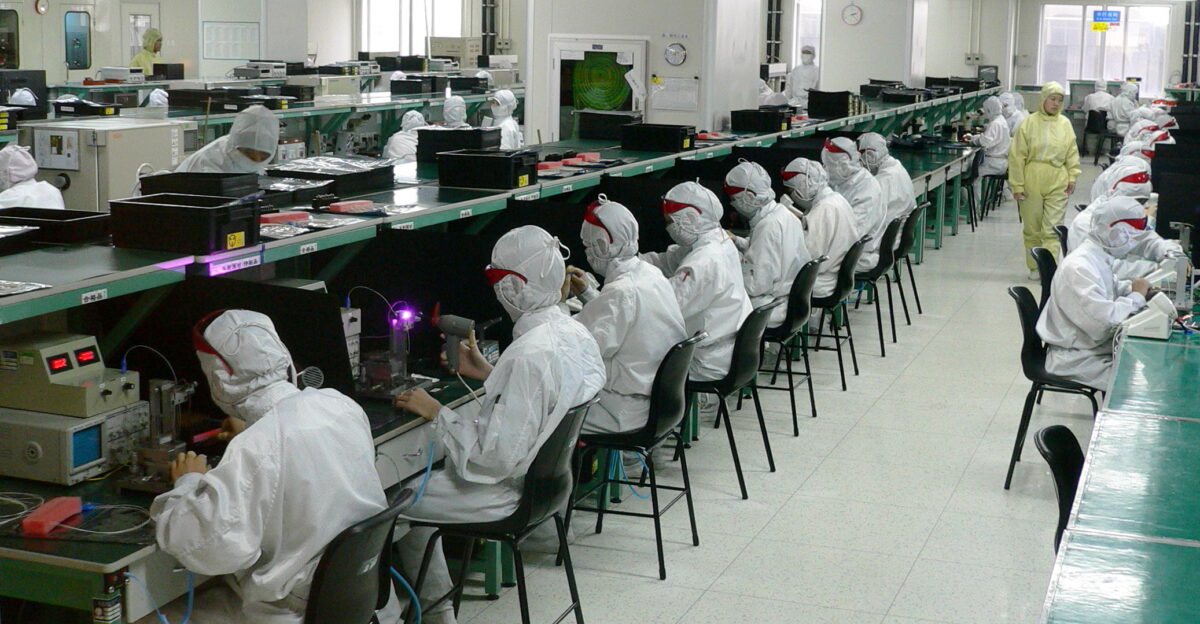
Manufacturing has lost 1.7 million jobs since 2000 due to the adoption of robotics and automation, with projections indicating another 2 million jobs will be lost by 2025. Industrial robots perform complex assembly tasks that humans once handled. Automotive plants, electronics factories, and mills operate with minimal human workers.
By 2030, over half of assembly and packaging positions are expected to be automated. A Brigham Young University study found that only 14 percent of workers were actually replaced, yet those affected overestimated the impact of automation at 47 percent.
13. Interpreters: 2% Growth

Interpreters and translators grow only 2 percent through 2034—slower than average occupations. Machine translation and artificial intelligence systematically suppress the demand for human translation. Research shows each 1 percent increase in machine translation usage drops translator employment growth 0.7 percentage points—costing approximately 28,000 translator positions from 2010 to 2023. The
Bureau of Labor Statistics concedes computers can’t yet match human translators, but AI improves daily.
14. Corrections Officers: Prisons Shrink

Federal corrections officers face unprecedented staffing challenges as inmate populations have declined since 2014—a policy reversal decades in the making. Corrections officer employment is projected to decrease by 7 percent from 2020 to 2030, despite an estimated 35,000 annual openings, primarily due to replacements.
Officers leave federal prisons in droves, recruited by Immigration and Customs Enforcement for higher pay. Declining incarceration rates contradict decades of prison-industrial expansion.
15. Projectionists: 15-Year Extinction

Film projectionists became nearly obsolete in just 15 years—from 2010 to 2025—during the transition from 35-millimeter film to digital projection. Skilled projectionists, who managed film reels and mechanical equipment, vanished as theaters adopted automated digital systems.
Independent art-house cinemas in New York employ projectionists, but multiplex cinemas nationwide require minimal human oversight.
Fear Outpaces Displacement

Here’s the nuance complicating the panic narrative: a Brigham Young University study found that only 14 percent of workers were actually replaced by robots. Yet, those affected estimated that 47 percent of their jobs would be automated.
Professor Eric Dahlin noted that “just because a technology can be used for something does not mean that it will be implemented,” citing cultural and economic arrangements that slow adoption. Robots paint airplane wings in 24 minutes; humans load paint. Fear outpaces reality.
Your Nine-Year Window: Act Now

Workers in declining professions have a critical nine-year window to act. While 250,000 to 500,000 jobs are lost across these 15 sectors—with middle-class professions accounting for over 600,000 positions—the economy simultaneously creates 6.7 million new opportunities.
The math is stark: transition now toward genuine growth sectors or risk obsolescence. 2025 marks the inflection point. Your next move determines your future.