
For eight months, comet 3I/ATLAS traveled through deep space unseen until it entered our solar system in July 2025.
The NASA-funded ATLAS telescope in Chile discovered the icy comet heading toward the Sun. Scientists didn’t yet know what made this visitor different from the two others before it.
Astronomers worldwide rushed to observe the comet before it disappeared back into darkness. They had a rare chance to learn how objects from other star systems behave near our Sun.
The Rarity Factor
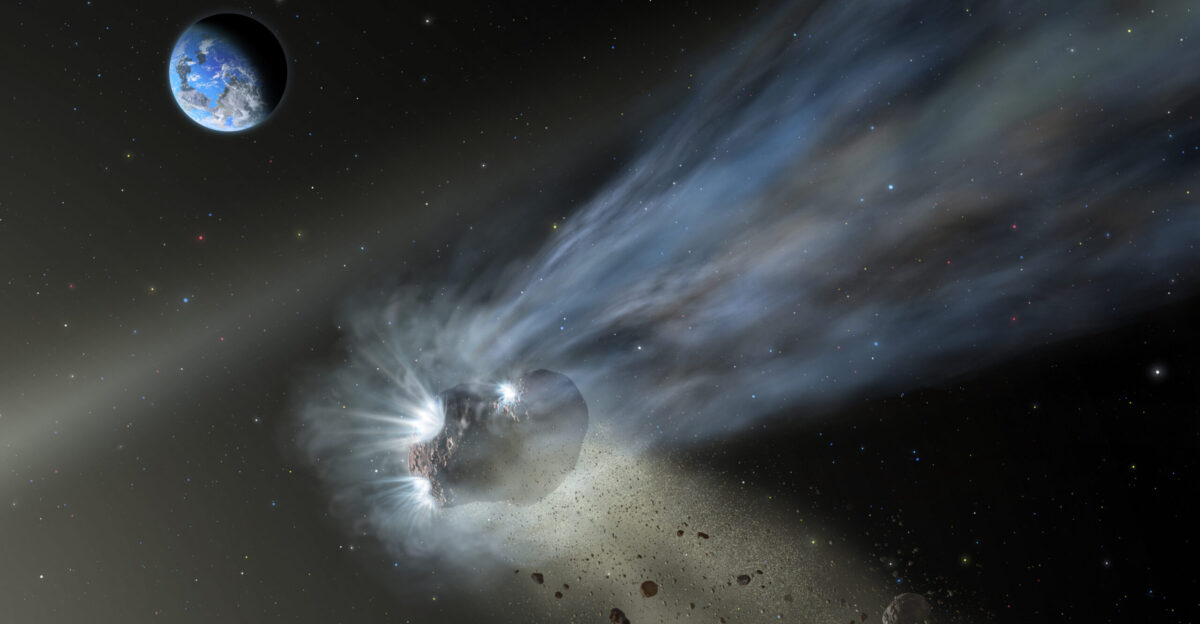
Comets from other star systems are extremely rare. In forty years of serious observation, humans have found only three visitors from beyond our solar system.
The first, 1I/’Oumuamua, arrived in 2017—fast, stretched out, and quiet. The second, 2I/Borisov, appeared in 2019 and looked more like a normal comet. Both passed by without producing X-rays or surprising behavior.
Then came 3I/ATLAS, offering a unique chance to study an active visitor up close. Time was running out.
Timeline Tightens
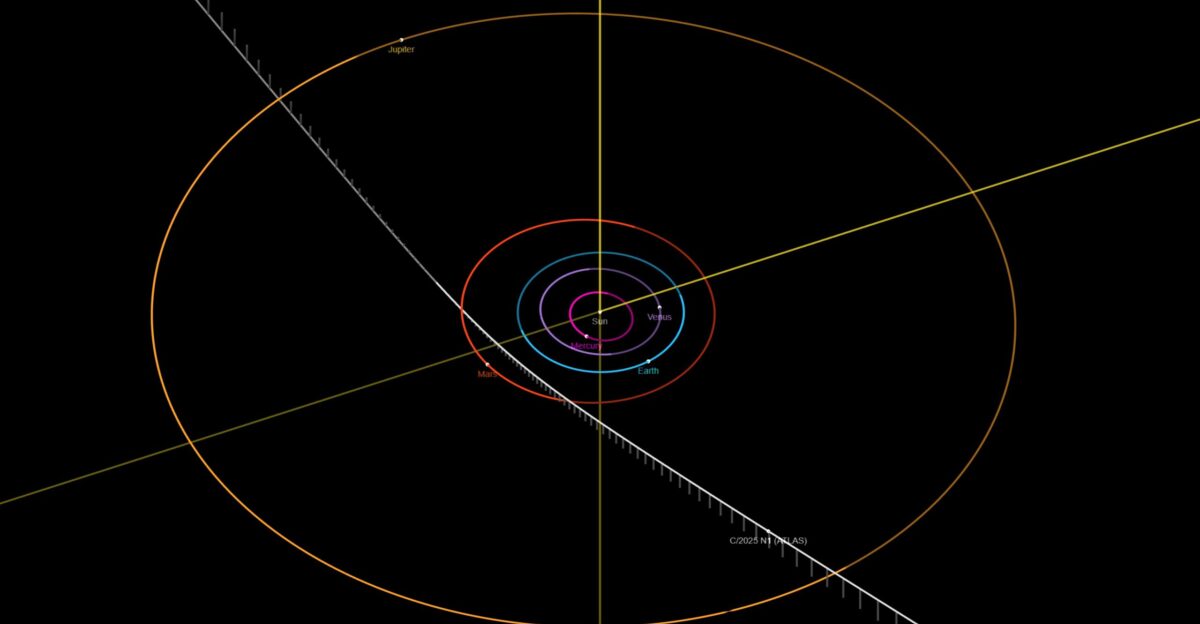
By November 2025, 3I/ATLAS had already passed closest to the Sun on October 30. The comet moved out of the solar exclusion zone, where ground telescopes cannot observe. A small window opened: weeks before the comet’s closest approach to Earth on December 19. The global astronomy community prepared carefully. Japan’s XRISM telescope, Europe’s XMM-Newton, and NASA’s NuSTAR all targeted the same object.
The Question
Scientists didn’t expect to find X-rays. Comets produce X-rays through charge exchange, when solar wind particles hit cometary gas and release high-energy radiation.
This process occurs in comets like Hyakutake (1996) within our solar system. But 1I/’Oumuamua and 2I/Borisov showed no measurable X-rays despite modern observations.
Would 3I/ATLAS break this pattern? JAXA’s XRISM telescope, launched in 2023, would make the first dedicated X-ray observation of an interstellar object.
The Detection
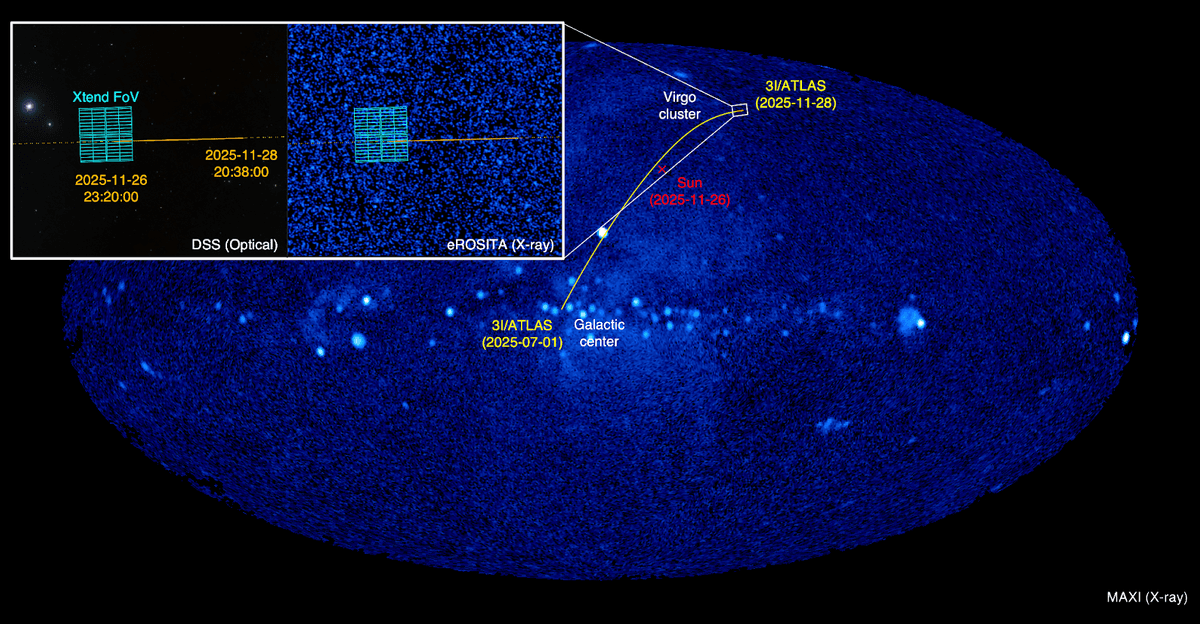
Between November 26 and November 28, 2025, XRISM observed 3I/ATLAS for 17 hours. Scientists found something never confirmed before: a faint X-ray glow around the comet’s core.
The glow extended roughly 5 arcminutes, or about 248,550 miles. The signal was clear and real.
The XRISM team stated the X-ray glow was “difficult to explain solely by the blur due to XRISM’s imaging performance,” proving a real physical effect existed.
A Historic First

The results were historic. 3I/ATLAS became the first confirmed interstellar object ever observed releasing X-rays.
Neither 1I/’Oumuamua nor 2I/Borisov produced such a signature despite searches by advanced equipment. Scientists asked urgent questions: Why was 3I/ATLAS different? Was it made of a different material, releasing more gas, or interacting with solar wind differently?
The X-ray spectrum showed carbon, nitrogen, and oxygen—fingerprints of solar wind charge exchange at work.
Why It Matters
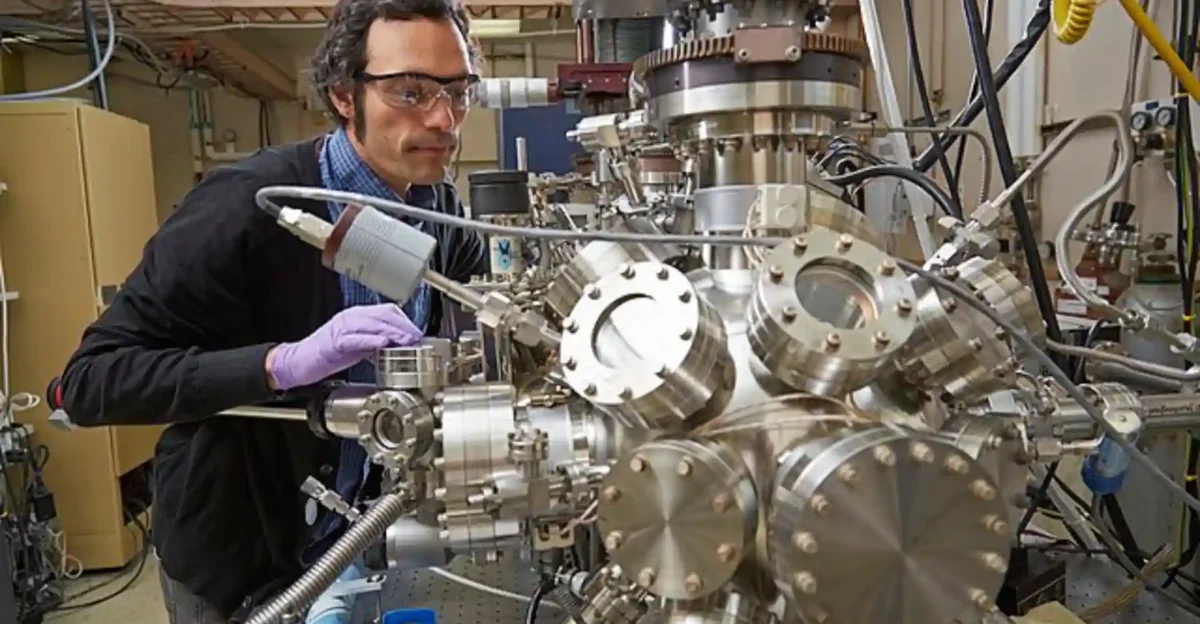
The discovery opened a new window into the behavior of interstellar objects. X-ray spectroscopy had never been applied to an interstellar visitor before, creating unique data.
The 248,550-mile glow suggested a large gas envelope around the core—unexpected for an object so far from the Sun. This suggested internal heat, possible gas release, or dormant activity that had been suddenly activated by solar proximity.
The data promised insights into how interstellar objects preserve gases during travel between stars.
The Comparison
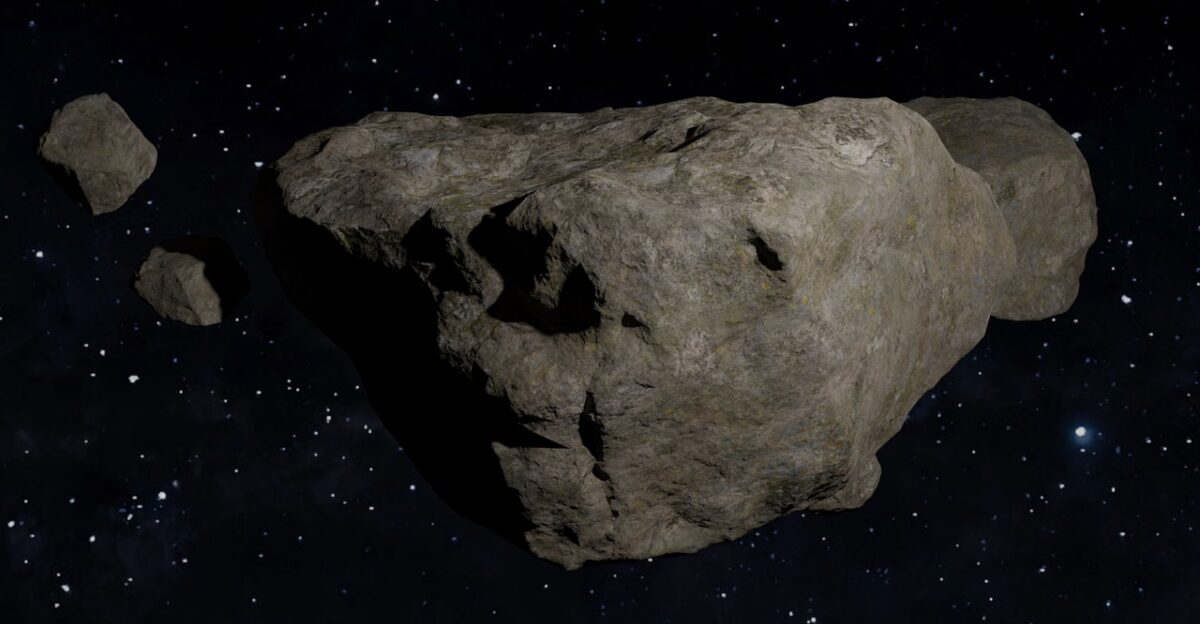
Scientists compared 3I/ATLAS to its predecessors immediately. 1I/’Oumuamua, discovered in October 2017, was tracked for weeks but produced no X-rays.
Its stretched shape and fast speed sparked decades of questions. 2I/Borisov, arriving in August 2019, looked more comet-like and was observed for months without X-rays. Yet 3I/ATLAS, after months approaching the Sun, suddenly released high-energy radiation.
This difference suggested major variations in makeup, structure, or solar interaction. Are interstellar objects more different than previously thought?
Multi-Mission Confirmation
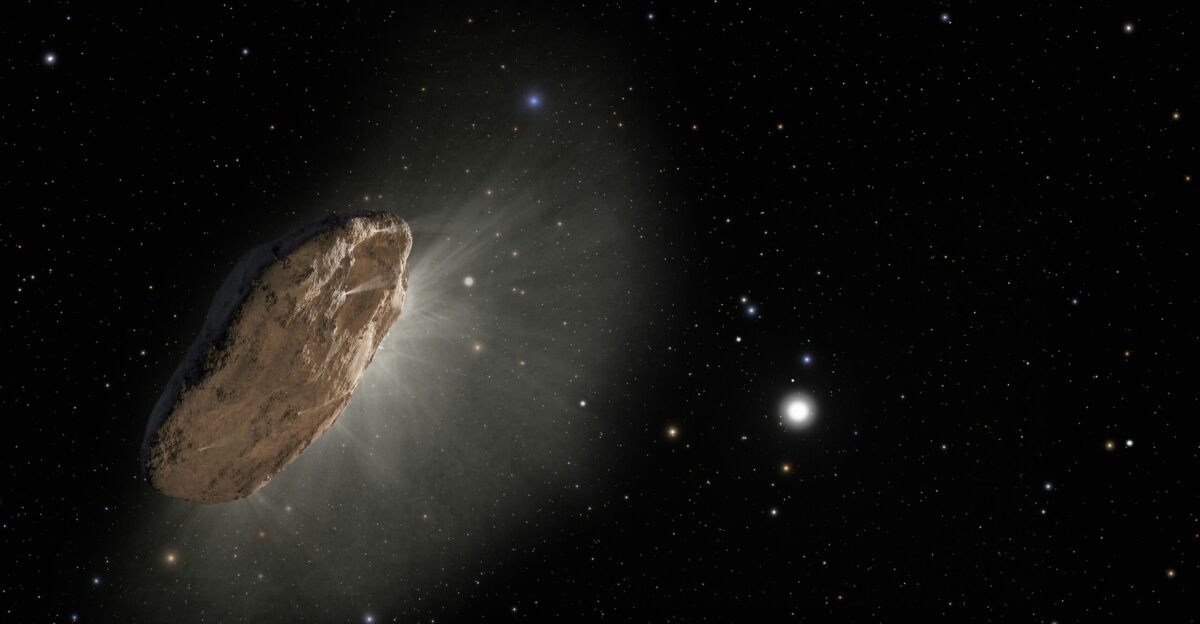
Days later, independent confirmation arrived. On December 3, 2025, the European Space Agency’s XMM-Newton telescope observed 3I/ATLAS for 20 hours and detected the same X-ray glow.
This confirmation mattered greatly—it ruled out equipment errors or single-telescope mistakes. NASA’s NuSTAR observatory also observed, searching for harder X-rays and setting limits on the presence of these sources.
Three major space agencies from different countries, using different tools, independently verified the signal. The X-ray detection became an established fact.
The Mechanism Revealed
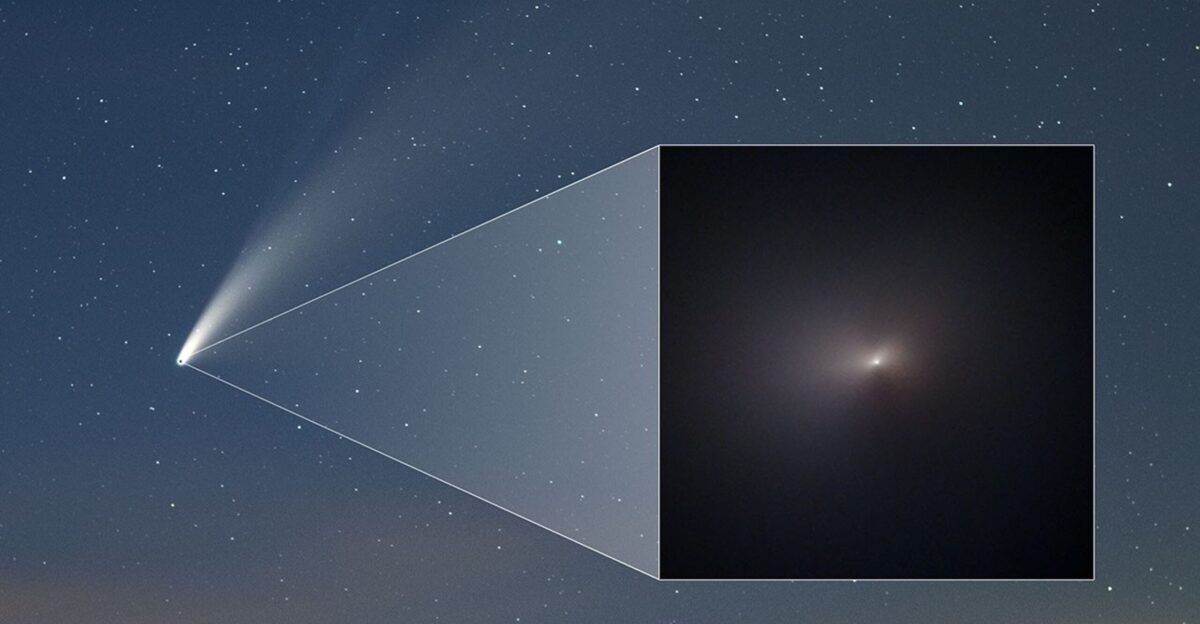
Charge exchange explained the X-rays clearly. When highly charged particles from the solar wind—mainly protons and alpha particles traveling hundreds of miles per second—hit neutral atoms in the comet’s gas shell, electron transfer happened.
The captured electrons released photons in the X-ray band as they dropped energy levels. Solar system comets showed this same process for nearly thirty years.
For an interstellar object, this finding proved revolutionary: interstellar comets possessed large gas envelopes that interacted with our solar wind.
Cometary Composition Clues
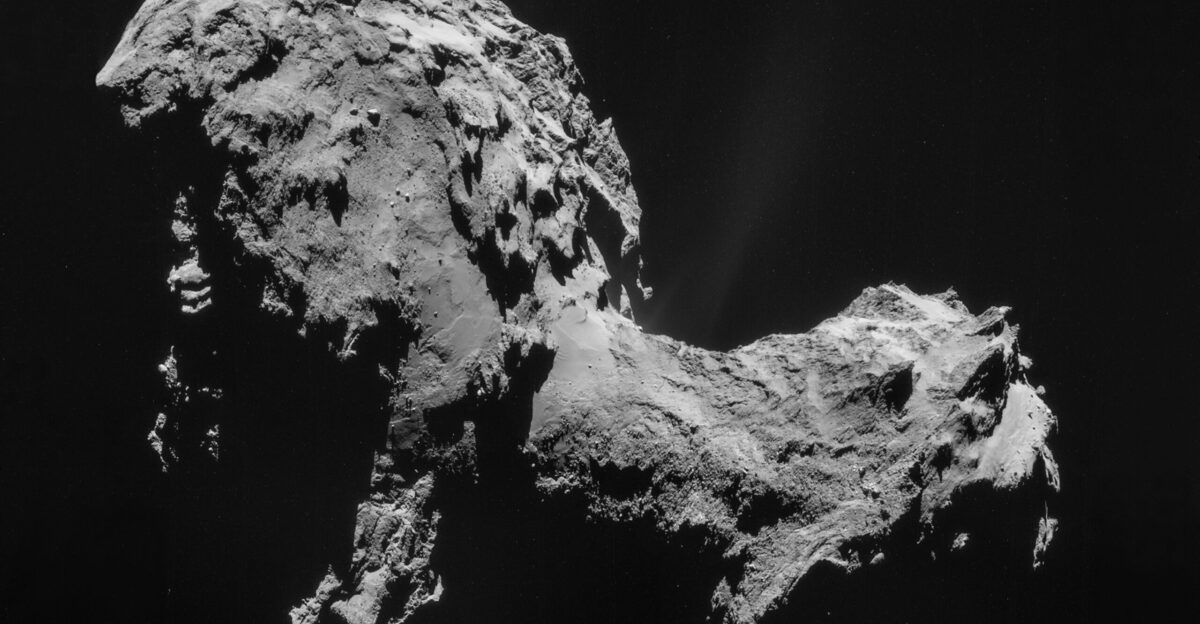
XRISM detected spectral lines showing which elements filled 3I/ATLAS’s gas shell. Carbon, nitrogen, and oxygen signatures stood out—hallmarks of volatile compounds like water, carbon dioxide, and ammonia.
These molecules also exist in comets within our solar system, suggesting that planetary formation and cometary makeup may be universal across different star systems.
The XRISM team stated: “X-ray components likely associated with carbon, nitrogen, and oxygen appear in ways that cannot be explained by ordinary background emission.” This detail raised confidence in the detection.
Distance and Safety

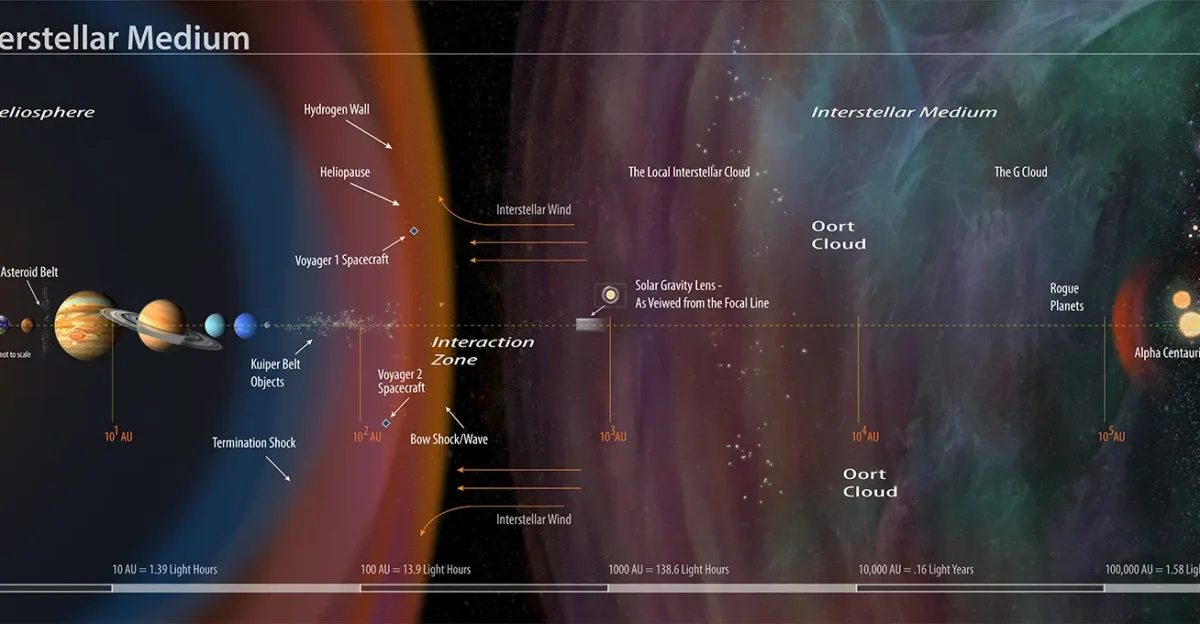
Astronomers emphasized one critical detail: 3I/ATLAS poses no collision risk to Earth. The comet’s closest approach on December 19, 2025, will bring it within 167.77 million miles—roughly 1.8 times Earth’s distance from the Sun, or nearly 1,000 times Earth-to-Moon distance.
The comet will be invisible to the naked eye but will be easily visible through telescopes. The vast distance also meant that during XRISM’s observation, the comet was moving away from the Sun, capturing its behavior after its closest approach to the Sun.
Outgassing Insights
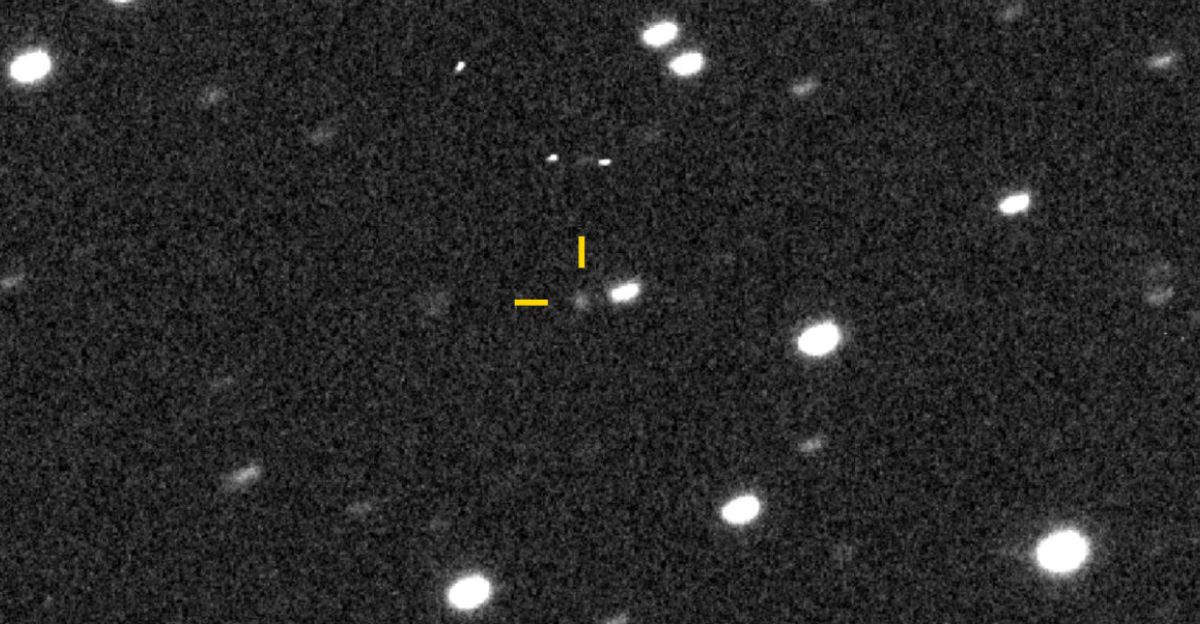
The 248,550-mile gas glow raised important questions about gas release rates and the sources of heat. At 3I/ATLAS’s current distance from the Sun, frozen material should release gases, but the glow’s size surprised some researchers.
The halo’s extent suggested either very high gas release or ideal conditions for gas spreading. Some scientists speculated that radioactive decay inside the comet or leftover heat from its birth star system contributed.
Others suggested the comet’s path and spin created an unusually large gas cloud. Future observations would test these ideas.
Observational Strategy Shift
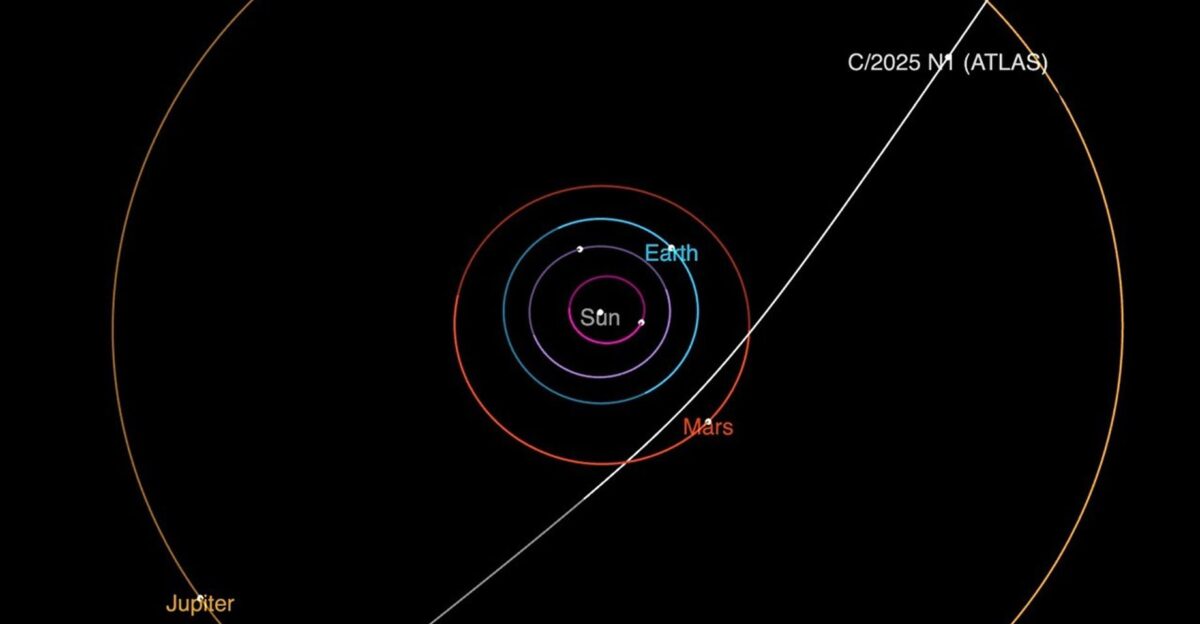
The X-ray detection immediately changed observation plans for 3I/ATLAS. Telescopes scheduled for infrared and visible light observations switched to high-energy radiation.
Radio observatories tried to detect molecular gases from the shell. Some teams planned ultraviolet observations to track hydroxyl radical signatures. The multi-wavelength campaign represented an unprecedented focused effort on a single interstellar target.
No previous interstellar visitor received such intense study. 3I/ATLAS transformed from curiosity to priority-one target worldwide.
The Unanswered Question
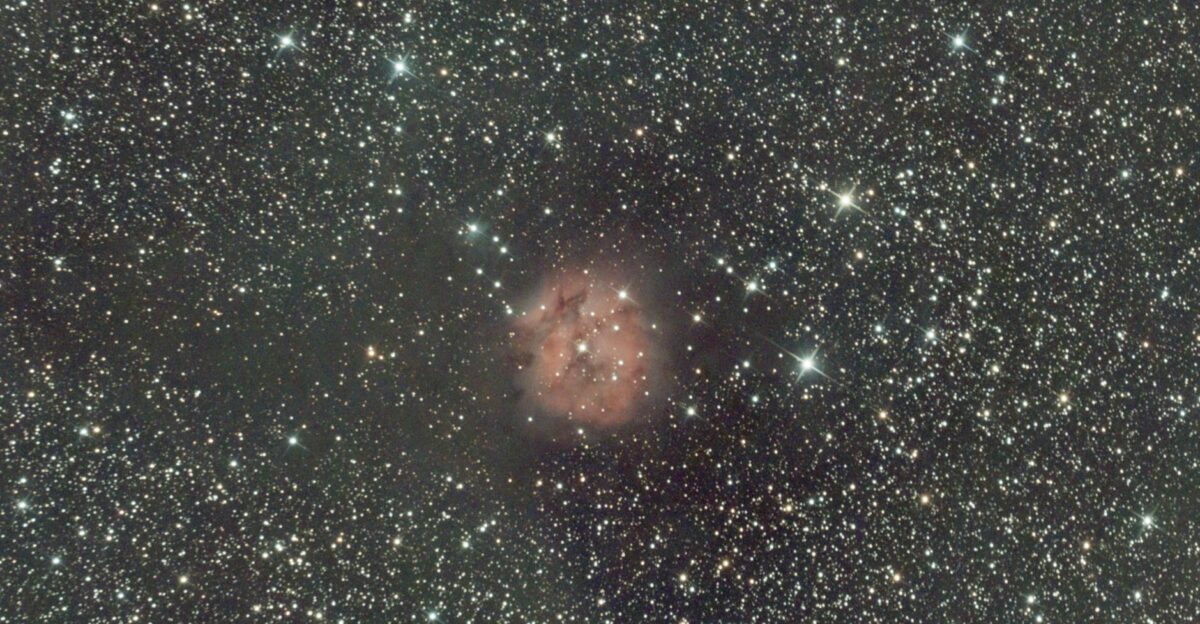
Even with mounting excitement, mysteries remained. Why did 3I/ATLAS produce detectable X-rays while its predecessors did not?
Three leading explanations competed: different material (3I/ATLAS might hold more volatile substances), different structure (perhaps a larger core with more gas release), or different encounter geometry (different angle and timing of solar wind interaction).
Some researchers suggested a fourth idea: 1I/’Oumuamua and 2I/Borisov may have released X-rays too, but weaker equipment or poor timing missed them. Only more discoveries would answer definitively.
New Frontiers in Astrobiology
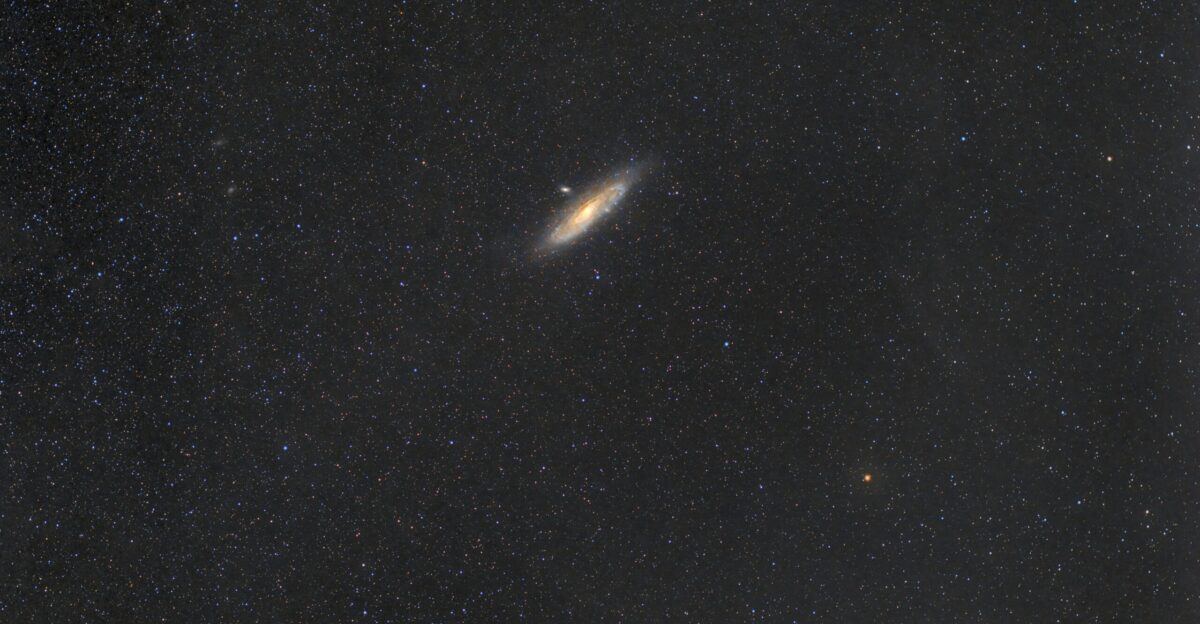
The carbon, nitrogen, and oxygen signatures sparked immediate discussions in astrobiology. These elements form organic molecules essential for life on Earth.
That 3I/ATLAS carries such substances suggested interstellar objects might deliver prebiotics—organic starter molecules—across interstellar distances.
Some researchers asked: Could impacts by such objects on early Earth or other planets have seeded life’s building blocks? While speculative, the finding reopened ancient debates on panspermia within modern observational science frameworks.
Implications for Planetary Formation

Astrophysicists studying planetary formation reconsidered how interstellar comets might affect developing planetary systems around young stars.
If 3I/ATLAS retains gas and interacts with stellar winds detectably, similar objects might deliver water and carbon compounds to forming planetary disks. This mechanism was mostly theoretical before the X-ray observation. Now, with solid spectroscopic evidence, researchers could refine simulations of planetary system chemistry.
Some speculated that the diversity of exoplanet compositions might partly reflect interstellar comet impacts during formation—a major shift in planetary science thinking.
Public Reception and Misinformation

News of the discovery sparked intense public interest and speculation. Social media overflowed with claims, both reasonable and far-fetched. Some correctly highlighted genuine scientific progress.
Others promoted unproven claims about the comet’s path, threat level, or hidden “messages” in the X-ray data. Astronomers have worked to clarify that 3I/ATLAS poses no impact risk and no threat.
The X-ray signature reflects common charge exchange physics, not unusual makeup or secret properties. NASA and JAXA issued joint statements correcting false claims while celebrating the real discovery.
Historical Precedent
The discovery echoed earlier breakthroughs in cometary X-ray science. In 1996, the ROSAT X-ray satellite unexpectedly detected X-rays from Comet Hyakutake, transforming understanding of comet-solar wind interactions overnight.
That discovery, made when X-ray comet observations were novel, revolutionized the field and sparked decades of research. Now, twenty-nine years later, the same process applied to an interstellar visitor offered validation and deeper insight.
The parallel suggested that fundamental comet physics crossed solar system boundaries. Future interstellar object discoveries will test whether X-ray activity is linked to specific properties.
The Bottom Line
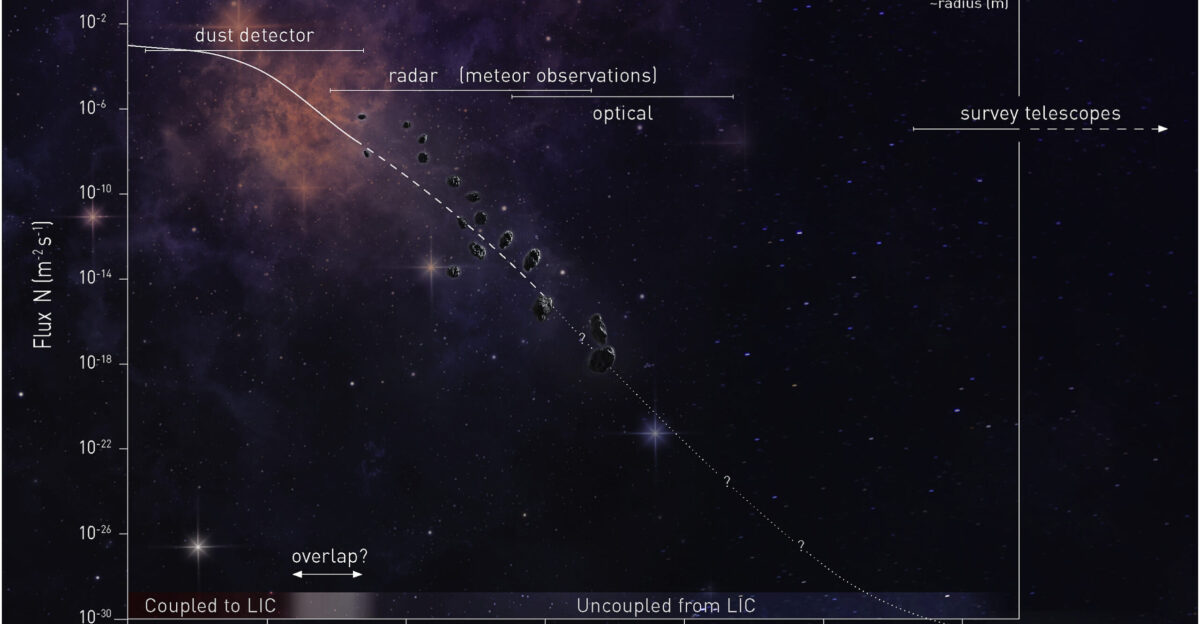
3I/ATLAS’s X-ray detection marks a turning point: proof that interstellar objects actively interact with stellar environments in measurable ways.
For the first time, high-energy spectroscopy has mapped the chemistry of an alien visitor, revealing carbon, nitrogen, and oxygen in amounts that match those of our solar system’s comets.
The finding validates decades of theoretical predictions and opens new observational paths for studying the chemical universe. As 3I/ATLAS fades toward cosmic darkness, the data reshapes how astronomy understands material connections between distant stars.
Sources:
JAXA Official Release, XRISM observes a cometary interloper 3I/ATLAS, 5 December 2025
IFLScience, First X-Ray Image Of Comet 3I/ATLAS Reveals Signature Unseen In Other Interstellar Objects, 9 December 2025
NASA Science Portal, Comet 3I/ATLAS Facts and FAQs, 2025
ESA Official Release, XMM-Newton sees comet 3I/ATLAS in X-ray light, 11 December 2025
Mashable, 3I/ATLAS: Japan’s XRISM Probe Captures X-ray Emission From Exocomet Ahead of Earth Flyby, 7 December 2025
Nature, Interstellar objects through the X-rays, October 2023