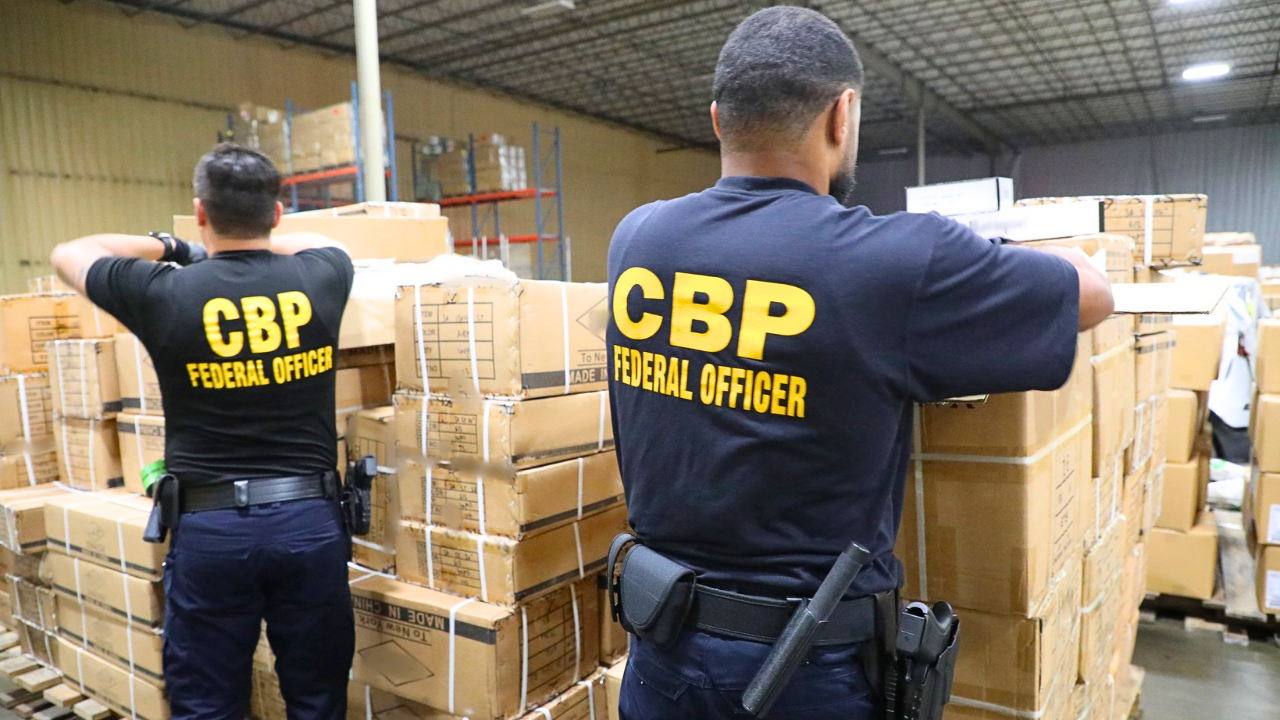
Authorities say a Texas-based businessman and his partners quietly moved more than $160 million worth of Nvidia’s most advanced AI processors from U.S. warehouses to buyers in China and Hong Kong, despite strict export bans tied to national security. The scheme, exposed through a multi-agency investigation known as Operation Gatekeeper, highlights how intense demand for cutting‑edge AI hardware has fueled a global gray market that is testing the limits of U.S. export controls.
Escalating Race for AI Hardware
Since 2022, Washington has restricted exports of Nvidia’s H100 and later H200 graphics processing units to China and Hong Kong, citing concerns that their computing power could accelerate military artificial intelligence programs. The H100, with 80GB of HBM3 memory and bandwidth of 3.35 TB/s, and the H200, with up to 141GB of faster HBM3e memory and 4.8 TB/s bandwidth, are widely viewed as essential for training large-scale AI systems.
Those restrictions, however, did not dampen demand. In 2024, smugglers succeeded in moving tens of thousands of chips to China, according to federal authorities, who seized more than $50 million in processors and cash during related operations. The hardware’s value, and its importance in the broader U.S.–China technology rivalry, turned it into a prime target for criminal networks willing to risk long prison terms to serve clients shut out by formal licensing rules.
Unraveling Operation Gatekeeper
The case that authorities describe as the largest Nvidia chip smuggling bust to date centers on Texas businessman Alan Hao Hsu and his company, Hao Global. Prosecutors say that between 2024 and 2025, Hsu arranged for restricted H100 and H200 units to be purchased from U.S. distributors, then diverted out of the country in violation of export controls.
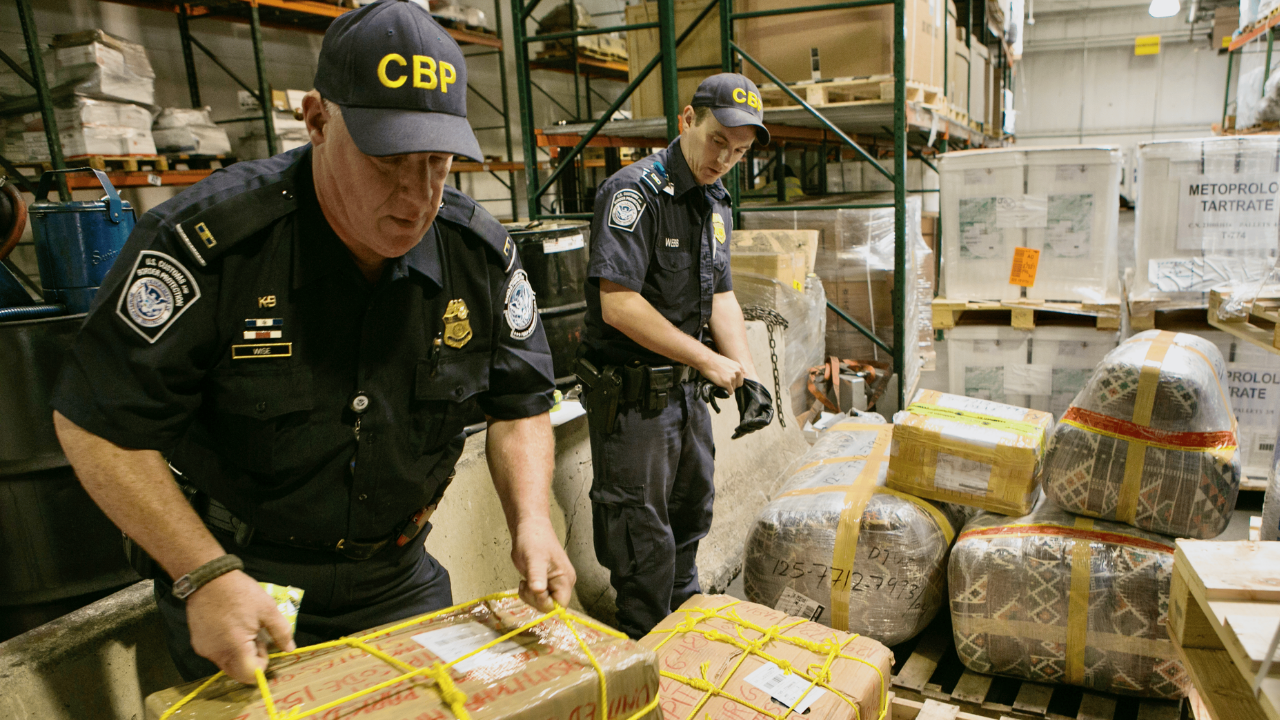
According to charging documents, the operation relied on a chain of warehouses and intermediaries. In Houston, straw buyers allegedly acquired the chips, masking the involvement of the true end users. The processors were then moved to facilities in Brooklyn, New York, where workers physically altered how the products appeared on paperwork and packaging.
From there, shipments passed through Hong Kong, a major logistics hub, before being routed on to a Chinese information technology firm. Authorities say millions of dollars in funding from China helped sustain the pipeline and pay for the complex logistics needed to keep it operating for months without detection.
Inside the Relabeling Scheme
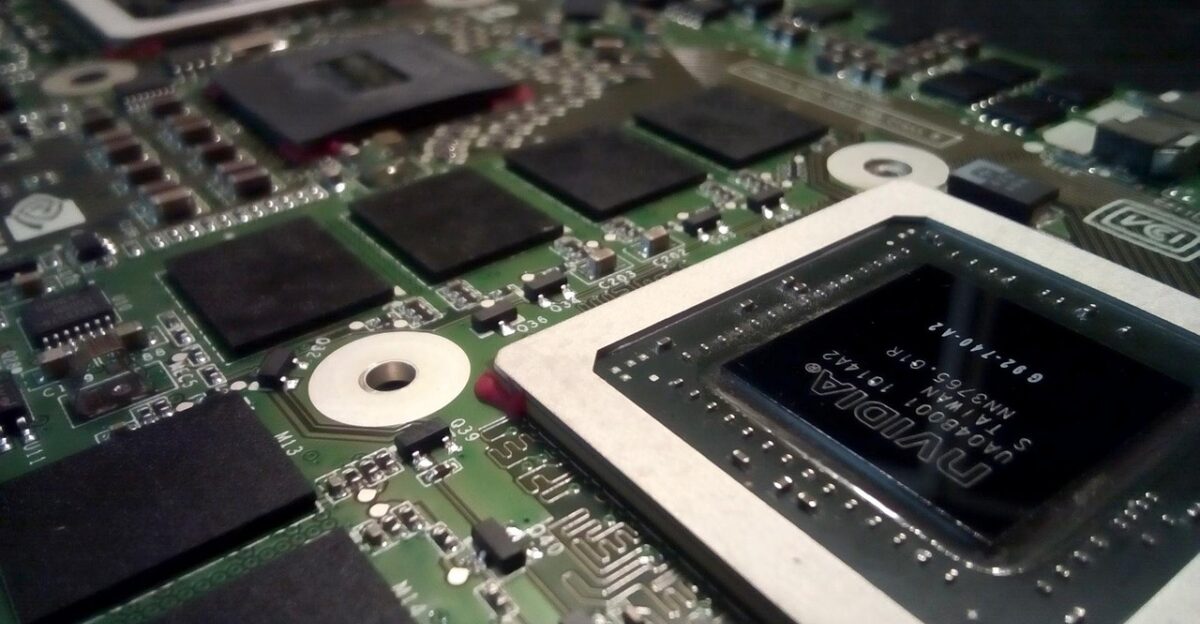
A key element of the conspiracy, according to federal officials, was the deliberate misbranding of the high-end Nvidia hardware. Under the direction of Chinese national Fanyue Gong, warehouse employees allegedly removed the original Nvidia labels from the GPUs and replaced them with the invented brand name “SANDKYAN,” presenting the units as generic components with no export restrictions.
Investigators say the physical relabeling was paired with falsified shipping and customs documents that obscured the true nature and destination of the products. Canadian executive Benlin Yuan, a chief executive based in Ontario, is accused of coordinating with inspectors and logistics partners to prevent scrutiny of containers ultimately bound for China.
The Bureau of Industry and Security, which oversees export controls, has pointed to this case as evidence that smuggling groups are moving beyond simple paperwork fraud to hands‑on manipulation of the products themselves. Officials say such tactics complicate traditional enforcement methods that rely heavily on serial numbers, product descriptions, and declared destinations.
Legal Consequences and Policy Tensions

Hsu has pleaded guilty to charges tied to the smuggling scheme and is scheduled for sentencing in February 2026. He faces substantial prison time and financial penalties. Gong faces up to 10 years in prison for his alleged role in the conspiracy, while Yuan could receive as much as 20 years under the Export Control Reform Act. Hao Global, the company at the center of the case, may be fined an amount that could reach double the value of its illicit gains.
U.S. Attorney Nicholas J. Ganjei characterized the processors at issue as “crucial for AI military applications,” underscoring why national security officials view the case as more than a financial crime. The U.S. Attorney’s Office has argued that supplying advanced GPUs to restricted Chinese entities risks strengthening foreign defense capabilities built on American technology.
The case also exposes tensions in Washington’s broader approach. The Trump administration has paired aggressive prosecutions with a controlled‑sales strategy that allows Nvidia to ship certain H200 chips to vetted customers in China under a framework that includes a 25% fee on exports. That policy is intended to offer a monitored legal channel while still limiting access to the most advanced capabilities. Chinese authorities, however, have rejected some of these approved H200 exports, raising questions about whether a mix of bans and licensed sales can effectively manage both security and commercial interests.
Looking Ahead in the AI Chip Contest
The fallout from Operation Gatekeeper extends well beyond the individuals charged. Nvidia has said it is tightening tracking systems and seeking better oversight of second‑hand markets to reduce the risk that its hardware is diverted after initial sale. Other chip makers, including global competitors such as AMD, are facing similar scrutiny as regulators move to close loopholes that smugglers have used to reroute specialized processors.
In response, federal agencies are increasing warehouse inspections, investing seized assets back into investigations, and pushing for more preemptive licensing and coordination with partner countries such as Canada and logistics centers like Hong Kong. At the same time, experts warn that as long as powerful AI chips remain central to defense and economic competition, criminal groups are likely to keep adapting their methods to meet demand.
The case has sharpened debates over how to balance open technological development with safeguards on sensitive tools. Supporters of strict controls argue that limiting access to top-tier AI hardware is essential for maintaining a strategic edge, while others caution that overly rigid measures may simply push more trade into the shadows. As new processors like Nvidia’s H200 raise the performance ceiling again, U.S. policymakers face an ongoing test: whether evolving enforcement strategies can prevent similar breaches and secure the country’s position in the global AI race without shutting down legitimate commerce.
Sources:
U.S. Department of Justice Press Release / Official Statement (December 8, 2025)
CNBC – “Nvidia chips: Plots to send GPUs to China expose $160 million” (December 9, 2025)
Fox 26 Houston – “Feds say Houston-linked ‘Operation Gatekeeper’ broke $160M AI chip smuggling pipeline to China” (December 8, 2025)
Arnold Porter – “DOJ Announces Shutdown of Major China-Linked AI Tech Smuggling Network” (December 14, 2025)
Times of India / Multiple outlets – “Technology company CEOs caught smuggling Nvidia GPUs worth $160 million” (December 9, 2025)