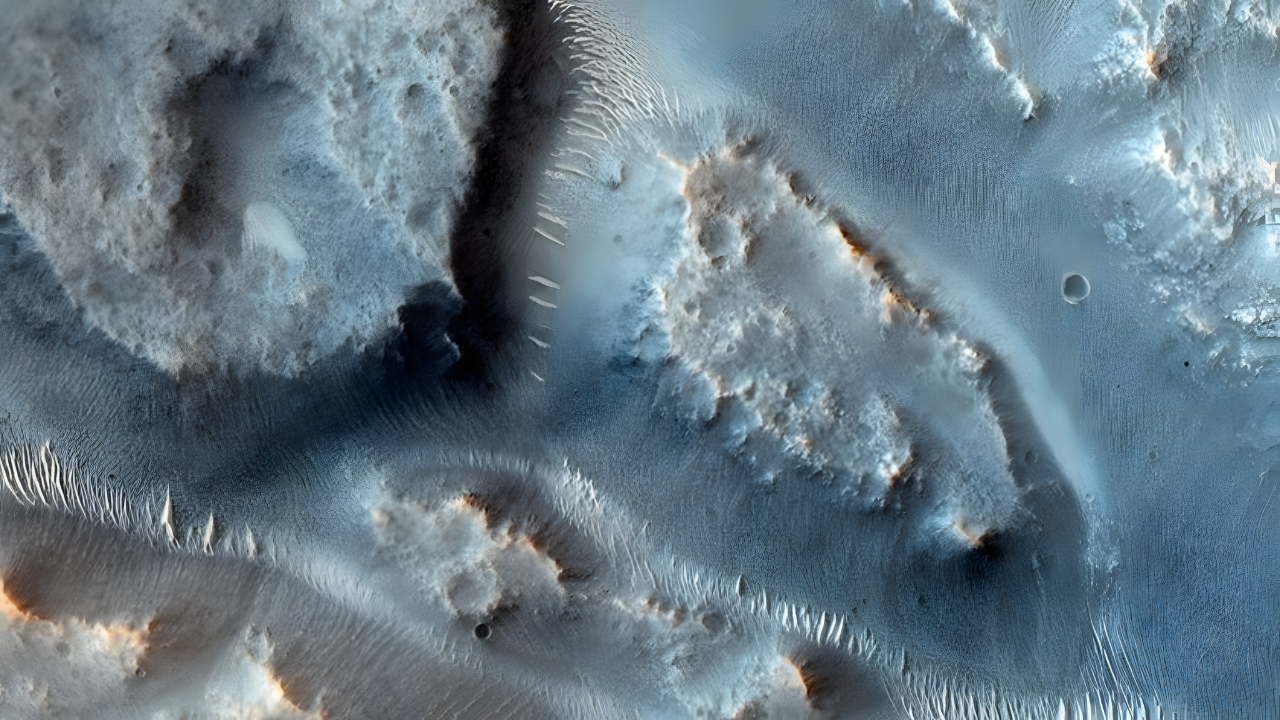
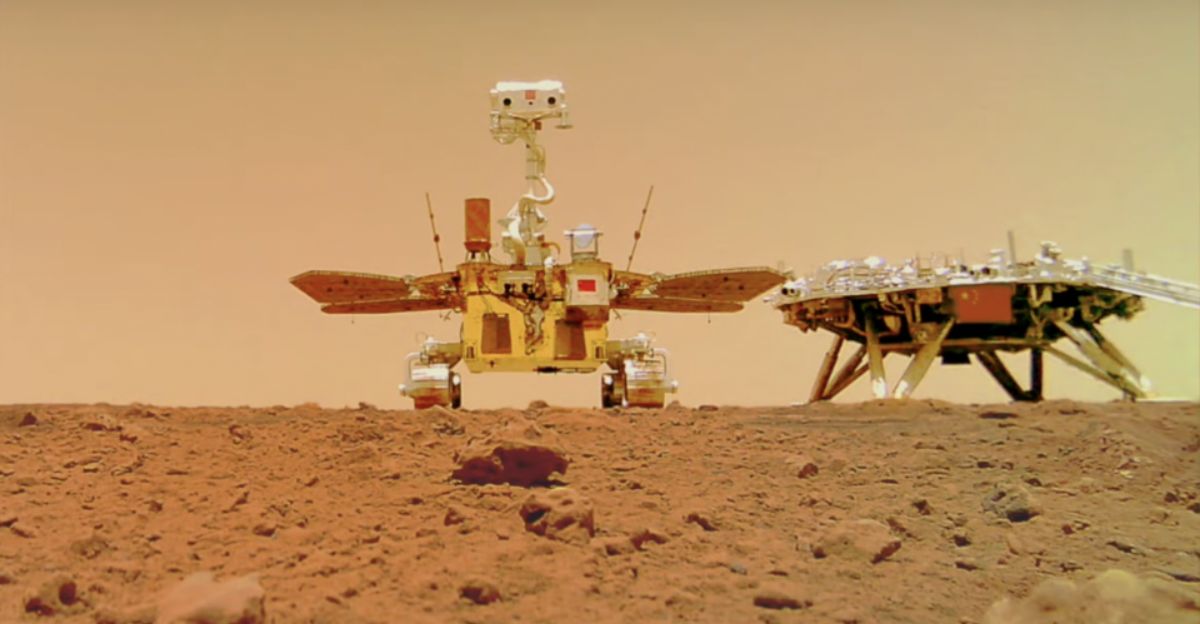
China’s Zhurong rover hit Mars in 2021 as part of the Tianwen-1 mission, landing in the huge, flat Utopia Planitia plain. This northern stretch covers thousands of kilometers and has puzzled scientists for years with signs of ancient water. Zhurong’s ground-penetrating radar (GPR) scanned 1.3 kilometers along a basin edge, spotting hidden layers safe from surface wear. Published in Proceedings of the National Academy of Sciences (PNAS), these results give the first direct proof of Martian beach deposits from long ago.
Dust storms and rough ground tested the rover’s solar panels, but it kept sending data home, reshaping our view of Mars’ past. This isn’t guesswork, it’s solid evidence of a wetter Mars.
Unearthing a 3-Billion-Year-Old Beach
Under Utopia Planitia’s dust hides a beach from over 3 billion years back, caught by Zhurong’s radar digging tens of meters deep. The layers slant away from what was once a shoreline, just like Earth’s wave-shaped coasts. Protected underground, they dodged eons of erosion, giving us a fresh look at Mars’ watery days.
This fits Mars’ Noachian era, when the planet went from maybe livable to bone-dry. Layers vary in thickness and makeup, hinting at floods that came and went regularly, not random mudslides. Radar matches match Earth’s old shorelines, like those in Australia.
Proof of Mars’ Long-Lost Oceans
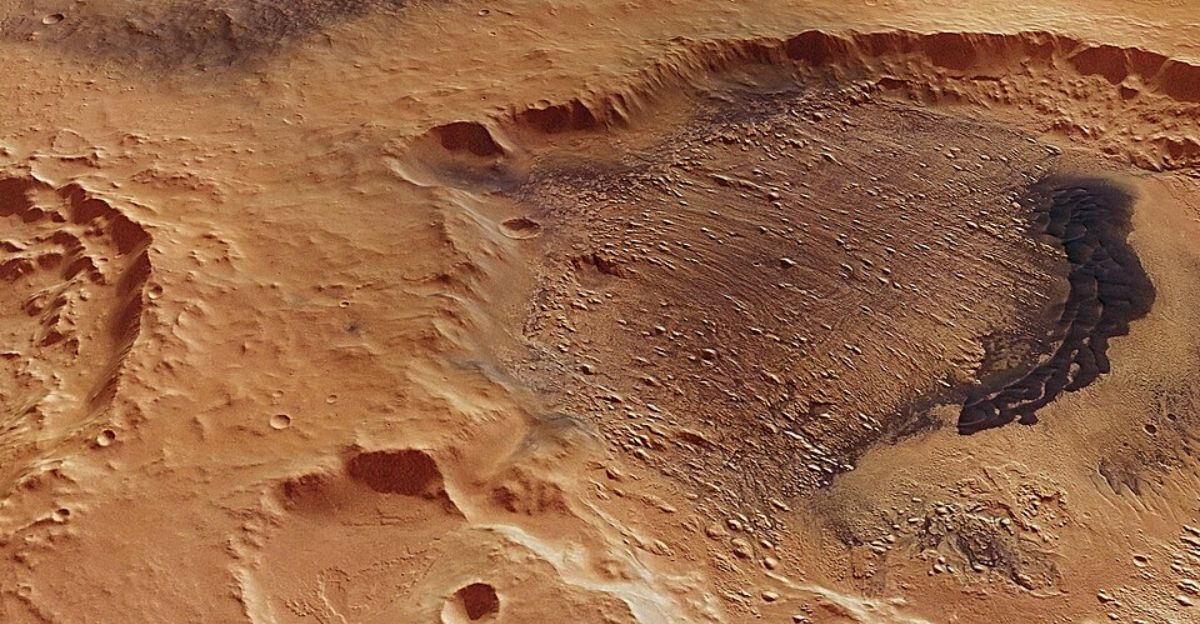
Orbiters teased ocean hints for decades, but Zhurong delivered the first underground evidence of beaches proving they existed. Its GPR mapped wavy layers in the soil, showing a coast where water once met land. Buried deep, these stayed safe from radiation and wind.
The PNAS study led by Jianhui Li from Guangzhou University’s team, measures sediment angles matching tides, not slides. Models suggest nearly half of Mars, was ocean around 3.6 billion years ago.
The Hidden Coastline
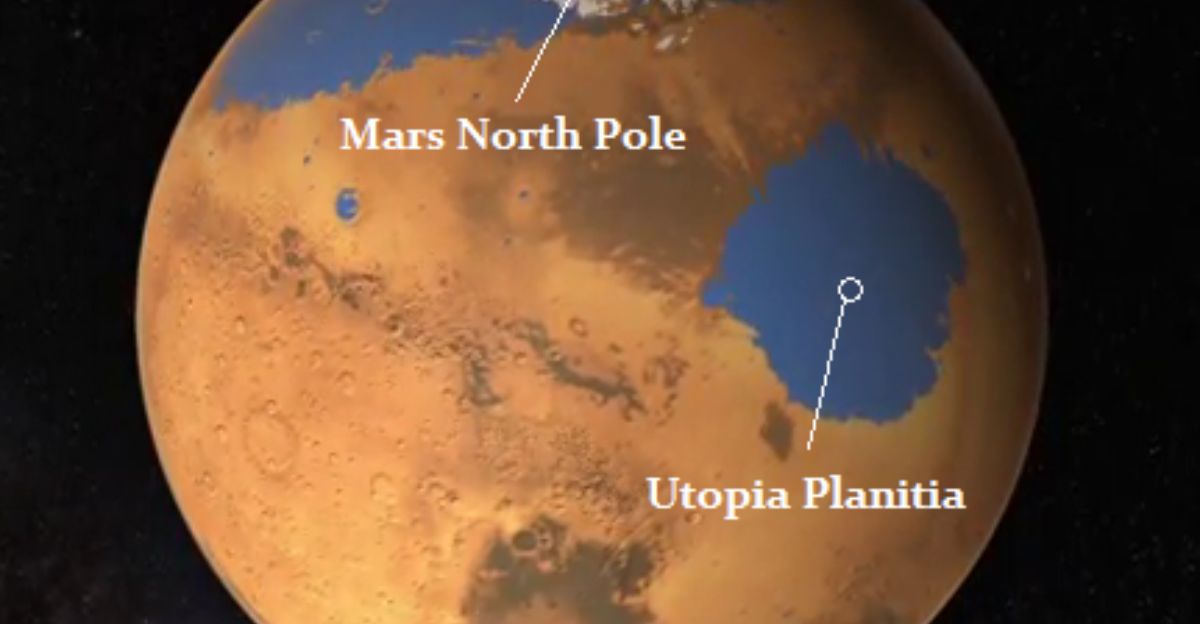
Zhurong roamed 1.3 kilometers in Utopia Planitia, Mars’ giant northern basin full of craters and lava. Beneath the rough top, smoother sands sorted by water point to ocean waves from billions of years ago. NASA’s 1970s Viking landers spotted sediments here first, but Zhurong’s radar confirmed the depth.
At the basin’s edge, layers slope out like a tide-battered shore, stretching habitability timelines. This plain hides more than it shows, inviting deeper digs.
How Radar Changed Mars Hunting
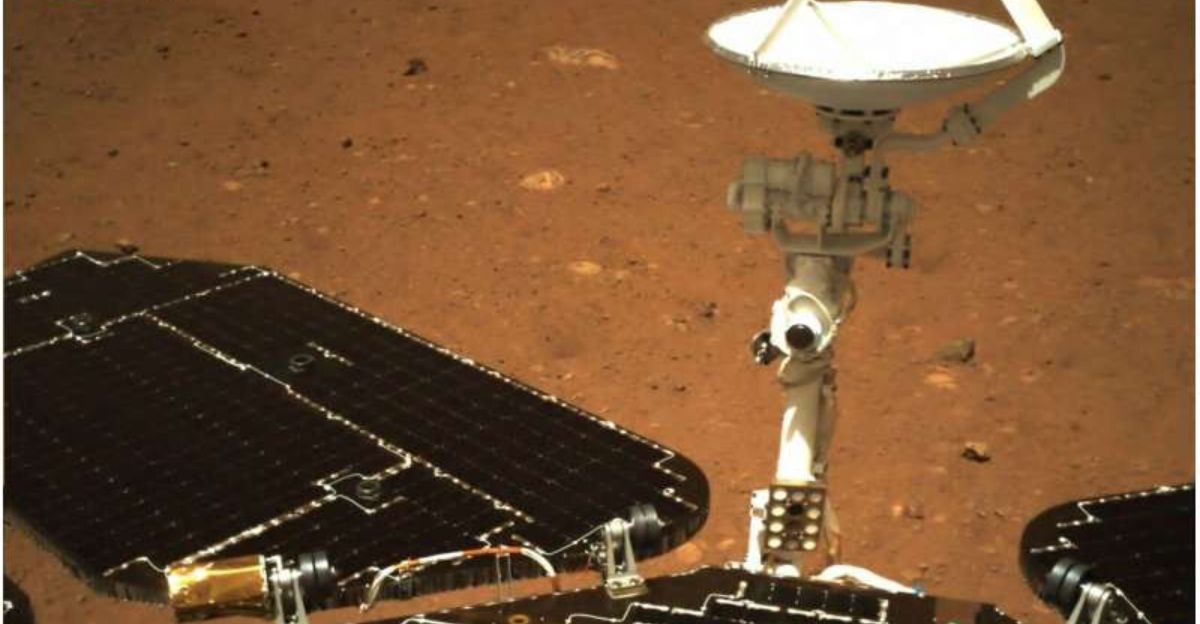
Zhurong’s dual-frequency GPR fired pulses into the ground, bouncing back from density shifts to reveal stacked beach ridges under lava. Cameras can’t do that; this tech pierced 10-20 meters, spotting 1-2 meter layers. Like Earth archaeology, it proved wave-sorted sands.
Li’s team tuned it against real Earth beaches for sharp results. Future rovers could map whole buried coasts.
Meet Jianhui Li, Mars’ Radar Detective
Jianhui Li from Guangzhou University led the data crunch that turned signals into shoreline proof. Her team mixed geophysics, sediments, and models for the PNAS win, putting China ahead in Mars rocks.
Building on lunar successes, they merged Zhurong data with global sets, proving long-lasting oceans.
Layers That Echo Earth’s Beaches
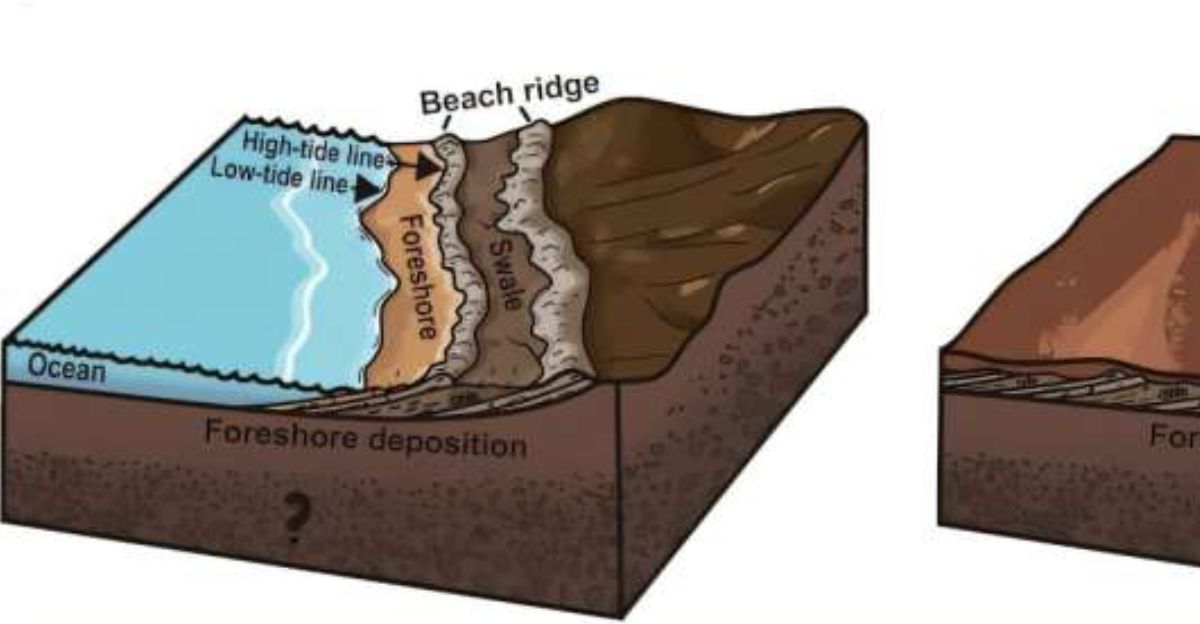
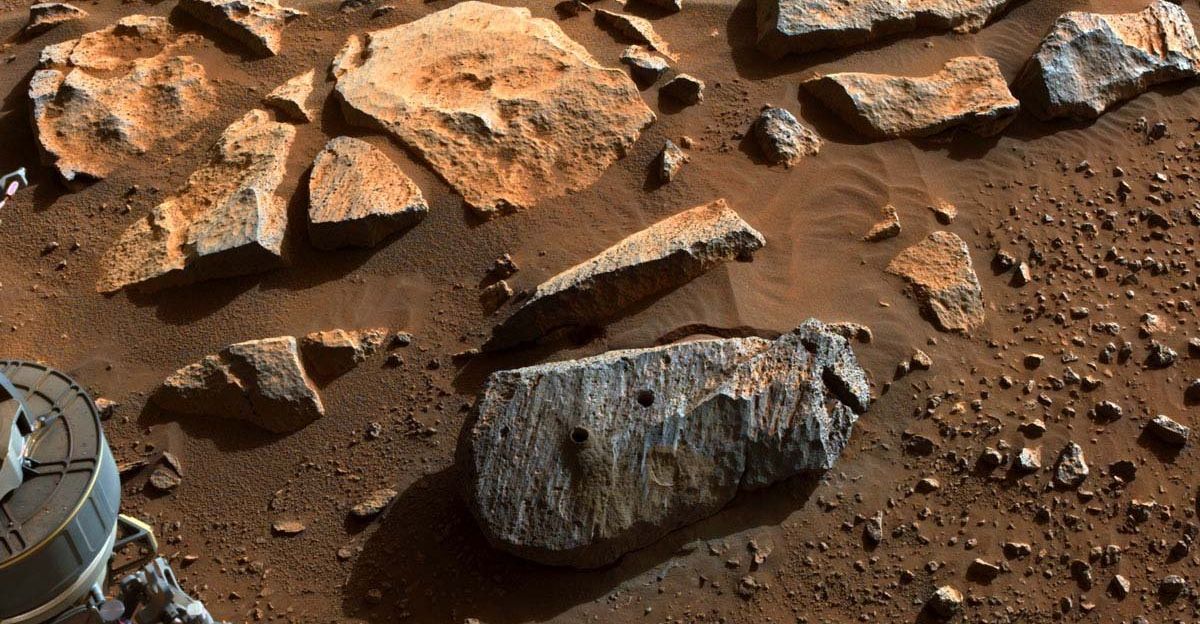
These rocks slant 5-10 degrees from the shore, like Earth’s advancing beaches where waves shove sand out to sea. Fine sands and gravels show cross-bedding from swirling water, not wind dunes. Mars’ thin air couldn’t erase them after 3 billion years.
Earth’s Miocene coasts match perfectly, backed by lab tests. Phobos-driven tides boosted waves, sorting grains. “Signatures are identical to terrestrial prograding beaches,” per the study.
Waves and Tides That Shaped Mars
Sloping layers show wave runups, thick ones from storms, thin from calm tides, over 1.3 kilometers of steady ocean edge, not quick floods. Models predict 10-meter waves hitting Utopia.
Water’s density hauled heavy stuff offshore, unlike wind. Oceans lasted to 3.7 billion years, giving Mars a long “just right” phase for life.
When Did Mars’ Oceans Dry Up?
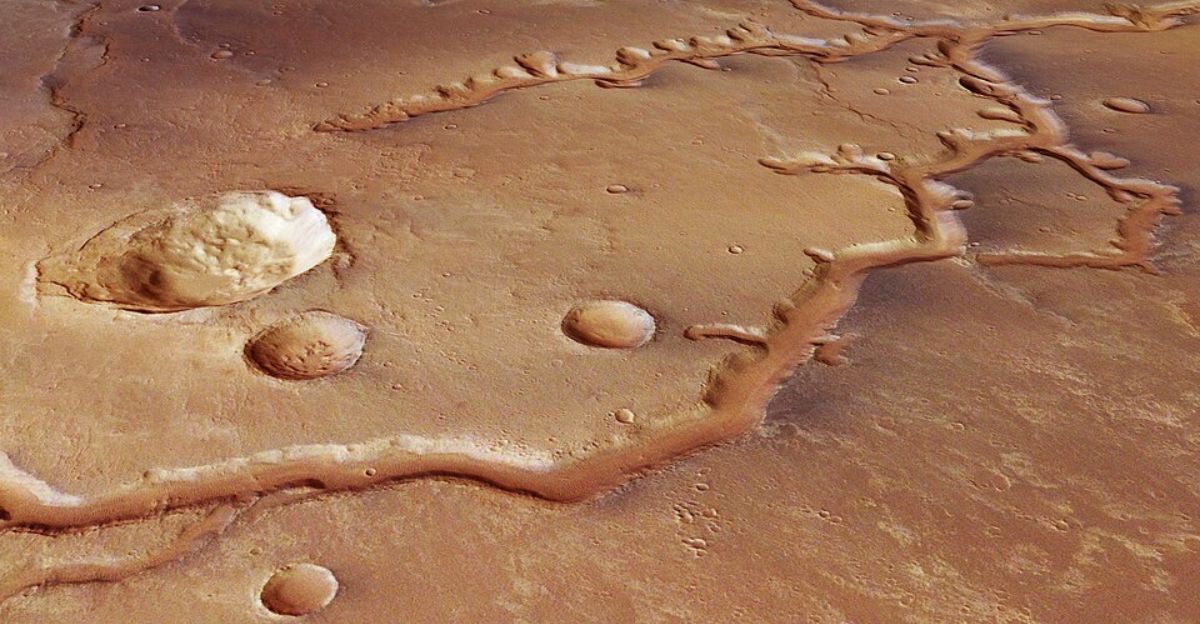
Oceans hung on until about 3.7 billion years ago, hundreds of millions of years, not mere decades. Mars meteorites show hydrated minerals from 4.5 billion years back. Zhurong’s beaches stretch the wet window to 700 million years.
This lines up with Earth’s first life at 3.8 billion years. Magnetic field loss and solar wind killed the air, freezing remnants underground.
NASA’s Old Photos Teased the Truth
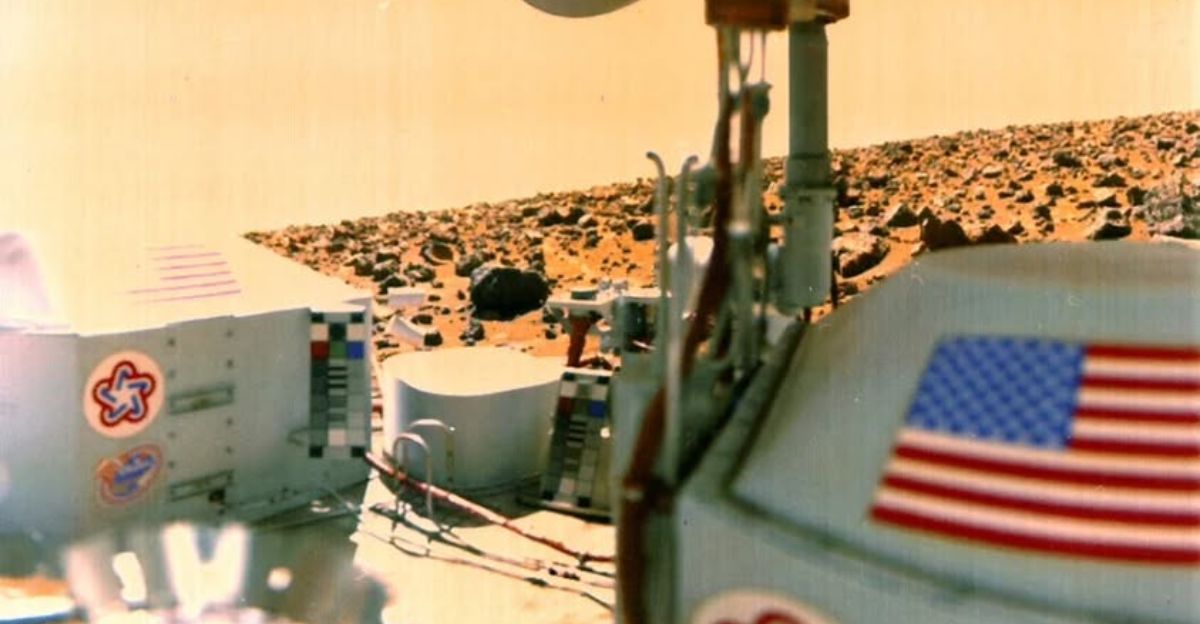
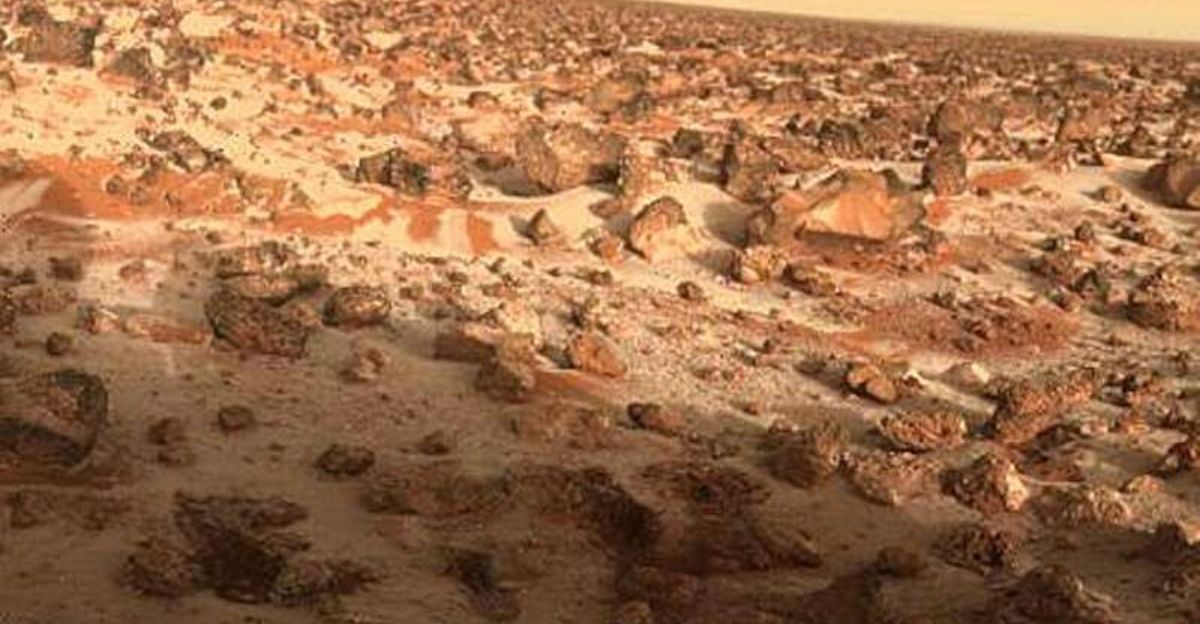
Viking 2 touched down in Utopia Planitia on September 3, 1976, capturing the plain’s boulder-strewn red rocks stretching to a horizon nearly two miles away. Its cameras snapped black-and-white strips and full 330-degree panoramas, showing a smooth northern plain, much like Viking 1’s site but without dunes and with pitted rocks.
Before the landers, NASA’s Mariner 9 orbiter in 1971 photographed outflow channels and valley networks across Utopia Planitia, suggesting massive water flows carved the landscape. Its infrared data mapped seasonal polar changes and water vapor variations by location and time, fueling theories of ancient floods.
Perseverance Joins the Water Hunt
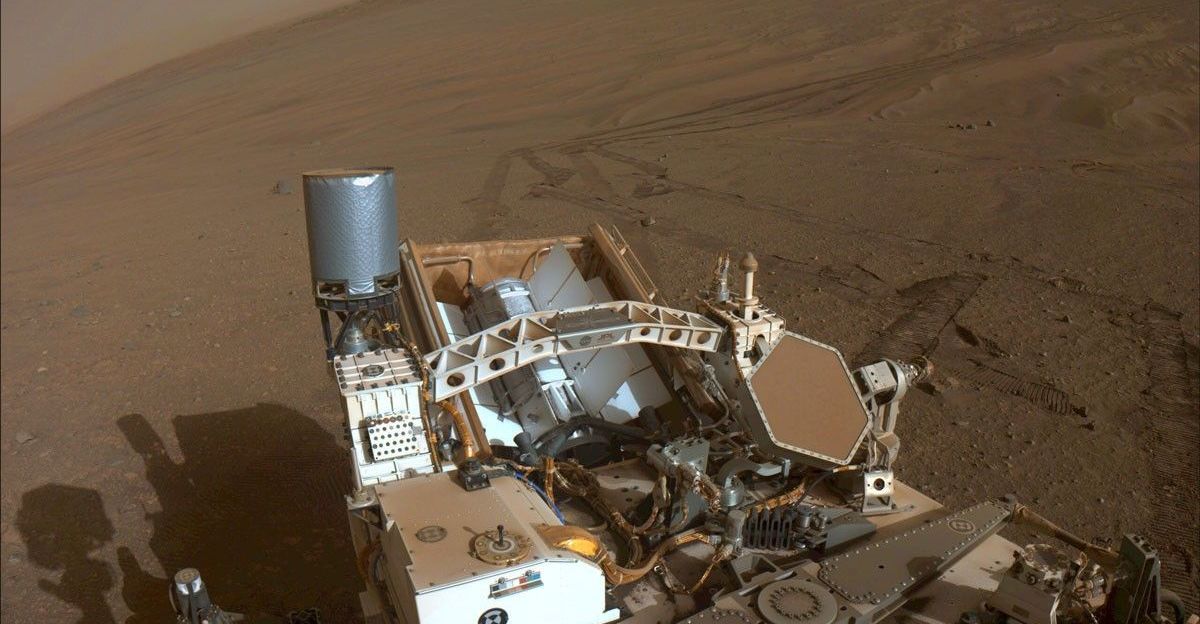
Perseverance landed in Jezero Crater in 2021, targeting a fan-shaped river delta from about 3.5 billion years ago, where a lake once filled the 45-kilometer-wide site. Orbital images showed clear water signs, clearer than at Curiosity’s Gale Crater, prompting the rover to drill chalk-sized rock cores for caching.
Equipped with RIMFAX radar probing 10 meters underground for water pockets, Perseverance scans for subsurface ice or habitats, much like Zhurong’s GPR but surface-focused. It has traveled nearly 25 miles (40 km) across Jezero, studying olivine-rich Margin Unit rocks altered by ancient lake water, forming minerals that record planetary changes.
A Longer Shot at Mars Life
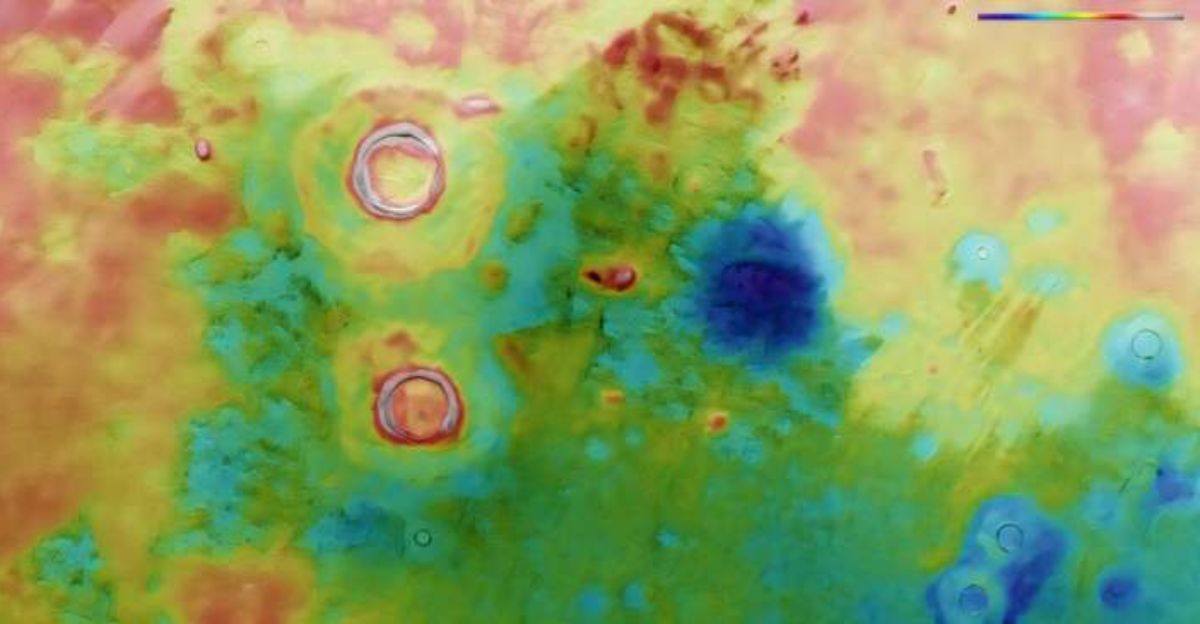
Zhurong pushes Mars’ wet time from millions to hundreds of millions of years, widening the door for microbes. Beaches older than most Earth life mean evolution time before dry-out. Underground shielding saved organics from radiation.
A prolonged wet Mars suggests biology could have surfed retreating shores, concentrating mats in shallows like Earth’s extremophiles. China’s Tianwen-3 and NASA-ESA returns by 2030s target these sites, racing to confirm.
Could Life Have Lived Longer on Mars?
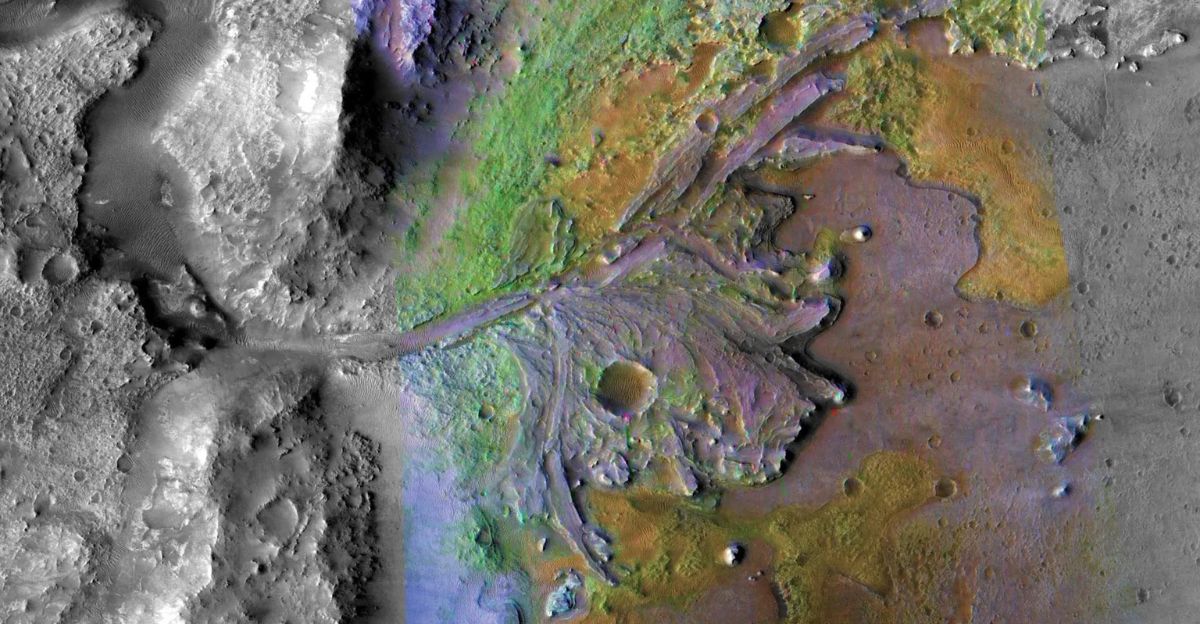
After main seas receded, life could thrive in aquifers or evaporating pools, shielded underground as Mars lost its magnetic field around 4 billion years ago. New tests like Imperial College’s for viable cells could scan samples, while China’s Tianwen-3 eyes returns.
If salty shallows bred survivors akin to Earth’s halophiles, Mars life outlasted its “blue” era. Astrobiologist Michael Manga of UC Berkeley added, “An ocean long enough to build thick sand layers fed by rivers boosts habitability odds.”
What Ended Mars’ Water World?
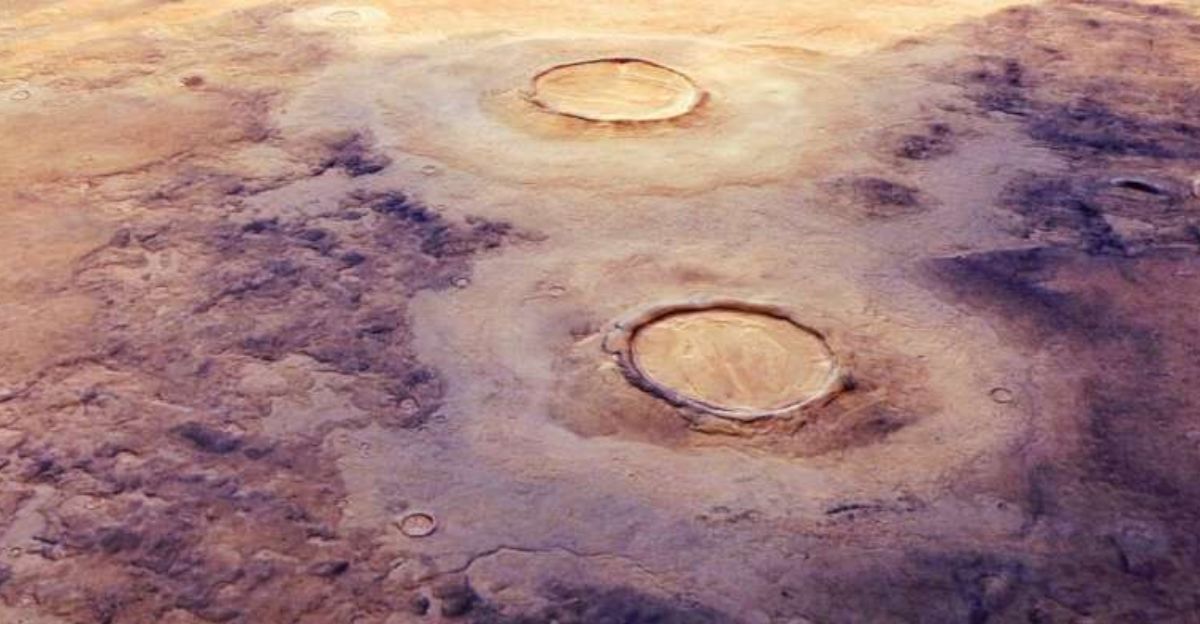
Mars lost its global magnetic field early in its history, leaving the atmosphere exposed to solar wind, charged particles from the Sun that stripped away gases over hundreds of millions of years. Without this shield, pressure dropped, freezing surface water into ice caps and subsurface reservoirs.
Zhurong’s Utopia beaches mark this transition’s endgame, preserved as oceans retreated around 3.7 billion years ago. Much of Mars’ ocean volume got locked into hydrated minerals like clays and sulfates in the crust, as shown by Curiosity and orbital spectroscopy. By 3 billion years ago, no young hydrated rocks appear, confirming a dry surface ever since.
How Far Down Do the Beaches Go?
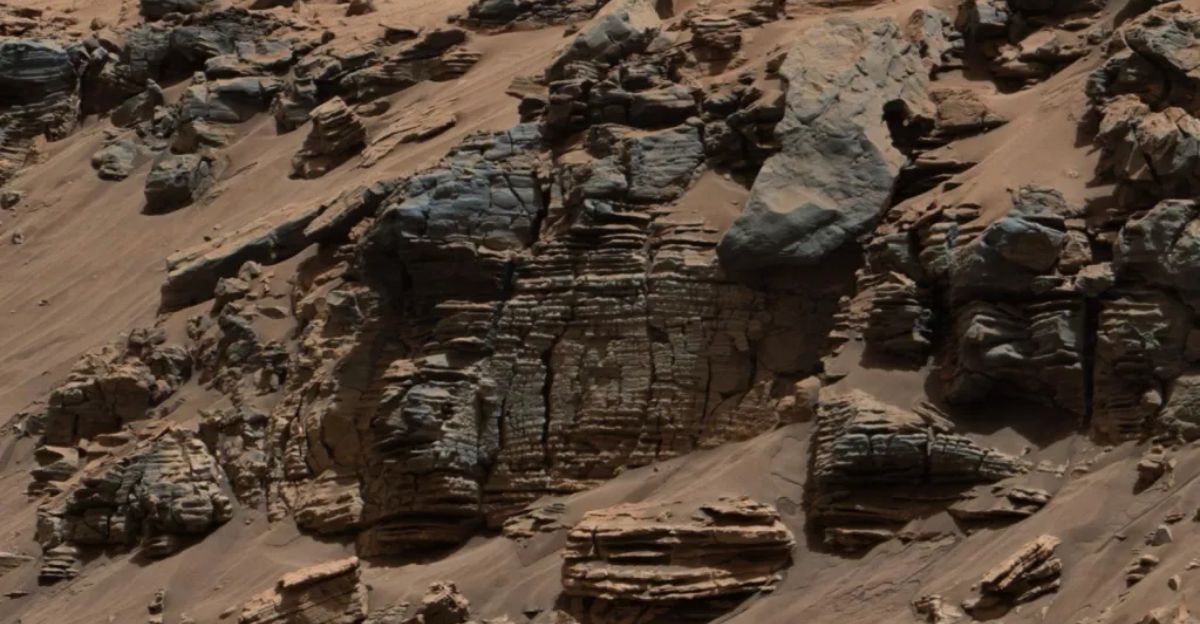
Basin geometry suggests beaches extend kilometers thick regionally, dwarfing surface craters with full shorelines with ridges and swash zones preserved like a layered cake. Perseverance’s RIMFAX saw similar 15-degree dips in Jezero at 10 meters, hinting planet-wide burial. Meteorite-ejected boulders at Zhurong’s site match these sands, implying even deeper stacks.
“The subsurface world vastly outscales relics above,” notes co-author Hai Liu from Guangzhou University.
Sources:
PNAS, Ancient ocean coastal deposits imaged on Mars, 2025-02-23
Penn State University, Gulf of Mars: Rover finds evidence of ‘vacation-style’ beaches on Mars, 2025-02-23
ScienceDaily, Gulf of Mars: Rover finds evidence of ‘vacation-style’ beaches on Mars, 2025-02-23
Space.com, Ancient beach on Mars discovered by China’s Zhurong Mars rover, 2025-02-25
The Conversation, Scientists have discovered a 3 billion-year-old beach buried on Mars, 2025-02-24