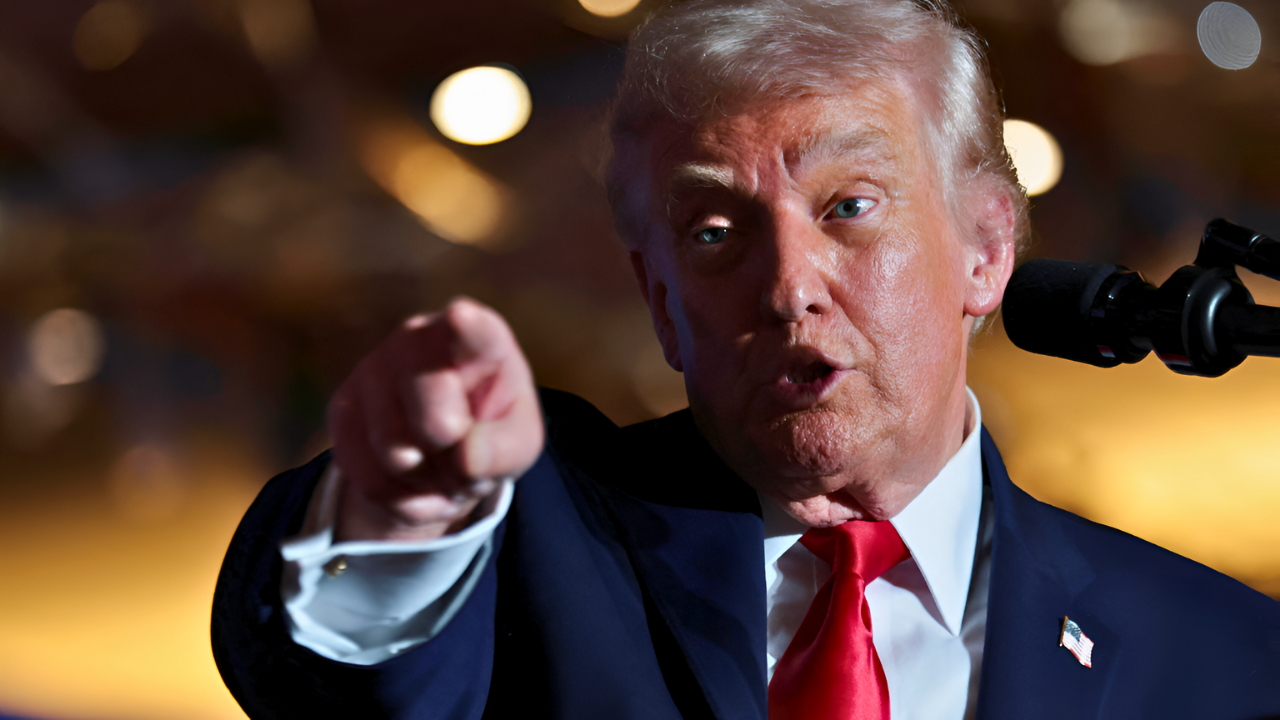
President Donald Trump filed a $10 billion defamation lawsuit against the BBC in Miami federal court on December 15, 2025, alleging the publicly funded broadcaster deliberately manipulated his January 6, 2021, speech to deceive viewers and interfere with the 2024 presidential election. The 33-page complaint accuses the BBC of “intentionally and maliciously” splicing together speech segments separated by nearly an hour, fundamentally altering their meaning and creating a false impression of incitement to violence.
The Lawsuit and Core Allegations
The controversy centers on the BBC’s Panorama documentary “Trump: A Second Chance?” which premiered October 28, 2024, one week before the presidential election. The investigative episode examined why Trump supporters wanted him to return to office and reached millions across the United Kingdom through BritBox, the BBC’s subscription streaming service accessible to international audiences.
According to Trump’s lawsuit, BBC producers engaged in what he characterizes as “editorial malpractice of the highest order.” The documentary’s editors pieced together two distinct segments from Trump’s 70-minute Ellipse speech, creating a false impression of a continuous statement. The first clip featured Trump saying “We’re going to walk down to the Capitol,” while the second segment, delivered nearly an hour later, contained “And we fight. We fight like hell.” By presenting these statements as adjacent, the editing suggested Trump directly called for violent action when his actual remarks included calls for peaceful demonstration.
The Editorial Controversy and Institutional Fallout
The editorial controversy detonated an institutional crisis at BBC headquarters. On November 9, 2025, Tim Davie, the BBC’s director-general since September 2020, announced his resignation after a five-year tenure. Hours later, Deborah Turness, CEO of BBC News, also stepped down. Both executives cited editorial controversy and broader concerns about institutional impartiality. The back-to-back resignations signaled unprecedented institutional dysfunction within the organization.
Internal dysfunction became public through a memo authored by Michael Prescott, an external adviser to the BBC’s editorial standards committee. Prescott’s correspondence, leaked to the Daily Telegraph in November 2024, raised alarm bells about “institutional bias” at the corporation. The memo highlighted concerns that the Panorama edit created a misleading impression by presenting fragmented clips as a cohesive statement. Prescott argued that editorial personnel raised concerns before broadcast, but BBC leadership dismissed these objections.
The BBC formally apologized to Trump in November 2024, admitting the Panorama edit “inadvertently created the impression of presenting a single continuous segment of the speech instead of excerpts from various points.” BBC Chair Samir Shah expressed regret that the edit “wrongly gave the impression of a direct call for violent action.” The corporation removed the documentary from all platforms, including BBC iPlayer, its primary streaming service. Despite these steps, Trump’s legal team deemed the apology insufficient and proceeded with litigation.
Trump’s lawsuit asserts two separate legal theories, each carrying $5 billion in damages. The first count alleges traditional defamation—the BBC published false statements that damaged Trump’s reputation. The second count invokes Florida’s Deceptive and Unfair Trade Practices Act (FDUTPA), alleging the BBC engaged in fraudulent business practices by distributing misleading content through platforms accessible to U.S. audiences.
Legal Strategy, Jurisdictional Questions, and Constitutional Hurdles
Trump’s decision to file in the U.S. District Court for the Southern District of Florida reflects strategic litigation planning. Although the Panorama episode premiered in the United Kingdom, Trump’s legal team asserts multiple jurisdictional hooks justifying Florida venue. The documentary reached U.S. audiences through BritBox, and Canadian company Blue Ant Media holds North American distribution rights to BBC programming.
Under New York Times Co. v. Sullivan, public figures suing for defamation must prove the defendant acted with “actual malice”—that the BBC knew the edited version was false or acted with reckless indifference to whether it was true. This extraordinarily high bar has defeated numerous lawsuits by powerful figures. Legal experts note the distinction between factual falsity and editorial judgment proves crucial. The BBC can argue it accurately reported Trump’s actual statements, which genuinely appeared in his speech.
Legal scholars across multiple institutions have expressed skepticism about Trump’s prospects of prevailing despite the lawsuit’s massive headlines. The actual malice standard represents perhaps the greatest obstacle. Trump must overcome constitutional protections crafted specifically to shield media organizations from liability for aggressive investigative journalism. First Amendment jurisprudence generally protects editorial judgment in selecting which statements to include in documentaries, provided selections do not constitute deliberate falsification.
Trump’s legal complaint emphasizes the documentary’s timing as evidence of intentional interference with the 2024 election. The Panorama episode aired precisely one week before Election Day. Trump’s lawyers argue this timing was deliberately calculated to maximize political damage during the election’s final days.
Trump’s Broader Media Litigation Campaign and Implications for Press Freedom
This lawsuit follows a remarkable streak of successful media litigation generating enormous payouts. In December 2024, ABC News agreed to pay $15 million to Trump’s presidential foundation plus $1 million in legal fees for an interview where George Stephanopoulos inaccurately stated Trump had been found “liable for rape.” A jury actually found Trump liable for “sexual abuse.” CBS News settled Trump’s lawsuit over “60 Minutes,” paying $16 million over deceptively edited Kamala Harris interview.
Unlike ABC and CBS, the BBC adopted an uncompromising legal posture, explicitly refusing settlement demands and committing to full-court litigation. When Trump’s attorneys demanded $1 billion in compensation, the BBC declined to negotiate. BBC attorney Charles B. Tobin stated the broadcaster maintains “no legal basis for a defamation claim” against it and emphasized Trump cannot demonstrate the broadcaster acted with actual malice required under law.
Trump’s lawsuit against the BBC carries profound implications for international broadcasters’ coverage of American political figures. The precedent, if successful, could encourage other powerful figures to sue British and international media organizations in American courts, exploiting favorable jurisdictional rules. Conversely, if Trump loses, American courts signal robust constitutional protection for editorial judgment, reassuring media organizations that they can report aggressively without catastrophic liability.
Free press advocates expressed significant concern about Trump’s systematic litigation campaign against media organizations. Seth Stern of the Freedom of the Press Foundation warned that Trump’s aggressive legal strategy creates a chilling effect on journalism nationwide. Samantha Barbas, a law professor at the University of Iowa, characterized Trump’s actions as “declaring war on the press.”
The BBC lawsuit represents the latest chapter in Trump’s unprecedented legal assault on major news organizations spanning multiple continents. In rapid succession, Trump sued or threatened to sue ABC News, CBS News, The New York Times, The Des Moines Register, and The Wall Street Journal. ABC and CBS capitulated quickly with substantial settlements, generating momentum for Trump’s legal strategy.
Trump strategically selected the U.S. District Court for the Southern District of Florida, as Florida offers legal terrain potentially more favorable to defamation plaintiffs. Trump invokes Florida’s Deceptive and Unfair Trade Practices Act (FDUTPA), codified at Fla. Stat. §§ 501.201–501.213, as a secondary claim in his BBC lawsuit. Unlike traditional defamation claims, FDUTPA does not require proving the Sullivan standard’s “actual malice,” potentially offering an easier path to liability for conduct deemed unfair or deceptive in trade.
The BBC lawsuit now enters a lengthy procedural phase likely consuming years before potential trial. Trump’s legal team must first survive potential motions to dismiss based on jurisdictional defects. If the court rejects jurisdictional challenges, discovery will commence with both sides exchanging documents and depositions.
Trump’s BBC lawsuit ultimately raises fundamental questions about balancing media accountability for falsity against protecting press freedom essential to democratic governance. The case tests whether American courts will extend their authority over international broadcasters covering American events, and whether defamation law can effectively police editorial judgment without chilling legitimate investigative journalism. If Trump prevails, other powerful figures may flood courts with defamation suits against media organizations, imposing litigation costs threatening journalism’s economic viability. Conversely, if the BBC prevails, American courts signal robust constitutional protection for editorial judgment.
Sources:
“Trump sues the BBC for $10 billion over speech edit.” Reuters, December 16, 2025.
“Trump files $10B defamation lawsuit against the BBC.” CBS News, December 15, 2025.
“Trump sues BBC for $10bn over edited 2021 US Capitol riot speech.” Al Jazeera, December 16, 2025.
“BBC says it will defend Trump defamation lawsuit over Panorama edit.” BBC News, December 15, 2025.
“Trump’s BBC lawsuit: A botched report, BritBox, and porn.” NPR, December 17, 2025.