Cosmic rays create muons—ghostly particles that rain down on Earth constantly, passing through almost everything. Scientists theorized decades ago that it was possible to see through stone if measured carefully. In March 2023, Nature confirmed that this works.
Hidden inside the Great Pyramid of Giza, directly above its main entrance, lies a sealed 30-foot corridor that has remained invisible to architects and archaeologists since Pharaoh Khufu built it around 2560 BCE. The technology that revealed it? Particles from exploding stars.
The Only Remaining Ancient Wonder of the World
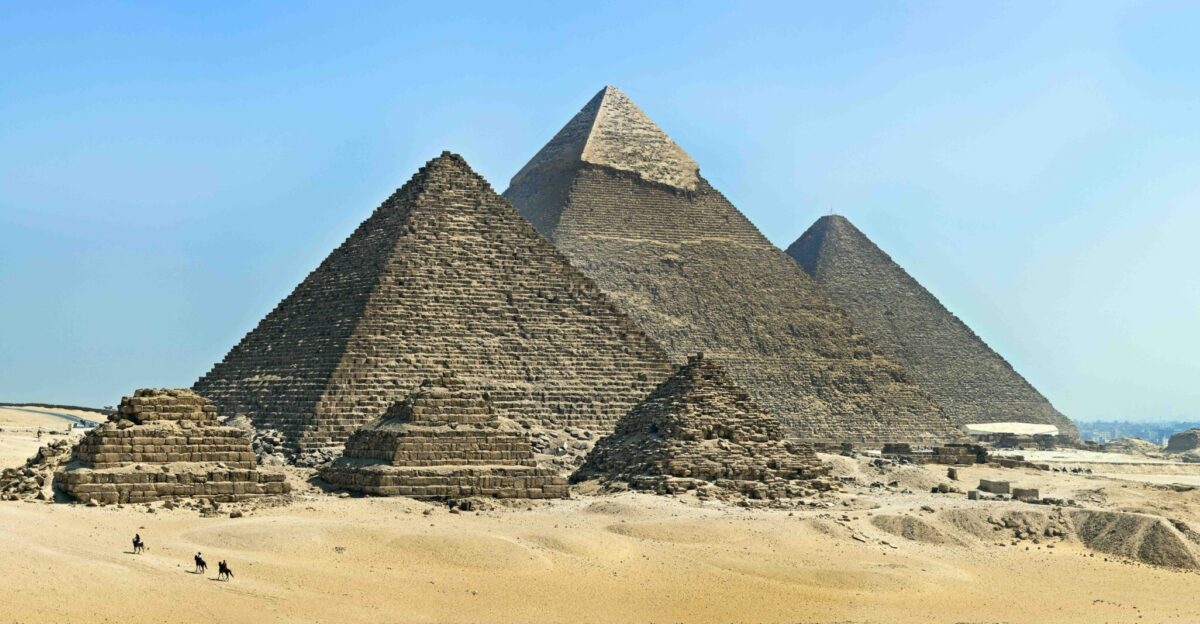
The Great Pyramid stands as one of humanity’s oldest surviving megastructures—a limestone engineering marvel built 4,500 years ago without the aid of computers or modern tools. It weighs 5.75 million tons. Stone blocks, cut with precision modern lasers, would envy, weighing one to two tons each.
Tourists enter through a medieval tunnel, but the pyramid’s original entrance sits seven meters up the northern face.
Turning Space Dust into Archaeological Tools

When cosmic rays collide with Earth’s upper atmosphere, they create muons—subatomic particles penetrating stone far more easily than X-rays. Physicist Luis Alvarez proposed decades ago that measuring the number of muons that pass through objects would reveal hidden voids due to density variations.
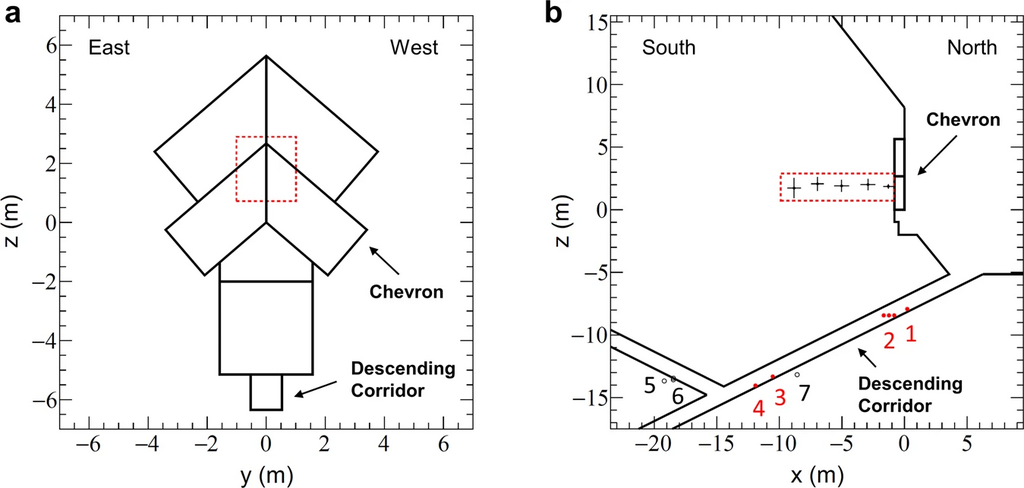
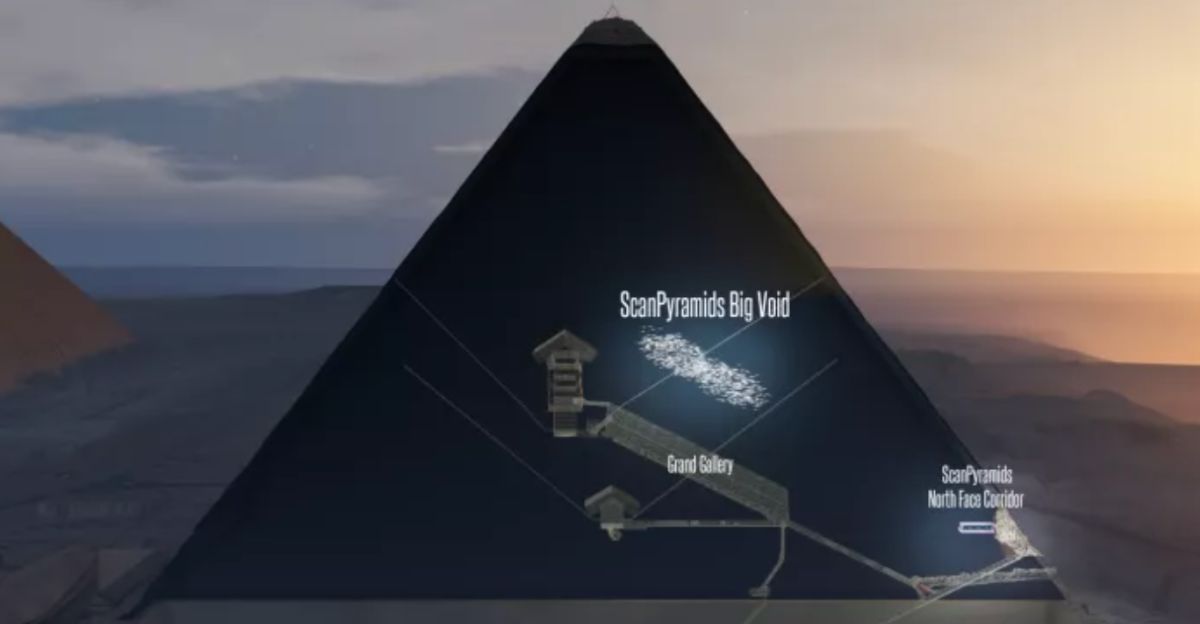
By 2016, the international ScanPyramids project deployed sophisticated muon detectors around the pyramid. Results signaled an anomalous void behind the Chevron area.
Four Technologies, One Conclusion
Muon radiography measured how cosmic particles scattered through stone, while ground-penetrating radar sent electromagnetic pulses to measure reflections. Electrical resistivity tomography assessed current flow through rock, and ultrasound tomography used sound waves to detect density boundaries.
Three years of field campaigns converged on identical coordinates: a large, air-filled void measuring approximately 2.5 meters wide, 2.5 meters high, and 9 meters deep.
A 6-Millimeter Camera Sees Inside
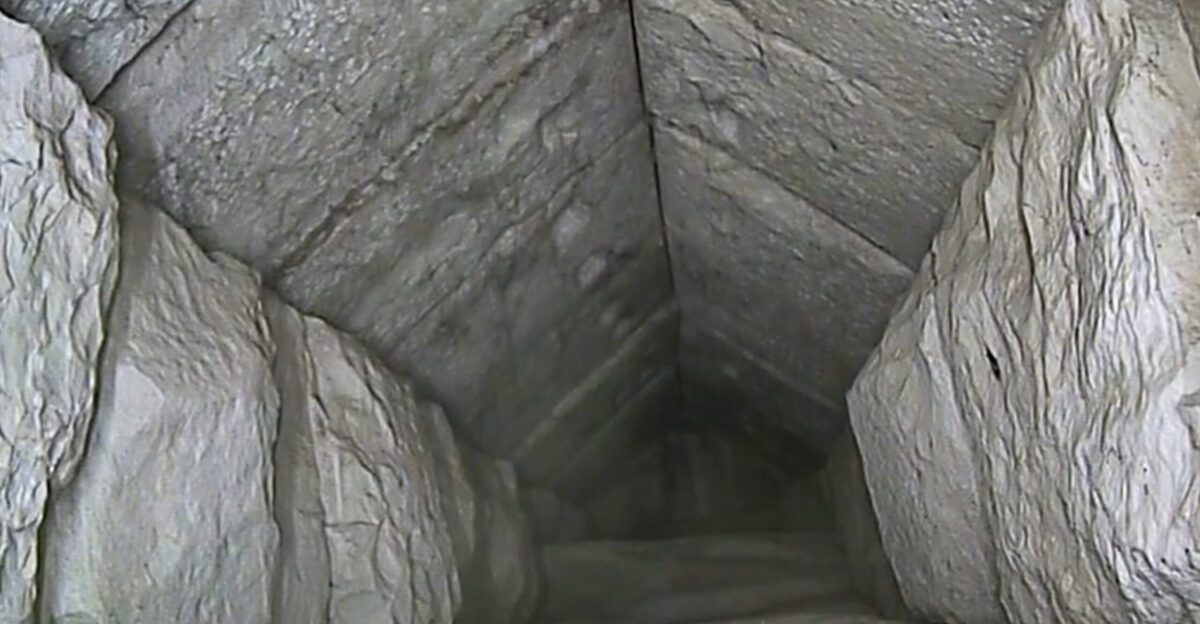
In 2023, researchers pushed a pencil-thin endoscope approximately 2 meters through a joint between stones in the Chevron structure. The footage revealed roughly hewn limestone blocks forming a vaulted ceiling—exactly what no one had expected to find.
At an official press conference, Mostafa Waziri, head of Egypt’s Supreme Council of Antiquities, announced the survey revealed features unusual for the Great Pyramid, noting the vaulted ceiling resembles the Grand Gallery.
Breaking the Pattern of Known Chambers
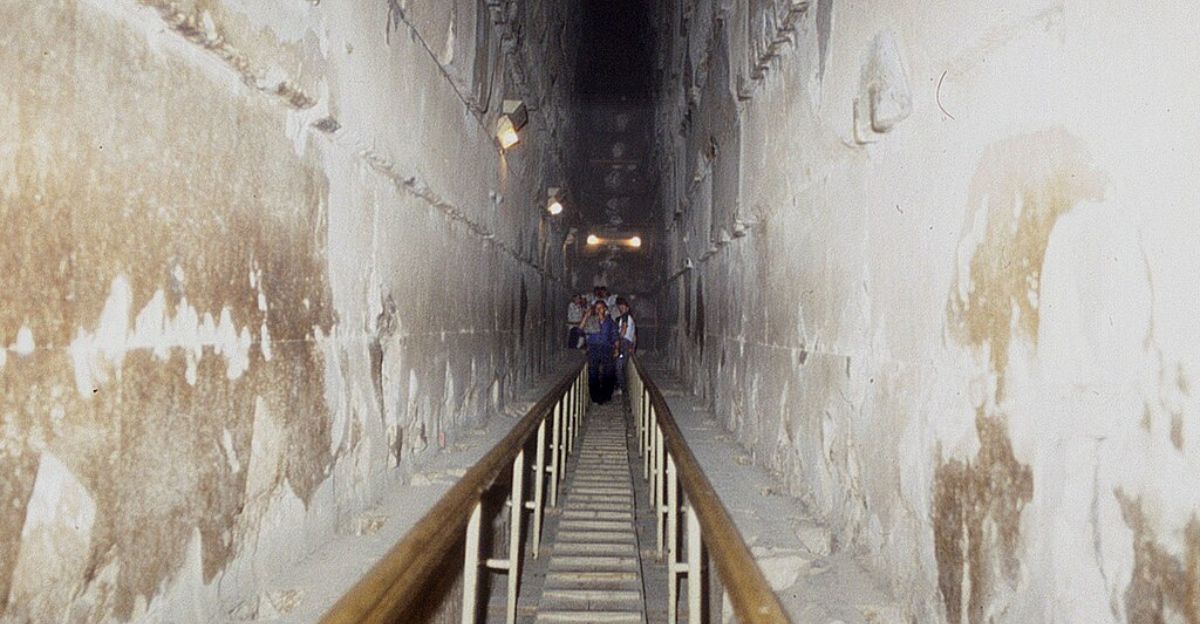
The King’s Chamber, Queen’s Chamber, and Grand Gallery have been documented and mapped since the 19th century. This hidden passage breaks every known pattern. At 2.1 meters wide, it exceeds the dimensions of most internal corridors except the Grand Gallery.
Its vaulted ceiling—not standard for other pyramid passages—suggests architects engineered something structurally demanding here.
An Architect Predicted This Years Ago
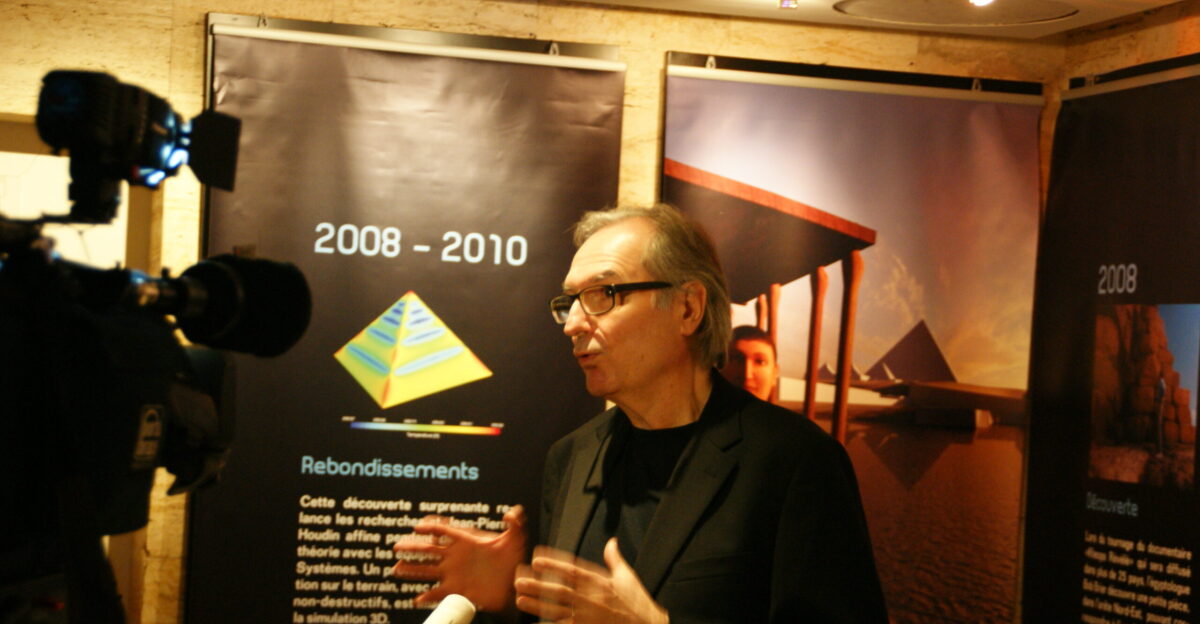
Before muon radiography existed, French architect Jean-Pierre Houdin proposed a radical theory: a hidden corridor at this precise location represented the entrance to a larger network called the “Noble Circuit.”
His prediction was speculative, based entirely on architectural analysis. When muon radiography later confirmed a void exactly where Houdin predicted, his theory shifted from speculation to partial validation.
The Engineering Behind the Mystery
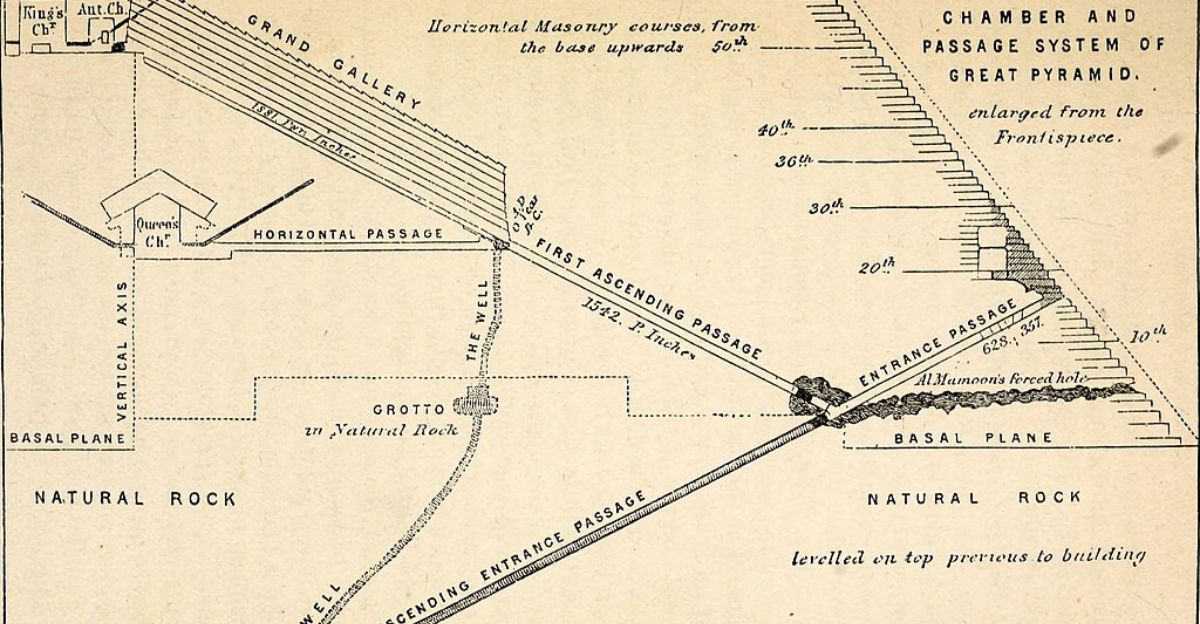
The architects of the Great Pyramid faced an unprecedented challenge: distributing the crushing weight of 4.5 million limestone blocks without the structure collapsing. Their solution was redundancy and strategic relief. Multiple chambers above the King’s Chamber were left empty to reduce load, while stress was redistributed around vulnerable points.
The hidden corridor, positioned directly above the main entrance, channeled pressure away from the gateway below.
A Corridor Large Enough for Humans
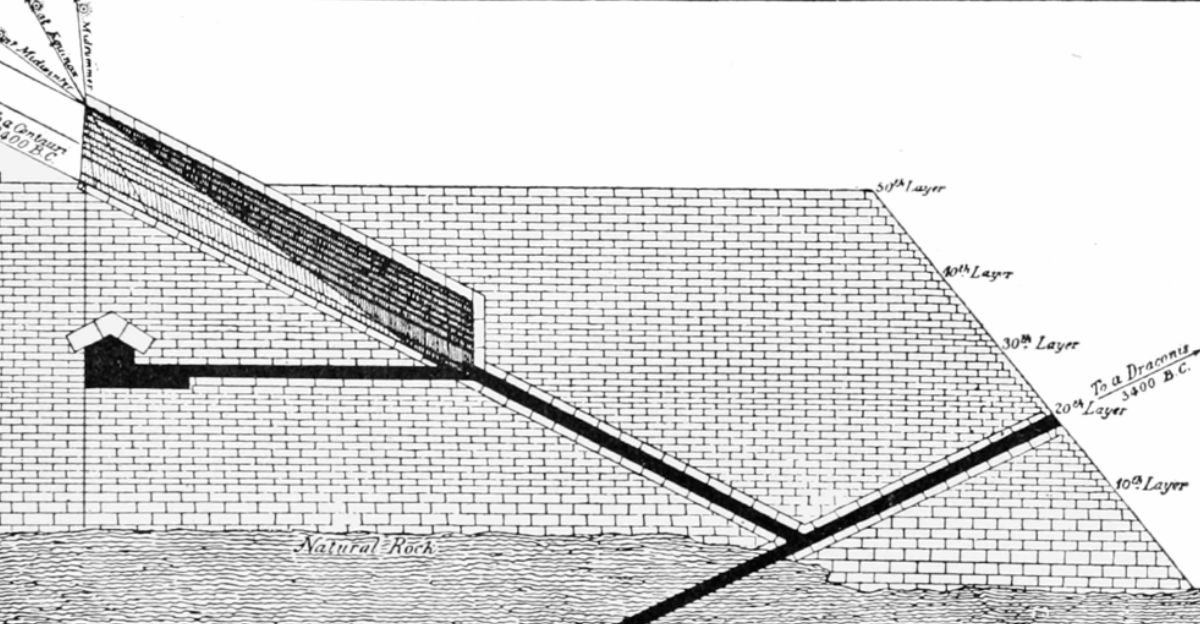
Most structural relief chambers inside pyramids are tiny voids hidden behind stone surfaces. This corridor measures nine meters in length—roughly 30 feet—with sufficient height for people to walk upright. Such dimensions suggest human accessibility.
Yet endoscopic footage showed no tool marks, graffiti, or artifact debris indicating ancient human presence.
The Sealed Southern End
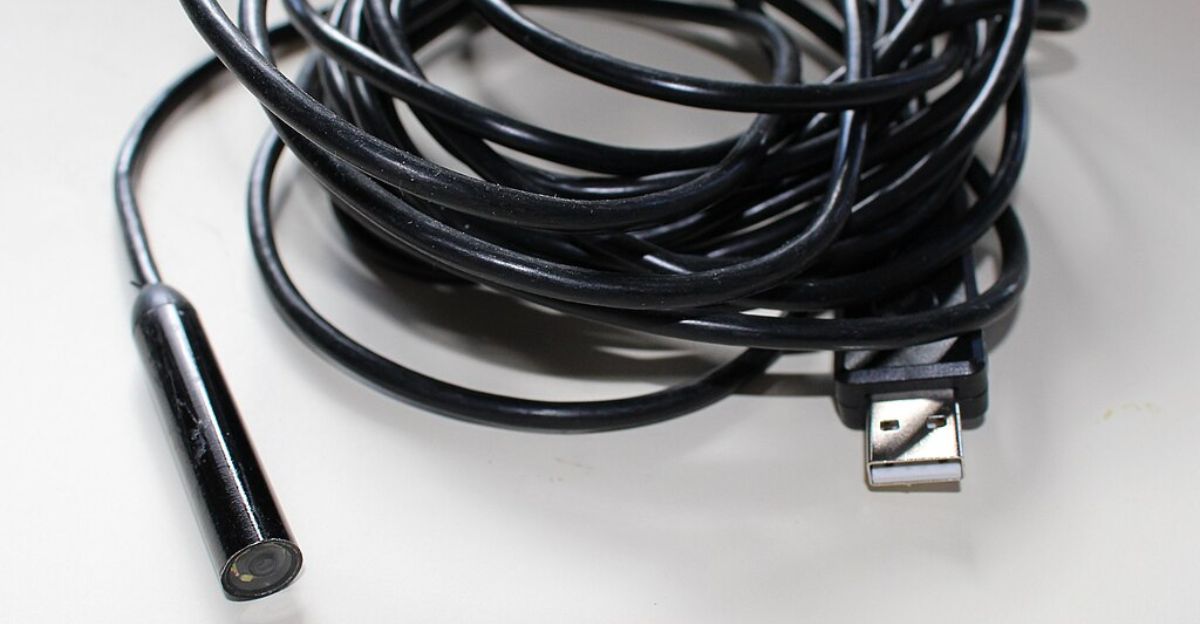
The endoscope could extend approximately two meters into the corridor before the stone configuration blocked further progress. Beyond that point, the passage clearly continues—the visible end showed an elevated floor on the southern side, indicating deeper extension.
Mostafa Waziri stated they would persist with scanning efforts to ascertain what lies beneath or at the end of the corridor
How Physics Became Archaeology
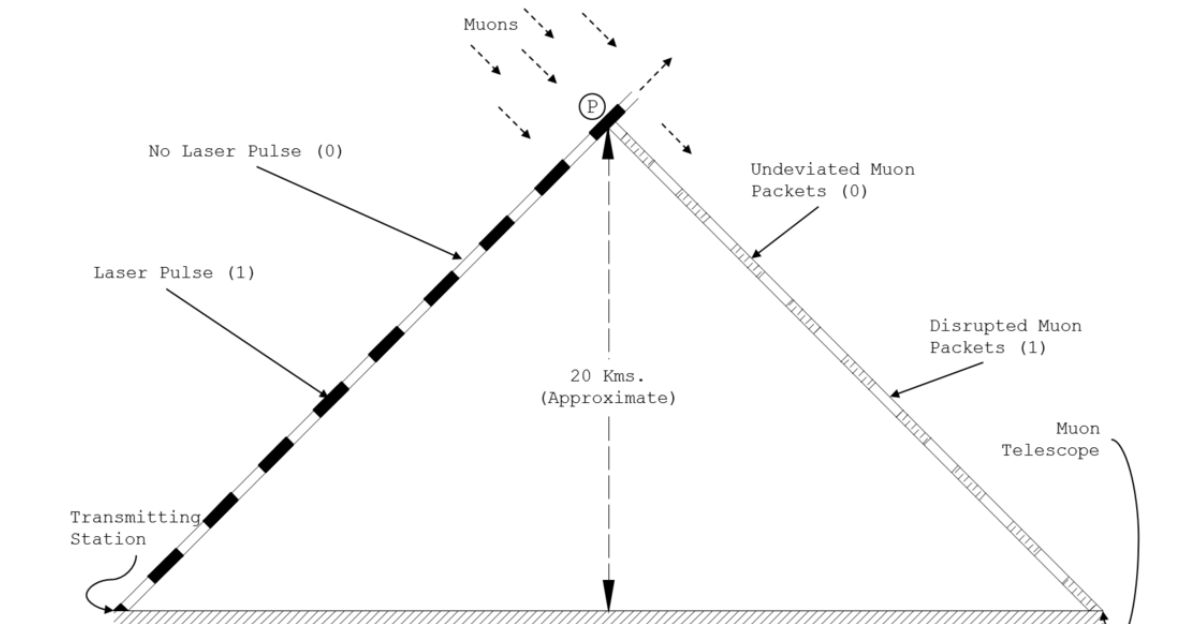
When primary cosmic rays collide with nitrogen and oxygen in Earth’s upper atmosphere, they create muons carrying enough energy to penetrate hundreds of meters of rock. Luis Alvarez realized decades ago that deploying detectors on opposite sides of thick objects could reveal cavities within them.
Modern detectors have become sophisticated enough to map the pyramid’s interior with precision exceeding one meter.
The Chevron Gateway
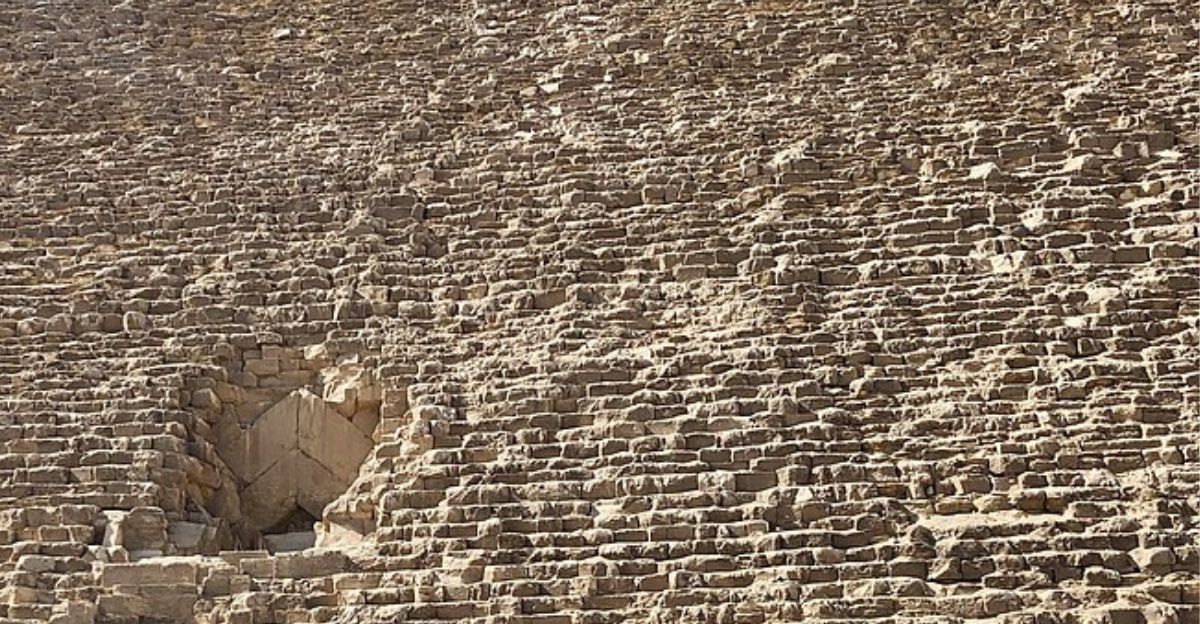
The chevron slabs on the pyramid’s north face represent an architectural first: the initial use of this inverted-V reinforcement technique in human construction history. These slabs redirect the crushing weight of stone mass above them, preventing internal collapse.
That this critical load-bearing structure coincides exactly with the location of the hidden corridor suggests that the two features are intimately connected in Khufu’s original design.
Why Verification Took Seven Years
The 2016 muon radiography detection was preliminary—a suggestion rather than proof. Between 2016 and 2023, researchers pursued verification through multiple independent methods because extraordinary claims require extraordinary evidence.
A hidden corridor inside the most famous monument on Earth could not be announced on theoretical data alone. The November 2025 Nature Scientific Reports study finally delivered three-dimensional confirmation with precision measurements.
No Drilling, No Damage
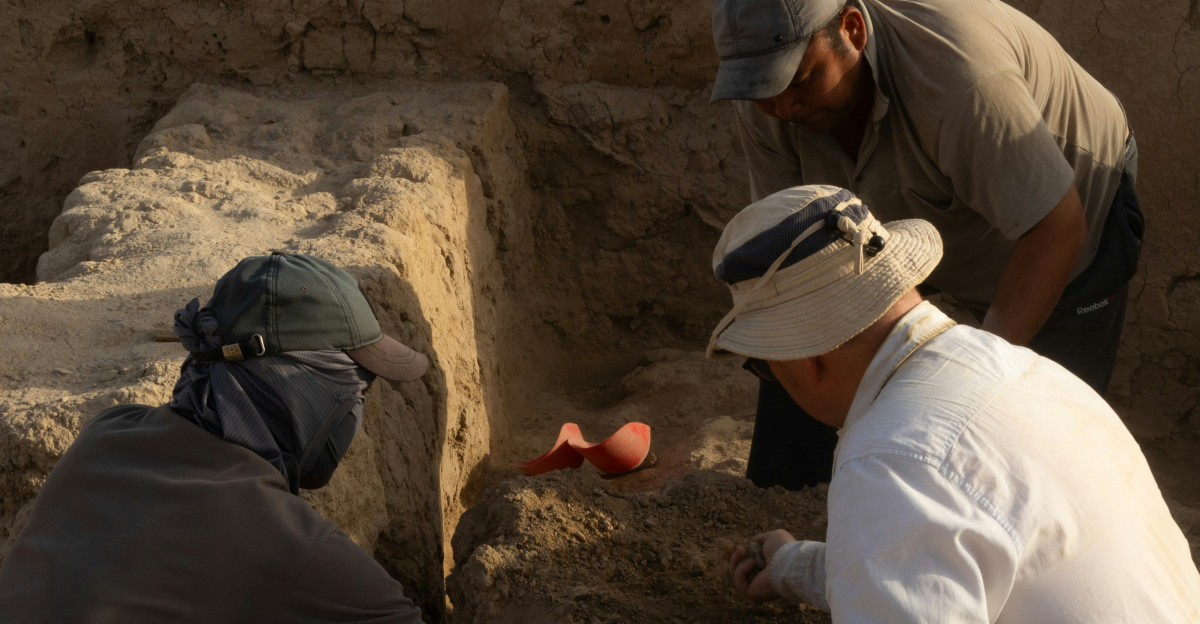
The investigation demonstrates a revolutionary shift in methodology. Rather than excavation—which destroys context and evidence irretrievably—modern archaeology employs non-destructive techniques that preserve monuments intact. Not a single hole was drilled, and not a stone was displaced.
The entire investigation proceeded through non-invasive scanning alone. The ScanPyramids team’s success validates decades of theoretical development in muon imaging.
Another Void Above the Grand Gallery
In November 2025, Zahi Hawass announced a separate discovery: a far larger void estimated at 30 meters long situated directly above the Grand Gallery. This void dwarfs the North Face Corridor in scale. Like the corridor, it has been detected via scanning but never visually confirmed.
Hawass indicated that this passageway will be formally announced in 2026, along with additional details. Its purpose—whether weight distribution, hidden chamber, or structural element—remains completely unknown to modern science.
Questions Reshaping History
Where does the North Face Corridor lead? Why was it sealed? Did ancient workers ever use it? Is Houdin’s Noble Circuit real? How many other hidden chambers remain undetected? These questions define the next phase of Great Pyramid research.
The answers will emerge from continued scanning, careful analysis of endoscopic footage, and perhaps eventually controlled access.
Architectural Analysis Meets Hard Science
Jean-Pierre Houdin’s “Noble Circuit” theory proposed that multiple passages connect the pyramid’s major chambers through a sophisticated interior network. His specific prediction about a corridor in this exact location demonstrates how careful architectural reasoning can anticipate archaeological discovery.
Validation of Houdin’s prediction raises questions about the rest of his theory. If the Noble Circuit is real, the hidden passage represents only its entrance. The circuit’s full extent and purpose remain open questions.
Ancient Engineering Still Baffles Us
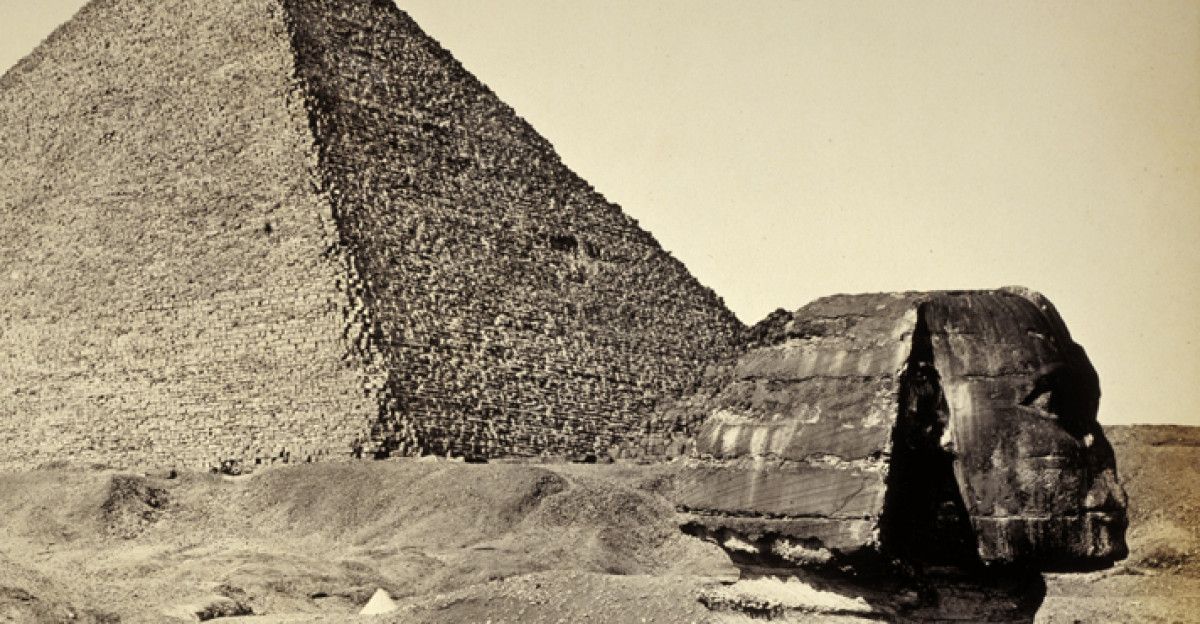
The Great Pyramid remains one of the most mysterious engineering marvels of the ancient world. We understand what is inside, but we do not fully understand how ancient workers built this structure without it collapsing.
Every new internal feature discovered provides additional data about the solutions the Ancients employed. The hidden corridor, with its unusual vaulted ceiling and strategic location, represents a specific architectural decision. Its discovery supports theories that the pyramid’s internal design involved far more sophistication than traditional maps suggest.
From Theory to Reality

The muon radiography technique represents a 40-year journey from theoretical physics to practical archaeological application. Luis Alvarez’s idea, dormant for decades, became possible only when detector technology advanced enough to measure particle interactions with precision.
The ScanPyramids project transformed that possibility into reality. Now, research teams worldwide deploy muon imaging to investigate Egyptian pyramids, Mayan temples, and archaeological sites across continents.
Still Teaching Us After 4,500 Years

The Great Pyramid continues to teach us, not through excavation, but through ghostly particles of cosmic rays that pierce its stone every second. The 2023 discovery of the North Face Corridor reveals that our understanding of this monument remains incomplete.
Researchers continue scanning, and new questions emerge faster than answers appear. What lies beyond the sealed southern end? The pyramid continues to reveal its story, one cosmic ray at a time.
Sources
- “Precise characterization of a corridor-shaped structure in Khufu’s pyramid by observation of cosmic-ray muons” – Nature Communications
- “Confirmation of the ScanPyramids North Face Corridor in the Great Pyramid of Khufu using multiple complementary non-invasive techniques” – Nature Scientific Reports
- “Discovery of a big void in Khufu’s Pyramid by observation of cosmic-ray muons” – Nature
- “Scientists reveal hidden corridor in Great Pyramid of Giza” – Reuters