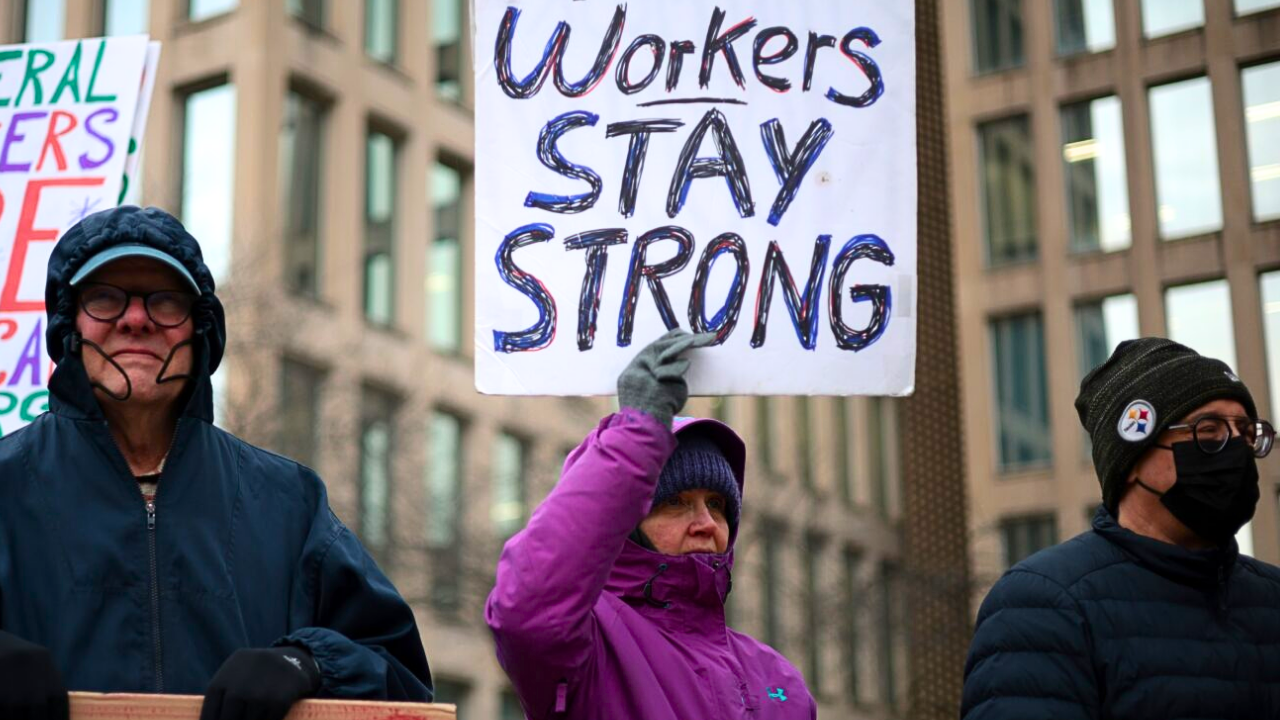
The layoff tally for 2025 has surged to 1.17 million jobs, the highest total since the height of the COVID-19 crisis, marking a pivotal moment in how automation and artificial intelligence are reshaping work in the United States and beyond. Even as initial jobless claims sink to a three-year low, the unemployment rate has climbed to 4.6% as of November, signaling a labor market under strain and workers increasingly unsure about their future.
Layoffs Spike as Hiring Slows

By November 2025, overall job cuts were up 54% from the previous year, with technology firms alone shedding more than 153,000 positions. Hiring plans have weakened sharply, with intentions to bring on new staff down by 35%, a combination that points to an increasingly fragile employment landscape as the year ends. Private-sector payrolls shrank by 32,000 jobs in November, an additional sign of softness beneath headline figures. The contrast is stark: companies are cutting more roles and slowing recruitment even as short-term jobless claims fall, underscoring how churn and structural change can coexist with relatively modest official unemployment rates.
From Pandemic Shock to Structural Shift

Unlike the sudden, lockdown-driven layoffs of 2020, this year’s cuts reflect longer-running shifts in business models and technology. Companies are responding to slowing revenue, higher borrowing costs, and investor pressure for leaner operations by reorganizing teams, consolidating functions, and accelerating automation. In many cases, this restructuring is not temporary: it is built around new tools, particularly AI systems, that permanently alter staffing needs. Employers emphasize that these changes are intended to improve productivity and position companies for long-term competitiveness, but for affected workers the turbulence is immediate and deeply personal.
AI Emerges as a Direct Cause
In 2025, artificial intelligence has moved from an abstract concern to a documented factor in job losses. AI is cited as a specific reason in roughly 54,700 cuts this year, with particular concentration in technology, finance, telecommunications, and customer service roles where software can take over repetitive tasks at scale. Research from National University indicates that about 13.7% of U.S. workers say they have already lost a job to robots or AI-driven automation, with younger and mid-career employees in technology and creative fields especially exposed. Surveys show that 30% of U.S. workers fear their current jobs could be automated away by 2025, and companies that have adopted tools such as ChatGPT report using them in ways that sometimes replace human staff. Worker frustration is growing as these decisions are often perceived as opaque or sudden.
Tech, Telecom, and Beyond

The most visible cuts remain in the technology sector, where more than 153,000 jobs have been eliminated in 2025 after earlier rounds beginning in 2023 at major firms such as Microsoft, Amazon, and Google. Telecom is also in the spotlight: Verizon alone announced 13,000 layoffs in November. But the impact is far broader than Silicon Valley or the communications industry. Manufacturing centers in the Midwest, large metropolitan service economies, and back-office hubs across the country are all feeling the effects as employers consolidate operations and deploy AI tools. Customer service agents, data-entry staff, and many mid-level professionals have seen their roles diminished or eliminated as chatbots, automated workflows, and decision-support systems become standard.
Global Scale and Economic Fallout

The U.S. experience is part of a worldwide transition. The World Economic Forum’s Future of Jobs Report projected back in 2020 that by 2025, as many as 85 million roles could be displaced globally by AI and automation, even as 97 million new positions emerged in parallel. Goldman Sachs has estimated that roughly 300 million full-time jobs worldwide could ultimately be affected by AI technologies. For displaced workers, research on long-term earnings consequences shows that job loss typically results in sustained income reductions ranging from 9 to 16 percent over five years, depending on industry and firm size. At this scale, the 1.17 million layoffs in 2025 represent a significant loss of household income that reduces consumer spending and weighs on local tax bases, amplifying the impact in communities already grappling with industrial change.
Reskilling, Regulation, and the Road Ahead
Governments and businesses are beginning to respond to these pressures. In 2025, the U.S. Department of Labor dedicated significant funding to reskilling and training programs designed to help displaced workers move into AI-related or more resilient roles. Some companies investing heavily in internal retraining report smoother transitions and better retention, but access remains uneven, especially for rural residents and low-wage workers who struggle to reach or afford such programs. Internationally, policymakers are debating how to govern AI’s role in employment: the European Union withdrew a proposed AI liability framework in early 2025 after disagreements among stakeholders, while U.S. authorities are considering mandatory impact assessments for major AI deployments and warning that biased systems used in hiring or firing could breach anti-discrimination laws.
Public opinion reflects this uncertainty. Many Americans believe AI will eliminate more jobs than it creates, and younger workers, particularly those aged 18 to 24, report far greater anxiety about technological displacement than older age groups. At the same time, organizations such as the World Economic Forum note that 41% of companies expect to reduce their workforce due to AI over the next five years while also planning to create new AI-focused roles. Economists remain split over whether this transition will ultimately resemble past technological shifts that eventually produced net job growth or whether it will mark a more disruptive break, especially for entry-level and routine white-collar work.
Looking toward 2030, some estimates suggest that up to 30% of current U.S. jobs could be fully automated. Whether new positions in AI development, oversight, and complementary services appear quickly enough—and whether education and training systems can adapt at the required speed—will be central to how workers, employers, and policymakers navigate this moment. The choices made now on retraining, regulation, and corporate strategy will help determine whether the current wave of layoffs and automation leads primarily to prolonged hardship, gradual adaptation, or a reconfigured labor market with new kinds of opportunity.
Sources
“Employers have cut 1.1 million jobs this year. Here’s what’s behind the wave of layoffs.” CBS News, December 2025.
“AI Job Losses in 2025: Over 54000 Impacted Amid Surging Layoffs.” ServnetUK, December 2025.
“The ‘Future of Jobs Report 2025’: AI Adoption and Workforce Displacement.” World Economic Forum, January 2025.
“Goldman Sachs Predicts 300 Million Jobs Will Be Lost Or Degraded By Artificial Intelligence.” Forbes, March 2023.