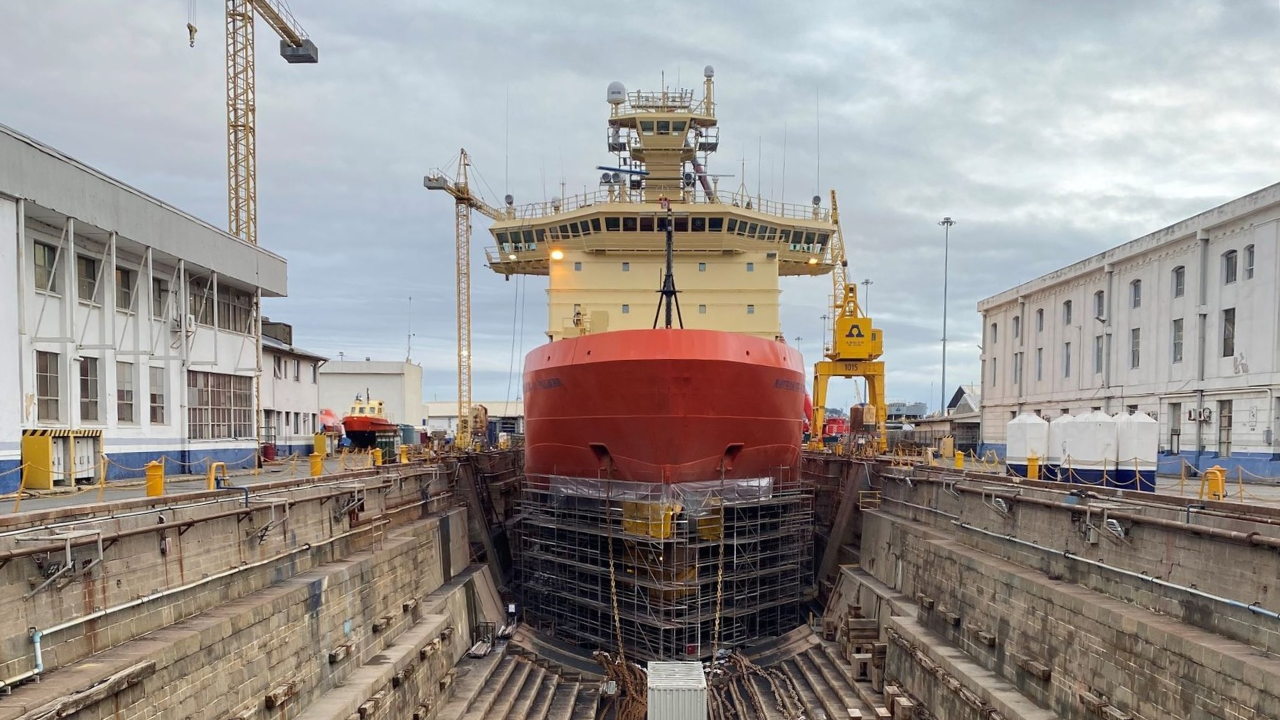
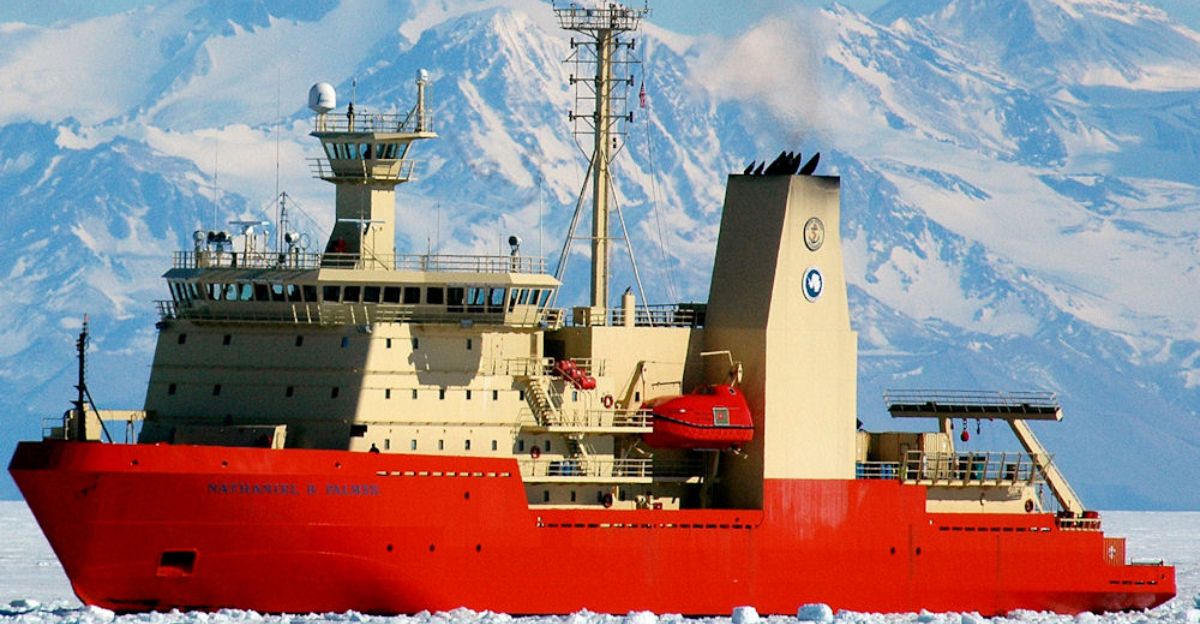
For over 30 years, one ship was America’s gateway to Antarctica’s frozen frontier. The RVIB Nathaniel B. Palmer, a 308-foot research icebreaker, conducted cutting-edge climate science in Antarctic waters.
This October, the ship completed its final voyage. The U.S. now has zero dedicated Antarctic research vessels for the first time since the 1950s. America’s position as a leader inpolar research is at risk.
A Decade of Gaps
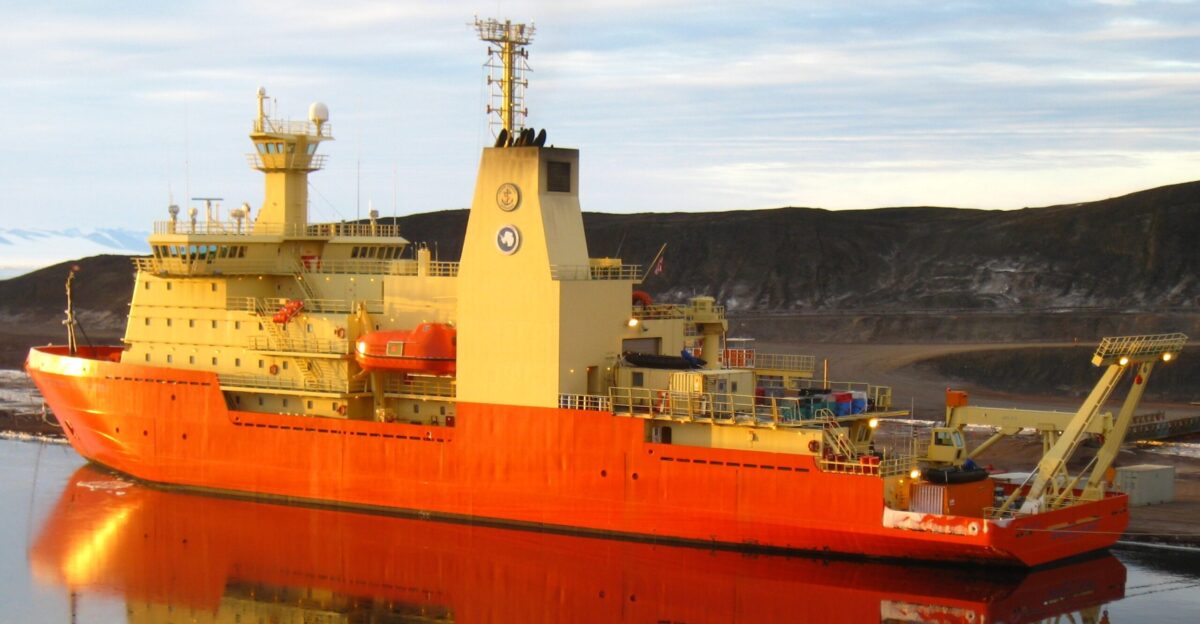
Palmer’s retirement marks more than just the loss of a ship—it signals America’s withdrawal from critical climate research. The National Science Foundation announced it would end Palmer’s lease to focus on Antarctic stations instead.
But the replacement ship won’t arrive until 2031. This ten-year gap means scientists lose direct access to Antarctica during a crucial period for understanding ice sheet collapse and sea-level rise.
The Palmer’s Legacy

The Nathaniel B. Palmer was launched in 1992, providing scientists with over 30 years of Antarctic access. The vessel carried up to 45 researchers per mission and stayed at sea for 65 days—critical for Antarctica’s extreme conditions.
Twin helicopters let scientists reach remote ice shelves. The ship enabled discoveries impossible from land. In 2020, Palmer researchers even discovered Sif Island in the Amundsen Sea. It wasn’t just equipment; it was scientific capability itself.
Budget Pressure Mounts

The Trump administration’s FY 2026 budget proposal slashed the National Science Foundation by 56 per cent—from $9 billion to $3.9 billion. Within NSF’s Office of Polar Programs, cuts hit even harder:
70 per cent of polar science research funding faced elimination. Palmer’s annual lease cost is roughly $6 million to $7 million. Officials targeted it as an easy cut. The broader message was stark: polar research wasn’t being trimmed; it was being eliminated.
The Announcement
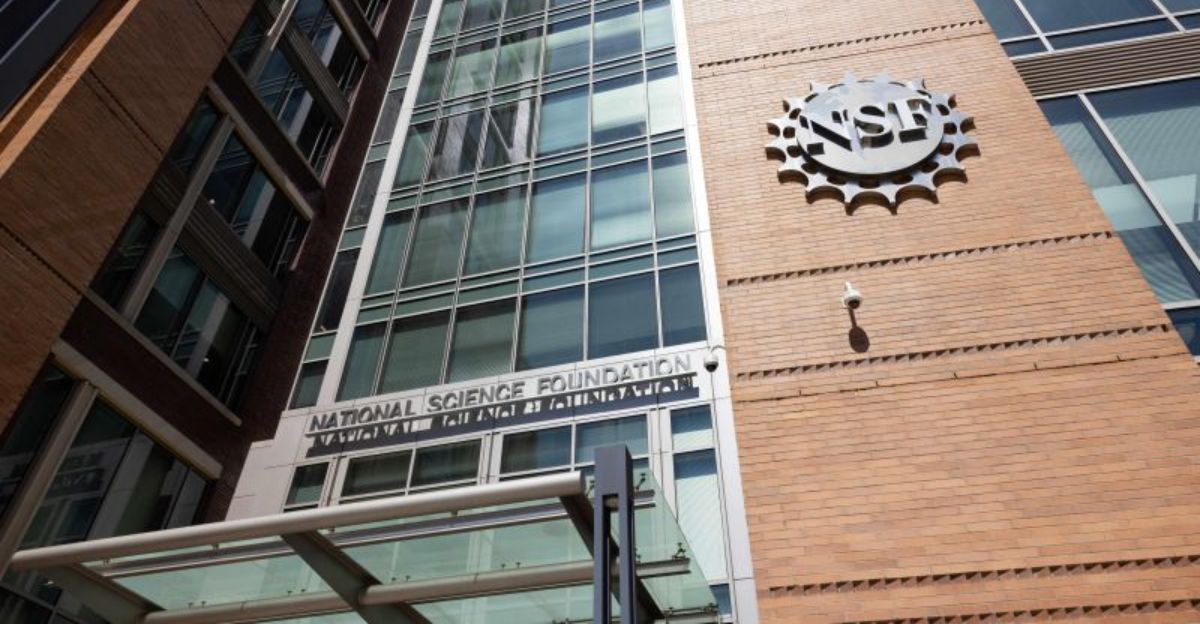
On May 30, 2025, the NSF released its FY 2026 budget. A single line buried inside shocked the polar research world: the agency would terminate its Palmer lease “to focus support on Antarctic stations.”
Days later, NSF confirmed to Science magazine: “NSF is terminating the lease of the research vessel Nathaniel B. Palmer.” The announcement stunned researchers. Most expected the Palmer to operate until its replacement arrived.
The Petition Heard Too Late

On July 27, 2025, more than 170 polar scientists sent a letter to NSF leaders and Congress, demanding reconsideration.
Researchers from top universities have warned that the decade-long gap would “cripple America’s ability to conduct essential climate and marine research” in one of the World’s most important regions.
Carlos Moffat, a physical oceanographer, called the Palmer “the hammer” in science’s Antarctic toolkit. NSF officials had already decided: the Palmer would sail its final voyage in October 2025.
A Researcher’s Lament

Julia Wellner, a marine geologist at the University of Houston, expressed frustration: “They are purposely not putting anything in writing.” The NSF offered the Alaska-based RV Sikuliaq as an alternative. But Wellner was direct: it “is wholly unsuited to most of what we do in Antarctica.”
The Sikuliaq has fewer research berths, less endurance, and weaker icebreaking power. Using it would also hurt Arctic research. Scientists felt NSF offered a token consolation for losing everything.
Thwaites: The Climate Tipping Point
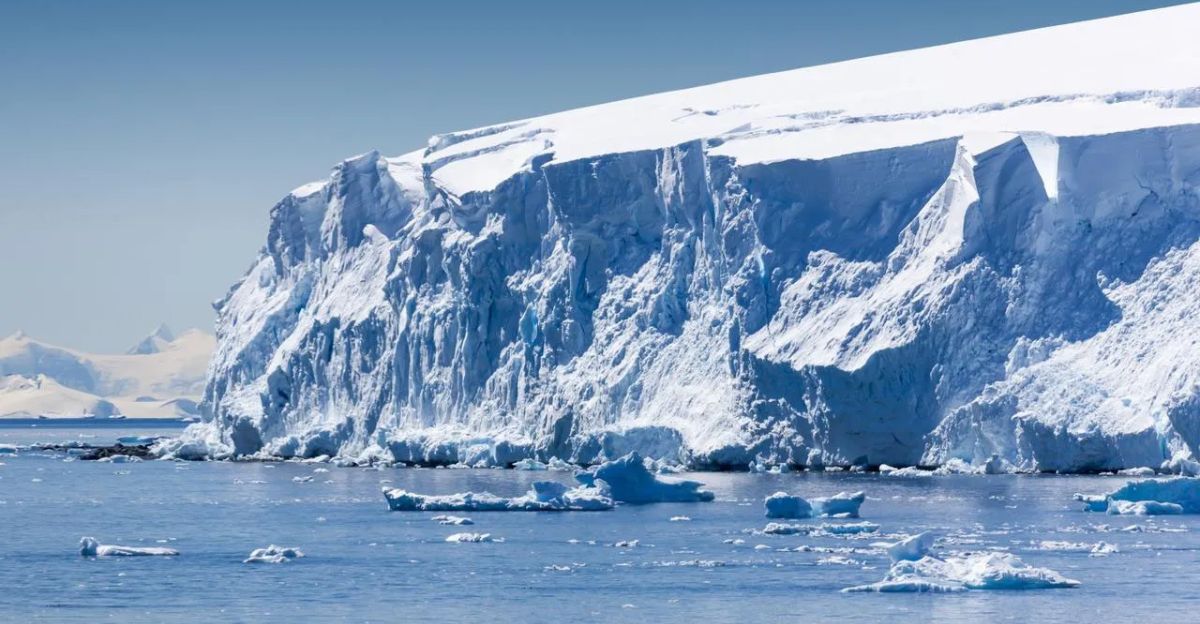
West Antarctica’s Thwaites Glacier—the “doomsday glacier”—is rapidly destabilising. It currently accounts for 4 per cent of global sea-level rise, losing roughly 50 billion tons of ice each year. Complete collapse would raise sea levels by more than 10 feet, flooding coastal cities worldwide.
The Palmer provided critical access to study the glacier’s vulnerable underside. Scientists mapped the ice sheet’s structure, tracked ice loss, and monitored the warm ocean water that was eating away at it. That research now stops.
The Global Context
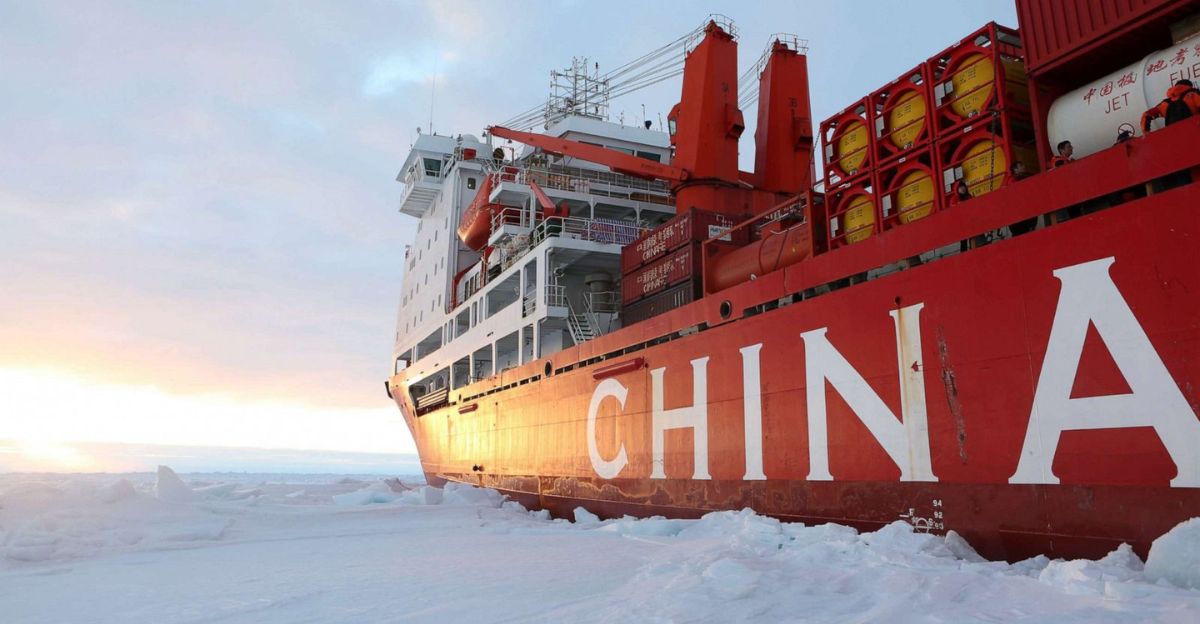
America’s Antarctic retreat happens as rival powers gain ground. China expanded its Antarctic presence and strengthened logistics networks. South Korea increased polar research spending. Meanwhile, the U.S.—continuously present in Antarctica since 1957–58—now faces limited direct access.
The Palmer’s October 2025 final voyage marked the end of roughly 60 years of unbroken U.S. Antarctic research vessel operations. Few nations voluntarily surrender such leadership. America’s competitors are watching.
Five Missions in Limbo
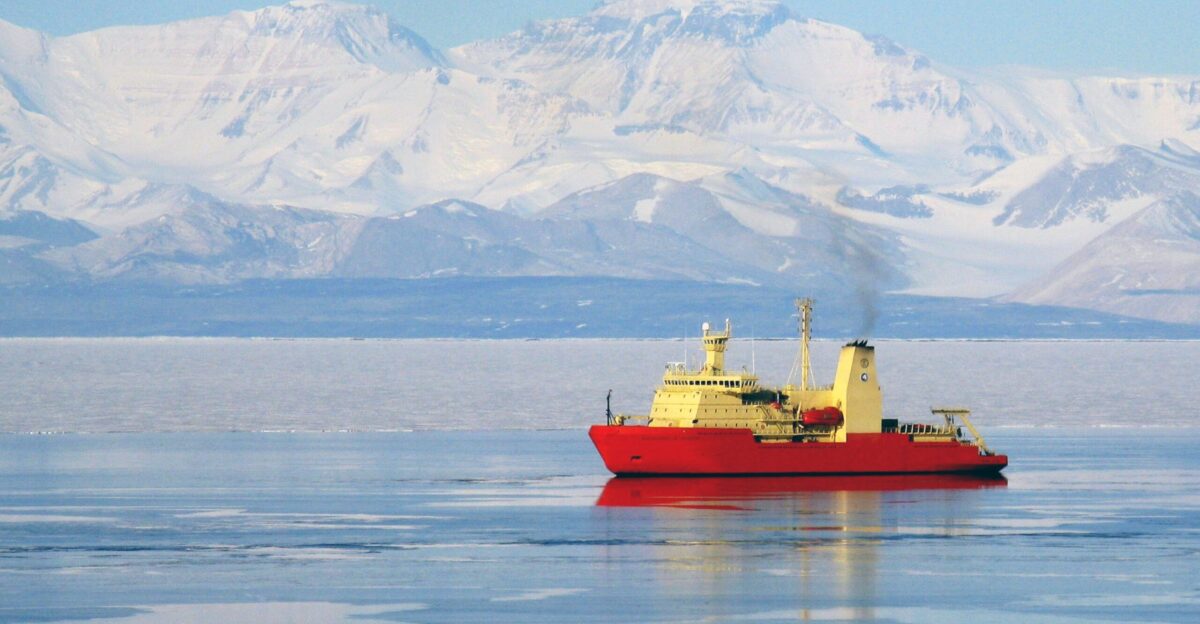
The cancellation created immediate disaster. Five Antarctic missions scheduled for October 2025 through April 2026 now face cancellation. Scientists had planned expeditions to critical sites, including studying ocean circulation beneath Thwaites, mapping changing ecosystems, and collecting sediment cores to document past climate shifts.
These weren’t abstract academic exercises—they were urgent investigations of a climate system in crisis. With the Palmer gone, decades of planned research data vanished, leaving unanswered questions about the stability of the ice sheet.
Congressional Silence
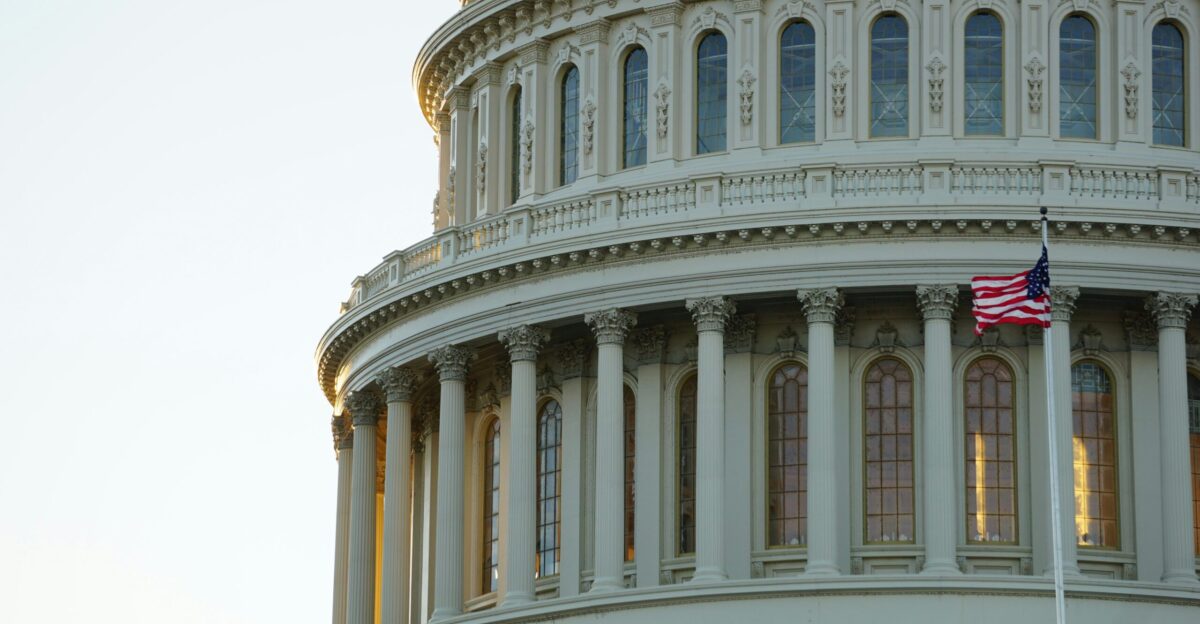
Congress did not mobilise to challenge the Palmer termination. Unlike other research cuts by the Trump administration, Senate and House panels overseeing NSF appropriations did not push back.
Researchers hoped legislative language protecting the Antarctic “at current levels” might save the ship, but by October 2025, no formal intervention had happened.
Capitol Hill’s silence was deafening. It reflected a broader unwillingness to defend polar research when budget cuts were the administration’s priority.
Searching for Alternatives
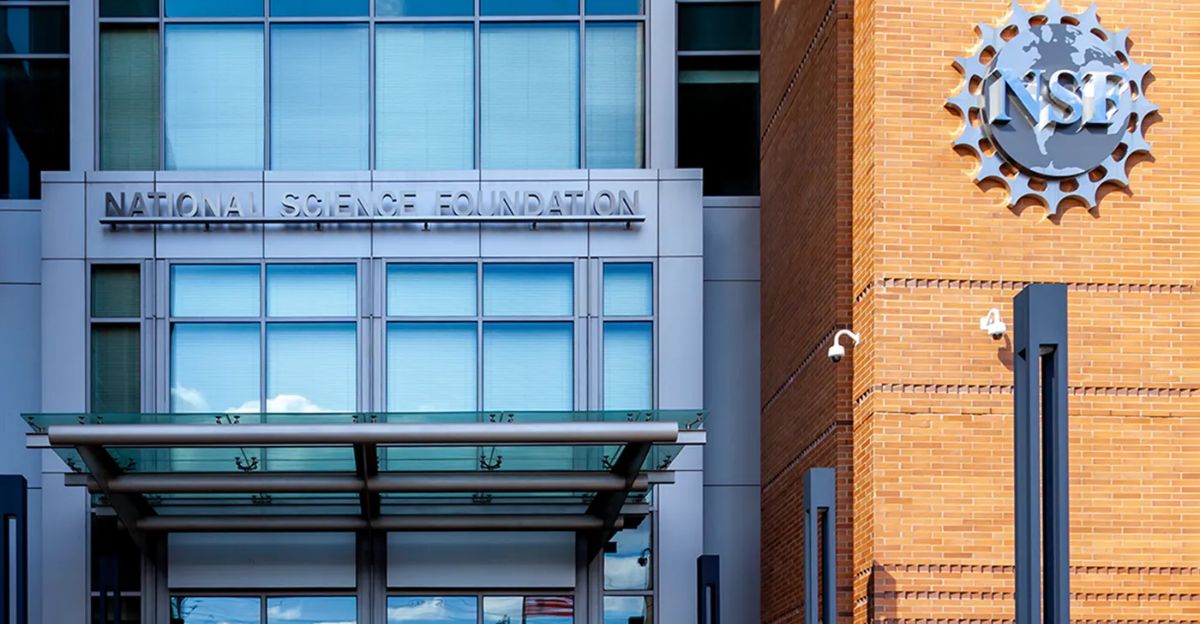
NSF stated it would “identify vessels and partnerships to support marine science.” Officials explored commercial arrangements and international collaborations. One option: partnerships with allies operating Antarctic research vessels.
Britain’s RRS Sir David Attenborough could potentially support some U.S. research, but coordinating schedules and priorities across nations is far more complex than operating a dedicated U.S. ship. Commercial operators rarely work in Antarctica—few have the expertise or equipment for polar operations.
The ARV Dream Delayed
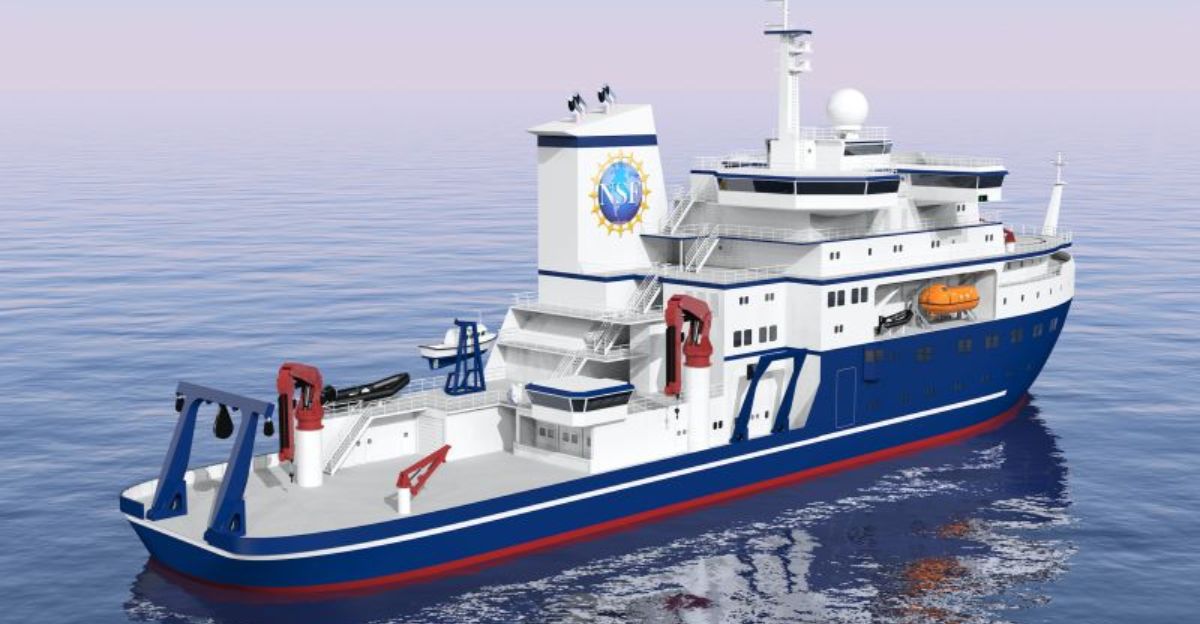
NSF has developed a new Antarctic Research Vessel (ARV) since 2021 through its Major Research Equipment funding process. The ARV operates year-round—a capability the Palmer lacked—with advanced robot deployment systems, superior icebreaking power, and helicopter support.
It represents a major leap forward in Antarctic research. But it won’t arrive until 2031 or later, and only if Congress fully funds construction. With FY 2026 eliminating design planning funds, even that timeline now looks unlikely.
The Expertise Lost
Beyond the ship, the Palmer’s termination means losing 30 years of accumulated expertise. The Palmer’s crew and scientific teams built vast knowledge about Antarctic operations, logistics, safety, and ice navigation.
Starting fresh with a new vessel in 2031 means rebuilding that human expertise from scratch. Scientists will relearn how to operate in Antarctic waters after a decade away. The gap isn’t just time; it’s institutional knowledge. That cost is impossible to fully measure.
What Remains Unresolved
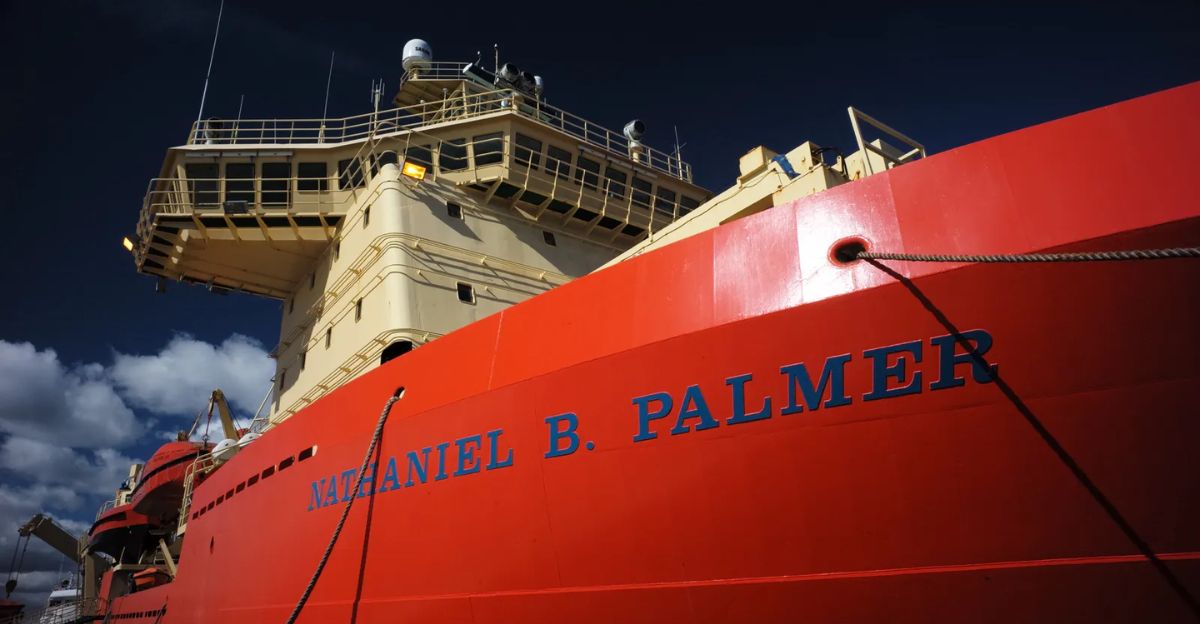
As December 2025 arrives, the Palmer has completed its final Antarctic voyage. Five research missions remain stranded. Dozens of scientists must redirect their careers or seek international collaboration. The NSF’s Office of Polar Programs operates under a 70 per cent budget cut.
The ARV is expected to arrive in 2031, pending continued funding. One central question lingers: Can America maintain credible Antarctic research leadership without its own ship, or does this decade-long gap mark the start of permanent U.S. withdrawal from polar science?
Sources:
- Science Magazine, “NSF plans abrupt end to lone U.S. Antarctic research icebreaker,” July 27, 2025
- Scientific American, “U.S. Cuts Antarctica’s Only Research Icebreaker Ship Under Trump Budget,” August 19, 2025
- National Academies, “Chapter: 2 The National Antarctic Program,” February 2024
- Columbia Climate School, “Scientists Respond to the Planned Termination of the Only U.S. Antarctic Research Vessel,” September 11, 2025
- Inside Climate News, “After Trump Cut the National Science Foundation by 56 Percent,” September 18, 2025
- SEJ Headlines, “US To Lose Ground In Antarctica After Pulling Out Last Research Ship,” December 11, 2025