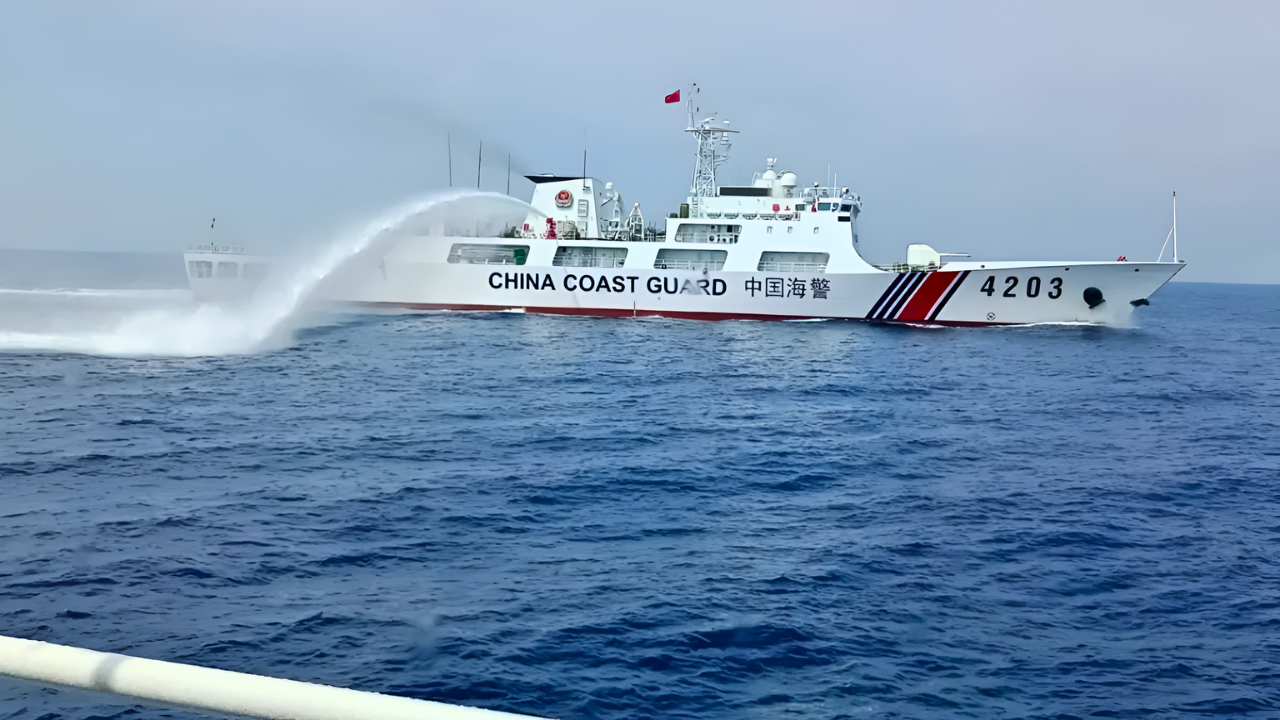
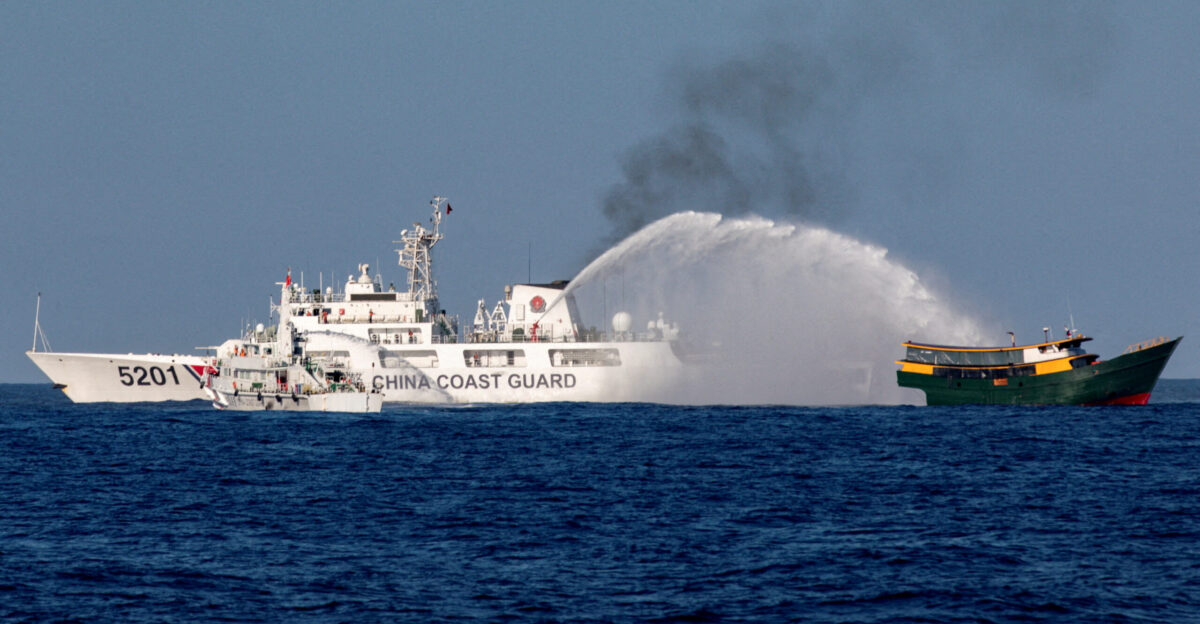
On December 12, 2025, about 20 small Philippine fishing boats met Chinese Coast Guard ships and militia vessels near Escoda Shoal in the West Philippine Sea. The fishermen were on a normal trip to catch fish. But things quickly got violent. Chinese ships fired high-pressure water cannons at the Filipino boats. This action showed how everyday fishing can spark big geopolitical fights in one of the world’s most disputed sea areas.
The attack hurt three Filipino fishermen. It also badly damaged at least two wooden boats. The hulls cracked and could not be fixed right away. Philippine Coast Guard ships MRV 4403 and MRV 4411, plus the support ship MV Pamela, rushed to help after distress calls. They evacuated the damaged boats. The clash happened deep inside the Philippines’ exclusive economic zone. Under international sea law, the Philippines has rights to fish and take resources there. But that legal right did not stop the Chinese ships’ rough actions.
Testing an Old U.S.-Philippines Defense Pact
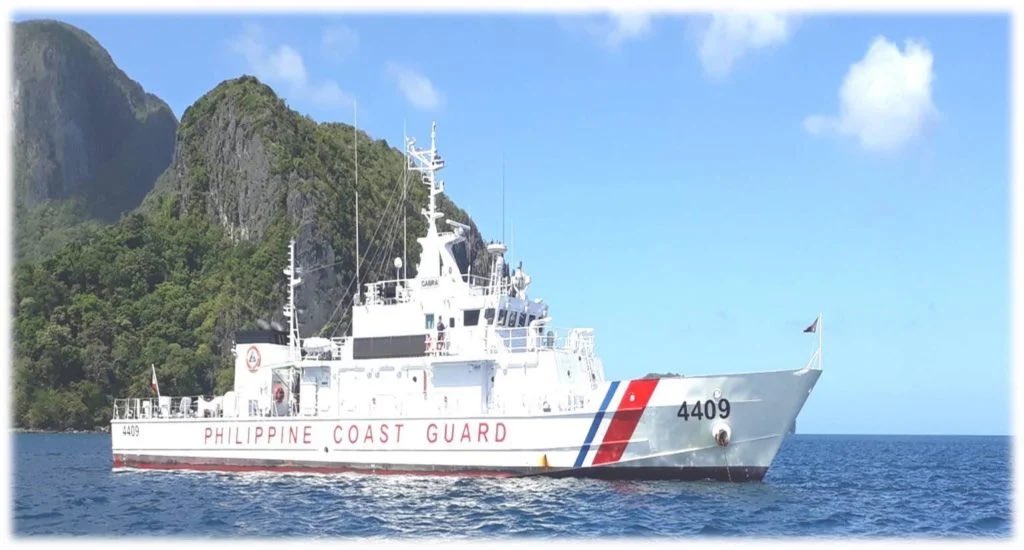
The fight right away brought up the 1951 Mutual Defense Treaty between the United States and the Philippines. Just two days later, the U.S. State Department said that armed attacks on Philippine Coast Guard or public ships in the South China Sea would activate Article IV of the treaty. This part requires U.S. support. The statement showed Washington’s promise to help. But it also pointed out confusion over what counts as an “armed attack.” Water cannons hit civilian fishermen, not soldiers.
This unclear area shapes fights in the South China Sea today. China uses tough tricks like harassment and blockades. These avoid full war but push the Philippines hard. The U.S. must back its ally under the treaty. Yet it risks starting a bigger fight with China if things go too far.
Location and Overlapping Sea Claims
Escoda Shoal, which China calls Xianbin Reef, lies about 150 kilometers west of Palawan. It sits fully inside the Philippines’ 200-nautical-mile exclusive economic zone under world sea rules. But the whole South China Sea has competing claims from China, the Philippines, Vietnam, and others.
In 2016, a tribunal under the United Nations Convention on the Law of the Sea ruled against China’s “nine-dash line.” That claim of old rights had no basis in law. The decision said spots like Escoda Shoal belong in the Philippines’ zone. China ignores this ruling. It keeps control with Coast Guard ships and militia boats.
Rising Tensions and a New U.S. Plan
Fights between Chinese and Philippine ships have grown sharper since late 2022. This matches President Ferdinand Marcos Jr.’s stronger talks and closer U.S. defense ties. Chinese patrols act bolder near Second Thomas Shoal, Scarborough Shoal, and now Escoda Shoal. They use water cannons, blocking moves, and cutting ropes to scare without full war.
These “gray-zone” tactics wear down Filipino fishermen and supply runs over time. The U.S. and Philippines hold bigger joint drills like Balikatan and Salaknib. They practice real threats and team responses. Each side’s shows of strength make the other dig in more. Fishermen pay the price in this back-and-forth.
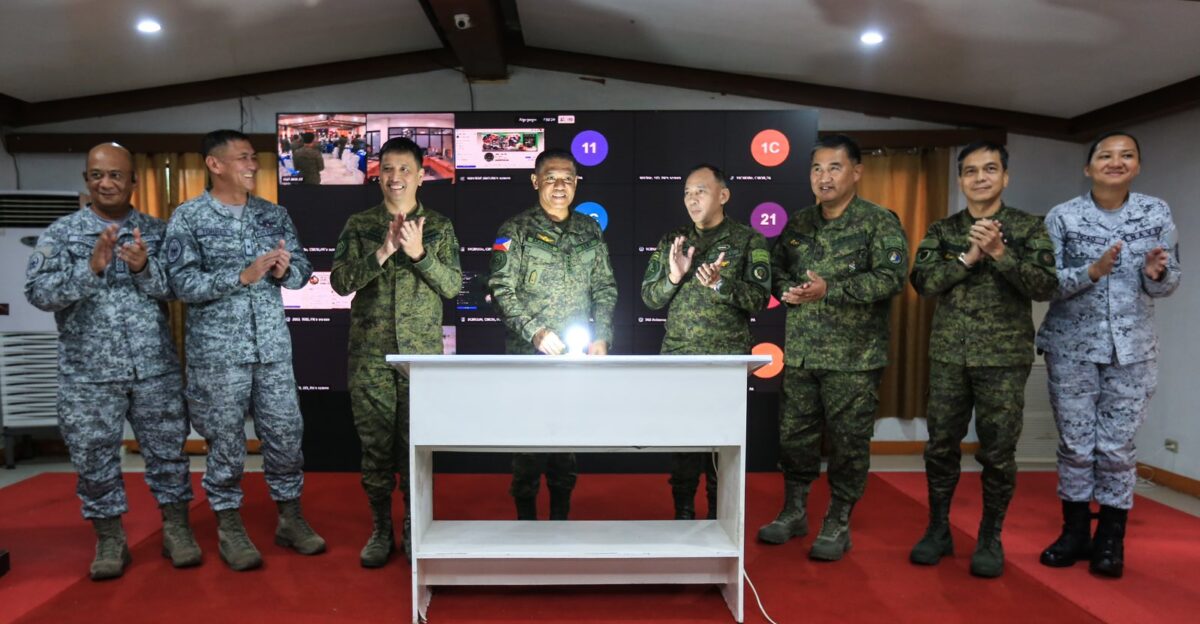
In late 2025, U.S. Defense Secretary Pete Hegseth and President Marcos set up Task Force Philippines. It’s a new command in Manila to handle Chinese moves in the South China Sea. It builds on joint exercises and the Enhanced Defense Cooperation deal. That gives the U.S. more access to Philippine bases. The task force speeds up decisions and quick reactions near disputed spots. It mixes U.S. and Philippine strengths to deter what Manila calls Chinese bullying. No U.S. fighter jets stay there full-time yet. The real test is still ahead.
Experts warn against too much focus on military steps. They could trap both sides in a risky loop. A Quincy Institute report says the U.S. should keep treaty promises but urge the Philippines to avoid high-risk trips near China-held areas. Changes like permanent U.S. bases might push China to react badly. The water cannon event shows how thin the line is between bullying and attack. Future clashes at other spots could force a treaty test. This might pull the U.S. into unwanted war. Risks grow for fishermen, the region, and big countries each month.
Sources:
CNA – “Manila says water cannon from Chinese vessels injured 3 Filipino fishermen”
Philippine Coast Guard / Philstar – PCG statements on Escoda Shoal harassment
Reuters / Associated Press – Wire reports on Chinese water cannon use near Sabina Shoal
Quincy Institute – “Defending Without Provoking: The United States and the Philippines in the South China Sea”