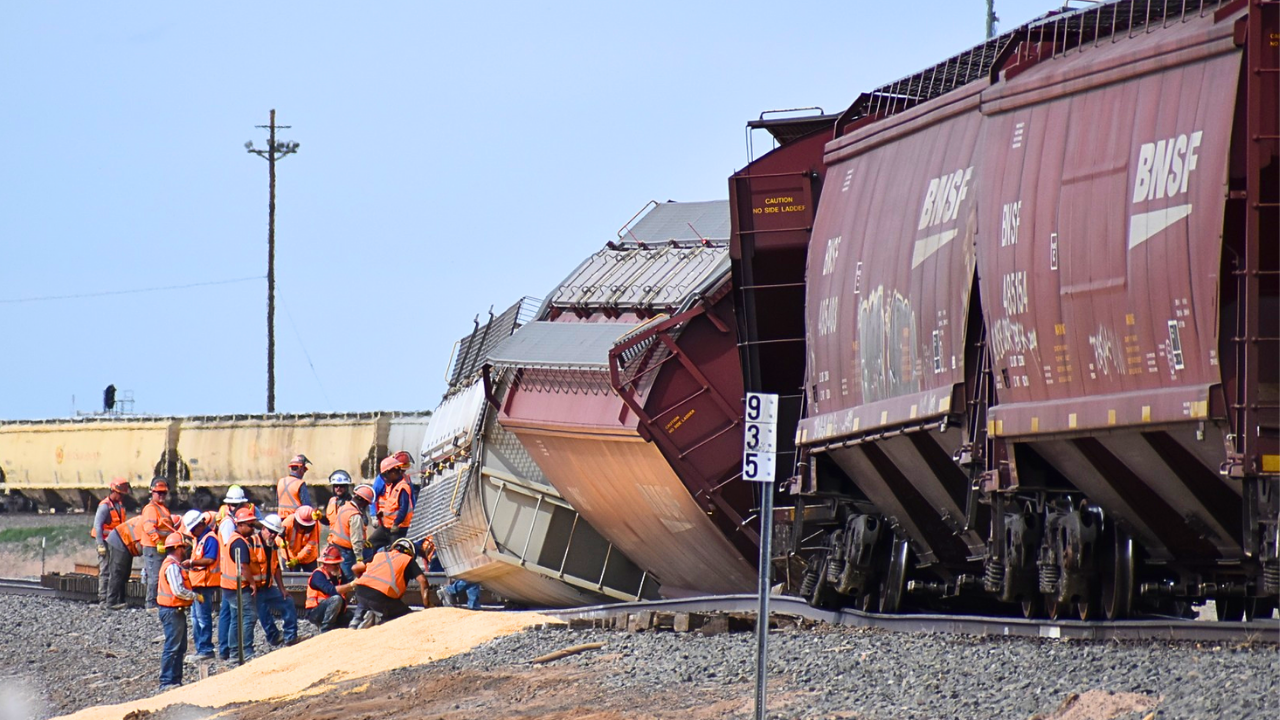
A ferocious atmospheric river storm battered the western United States from December 17-20, 2025, unleashing record-shattering winds that derailed over 100 freight cars, ignited devastating wildfires, and plunged approximately 750,000 customers into darkness. The extreme weather event disrupted millions nationwide, triggering evacuations, interstate shutdowns, and prompting Colorado to issue its first-ever “Particularly Dangerous Situation” Red Flag Warning.
Wyoming Shatters Wind Records
Wyoming bore the storm’s fiercest assault, with a 144 mph gust recorded at Mount Coffin in Lincoln County marking one of the state’s strongest wind measurements ever. The December 17-18 reading stands as the second-highest in Wyoming history, surpassed only by a 165 mph record set at the same location in 2017.
Sustained winds of 50-70 mph, with gusts reaching 78 mph, ravaged the Cheyenne-Laramie corridor during the storm’s peak. South Pass between Farson and Lander clocked 123 mph gusts, Hunt Field Airport in Lander recorded 92 mph, and Platte County measured 112 mph. These hurricane-force blasts highlighted Wyoming’s vulnerability to extreme weather amplified by its rugged terrain and jet stream patterns.
Freight Train Topples in Spectacular Derailment

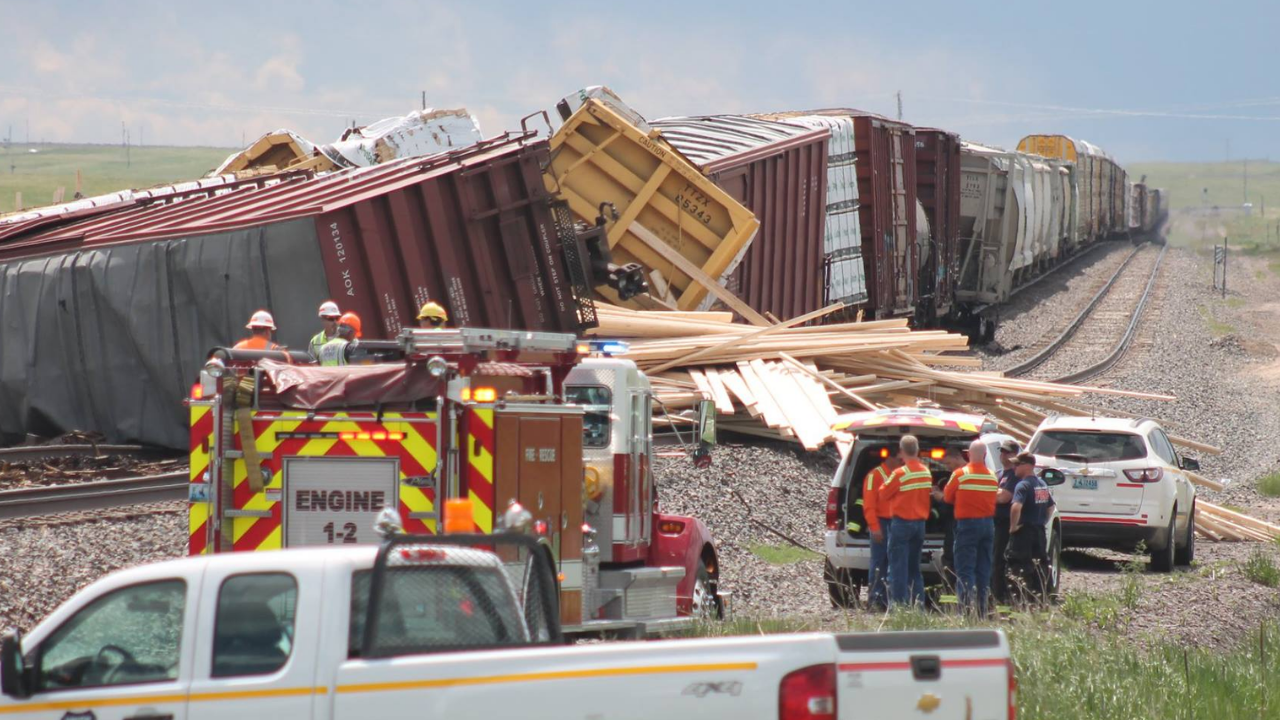
On December 19, a BNSF Railway freight train carrying over 150 double-stacked intermodal containers derailed near Federal, Wyoming, approximately 17 miles northwest of Cheyenne. More than 100 cars toppled in what investigators classified as a “blow-over event” driven entirely by wind rather than mechanical failure.
The train carried mostly empty or lightly loaded containers, each standing 8-10 feet tall and stacked to heights of 16-20 feet while weighing just 2-3 tonnes apiece. Eyewitnesses described the containers acting like a “giant billboard” vulnerable to powerful gusts. National Weather Service meteorologist Don Day characterized the derailment site as lying in North America’s most wind-prone rail corridor, where canyons and rising elevations funnel and accelerate airflow into what he called “notoriously windy… really nasty” conditions.
A single car likely tipped first, sparking a domino effect as strong shelf couplers linking the cars together prevented separation and caused a cascading collapse along the tracks.
BNSF deployed four excavators, heavy cranes, and over 30 workers who cleared the wreckage in approximately 18 hours, laboring through continued high winds and overnight darkness. The Federal Railroad Administration confirmed the incident as a natural event from high winds—a relatively common yearly occurrence in the region—and declined to launch an investigation, though BNSF must file a damage report for losses exceeding $12,600.
Highway Chaos: 40 Trucks Blown Over in Three Days
Wyoming’s Department of Transportation closed Interstates 80 and 25 to high-profile vehicles as the windstorm intensified, yet the Wyoming Highway Patrol still logged at least 40 semi-truck blowovers from December 17-19. An earlier wind episode on December 10-11 had already produced 39 similar incidents.
While some overturned trucks exceeded weight limits, even compliant rigs proved vulnerable to the relentless wind assault. Research indicates empty double-stacked trains are particularly susceptible to winds as low as 50-62 mph, especially when approaching at 60-80 degree angles, causing wheel unloading and sail-like oscillations.
Winchester Hills Fire: Residents Flee Advancing Flames
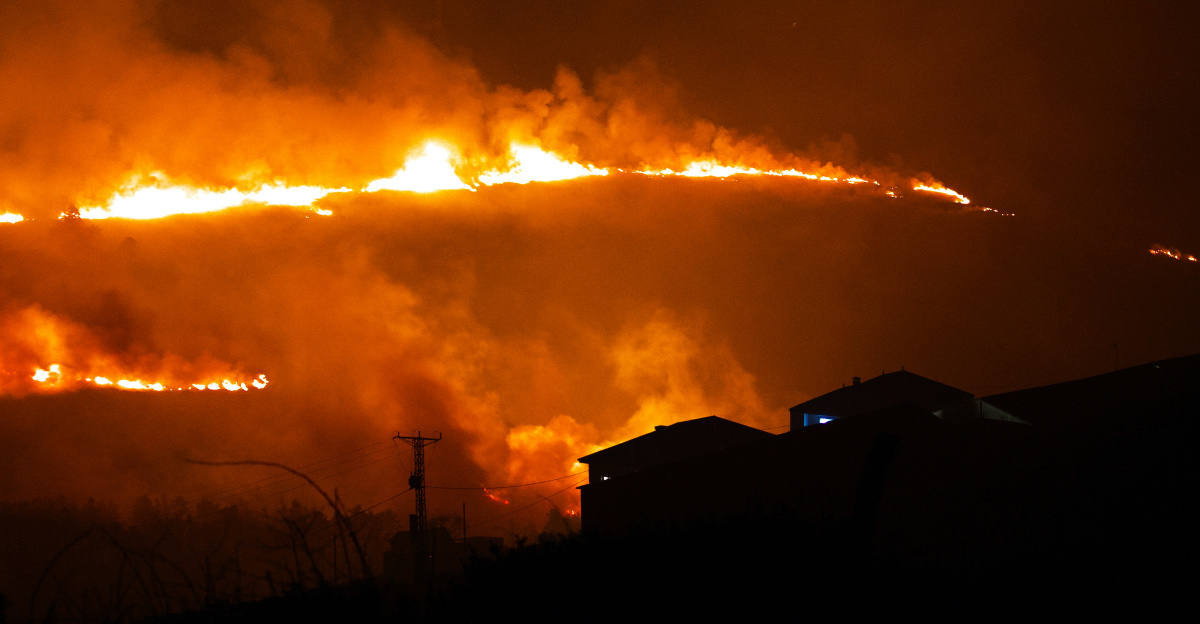
Extreme winds sparked the Winchester Hills Fire south of Cheyenne on December 18, scorching 565 acres near the Winchester Hills and Bison Crossing subdivisions. Evacuation orders issued at 4:26 p.m. gave residents just 10-15 minutes to escape as flames raced toward homes.
Over 120 firefighters mobilized to contain the blaze, ultimately saving all structures despite losses including one greenhouse. Wind gusts of 45-70 mph propelled the fire’s rapid spread, prompting Black Hills Energy to implement localized power cuts for safety.
Colorado Fires Consume 14,000 Acres
In Colorado’s Yuma County, winds near 70 mph ignited multiple fires around 8:50 p.m. on December 17-18, with downed power lines suspected as the ignition source. The County Road 33 Fire consumed 12,000 acres, the County Road L Fire burned 2,000 acres, and the County Road 44 Fire scorched 50 acres, totaling over 14,000 acres of destruction.
The unprecedented fire conditions prompted the National Weather Service to issue Colorado’s first-ever “Particularly Dangerous Situation” Red Flag Warning, covering Boulder, Jefferson, and Laramie counties due to critically low humidity, extreme winds, and elevated wildfire risk.
Massive Power Disruptions Across Multiple States

The storm’s impacts extended far beyond Wyoming, with Pacific Northwest utilities experiencing the worst disruptions. Nearly 600,000 customers in Washington, Oregon, and Idaho lost power as the atmospheric river made landfall.
In Colorado, Xcel Energy took the proactive step of shutting off power to over 69,000 customers on December 19 to prevent wildfire ignitions from damaged infrastructure. An earlier preventive shutoff on December 17 had already affected approximately 50,000 customers. At the storm’s peak, approximately 750,000 customers nationwide remained without electricity.
The Road Ahead
Wyoming’s topography and jet stream patterns ensure such wind events will recur, leaving critical infrastructure including railways, highways, and power systems perpetually at risk. As recovery operations conclude and power is restored, questions linger about enhancing resilience against these predictable yet devastating natural forces.
The December 2025 windstorm serves as a stark reminder that even in an era of advanced meteorological forecasting, nature’s raw power can overwhelm human infrastructure, disrupting modern life for millions across multiple states.
Sources:
“Freight Cars Topple Off Tracks After Wyoming’s Fierce Windstorm,” Cowboy State Daily, December 19, 2025.
“144 MPH Wind Gust Is Strongest Ever Recorded in Wyoming,” Cowboy State Daily, December 17, 2025.
“December 17-18, 2025 Historically High Winds,” National Weather Service Cheyenne Office, December 16, 2025.
“Crew Clears 100+ Derailed Freight Cars From Track Near Cheyenne in 18 Hours,” Cowboy State Daily, December 21, 2025.
“Train Derailed by Wind Gusts North of Cheyenne,” Yahoo News / Associated Press, December 23, 2025.
“Wyoming Troopers Responded to 39 Semi Truck Blowovers This Week,” CDL Life, December 11, 2025.
“Evacuations Ordered for Area South of Cheyenne Due to Wildfire,” Wyoming Public Media, December 16, 2025.