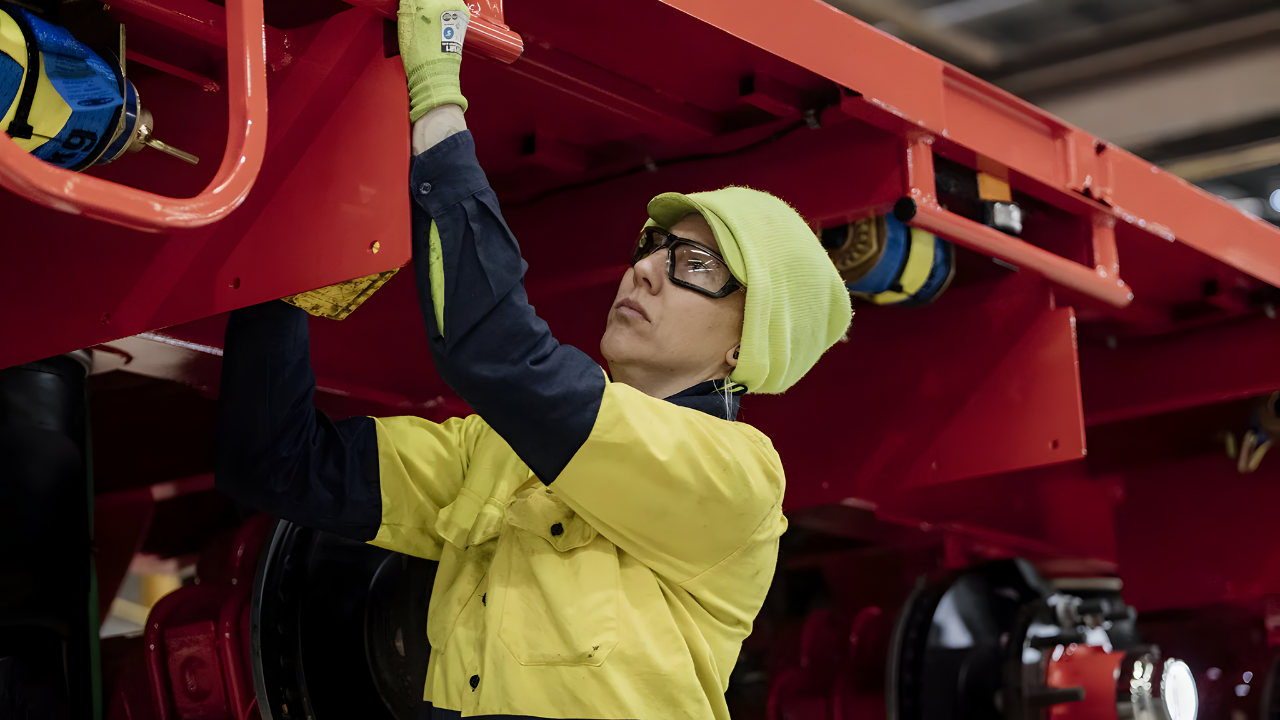
A manufacturing town in central Pennsylvania is bracing for a major economic shock as one of its anchor employers prepares to idle roughly half its workforce. Great Dane, the world’s largest commercial trailer maker, has announced temporary layoffs at its Elysburg plant, a move that reflects a prolonged freight downturn that began in April 2022 and shows few signs of ending soon.
Freight slump drags into a fourth year
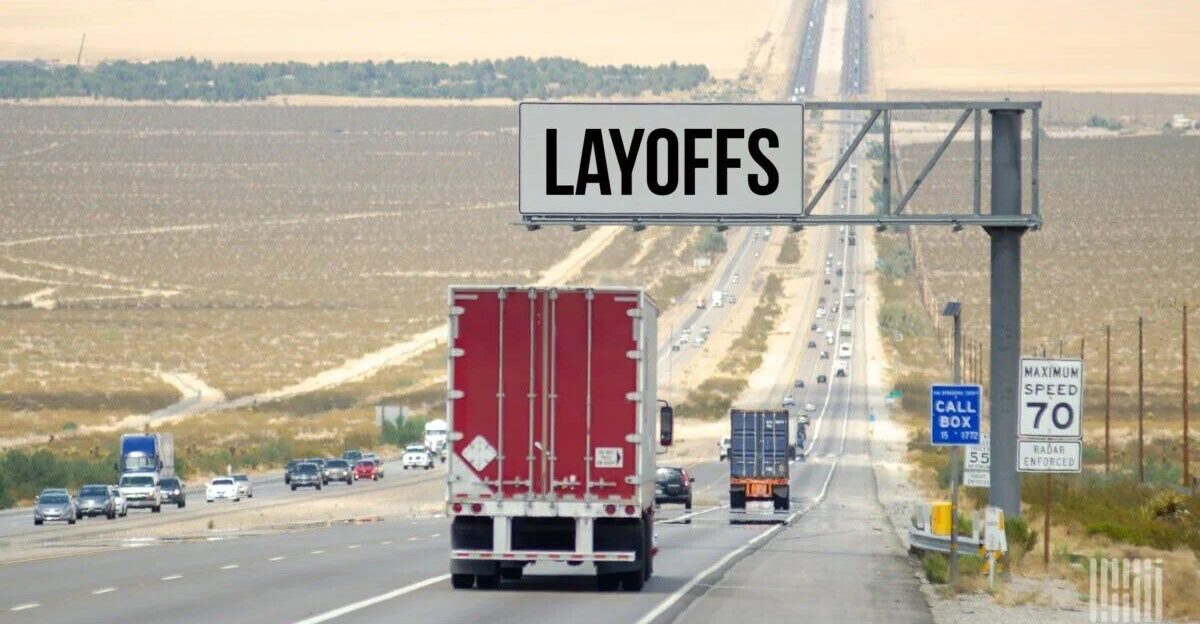
The current wave of cuts can be traced to a freight slowdown that started in April 2022, when industry analysts first described conditions as a “correction cycle.” Instead of the typical 12- to 18-month dip, weak demand has stretched on for about three and a half years. Shipment volumes have fallen, freight rates remain well below pre-slump levels, and an oversupply of trucks has weighed on pricing and profitability across the sector.
By late 2025, the data pointed to deep weakness rather than a short-lived soft patch. National truck shipments dropped 10.7 percent year-over-year in the third quarter of 2025, and October 2025 freight volumes hit a 21‑month low. Many carriers have exited the market entirely, either through bankruptcy or consolidation. Trailer manufacturers, including Great Dane, are now scaling back output rather than risk building inventory they cannot sell.
In its December 8, 2025 statement about the Elysburg layoffs, Great Dane said “macroeconomic uncertainty remains high,” avoiding blame on any single customer, region, or policy decision and underscoring how broad‑based the downturn has become.
Elysburg’s factory hub under strain
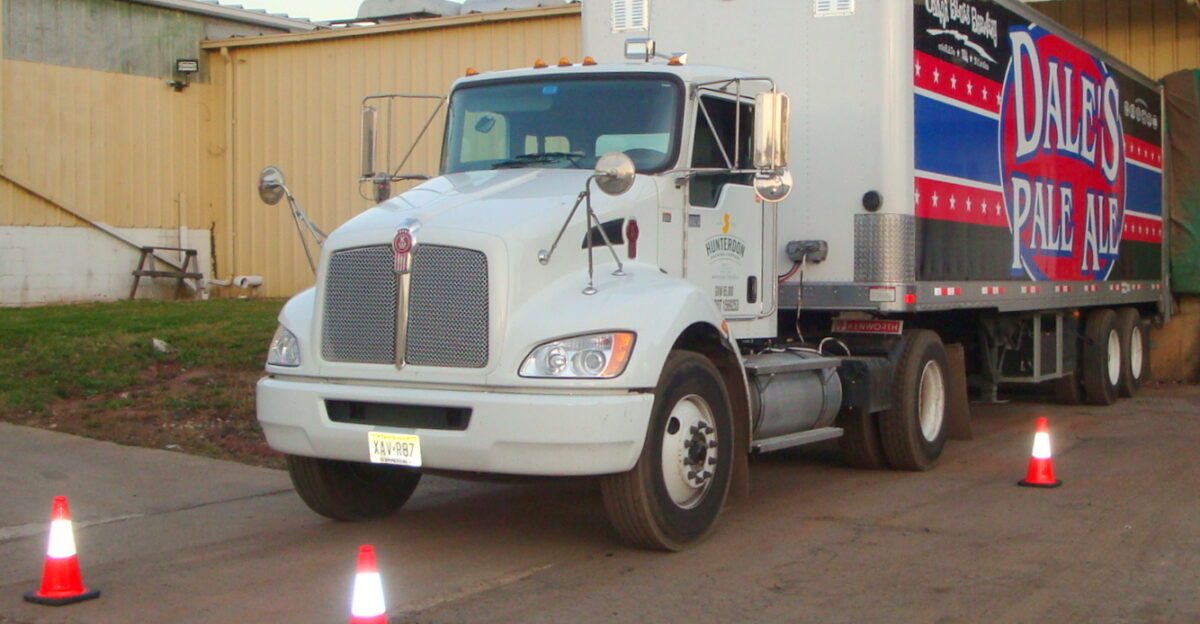
Elysburg, in rural Northumberland County, has relied on manufacturing for more than a century. Over the past decade, Great Dane’s trailer plant has provided some of the area’s best‑paid industrial jobs, becoming central to household incomes and local government finances.
Great Dane, a $1.6 billion company with about 5,000 employees spread across 11 factories, opened the Elysburg facility in 2016 to serve customers in the Mid‑Atlantic and Northeast. In 2021, during a post‑pandemic freight boom, the company invested $3.5 million in upgrades there and expanded hiring, betting on sustained demand. That expansion proved short‑lived: the freight market turned downward in April 2022, and the current layoffs effectively unwind much of that growth.
In December 2025, the company filed a layoff notice with Pennsylvania’s Department of Labor. The filing states that 164 workers at Elysburg will be temporarily laid off beginning in February 2026. With the plant employing about 315 people, roughly half its staff will be affected.
Household wages and local taxes hit
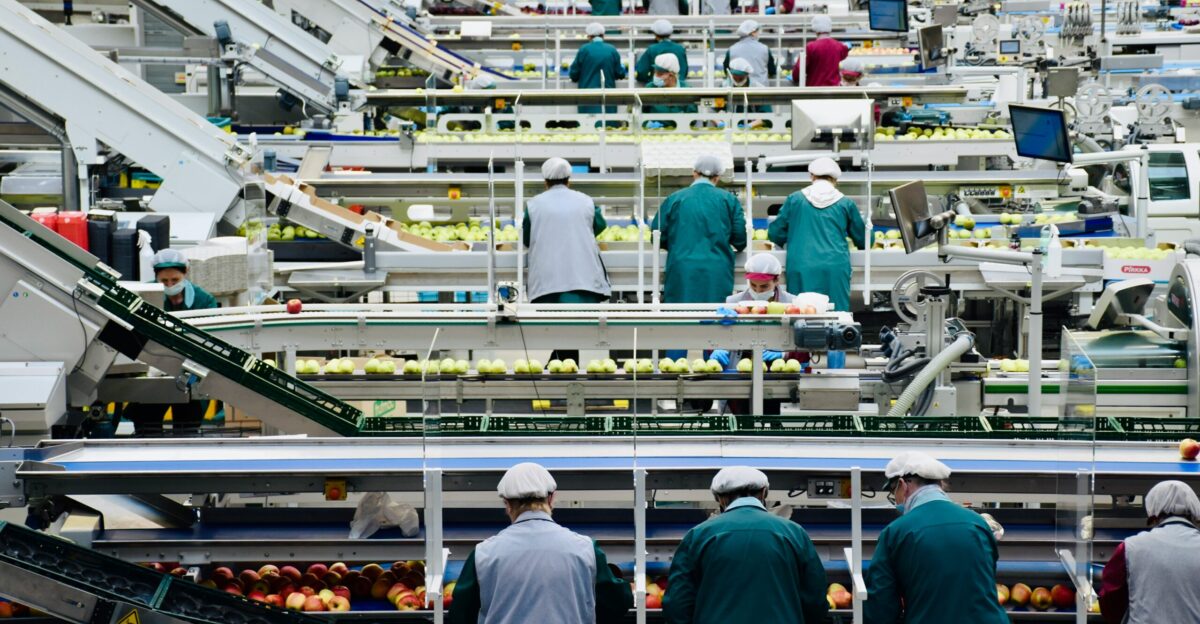
For the 164 workers and their families, the impact is immediate. Factory employees in the region typically earn between $22 and $27 an hour, which works out to approximately $45,000 to $56,000 a year for full‑time roles. Removing that many positions at once will strip an estimated $7 million to $9 million in annual wages from the surrounding economy.
Those lost paychecks will ripple through local businesses such as grocery stores, auto dealers, and medical offices that depend on steady customer spending. Elysburg’s municipal government, which relies heavily on wage and property taxes, will feel the strain as well. With fewer workers and the potential for families to move away in search of jobs, tax collections could fall just as aging infrastructure and public services require continued investment.
Schools, already operating in a region with a shrinking population, may face further pressure if enrollment drops and tax revenue declines. For a town with few large employers beyond Great Dane, finding comparable replacement jobs nearby may prove difficult.
Industry pressures and plant‑level uncertainty
Trailer manufacturing is a volume‑driven business with thin margins. Producers must keep assembly lines busy to spread fixed costs, but when freight demand falls, they risk tying up cash in unsold trailers if they keep building at previous rates. Over the past year, many large trailer makers have slowed production, postponed expansions, or temporarily closed facilities.
Great Dane’s decision in Elysburg follows that broader pattern, but it carries added weight because of the company’s size and market position. A leading manufacturer trimming half the workforce at a relatively modern plant suggests that management does not expect a rapid rebound in orders. The company describes the Elysburg cuts as temporary rather than permanent, which preserves workers’ seniority and benefits under the plant’s union contract, yet has not provided a timeline or specific production thresholds that would trigger recalls.
Past freight downturns indicate that “temporary” layoffs can stretch for a year or longer. Workers who secure permanent positions elsewhere may not be available if and when Great Dane seeks to bring them back, complicating any future restart.
The Elysburg facility’s long‑term role within Great Dane’s 11‑plant network is now uncertain. If trailer demand does not improve by late 2026, the company could consider consolidating production at other locations or repurposing the site for maintenance or specialized work with fewer employees.
Broader economic cycle and policy stakes
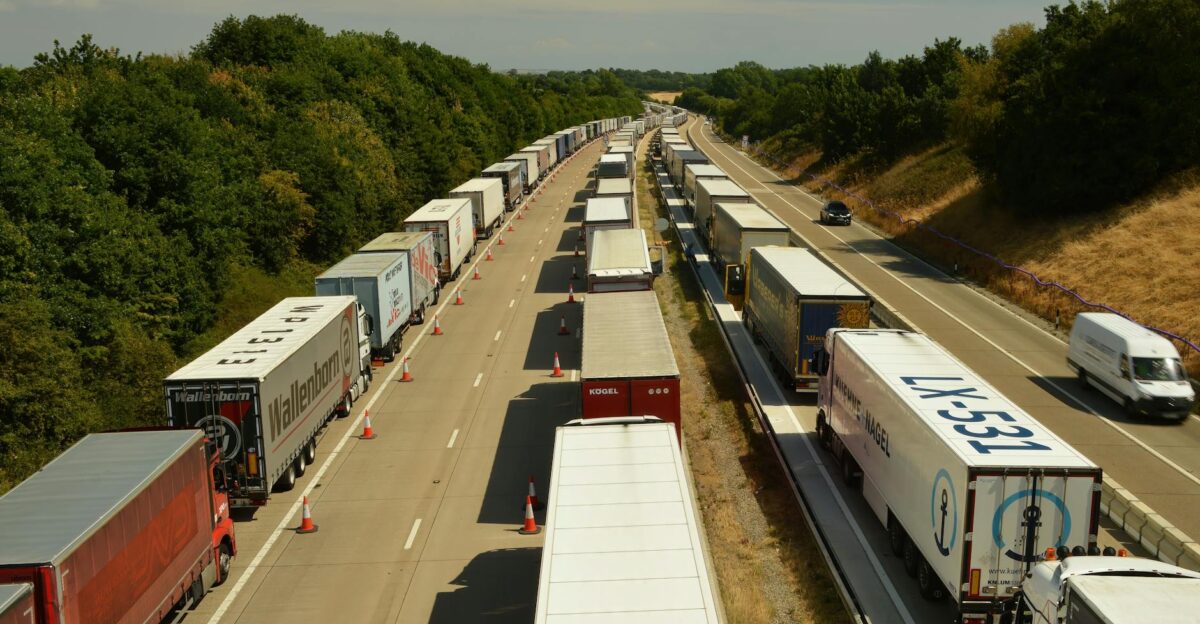
The freight recession has been intensified by a wave of carrier failures in 2025, which reduced fleet sizes and further cut demand for new trailers. Surviving trucking companies have focused on running smaller, more efficient fleets and postponing equipment purchases, reinforcing a cycle of weak orders and cost‑cutting at manufacturers.
Analysts offer differing views on when conditions might improve. Some forecasts point to modest gains by mid‑2026, as long as there are no major economic shocks, while others warn that slack demand could persist into 2027. The phrase “macroeconomic uncertainty remains high,” repeated in corporate statements and industry reports, captures the difficulty of planning under such conditions.
The situation in Elysburg also recalls earlier industrial downturns. After the 2008 financial crisis, factory employment in many manufacturing‑heavy regions took most of a decade to return to previous levels, and in some places never fully recovered. If the current freight slump follows a similar trajectory, factory towns tied closely to trucking and logistics could see years of subdued hiring.
In the near term, federal and state labor laws are shaping the response. By filing a notice under the Worker Adjustment and Retraining Notification (WARN) Act, Great Dane triggered requirements for at least 60 days’ advance warning before mass layoffs. The filing also opens access to state‑supported retraining and job placement programs. Pennsylvania officials have begun offering resume assistance and employment counseling, but options remain limited in a sparsely populated county.
For workers, residents, and policymakers, the Elysburg layoffs are a visible sign of systemic stress in freight‑dependent manufacturing. Families face income loss and uncertainty, while local governments confront potential budget gaps. For business leaders and public officials, the case underscores how closely regional economies are tied to national freight cycles, and how difficult it is to chart a recovery when demand, pricing, and investment decisions across the trucking sector all remain in flux.
Sources
Fox56 News (WOLF), Great Dane to lay off up to 164 workers at Elysburg plant as freight slowdown continues, December 7, 2025
ACT Research, Trucking Industry Forecast, November 2025
RXO, Truckload Market Guide, December 2025
Pennsylvania Department of Labor, WARN Notice, December 8, 2025
American Trucking Associations, Industry Report, December 2025
FreightWaves, Market Analysis and Carrier Bankruptcy Analysis, December 2025