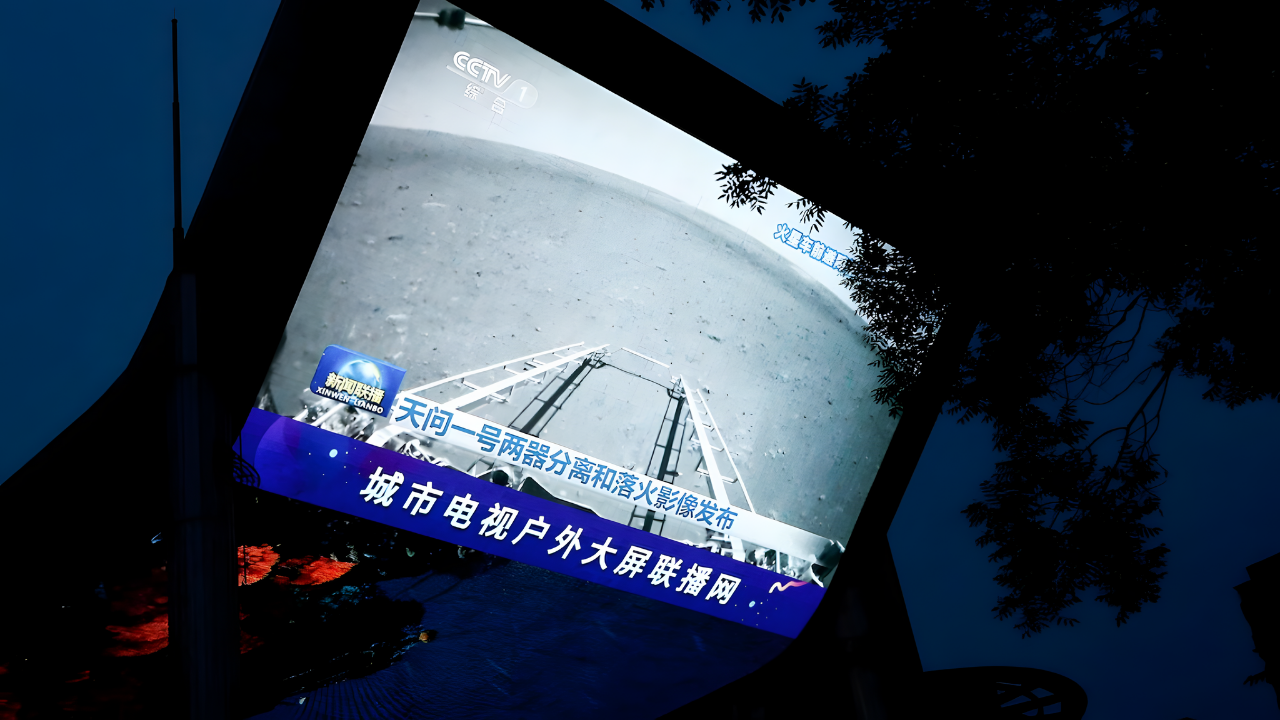
China’s Zhurong rover, part of the 2021 Tianwen-1 mission, has found the first clear signs of ancient beach deposits under Utopia Planitia, a huge plain in Mars’ northern region. Radar scans from the rover, detailed in a study in Proceedings of the National Academy of Sciences, show layered sediments that slope like old shorelines. These discoveries prove Mars had much more water billions of years ago.
Unearthing Ancient Shores
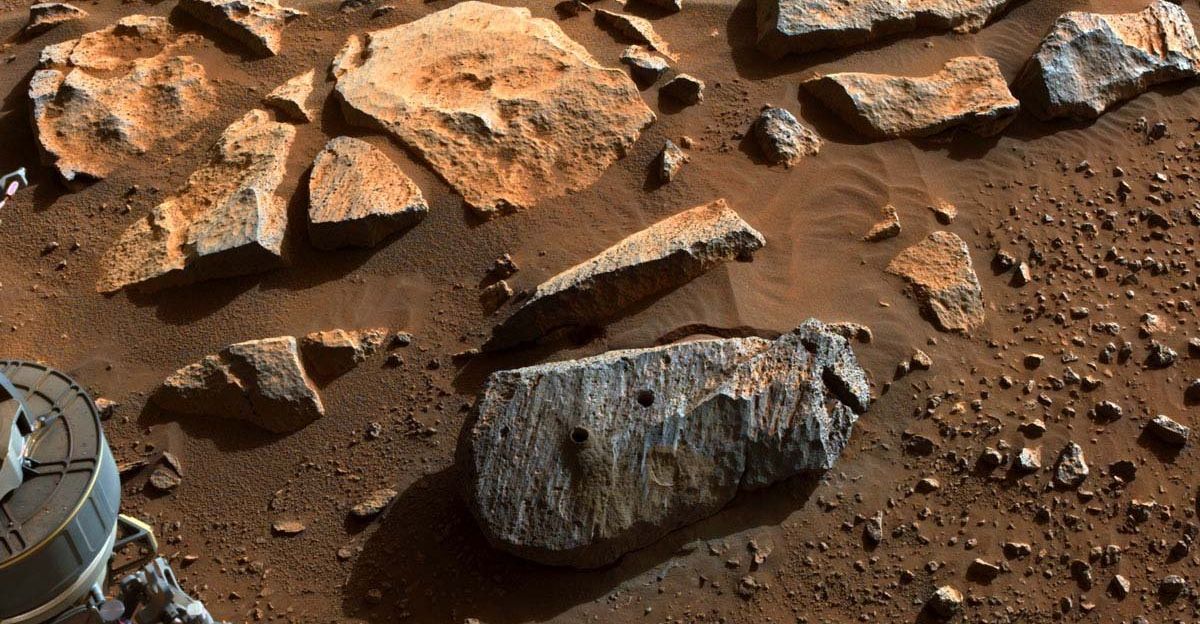
The Zhurong rover used ground-penetrating radar to scan deep into the Martian surface along a 1.3-kilometer path at the edge of Utopia Planitia. The radar cut through tens of meters of dust and rocky ground, revealing wavy layers that had stayed safe from wind erosion on top. These layers sloped at 5 to 10 degrees, pointing away from what scientists believe was an ancient shoreline.
The patterns match beaches on Earth, where waves push sand forward over time, much like Miocene-era coasts in Australia. Lab tests confirmed this by recreating the process. Layer thicknesses changed: thicker ones came from powerful storms and floods, while thinner layers showed quieter tides. Fine sands and gravels with cross-bedding came from swirling water, not wind-blown dunes or landslides. Mars’ thin air helped preserve these features for over 3 billion years. Tides from the moon Phobos likely created waves up to 10 meters tall, sorting sediments by water flow instead of wind.
Proving Oceans Existed
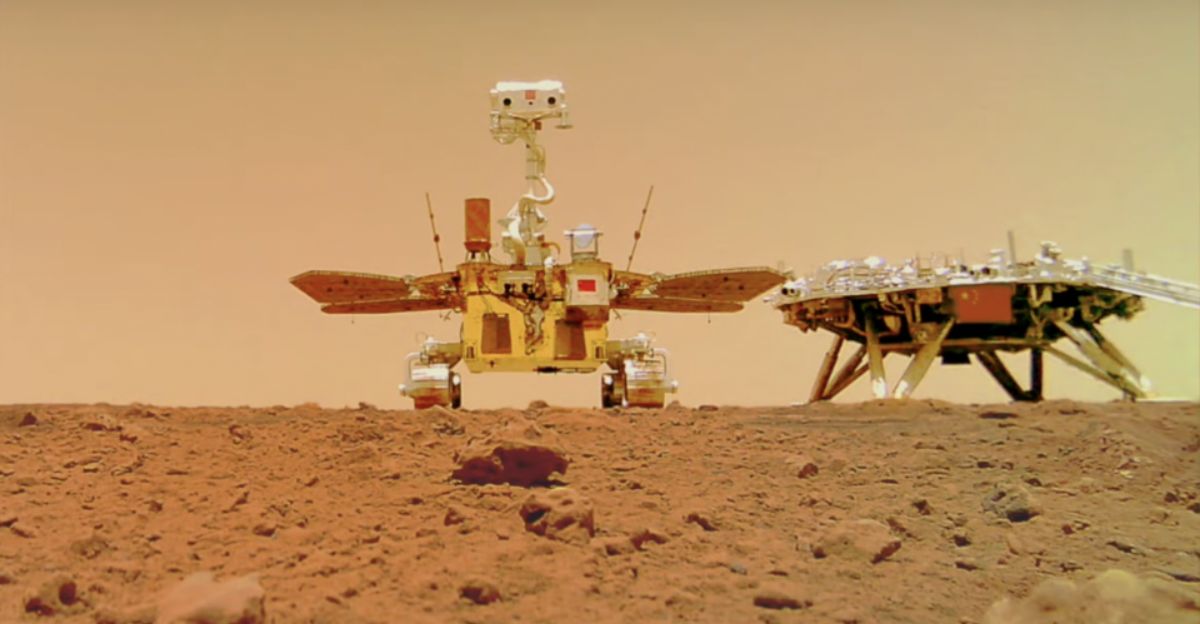
Spacecraft orbiting Mars had suggested vast oceans covered nearly half the planet around 3.6 billion years ago. But Zhurong delivered the first underground evidence. Its radar spotted stacks of beach ridges, each 1 to 2 meters thick, buried under old lava flows, too deep for surface cameras to see. These smooth, wave-shaped sediments stood out against the rough, crater-filled top layer full of boulders.
NASA’s Viking 2 lander captured the first close-up views of Utopia Planitia in 1976. Its photos showed a flat, rocky plain stretching to a horizon nearly two miles away, dotted with pits and stones. Earlier, Mariner 9 images from 1971 revealed giant outflow channels and valley networks, signs of huge water floods. Zhurong’s data built on these hints by confirming underground beach angles that fit tidal action, not just debris from slides.
Radar Revolution
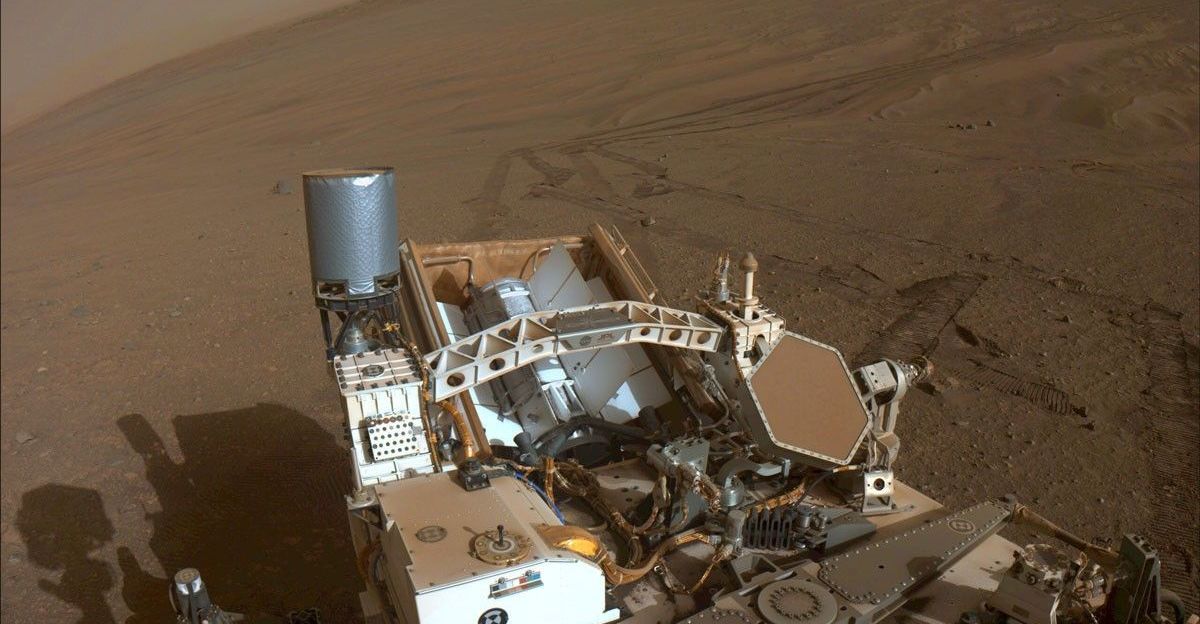
Zhurong’s radar worked by sending out pulses that bounced back from changes in material density, mapping hidden layers 10 to 20 meters down. The team calibrated it using Earth’s beaches to tell wave-sorted sands apart from other types of deposits. Jianhui Li from Guangzhou University led the effort, combining geophysics, sediment studies, and computer models for solid conclusions.
Dust storms on Mars coated the rover’s solar panels, forcing it into hibernation after sending key data. This radar beat out surface photos and orbital views by spotting buried coastlines no one could see before. It opens doors for future missions to map more hidden areas across Mars.
Extending the Wet Era
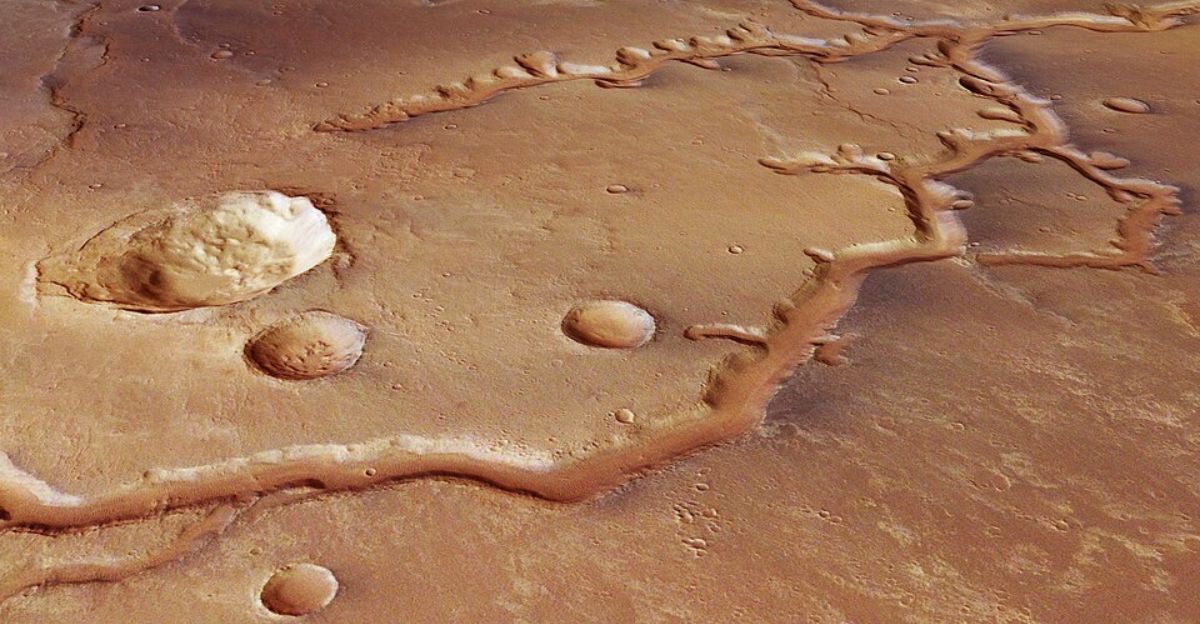
These beach deposits date back to the Noachian period, when Mars shifted from a wet, possibly livable world to a dry desert. Oceans lasted until about 3.7 billion years ago, hundreds of millions of years of water, not just brief bursts. Hydrated minerals in Mars meteorites push evidence of water to 4.5 billion years ago. Zhurong’s finds stretch the wet phase by another 700 million years, matching Earth’s timeline for the first life around 3.8 billion years ago.
Around 4 billion years ago, Mars lost its global magnetic field. This left the atmosphere open to solar wind, which stripped away gases and crashed pressure levels. Water froze into polar ice caps and underground reserves, with much trapped in crustal clays and sulfates. NASA’s Curiosity rover and orbital tools have confirmed this, finding no young hydrated rocks after 3 billion years.
NASA’s Perseverance rover, which landed in Jezero Crater in 2021, explores a 3.5-billion-year-old river delta in an ancient lake bed 45 kilometers wide. Its RIMFAX radar scans 10 meters deep for ice or signs of life, spotting similar 15-degree slopes. The rover has driven nearly 25 miles, studying rocks rich in olivine that water once changed.
Zhurong’s breakthroughs push back Mars’ window for habitability, hinting at chances for microbes along shrinking shores, in salty groundwater, or drying pools. The basin’s shape suggests beaches stack kilometers deep under craters, like a layered cake. China’s Tianwen-3 mission and NASA-ESA sample returns in the 2030s will target these spots for biosignatures from Mars’ lost water world.
Sources:
PNAS, Ancient ocean coastal deposits imaged on Mars, 2025-02-23
Penn State University, Gulf of Mars: Rover finds evidence of ‘vacation-style’ beaches on Mars, 2025-02-23
ScienceDaily, Gulf of Mars: Rover finds evidence of ‘vacation-style’ beaches on Mars, 2025-02-23
Space.com, Ancient beach on Mars discovered by China’s Zhurong Mars rover, 2025-02-25
The Conversation, Scientists have discovered a 3 billion-year-old beach buried on Mars, 2025-02-24