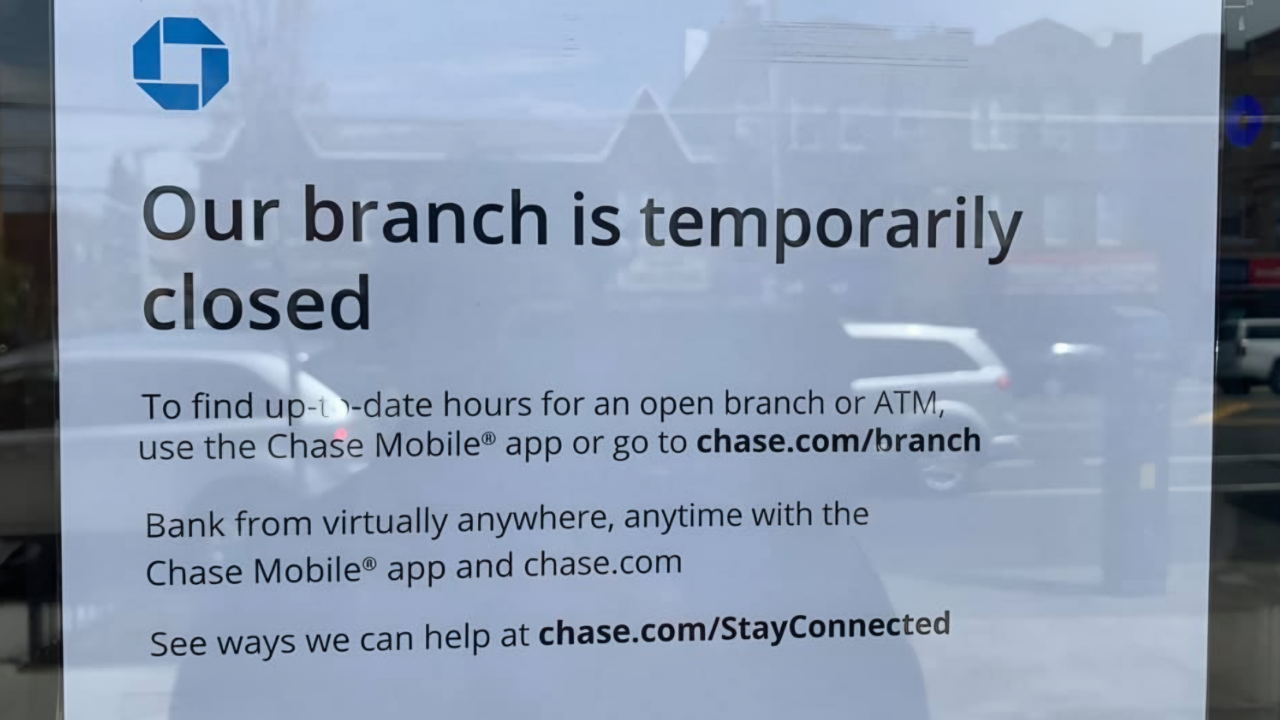
Bank branches in the United States are closing faster than ever in 2025. JPMorgan Chase shut down 66 locations between August 31 and November 29, adding to a national total of 311 closures in that period. Analysts at S&P Global expect around 1,400 branches to close by year’s end, up 34% from 1,043 in 2024. The first quarter alone saw 148 net closures.
High costs drive this trend. Banks face steep rents, maintenance bills, staffing shortages, and fewer people walking in. Customers now prefer mobile apps for everyday banking. To cut expenses, banks close underused branches and open a few new ones in busy city spots. Regulators watch closely to avoid banking deserts in areas that need services most.
This shift shows how banks chase efficiency in a digital world. Yet it raises questions about access for those who still rely on face-to-face help.
Closures Hit States Hard

The wave of closures strikes populous states the hardest. Florida and California each lost multiple branches in the late 2025 period. New York followed by Texas and states like Pennsylvania and Massachusetts saw others close too.
In daily life, the impact feels real. Shop owners in Orlando put off payments because getting cash takes more effort now. Houston residents drive longer distances for basic services. These urban areas show growing pains as mobile banking takes hold, but not everyone switches at the same speed.
The pattern reveals uneven pressures. States with big populations and heavy app use suffer most, leaving gaps in service that affect local routines.
Mobile Banking Takes Over
Americans now bank mostly on their phones. A 2025 American Bankers Association survey found that majority use mobile apps as their main channel. While some log in via PC online portals, and only a few head to branches.
The COVID-19 pandemic sped this up. Apps offer round-the-clock tools like instant deposits, bill payments, and spending alerts, no travel required. JPMorgan Chase boosts its app with features such as one-tap ATM deposits at over 15,000 machines. It also includes AI chatbots for spending tips, bill splitting, and easy tutorials for seniors with big print and videos.
Still, branches matter. Most Americans visit one yearly for big tasks like mortgages, fraud fights, or estate planning. Digital tools help with simple stuff, but human interaction fills key gaps.
Challenges for Vulnerable People
Closures hit some groups harder. Seniors over 65 struggle most as many distrust apps due to tricky interfaces, scam fears, and spotty internet in retirement zones. With limited mobility and distant family, they need in-person aid for issues like fraud fixes.
Small businesses and rural folks face long drives, often 20 to 30 miles across Pennsylvania farms or Texas plains. App glitches during key steps add frustration. Online petitions call for laws requiring branches in senior-heavy areas. Community centers report more pleas for tech help.
Banks respond with hybrid ideas. They project 1,000 to 1,600 job losses, mostly tellers and managers in Florida and California, as automation takes routine work. Rivals like TD Bank, Citizens, and Bank of America follow suit. New setups include kiosks for wires and passports, Walmart-embedded virtual branches, and “branch-in-a-box” units. Credit unions and neobanks offer live-stream advisors.
Regulators eye rules for steady service. Innovations like AR loan approvals and Wi-Fi vans target the 83% who need occasional in-person help. The industry weighs digital growth against fair access, as markets and policies decide if communities keep financial lifelines or go fully online.
Sources:
The U.S. Sun (December 2025) – Covers JPMorgan Chase leading 311 branch closures from August to November 2025.
FDIC data (2025) – Tracks nationwide branch shutdowns, including state breakdowns like Florida and California at 28 each.
American Bankers Association survey (2025) – Reports 54% of customers use mobile apps primarily, up from branches at 9%.
S&P Global (May 2025) – Details Q1 2025 net closures at 148, with projections up to 1,400 for the year