
A federal courtroom drama is unfolding that could reshape the nation’s sentencing law. At its center stands Sean “Diddy” Combs, the hip-hop icon whose 50-month prison sentence has ignited fierce debate about judicial power and jury verdicts.
His legal team filed an 84-page appeal in late December 2025, demanding immediate release and accusing the sentencing judge of overstepping constitutional boundaries.
The Verdict That Shocked the Industry

On July 2, 2025, after eight grueling weeks of testimony, a Manhattan jury delivered a split decision that sent shockwaves through the entertainment world. Combs walked away acquitted of the most serious charges—sex trafficking and racketeering conspiracy—which could have imprisoned him for life.
The jury convicted him on two counts of transportation to engage in prostitution under the century-old Mann Act. Each count carried a maximum sentence of 10 years, leaving his fate in the hands of Judge Arun Subramanian.
When the Gavel Came Down

Four months after the verdict, on October 3, 2025, Judge Subramanian sentenced Combs to 50 months—just over four years—and imposed a $500,000 fine. The music executive, who had been held at Brooklyn’s notorious Metropolitan Detention Center since his September 2024 arrest, watched as the judge explained his reasoning.
According to Subramanian, the sentence needed to send a message that abuse and violence against women would face real accountability.
A Sentence That Defies the Guidelines
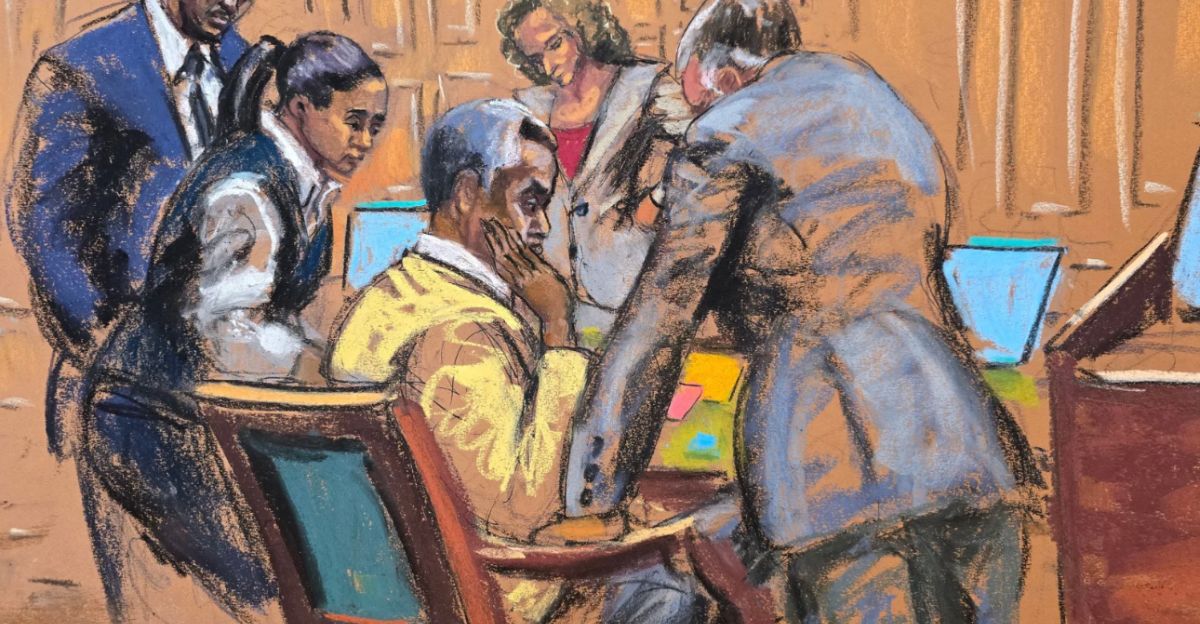
The numbers tell a striking story. Federal probation officials recommended 70 to 87 months—roughly six to seven years behind bars. Prosecutors pushed even harder, seeking 135 months, or just over 11 years. Meanwhile, Combs’ defense team had argued for no more than 14 months, essentially time served.
The judge ultimately landed at 50 months, far above what defense attorneys say is typical for similar Mann Act convictions.
The “Thirteenth Juror” Accusation

At the heart of Combs’ appeal lies a provocative allegation: that Judge Subramanian acted as a “thirteenth juror” by effectively overriding the jury’s decision. Attorney Alexandra A.E. Shapiro, who is spearheading the appeal, argues that the sentence was driven by conduct the jury explicitly rejected when they acquitted Combs of sex trafficking and racketeering.
According to the defense, the judge’s repeated references to coercion, exploitation, and force during sentencing directly contradicted the jury’s findings.
What the Law Actually Says
The appeal challenges whether judges can punish defendants for allegations that juries didn’t believe. Combs’ legal team points to a November 2024 amendment to federal sentencing guidelines that explicitly excludes acquitted conduct from guideline calculations. According to Shapiro, this change represents a fundamental shift in how the justice system should approach sentencing.
The defense argues that typical sentences for Mann Act violations, even those involving coercion, average less than 15 months—making Combs’ 50-month term nearly unprecedented.
The Judge’s Constitutional Defense

But prosecutors and the judge see it differently. In his September 30, 2025, written opinion denying Combs’ motion for acquittal, Judge Subramanian addressed the constitutional arguments head-on. He wrote that at some point, illegal activity cannot be laundered into constitutionally protected activity just by the desire to watch it.
The judge emphasized that federal law allows consideration of relevant conduct beyond what the jury found, as long as it meets a lower standard of proof.
Behind Bars at Fort Dix

In late October 2025, Combs was transferred from Brooklyn’s detention center to the Federal Correctional Institution at Fort Dix, New Jersey. The low-security facility, located roughly 80 miles south of Manhattan, offers a residential drug abuse treatment program that could reduce his sentence by up to a year.
According to the Federal Bureau of Prisons, Combs is projected to be released on May 8, 2028—about 29 months from now—if he maintains good conduct and completes programming.
The Women at the Center of the Case

Two women’s testimonies formed the backbone of the prosecution’s case. Casandra “Cassie” Ventura, Combs’s former girlfriend of over a decade, described years of abuse and being forced into drug-fueled sexual encounters with male escorts, which Combs orchestrated and often filmed.
Both women submitted victim impact statements before sentencing, with Ventura writing that she lives in constant fear of retaliation if Combs were released.
The Damning Video Evidence

Perhaps the most powerful evidence shown to jurors was a 2016 surveillance video from a Los Angeles hotel, first obtained and aired by CNN in 2024. The footage depicted Combs violently assaulting Ventura in a hallway as she attempted to flee what she described as a “freak-off” that had turned violent.
Combs had publicly apologized for the incident after the video surfaced, calling his behavior “inexcusable” and taking “full responsibility”. During the trial, his attorneys acknowledged his history of domestic violence but argued it wasn’t connected to sex trafficking.
What Are “Freak-Offs,” Legally Speaking?

The term “freak-offs” dominated the trial, referring to elaborate performances that prosecutors said Combs directed and controlled. According to testimony, these events involved Combs’ girlfriends with hired male escorts while Combs watched and sometimes participated.
The defense attempted a novel First Amendment argument, claiming Combs was producing amateur adult films for private viewing.
The Court Rejected the Pornography Defense

Judge Subramanian dismissed the First Amendment defense in his written opinion, drawing a clear line between protected speech and illegal conduct. While acknowledging that film is an expressive medium, the judge wrote that evidence showed Combs didn’t typically give notice or ask for consent before filming.
According to Subramanian, Combs’ “incidental filming” resembled a case where a bookstore was shut down for prostitution occurring on the premises—even though it affected distribution of pornographic materials, the First Amendment didn’t apply.
A Record-Setting Sentence for These Charges

The appeal argues that Combs’ sentence is unprecedented for convictions under the Mann Act without accompanying sex trafficking findings. According to defense filings, an examination of over 60 similar Mann Act cases showed an average sentence of approximately 14.9 months.
Even when coercion is involved—which the jury didn’t find in Combs’ case—defendants typically receive less than 15 months.
The Prosecution’s Counter-Argument
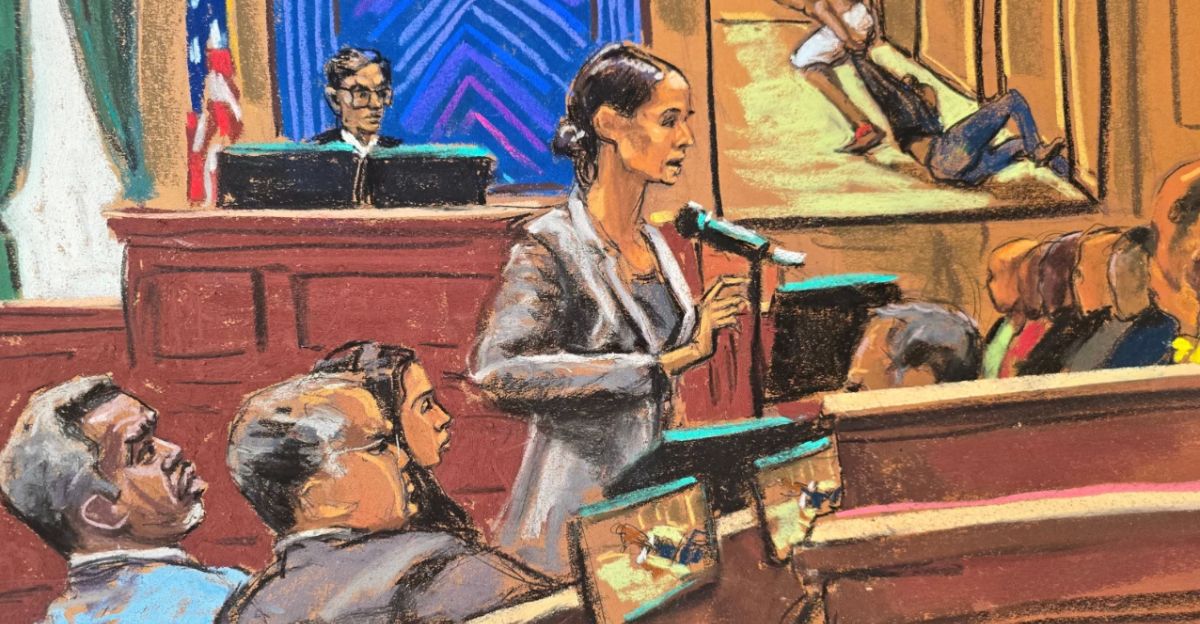
Federal prosecutors maintain that the sentence appropriately reflects the gravity of Combs’s conduct over two decades. In their 164-page sentencing memorandum, they argued that Combs used his wealth, power, and celebrity status to exploit vulnerable women.
According to Assistant U.S. Attorney Christy Slavik, Combs showed no genuine remorse and had even booked speaking engagements in Miami for the week after sentencing, anticipating a light punishment.
An Empire Built on Bad Boy Records

To understand what’s at stake, one must consider what Combs built over three decades. In 1993, after being fired from Uptown Records, he founded Bad Boy Records, which became one of hip-hop’s most influential labels. He discovered and developed The Notorious B.I.G., Mary J. Blige, Faith Evans, Mase, and numerous other artists who defined 1990s hip-hop.
By the late 1990s, Bad Boy had generated an estimated $75 million in album sales. Combs expanded into fashion, fragrances, vodka, and television, becoming one of the music industry’s first mogul-entrepreneurs.
The Constitutional Question Before the Courts

The appeal raises fundamental questions about the American justice system. If a jury finds reasonable doubt exists and acquits a defendant of specific conduct, can a judge then punish that person for the same conduct under a lower standard of proof?
The 2024 Sentencing Guidelines amendment suggests growing discomfort with this practice, with the U.S. Sentencing Commission unanimously voting to exclude federally acquitted conduct from guideline calculations.
What Happens Next

Combs filed his notice of appeal in December 2025 with the Second U.S. Circuit Court of Appeals in Manhattan. The appeals process typically takes 12 to 18 months, during which Combs will remain at Fort Dix.
His legal team is asking the appellate court to either acquit him entirely, order his immediate release, or direct Judge Subramanian to reduce his sentence to match typical punishments under the Mann Act.
The Broader Implications

Legal experts say Combs’ appeal could test the boundaries of federal sentencing law and the power of juries. If the Second Circuit rules that judges cannot rely on acquitted conduct to enhance sentences, it could affect countless federal cases nationwide.
The case also highlights tensions between prosecutors who seek accountability for alleged abuse and defense attorneys who argue the jury’s verdict must be respected above all.
A Life Interrupted at 56

Sean Combs turned 56 on November 4, 2025, behind bars at Fort Dix. It was a stark contrast to his lavish 50th birthday party in 2019, which featured performances by Mary J. Blige, appearances by Jay-Z and Beyoncé, and McDonald’s served on golden platters at 2 a.m.
His current birthday menu consisted of whole wheat bread, jelly packets, skim milk, and institutional chicken parmesan. Unless his appeal succeeds or he receives a presidential pardon, Combs will remain incarcerated until May 2028, when he’ll be nearly 59 years old.
Sources:
Sean ‘Diddy’ Combs files appeal asking for immediate prison release – BBC News
Diddy’s lawyers appeal conviction, seek reversal or reduced sentence – TNND / KOMO News syndication
Sean Combs’ prison release date set for May 2028, Federal Bureau of Prisons says – ABC7 New York
2024 Acquitted Conduct Amendment In Brief – U.S. Sentencing Commission (PDF)
Federal Sentencing Commission Limits Use of Acquitted Conduct in Sentencing Guidelines – JMBM Law Article summarizing USSC action