For three years, a silent economic downturn has drained billions from the trucking industry, yet most Americans remain unaware of it. The U.S. freight recession began in earnest in April 2022 when shipment volumes started declining and freight rates compressed, unlike the post-pandemic surge that preceded it.
Today, carriers are operating at losses, fleets are shrinking, and the sector shows no signs of recovery. This prolonged slump is now forcing major industrial companies to make painful decisions about their workforce and future capacity.
The Numbers Don’t Lie
The freight downturn has lasted over 33 months longer than most recent economic recessions and far longer than industry watchers predicted in 2022. Year-over-year shipment volumes have remained negative through 2023 and 2024, with freight expenditures declining in real terms.
Cass Freight Index data indicate that the decline is expected to continue into late 2025, signaling no imminent rebound. The cumulative effect has bankrupted numerous trucking carriers and forced equipment makers to slash production capacity at a pace unseen in recent decades.
How We Got Here
The roots of the freight recession can be traced back to the sudden end of the post-pandemic boom. From 2020 to early 2022, pandemic-driven e-commerce and supply-chain rebuilding created unprecedented freight demand, pushing rates and profits to record highs.
Trucking companies and equipment manufacturers expanded capacity aggressively, anticipating sustained growth. When consumer demand normalized and inflation cooled in 2022, freight volumes collapsed just as the industry had maximized its capital investments. Carriers found themselves with too many trucks, too many drivers, and falling rates, a recipe for financial distress.
The Carrier Casualties
Trucking companies, large and small, have suffered under sustained weakness. Fleets operating at a loss since 2022 have been forced to burn through their reserves or exit the market entirely. FreightWaves reports that many carriers have had their authorities revoked or voluntarily shut down operations, with capacity “bleeding” out across the sector.
Even traditionally profitable operations face margin pressure, and owner-operators have been hit hardest by compressed rates and elevated fuel and labor costs. The damage extends upstream to trailer manufacturers and equipment suppliers who depend on carrier health.
Great Dane’s Reckoning
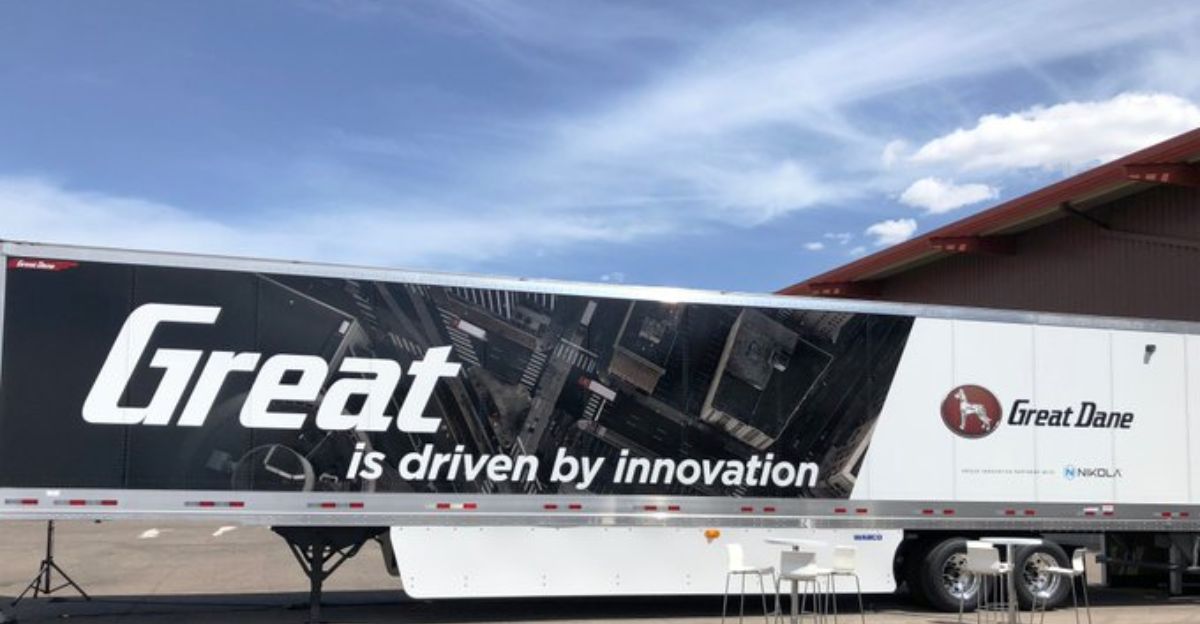
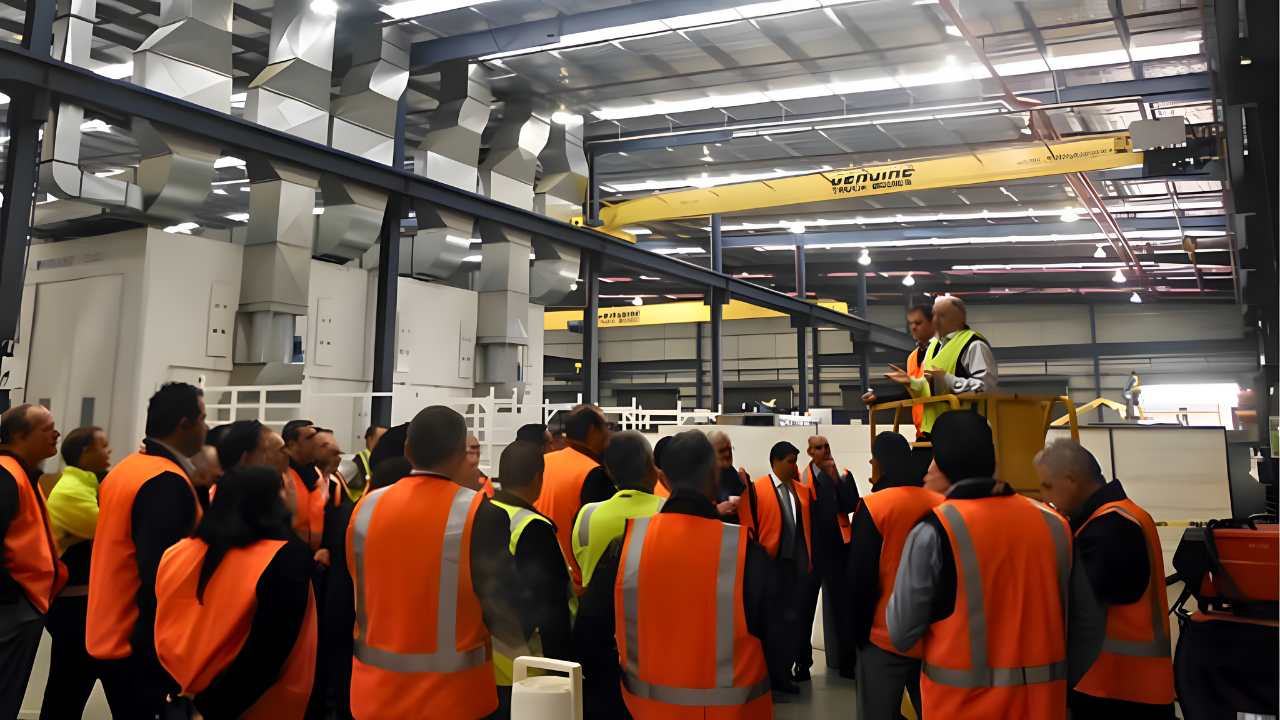
In December 2025, Great Dane, one of North America’s largest semi-trailer manufacturers, announced it would lay off approximately 164 workers at its Elysburg, Pennsylvania, facility, effective early 2026. The company attributed the cuts directly to weak freight demand and a “protracted freight recession” that has squeezed customer orders, forcing production lines to operate below capacity.
Great Dane, which has dominated the dry-van trailer segment for decades and maintains multiple manufacturing plants across North America, is a bellwether for the sector’s health. This major industrial player’s decision to cut jobs signals deepening stress even among industry leaders.
Elysburg’s Economic Blow
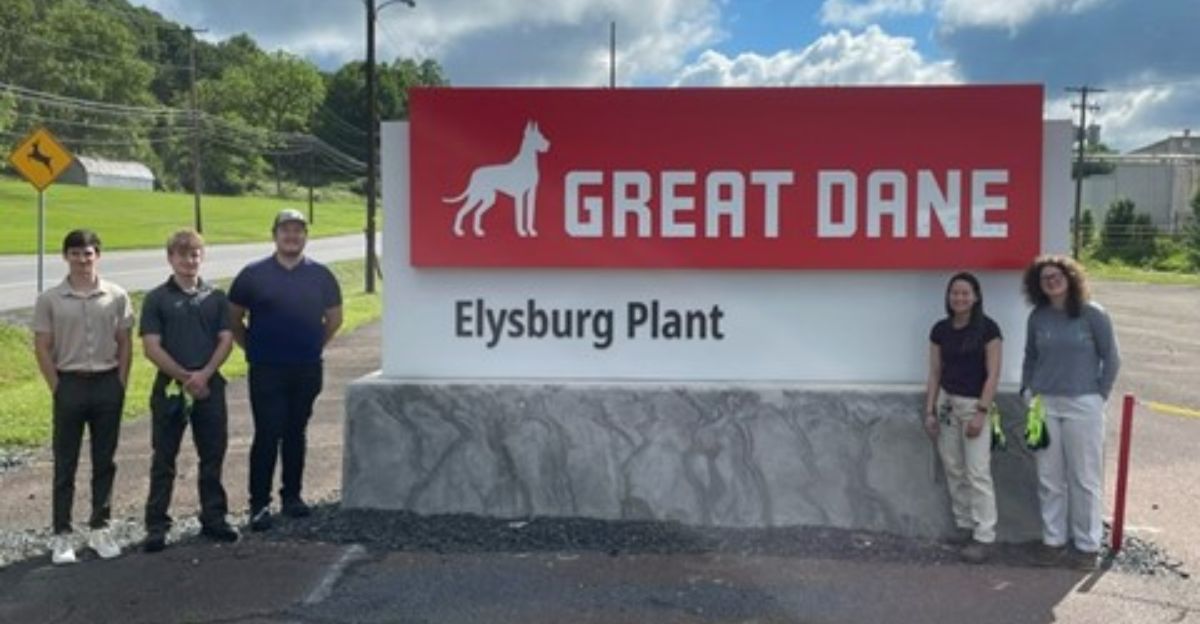
Elysburg, Pennsylvania, a rural community in Luzerne County, has long depended on the Great Dane facility as a major employer. The facility’s workforce of approximately 164 positions represents a substantial influx of income into the local economy through wages, property taxes, and consumer spending.
The loss of these jobs will have immediate ripple effects, including reduced retail traffic, lower property values, and strained municipal budgets that rely on industrial tax bases. Rural manufacturing communities across the nation have faced similar waves of deindustrialization; however, when a single facility represents a significant fraction of local employment, the impact is concentrated and severe.
The Wage Loss & Family Impact
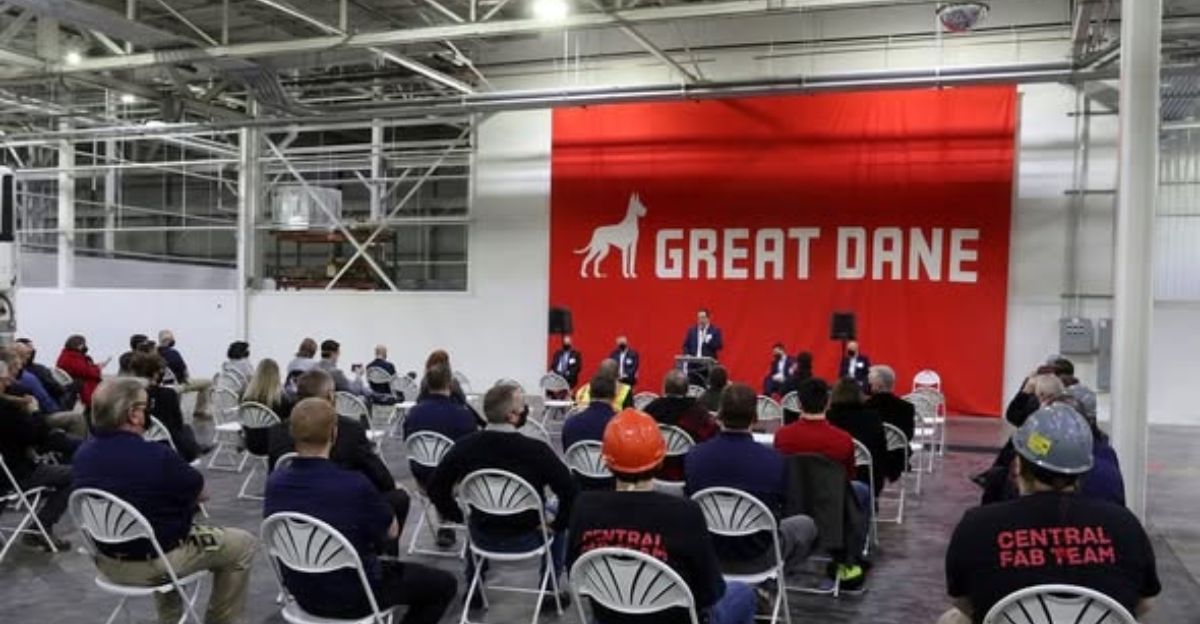
The 164 laid-off workers face the immediate loss of stable manufacturing income. Based on typical U.S. trailer manufacturing wages, averaging $50,000 to $75,000 annually, including overtime and benefits, the facility’s annual wage bill is estimated at roughly $8 million to $12 million. That income supported not only the workers but their families, local schools, and small businesses in the region.
For rural Luzerne County, where median household income trails the national average, the loss of such jobs cascades through entire communities. Workers aged 50 and older, who comprise a significant portion of manufacturing workforces, face particular challenges in finding comparable employment.
Sector-Wide Production Cuts
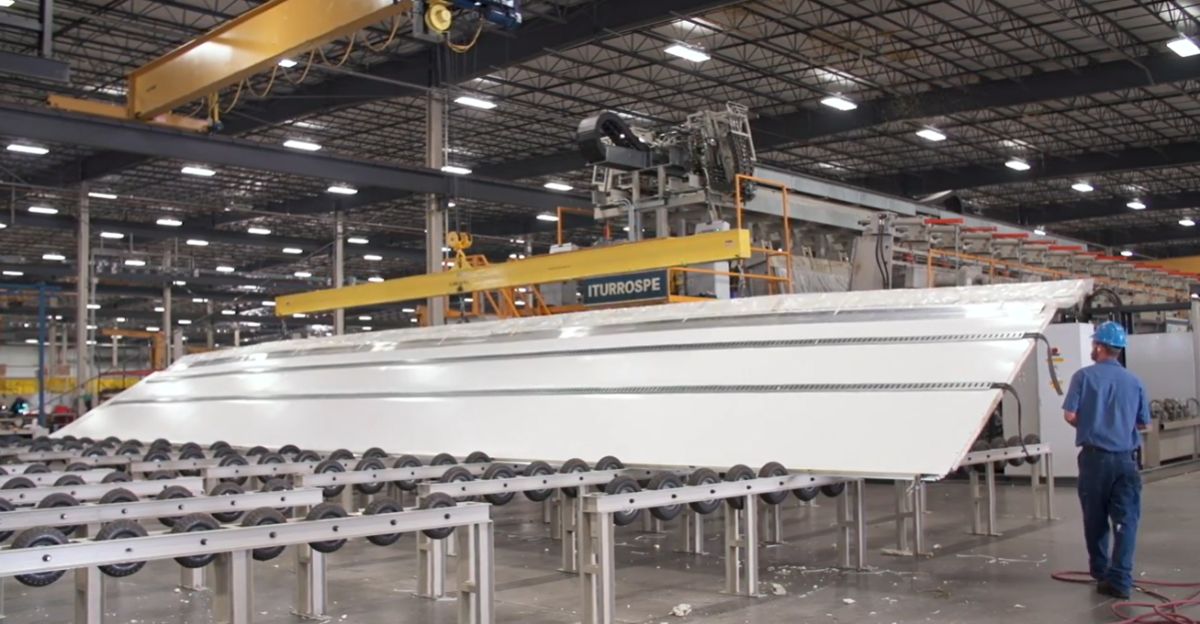
Great Dane’s layoff is not an isolated incident but part of a broader pattern across North American trailer manufacturing. Multiple equipment makers have announced production reductions, extended plant shutdowns, and workforce cuts as freight demand remains depressed. Competitors, including Wabash National and others, have similarly trimmed capacity and employment in response to weak carrier demand.
Industry observers describe a sharp, coordinated pullback in trailer production as a sign that major manufacturers expect the freight downturn to persist well into 2026. This coordinated retreat from capacity suggests sector-wide consensus that recovery remains distant.
The Supply-Chain Domino Effect
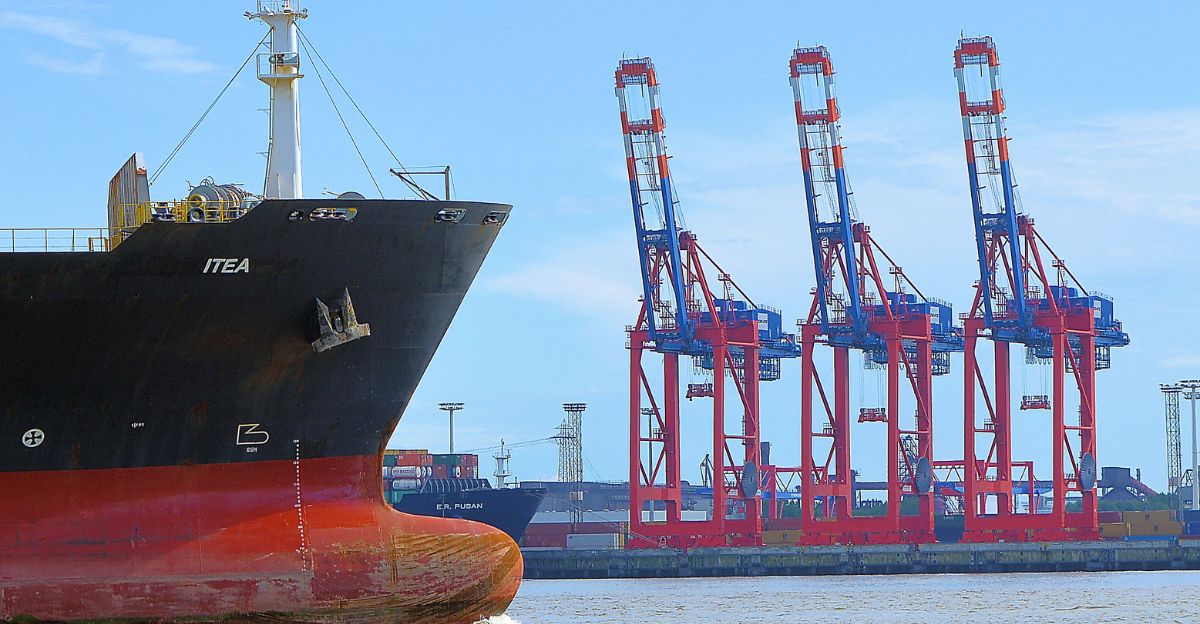
The freight slump’s damage extends beyond carriers and trailer makers to suppliers, logistics firms, and transportation-adjacent businesses. Component suppliers that feed trailer manufacturing have also announced production cuts and furloughs. Logistics and warehousing firms, which expand and contract in response to freight volumes, are consolidating operations and laying off workers.
Port operations and intermodal yards have experienced reduced activity, resulting in limited job opportunities in transportation hubs. Economists tracking the supply chain note that freight weakness is a leading economic indicator, suggesting broader softness in manufacturing and goods movement ahead.
The Invisible Recession’s Hidden Cost

While headlines focus on consumer inflation and stock markets, the freight recession has quietly eliminated thousands of stable blue-collar jobs across rural America. These jobs once supported middle-class lifestyles and community stability. Unlike cyclical downturns, which typically trigger rapid policy responses, the freight recession has persisted for over three years with minimal federal intervention and media attention.
Rural communities dependent on manufacturing lack the economic diversification of urban centers, making each facility closure a potential financial crisis. This “invisible recession” reveals how structural economic shifts can devastate regions while headline economic indicators remain resilient, a troubling paradox for workers and communities left behind.
Carrier Frustration & Pushback

Trucking company owners and operators have grown increasingly vocal about the unsustainable pressure they face. According to freight industry reporting, carriers argue that freight rates have fallen below operational break-even levels, forcing them to choose between accepting unprofitable loads or sitting idle. Owner-operators report that fuel costs, insurance, and maintenance expenses have not decreased proportionally to freight rates, squeezing margins to historic lows.
Industry associations have lobbied for regulatory relief and questioned whether the market can absorb further rate compression without triggering more bankruptcies. Yet equipment makers like Great Dane argue they cannot justify maintaining production capacity when customer demand remains weak.
Leadership’s Capacity Gamble

Great Dane’s decision to reduce workforce rather than maintain capacity at a loss reflects a strategic choice by company leadership: preserve profitability by matching supply to current demand, even at the cost of layoffs. This approach prioritizes short-term financial health over employment stability and manufacturing footprint.
Other trailer makers have made similar choices, betting that the market will eventually recover and that they can ramp up production when demand rebounds. However, this strategy carries risk: competitor failures or delayed recovery could shift market share, and retaining skilled workers during downturns is cheaper than retraining replacements during upswings. Leadership’s gamble hinges on a recovery timeline that remains fundamentally uncertain.
Tentative Recovery Signals?

Some industry analysts point to modest signs of potential recovery on the horizon. Spot freight rates have stabilized at low levels, and contract rates show some resilience compared to 2024. Reports suggest that excess trucking capacity is finally being absorbed into the system, potentially setting the stage for a gradual demand rebound in 2026.
However, macroeconomic uncertainty, including tariff pressures and potential trade disruptions, clouds the outlook. Most freight analysts remain cautious, warning that any recovery will likely be gradual and that manufacturers should not expect an immediate snap-back to 2021–2022 demand levels.
Worker Retraining & Community Response

Pennsylvania and Luzerne County have initiated workforce retraining programs to assist the laid-off Great Dane workers. Federal Trade Adjustment Assistance (TAA) and state-level dislocated worker programs are available, though they typically provide modest income support and retraining vouchers. Local community colleges are preparing manufacturing and logistics programs to help workers transition to new roles.
However, retraining alone cannot replace the stable, middle-class wages that manufacturing jobs provided. Many displaced workers will face permanent income loss, and younger workers may relocate to urban areas with more diverse job markets, further straining the demographic and economic resilience of rural communities.
When Will the Freight Ship Right?
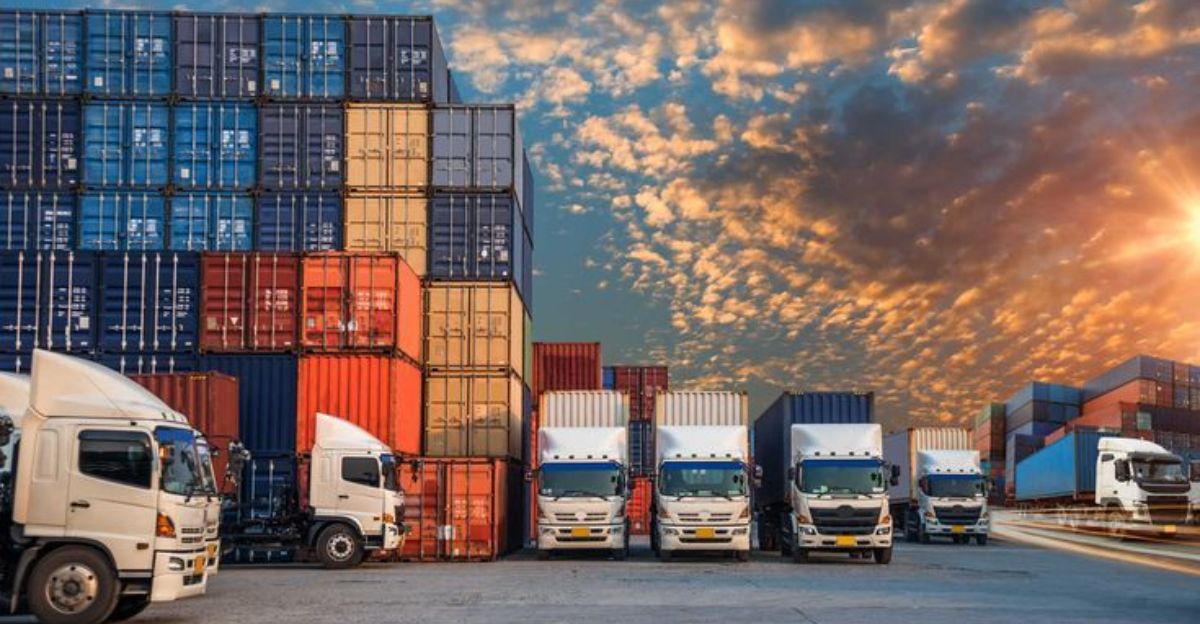
As 2025 comes to a close and 2026 approaches, the freight industry faces a fundamental question: Is the recession a temporary cyclical downturn, or does it signal a structural shift in goods movement and manufacturing demand? If the latter, equipment makers and carriers must permanently right-size their operations to a lower equilibrium.
If the former, those who have drastically cut capacity risk losing market share in a recovery. Meanwhile, rural communities like Elysburg wait for clarity. The invisible freight recession has already rewritten the economic calculus for thousands of workers and their families. Whether recovery arrives in months or years will determine whether this is merely a painful pause or a permanent contraction of America’s industrial heartland.
Sources:
Cass Freight Index, Freight Market Data and Analysis
FreightWaves, “The Great Freight Recession Has Now Lasted Longer Than the COVID Bull Market”
FreightWaves, “From Factories to Fulfillment Centers: More Layoffs Hit U.S. Supply Chains”
Fox56 Pennsylvania, “Great Dane to Lay Off Up to 164 Workers at Elysburg Plant as Freight Slowdown Continues”
Bureau of Labor Statistics, Occupational Employment Statistics
U.S. Department of Labor, Trade Adjustment Assistance Program