
The prospect that a crucial Atlantic current could fail within decades, dramatically reshaping weather, sea levels, and economies, is moving from distant scenario to near-term risk, according to new research led by former NASA scientist James Hansen. His latest work argues that the “point of no return” for major climate upheaval may arrive in just 20–30 years—roughly half a century sooner than earlier mainstream assessments.
Rethinking the Climate Clock
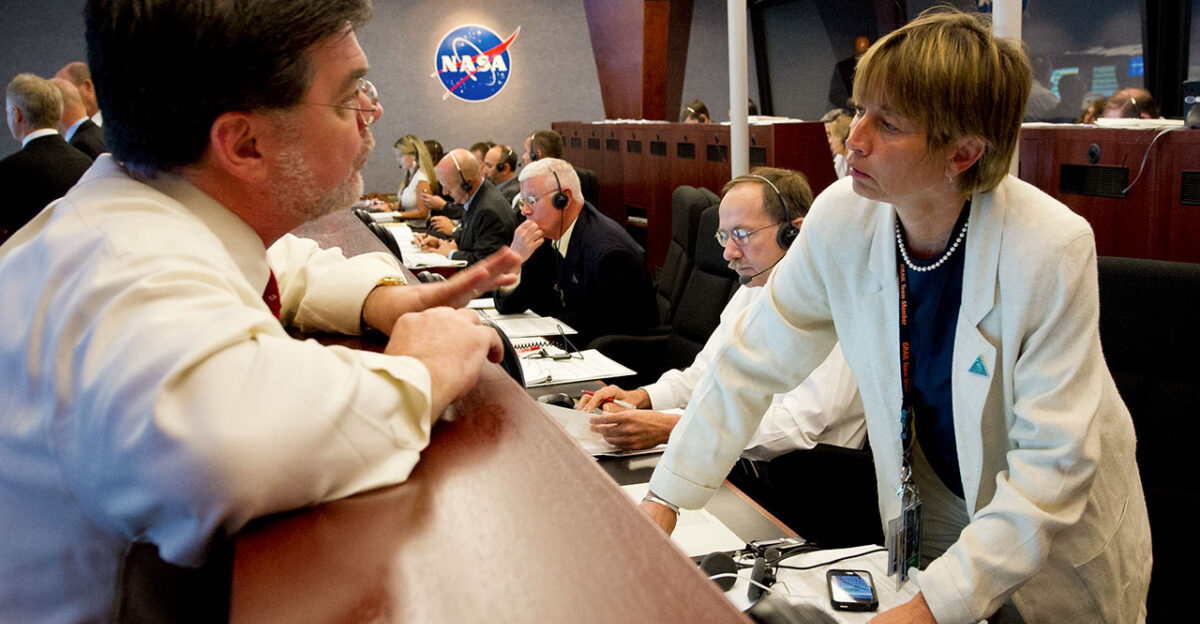
Hansen, who first warned the U.S. Congress about human-driven warming in 1988, has spent decades studying how rising greenhouse gas concentrations interact with ice sheets and oceans. His February 2025 study, co-authored with 17 international scientists, focuses on the Atlantic Meridional Overturning Circulation (AMOC), a vast system of currents that transports warm water northward and cooler, denser water southward at depth.
The Intergovernmental Panel on Climate Change (IPCC) has long judged a shutdown of this circulation as unlikely before 2100. Hansen’s team, drawing on paleoclimate evidence, recent temperature records, and ice melt estimates, now argues that a collapse could occur as early as mid-century. That revision pulls forward the potential tipping point by an estimated 50–60 years and reframes it as a risk that could materialize within a single human generation.
Hansen describes the concern in stark terms, warning that the world is approaching a “point of no return” at which overturning circulation in the Atlantic could shut down around mid-century. In his view, the climate system is responding more quickly than many earlier models anticipated, especially as global warming has sped up over the last 15 years.
Signals from a Warming Planet

Recent temperature trends form an important part of the backdrop. Global warming has accelerated from about 0.18°C per decade over the late 20th and early 21st centuries to roughly 0.27°C per decade or more in the past 15 years. January 2025 registered as the warmest on record, even though a developing La Niña would normally exert a modest cooling influence.
Hansen and colleagues link this acceleration to rising greenhouse gas concentrations and unexpectedly rapid ice melt in Greenland and Antarctica. As large volumes of cold, fresh water flow into the North Atlantic, they can disrupt the density-driven sinking that helps power the AMOC. The study argues that current melt rates already exceed earlier assumptions and may continue to rise, with consequences that reverberate through the climate system for centuries.
Researchers are watching several key signals: shifts in ocean temperature and salinity profiles, changes in deep-water formation regions, increasing freshwater input from ice sheets, and subtle alterations in established current patterns. Expanded satellite monitoring and in‑situ ocean observing networks are expected to refine estimates of how close the AMOC may be to a tipping point.
Regional Impacts: Coasts and Continents

If the AMOC were to fail, the consequences would be uneven but far-reaching. Along the U.S. East Coast, a shutdown is expected to produce a sharp, regional jump in sea level on top of global averages. Hansen’s analysis estimates that millions of homes could face rapid inundation, with real estate exposure valued at between $2 trillion and $5 trillion in coastal cities such as Miami, New York, and Boston. Critical infrastructure—ports, subways, power systems, and roads—would be at heightened risk within a few decades.
Western Europe, home to roughly half a billion people, currently benefits from the moderating influence of Atlantic heat transport. A weakened or collapsed AMOC could bring more extreme seasonal swings: hotter summers, more severe winters, and disruptions to rainfall that affect agriculture and water supplies. Food security, public health, and energy demand could all be strained as familiar patterns give way to a more volatile climate.
Beyond these regions, the redistribution of heat and moisture would likely alter storm tracks, shift monsoon systems, and affect agricultural productivity in multiple continents. Island states and low-lying deltas, already vulnerable to sea level rise, would confront higher water and more intense weather. Nearly a billion people living in coastal areas worldwide could face escalating risks of flooding, erosion, and displacement.
Disputed Timelines, Shared Concerns

Hansen’s conclusions have prompted vigorous debate among climate specialists. Some independent work, such as a study by Peter and Susanne Ditlevsen, also points to a possible AMOC collapse around mid-century using different statistical techniques. At the same time, high-profile researchers including Michael Mann and Bob Kopp caution that the evidence for rapidly accelerating ice melt remains incomplete and that current data may not yet justify projecting an exponential increase in loss from Greenland and Antarctica.
Despite these disagreements, there is broad scientific agreement that the AMOC is weakening and that continued warming will increase stress on the system. The central point of contention is timing and severity, not whether ongoing change is occurring. This distinction matters for public understanding: uncertainty spans a range from serious disruption later this century to a more abrupt, higher-impact shift within a few decades.
Policymakers, researchers, and financial analysts are already wrestling with the implications. Rising climate risks are reshaping insurance markets, coastal planning, and infrastructure investment. Legal debates over liability for emissions, adaptation funding, and protection of vulnerable communities are likely to intensify as impacts mount and as scientific assessments narrow the window for action.
Policy Responses and a Narrowing Window
Hansen remains sharply critical of what he sees as decades of missed opportunity since his 1988 testimony. He argues that short-term economic priorities and lobbying by entrenched interests have delayed measures that could have slowed warming and reduced the odds of crossing major thresholds. In response, he promotes a package of steps that includes direct emission cuts, expanded research, and broad public engagement.
Central to his policy prescription is a carbon fee and dividend model. In one set of simulations cited by Hansen, a fee starting at 15 dollars per ton of carbon and rising annually could cut U.S. emissions roughly in half within 20 years while creating an estimated 2.8 million jobs and adding about 1.375 trillion dollars to economic output. Under the dividend approach, most of the revenue is returned to households, with analyses suggesting that around 70 percent of families would come out ahead financially even as fossil fuel use declines.
Internationally, Hansen’s latest study has been described by European officials as a serious warning for climate planning. It strengthens calls for faster deployment of renewable energy, accelerated phase‑out of fossil fuels, and scaled-up methods to remove carbon dioxide from the atmosphere. Meeting net‑zero emission targets by mid-century is increasingly framed not only as a global temperature goal but also as a way to limit the probability of triggering a cascade of tipping points, including a potential AMOC collapse.
Younger generations, who will live through the period when these risks are expected to peak, are becoming an influential force in this discussion. Their activism is adding moral and political weight to demands for rapid decarbonization and adaptation measures designed to protect those who are most exposed yet contributed least to historical emissions.
As scientists refine models and expand monitoring in the coming decade, the picture of how close the AMOC and other systems are to critical thresholds should become clearer. The core message of Hansen’s work is that decisions taken over the next 20–30 years will strongly shape whether those thresholds are crossed. The choices now before governments, industries, and communities may determine not only how much warming occurs, but whether key parts of Earth’s climate machinery remain stable or enter a new, less predictable state.
Sources
Hansen, James E., et al. “Pulling the Trigger: Human-Induced Jump in Global Warming and Point of No Return for Ocean Overturning Circulation.” Environment: Science and Policy for Sustainable Development, vol. 87, no. 2, 2025, pp. 4-15.
United Nations News. “It’s Official: January Was the Warmest on Record.” UN News, 5 Feb. 2025.
The Guardian. “Collapse of Critical Atlantic Current Is No Longer Low-Likelihood, Study Finds.” The Guardian, 28 Aug. 2025.
Citizens Climate Lobby. “Carbon Fee & Dividend’s Economic Impact: REMI Report.” Citizens Climate Lobby, 14 Mar. 2024.
Berkeley Earth. “January 2025 Temperature Update.” Berkeley Earth, 18 Mar. 2025.