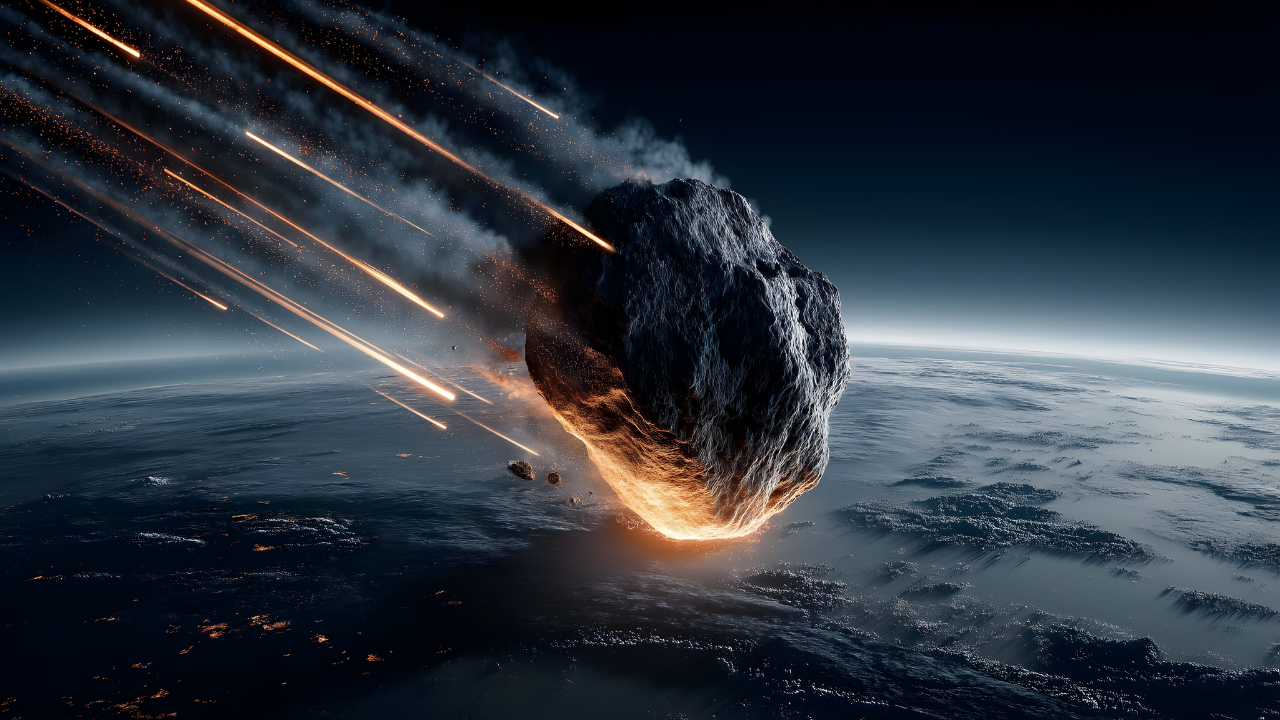
Asteroid 2025 XM’s recent flyby offered a reminder of how closely Earth is watched for cosmic hazards. The plane‑sized object, traveling at about 9,753 miles per hour, passed at a safe distance of roughly 295,000 miles on December 9, 2025—farther out than the Moon’s average 239,000‑mile orbit—yet it sat at the center of a complex web of surveillance, technology investment, and global coordination focused on defending the planet.
NASA’s Watchful Eye
NASA’s intense monitoring of asteroid 2025 XM fits into a broader mandate to find and track near‑Earth objects, or NEOs. Since 2005, the agency has been tasked with cataloging space rocks larger than 140 meters that come close to our planet’s orbit. Although 2025 XM is much smaller—an estimated 84 feet across—its passage illustrates how even relatively modest objects are now swept into global tracking networks.
These efforts are not limited to observing individual rocks. They underpin a growing field known as planetary defense, where researchers, engineers, and emergency planners work together to understand impact risks, refine detection methods, and design practical responses should a threatening object be found.
Rising Investment and New Technology

The scale of that effort is reflected in money as well as hardware. NASA’s planetary defense budget has surged from about $3.8 million in 2009 to $304.2 million in 2026, enabling the agency to maintain sophisticated surveys, run simulations, and develop experimental missions aimed at diverting hazardous asteroids before they can strike.
The most visible example so far is the Double Asteroid Redirection Test, or DART. In September 2022, the $330 million spacecraft deliberately slammed into a small asteroid, changing its orbit. The mission provided the first real‑world proof that a kinetic impactor could nudge a space rock off course, a cornerstone concept for any future attempt to prevent an impact on Earth.
Next‑generation detection systems are also on the way. NASA’s planned NEO Surveyor spacecraft, slated for launch in late 2027, is designed to operate from the L1 Lagrange point between Earth and the Sun. From that vantage, it will use infrared sensors to spot asteroids that ground‑based telescopes often miss, particularly those that approach from the direction of the Sun. If successful, it could extend warning times from years to potentially decades for dangerous objects.
Global Networks and Emergency Planning

Planetary defense has increasingly become an international project. More than 25 countries, representing over 50 signatories, participate in the International Asteroid Warning Network, which coordinates observations, shares orbital data, and discusses potential strategies for response. Governments also work through other channels to run tabletop exercises and scenario drills in which fictional asteroids are put on a collision course with Earth.
In the United States, NASA collaborates with emergency management agencies such as FEMA to rehearse what would happen if a large impact were predicted. These exercises explore evacuation plans, communication strategies, and decision‑making timelines. Officials emphasize that the probability of a truly catastrophic event is low, but they argue that building procedures in advance is essential if a serious threat were ever discovered.
Risk, Business, and Public Perception
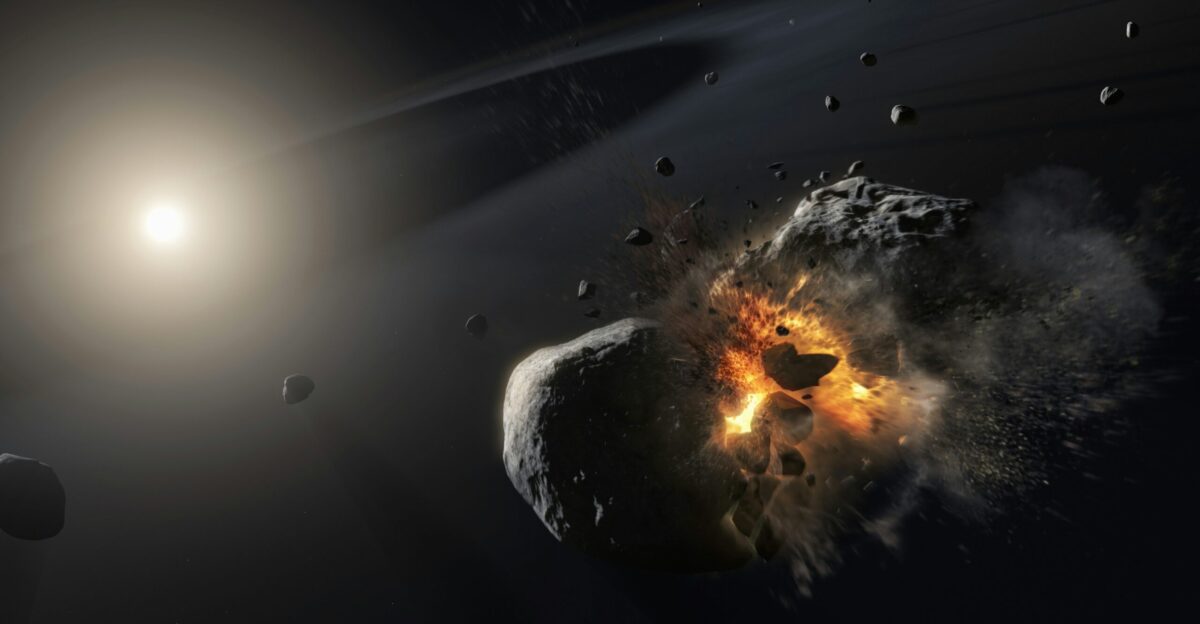
The attention to asteroids is reshaping industries that must account for hazards beyond Earth’s atmosphere. Space insurers, for example, are adapting policies to cover debris, collision risks, and other orbital threats as companies like SpaceX launch large constellations of satellites and commercial spaceflight expands. Space tourism operators now factor meteorites and debris into risk assessments and safety protocols for suborbital and orbital trips.
Asteroid resources are also drawing interest. A small but growing group of firms and researchers view certain asteroids as potential sources of water, metals, and rare elements. Market projections for asteroid mining vary widely, but some forecasts run as high as $17.5 billion by 2032, suggesting sizable expectations for future development even though practical mining remains in an early stage.
Closer to home, satellite operators face crowded orbits and a rising probability of debris collisions. Space situational awareness programs track thousands of objects, issuing alerts and recommending maneuvers when conjunction risks increase. The same surveillance infrastructure that keeps tabs on 2025 XM and other NEOs also feeds data into these collision‑avoidance systems.
Public awareness of asteroid threats is influenced as much by culture and communication as by technical assessments. Disaster films centered on planetary impacts have taken in roughly $900 million in worldwide box office revenue, shaping popular notions of how an asteroid crisis might unfold. At the same time, social media has become a rapid amplifier of fear. When asteroid 2024 YR4 briefly showed an impact probability of around 3 percent in February 2025, online speculation surged, prompting NASA’s Near‑Earth Object program to devote extra effort to sharing clear, evidence‑based updates and countering rumors.
Beyond research labs and control rooms, the growing focus on planetary defense is creating new academic and professional pathways. Universities are adding courses and graduate programs in space resources, asteroid mining, and impact risk. Demand is rising for engineers, orbital dynamicists, and data specialists who can work on detection networks, diversion technologies, and space‑risk modeling.
Asteroid 2025 XM’s uneventful passage highlights how much quieter reality is than a blockbuster storyline, yet it also underscores how much work is being done in the background. As budgets rise, detection systems improve, and international partnerships deepen, planetary defense is evolving from a theoretical concern into a structured system that touches insurance markets, commercial spaceflight, education, and emergency planning. The asteroid that passed harmlessly by in 2025 is unlikely to be remembered, but the infrastructure built to track it may prove crucial if a more dangerous object is ever found on a path toward Earth.
Sources:
“NEO Surveyor: Finding Asteroids Before They Find Us.” NASA Science, NASA Jet Propulsion Laboratory, December 2025.
“How We Track Near-Earth Asteroids.” Astronomy Magazine, 2025.
“Double Asteroid Redirection Test (DART).” Wikipedia, 2022-2025.
“In Win for Planetary Defense, NASA Mission Successfully Nudges Asteroid Orbit.” Science Magazine, October 10, 2022.