
President Donald Trump proposed eliminating federal income tax entirely during a Thanksgiving video call with U.S. military personnel on November 27, 2025, stating that tariff revenue could replace the trillions in lost federal revenue. The announcement marks the most aggressive income tax proposal by a sitting president in modern American history. Economists immediately questioned the feasibility of bridging a $2.7 trillion annual revenue gap, signaling a primary fiscal debate ahead.
“This proposal would be a structural challenge of unprecedented magnitude,” analysts warned, reflecting the difficulty of replacing nearly half of all federal receipts. With trillions at stake, lawmakers and financial experts are weighing the potential economic and legislative fallout. Here’s what’s happening…
The Revenue Gap Problem

The scale of the undertaking is staggering. Approximately 160 million American households file federal income tax returns annually, generating roughly $2.66 trillion—the largest funding source for the federal government, accounting for 49% of total federal receipts. Replacing this revenue through alternative means poses immense challenges.
Trump’s administration proposes funding operations through tariffs, foreign investment pledges, and economic growth projections. Tariff revenue reached $195 billion in fiscal year 2025, a record high but still accounting for less than 8% of income tax collections. Even with a proposed 10% universal tariff on imports and higher rates on Chinese goods, independent analyses suggest tariffs could cover less than 20% of the income tax gap.
Funding Plans Under Scrutiny
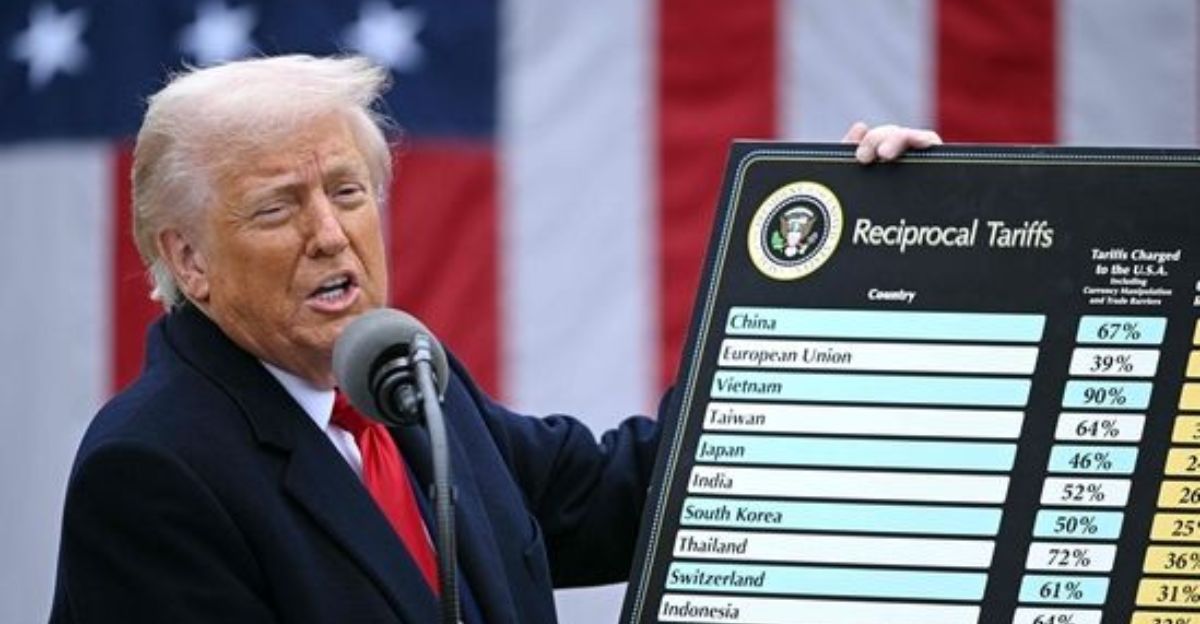
Foreign investment pledges and economic growth projections remain unquantified in administration statements. Treasury Department data indicate that foreign direct investment in the U.S. totals roughly $5.4 trillion annually; however, converting these commitments into sustainable tax revenue would require novel policy mechanisms that have not yet been detailed.
Experts argue that relying on economic growth to offset lost income tax revenue is highly uncertain. Even optimistic growth scenarios would fall short of replacing trillions in federal funding. Analysts warn that without concrete numbers, the plan leaves a massive shortfall unaddressed, raising questions about the proposal’s practicality.
Spending Cuts Implications

The $2.7 trillion revenue hole would force Congress to consider severe spending reductions. Analysts describe these cuts as “mathematically unavoidable” if income tax revenue disappears. Maintaining current deficit levels would require reducing spending by roughly 45% across all non-defense discretionary programs or eliminating entire cabinet departments.
Mandatory spending programs, including Social Security, Medicare, and Medicaid, account for 61% of federal outlays and remain politically protected. This concentrates potential reductions on defense (13%) and non-defense discretionary programs (15%), covering agencies, research, infrastructure, and education. Historical context shows cuts of this magnitude are unprecedented in nominal terms.
Economic and Legislative Challenges
Budget experts across the political spectrum express skepticism. The Penn Wharton Budget Model calculates that eliminating income tax while keeping current spending would raise the national debt by $27 trillion over a decade. The Tax Policy Center notes that 76 million households already pay no federal income tax, meaning the proposal would mainly benefit 84 million households with taxable income.
Congressional leaders have not signaled whether they will advance legislation. Any tax reform package would need to address revenue replacement, payroll tax integration, refundable credit mechanisms, and state tax conformity—complexities the administration has not publicly explained. Analysts warn that navigating these challenges would be legally and politically daunting.
High Stakes for Government and Economy

Trump’s proposal highlights the tension between bold fiscal ideas and the practical realities of governance. Eliminating income tax without a clear replacement strategy could trigger unprecedented budget cuts or massive debt growth, reshaping federal spending priorities. The plan highlights the challenge of striking a balance between ambitious tax policy and economic realities.
For lawmakers, analysts, and households, the stakes are immense. Key decisions will determine how—or if—the government can sustain current programs without income tax revenue. The debate will likely influence fiscal policy, public services, and the broader economy for years to come.
Sources:
Reuters: Trump income tax elimination statements (Nov 27-28, 2025)
U.S. Treasury Department: Federal revenue statistics (FY2025)
Tax Policy Center: Individual income tax data and household analysis (2025)
Committee for a Responsible Federal Budget: Tariff revenue and spending cut analysis (Nov 2025)
Axios: Trump tariff and tax policy coverage (Nov 28, 2025)