Deep in the Pacific Ocean, a huge whale stayed out of sight from humans for many years. People knew about it only from dead bodies that washed ashore or weak sounds it made. This whale is as big as a car. In June 2024, researchers finally took the first live photos of it and confirmed its identity with DNA. The whale is called the ginkgo-toothed beaked whale, or Mesoplodon ginkgodens. It was one of the hardest large animals on Earth to spot alive.
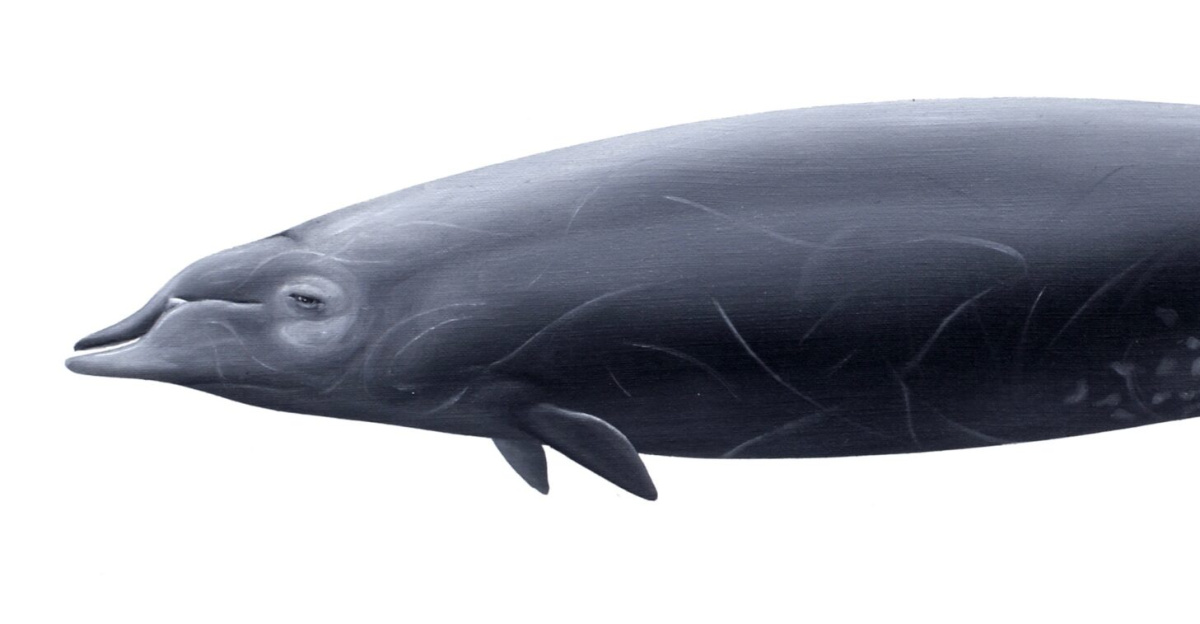
Beaked whales like this one dive very deep. They stay underwater for more than an hour. Then they come up quickly in far-off ocean areas. This habit keeps them hidden from people. But dangers are growing, such as big fishing boats, ships passing by, and loud sonar from the military. Male ginkgo-toothed beaked whales grow longer than 4 meters. They have special teeth shaped like leaves and tusks. Scientists first saw these teeth in 1958 on a whale that washed up near Tokyo.
For 60 years, almost all records came from dead whales. Most washed up in the western Pacific, especially Japan. Others got caught in fishing nets by accident. These finds told little about what the whales look like alive, how they live in groups, or where they swim in the ocean.
Listening for Mystery Sounds
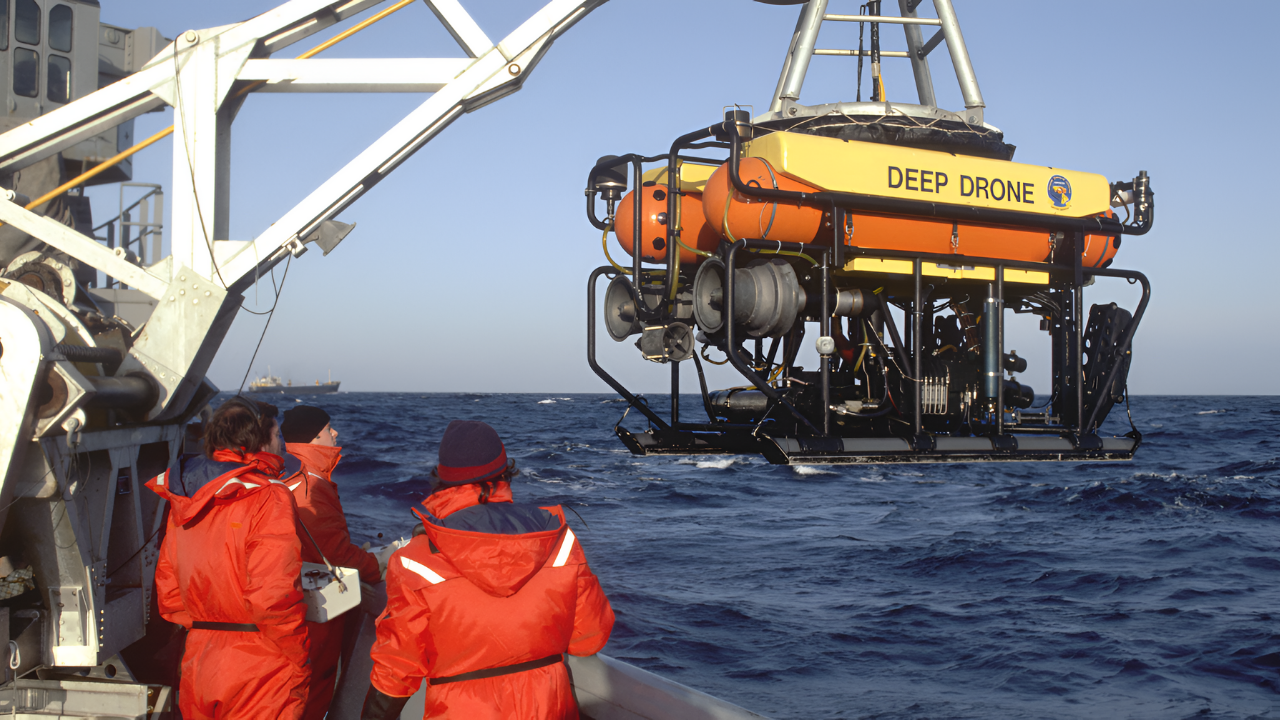
Scientists used underwater microphones called hydrophones in the North Pacific. Starting in 2018, they picked up a repeating sound called BW43. It came from a beaked whale but did not match any known type. From 2020, a team from the U.S. and Mexico dragged listening equipment behind boats off Baja California, Mexico. They went out every summer. They hoped to find ginkgo-toothed beaked whales or another rare kind called Perrin’s beaked whale.
The team faced four summers with no luck. They saw empty oceans and chased wrong clues in deep underwater canyons. This tested their patience.
The Big Breakthrough at Sea
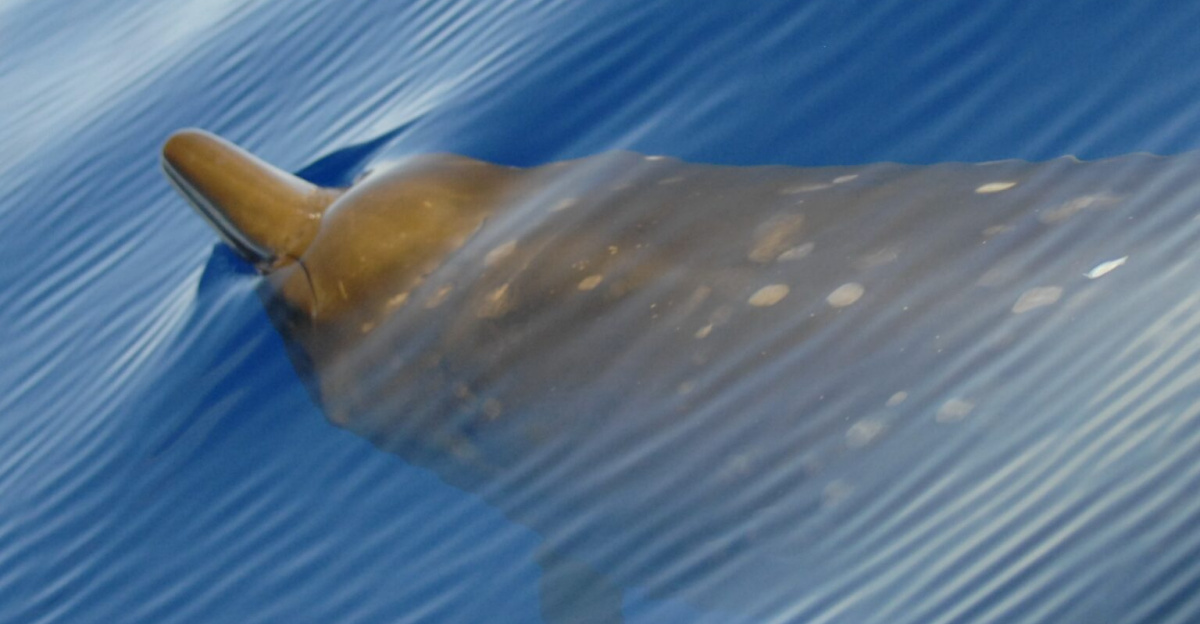
Everything changed on a boat called the Pacific Storm from Oregon State University. Six whales came to the surface in deep water. Photographer Craig Hayslip took clear pictures of them. Biologist Robert Pitman got a skin sample from one that swam close, within 20 meters. Tests on the DNA showed five of them were ginkgo-toothed beaked whales. This gave the world its first confirmed live photos.
The live whales had features not seen on dead ones. Their heads looked pale. They had dark patches around their eyes and light spots there too. White scars showed fights between males. Round bite marks came from cookiecutter sharks. At the same time, the team recorded the BW43 sound near these whales. This proved the mystery noise belongs to the ginkgo-toothed beaked whale.
What It Means for the Future
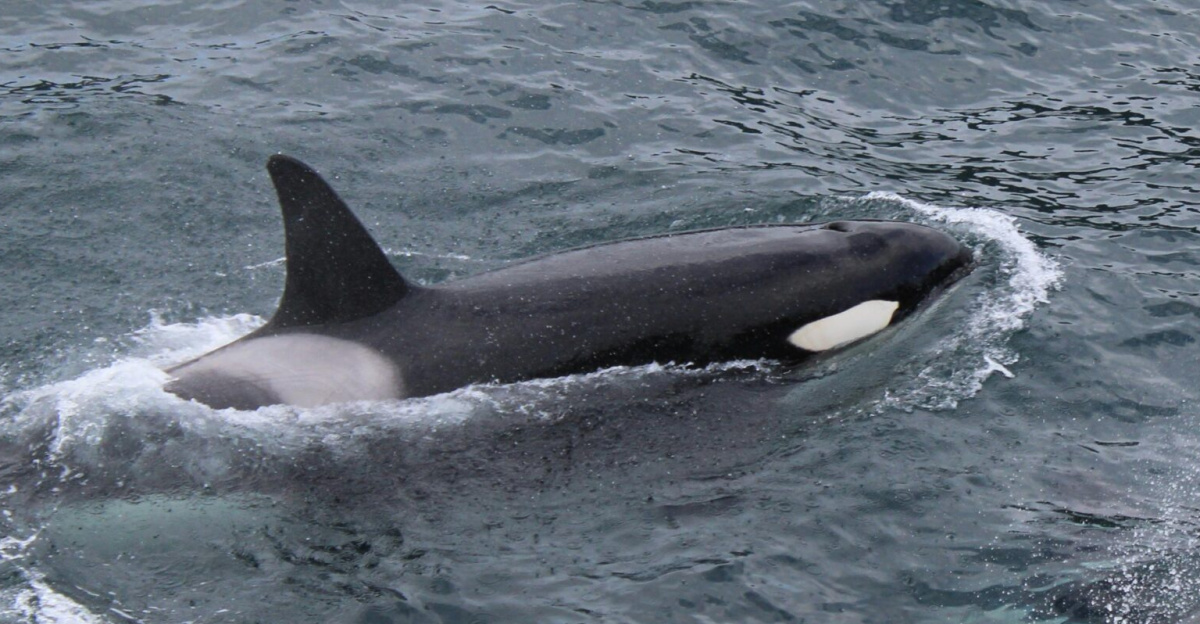
Old records of dead whales off North America were once ignored. Now they show these whales live there year-round, off California and Baja California. This widens their known home beyond Asia. The U.S. Naval Information Warfare Center Pacific led the work. They wanted to study how sonar affects deep-diving whales.
The team shared their results in a journal called Marine Mammal Science. Now experts can track these whales with sound alone, without needing rare sightings. Worldwide, 94 types of whales and dolphins exist. About 25 percent are beaked whales, and many remain little-known. Ocean noise from humans and climate change make this a big worry.
This find highlights real dangers. Loud sonar scares deep divers. They shoot up too fast and get sick, like the bends in humans. This has caused group strandings before. Now that BW43 is known, tools like fixed recorders, dragged arrays, and floating buoys can watch whale numbers. This helps plan safe ship paths, sonar rules, and protected ocean areas.
But experts say a few sightings mean we still don’t know how many whales there are. They call for more searches and teamwork. Mexico’s Pacific coast looks like prime habitat. This means rethinking risks from fishing and ocean floor drilling. The ginkgo-toothed whale shows how much of the sea stays unknown. It pushes scientists to find other “ghost” whales fast and protect them before it’s too late.
Sources:
Mesoplodon ginkgodens (Ginkgo-toothed beaked whale) – Marine Mammal Science, 2014-12-03.
Scientists find rare tusked whale alive at sea for the first time – Live Science, 2025-11-21.
Scientists Spot Extremely Rare Whale Alive for the First Time – Outdoors.com, 2025-11-17.