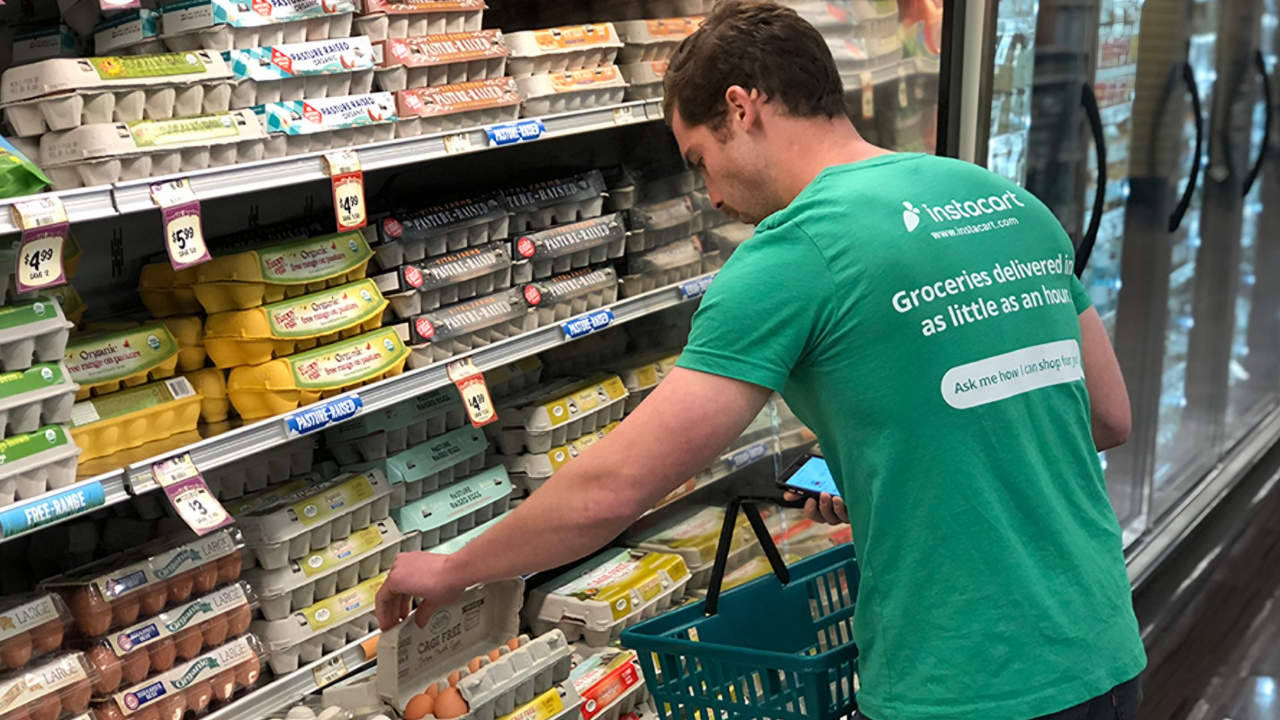
Consumer Reports revealed that Instacart’s AI-powered pricing technology enabled retailers to charge different prices for identical products to different shoppers simultaneously. A December 2025 investigation found price variations as high as 23%, with some grocery baskets differing by nearly $10.
Researchers recruited 437 volunteers purchasing identical items across major retailers including Kroger, Safeway, and Target. The study estimated annual costs could increase by approximately $1,200 for average households shopping regularly through the platform.
FTC Issues Civil Investigative Demand

The Federal Trade Commission issued a civil investigative demand to Instacart on December 17, 2025, regarding its AI-powered pricing practices. The FTC stated it was “troubled” by reported pricing practices, signaling serious regulatory concern.
A civil investigative demand functions as an administrative subpoena compelling document production and sworn testimony. Regulators specifically scrutinized whether Instacart disclosed that customers were participating in algorithmic pricing experiments.
Eversight Technology at Center of Controversy
Instacart acquired the AI-powered pricing platform Eversight in September 2022 for $59 million to enhance retail partner capabilities. The technology enabled randomized A/B testing, allowing retailers to present different “original” prices for discounted items across customer cohorts.
Instacart’s marketing materials claimed retailers achieved 1-3% revenue increases and 2-5% margin improvements using the technology. Patent applications referenced using personal and demographic data to segment customers into distinct pricing tiers.
Congressional Democrats Demand Action

Senate Minority Leader Chuck Schumer sent a formal letter to the FTC on December 14, 2025, characterizing Instacart’s practices as “AI-driven price gouging.” Schumer warned families could pay “$1,200 more per year” through algorithmic pricing and demanded on-screen notifications when consumers enrolled in tests.
Representative Robert Garcia and other lawmakers sent separate letters requesting detailed explanations of Instacart’s pricing strategies. The political pressure reflected broader anxieties about grocery inflation affecting American families.
Stock Market Reacts to FTC Investigation
Instacart shares fell approximately 7% in after-hours trading on December 17, 2025, immediately following the FTC investigation announcement. The stock closed down more than 1% the following trading day as investor concerns about regulatory risk intensified.
Instacart’s market capitalization stood at approximately $11.8 billion as of December 23, 2025. Earlier competitive pressures from Amazon’s grocery expansion had already contributed to volatility throughout 2025.
Parallel $60 Million Settlement on Deceptive Practices
The FTC simultaneously secured a $60 million settlement with Instacart for allegedly deceptive billing practices unrelated to pricing algorithms. The agency accused Instacart of falsely advertising “free delivery” while charging mandatory service fees and auto-enrolling customers into paid subscription programs without consent.
The settlement required Instacart to cease misrepresentations and obtain express informed consent for subscription services. This parallel enforcement action intensified scrutiny of Instacart’s broader business transparency.
Instacart’s Defense and Denial

Instacart repeatedly stated that media coverage “mischaracterized how pricing works” on its platform, emphasizing that retailers control prices. The company claimed only 10 U.S. retailers used Eversight for “limited online pricing tests” and denied employing dynamic or surveillance pricing.
Management characterized experiments as “randomized A/B testing, similar to retailers’ physical store practices.” CEO Chris Rogers defended pricing tests as helping retailers understand customer preferences and enable sustainable price reductions.
Company Terminates All Price Testing
Facing escalating regulatory pressure, Congressional scrutiny, and negative media coverage, Instacart announced on December 22, 2025, that it was ending all item-level price testing immediately. The company stated: “If two families shop for the same items, at the same time, from the same store on Instacart, they see the same prices—period.”
Retailers retain store-by-store pricing flexibility but cannot conduct algorithmic experiments presenting different prices to simultaneous shoppers. Instacart emphasized commitment to pricing transparency going forward.
Broader FTC Scrutiny of Algorithmic Pricing
The Instacart investigation represents one component of comprehensive federal scrutiny targeting AI-driven pricing systems across industries. In July 2024, the FTC issued investigative orders to eight companies offering “surveillance pricing” products, seeking information about how consumer data influences individualized pricing.
The agency’s 2022 guidance stated that “price discrimination not justified by differences in cost or distribution” may constitute unfair pricing. Related cases target Amazon’s alleged “Project Nessie” algorithm and RealPage’s rental pricing coordination.
State Legislative Actions on Algorithmic Pricing
California and New York have enacted pioneering legislation targeting algorithmic pricing practices, with additional states considering similar measures. Minnesota, Colorado, and other states proposed bills requiring disclosure when AI sets prices or banning real-time dynamic pricing entirely.
Colorado’s proposed law would require notices stating: “THIS PRICE WAS SET BY AN ALGORITHM USING YOUR PERSONAL DATA.” These state-level initiatives reflect growing concern that algorithmic systems facilitate market distortion and consumer deception.
Academic Research Reveals Collusion Risks
Academic research demonstrates that sophisticated AI pricing algorithms can achieve tacit collusion without explicit coordination between competitors. Carnegie Mellon economists found that reinforcement learning algorithms quickly learn to charge supra-competitive prices knowing competitors will follow price increases.
While algorithmic pricing offers efficiency benefits—allocating inventory responsibly and intensifying price competition—the collusion risks raise significant concerns. Research shows basic price explanations increase customer satisfaction by up to 42%.
Competitive Landscape Intensifies

Instacart maintains leadership in dedicated grocery delivery but faces intensifying competition from Amazon, DoorDash, and Uber Eats. Amazon expanded 30-minute grocery delivery to over 2,300 cities in December 2025, directly challenging Instacart’s core value proposition.
DoorDash and Uber Eats employ dynamic pricing with markups up to 40% above in-store prices, though they don’t deploy Instacart’s cohort-based experimentation. Instacart processed over 250 million orders in the first three quarters of 2025 across nearly 100,000 stores.
Strong Financial Performance Amid Controversy

Instacart’s third-quarter 2025 earnings significantly exceeded analyst expectations with GAAP earnings of $0.51 per share and revenue growth of 10% year-over-year. Gross Transaction Value reached $9.17 billion (10% increase) with 83.4 million orders (14% growth).
The company generated $287 million in operating cash flow and expanded its share repurchase program by $1.5 billion, including a $250 million accelerated buyback. Management provided optimistic fourth-quarter guidance despite pricing controversy headwinds.
Long-Term Implications for Business Model
The termination of Eversight price testing eliminates potential revenue streams but may prove essential for preserving consumer trust in a commoditized grocery delivery market. Instacart’s strategic diversification into advertising and enterprise technology services—including white-label retail platforms and smart cart technology—provides growth alternatives.
Retail analyst Neil Saunders emphasized: “Anything introducing doubts about fairness undermines Instacart’s credibility.” Moving forward, algorithmic sophistication must balance against transparency and perceived fairness for commercial viability.
Regulatory Precedent Reshapes Industry Practices
The Instacart investigation establishes critical precedents for regulatory treatment of AI-powered pricing in essential services. Federal and state regulators will likely require disclosure when algorithms influence consumer-facing prices, particularly for necessities like food.
Industry self-regulation trends suggest transparency measures including clear algorithmic pricing explanations and limitations on person-based discrimination. The episode demonstrates that technical legality provides insufficient protection when consumer advocates and elected officials mobilize around fairness perceptions.
Sources:
“Instacart Shares Drop on Report FTC Probing Company’s AI Pricing Tool.” CNBC, December 17, 2025.
“Instacart’s AI Pricing May Be Inflating Your Grocery Bill.” Consumer Reports, December 21, 2025.
“Instacart to Pay $60 Million in Consumer Refunds to Settle FTC Lawsuit over Algorithmic Pricing Deception.” Federal Trade Commission Press Release, December 18, 2025.
“Leader Schumer Sounds Alarm on Instacart’s Use of AI to Price Gouge Customers.” U.S. Senate Minority Leader Press Release, December 13, 2025.
“Instacart Ends AI Pricing Tests Following FTC Probe and Consumer Backlash.” TechCrunch, December 22, 2025.
“Study Shows Instacart May Be Charging Some Shoppers 20% More for the Same Product.” TechCrunch, December 16, 2025.