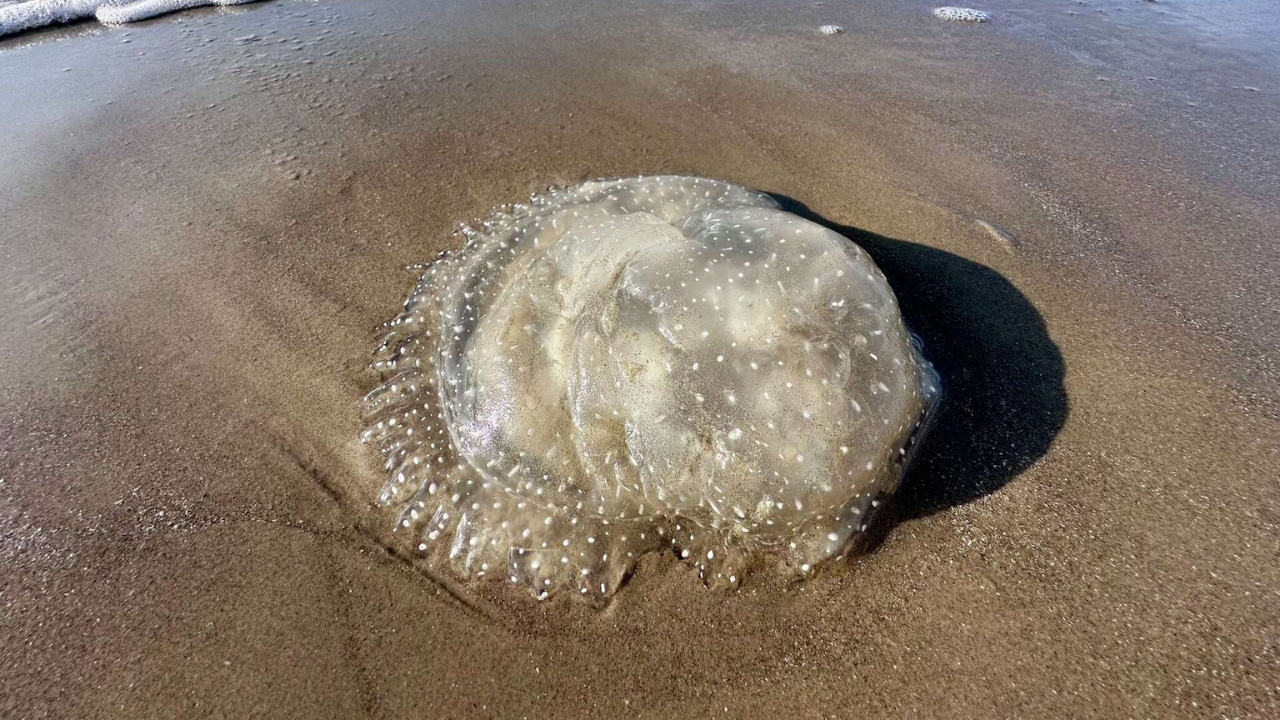
Beachgoers on the Texas Gulf Coast are finding large, white-spotted jellyfish strewn across the sand, some as wide as 20 inches, as the invasive creatures wash ashore in growing numbers from Corpus Christi to Mustang Island.
These semi-translucent animals, with their distinctive white spots on the bell, have appeared in clusters during recent beach surveys. Marine experts from the Harte Research Institute confirm the species as Phyllorhiza punctata, an invader from Australian and Indo-Pacific waters that first reached the Gulf of Mexico around 2000.
Warmer ocean temperatures and shifting currents appear to boost their populations, echoing past seasonal surges. Scientists now track how this influx might alter local marine dynamics.
Invasion Spread

Strandings have increased along Texas beaches, with most jellyfish measuring 12 to 18 inches across, though some reach 20 inches. Observations show multiple individuals in single surveys, signaling a notable escalation.
The species arrived through ships’ ballast water, where vessels intake ocean water for stability, carrying larvae and organisms to new regions. Hardy polyps also cling to hulls, aiding establishment in foreign ecosystems. Seasonal warming enhances their survival in Gulf waters.
Native to the western Pacific, these jellyfish have embedded in U.S. coastal areas from California to the Atlantic since the early 2000s. Climate shifts may sustain recurring blooms, complicating containment.
Species Profile
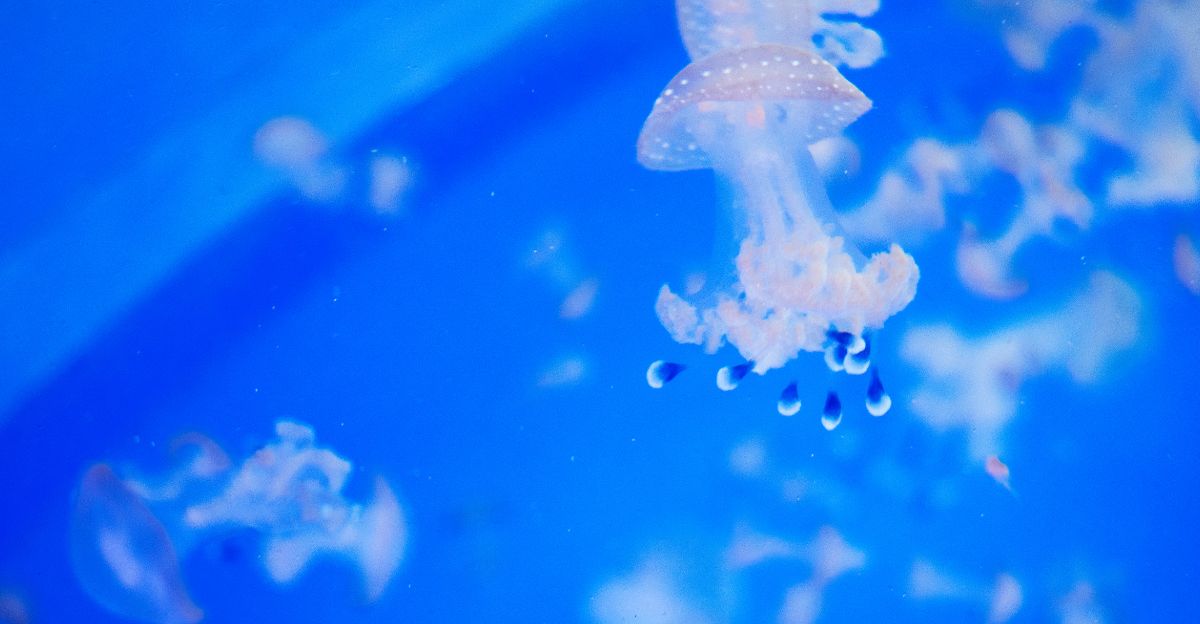
Known as Australian white-spotted jellyfish, Phyllorhiza punctata feature bell-shaped bodies up to 20 inches wide. They navigate via a simple nerve net, lacking a brain, and persist in Gulf waters for months to a year.
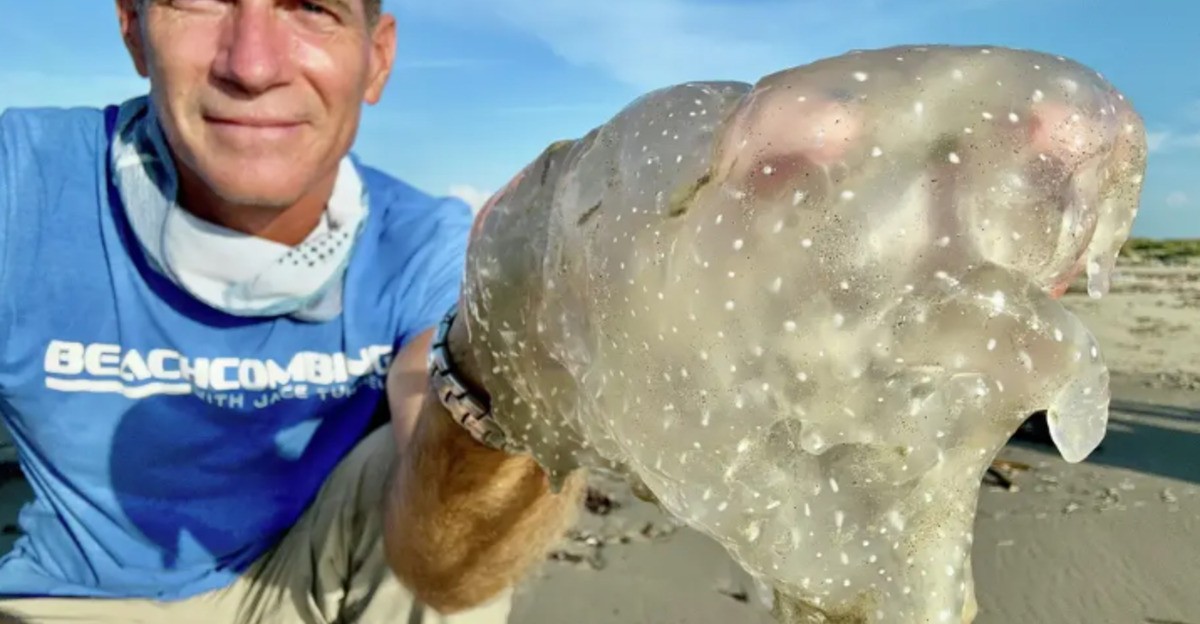
Each filters up to 50 cubic meters of water daily, siphoning plankton efficiently. Jace Tunnell, Director of Community Engagement at the Harte Research Institute, notes their presence near Corpus Christi, describing them as effective yet unwelcome filter feeders.
Texas A&M-Corpus Christi’s Harte Institute leads research into their population dynamics, emphasizing community reports for baseline data.
Ecological Impact
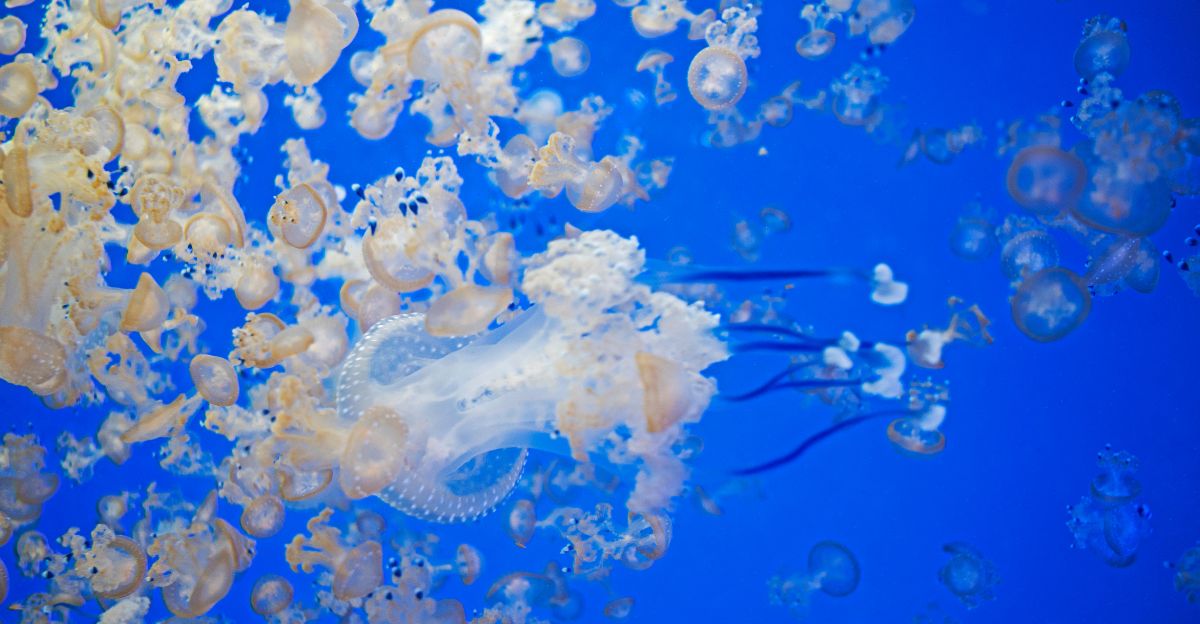
These invaders devour zooplankton, clashing with native shrimp and juvenile fish that rely on the same food base. This competition ripples through food webs, straining Texas fisheries dependent on plankton-rich chains.
Blooms disrupt balance for local filter feeders, with potential long-term effects on commercial catches. As one of the top extinction drivers worldwide—alongside habitat loss and pollution—invasive species like this amplify Gulf vulnerabilities amid warming trends.
Public reports help map spread, though establishing reliable patterns proves difficult without sustained data.
Monitoring and Prevention
Harte Research Institute urges beachgoers to report sightings, as stings pose minimal human risk but ecological damage mounts. Tunnell highlights clusters during his surveys, stressing vigilance.
Prevention centers on ballast water regulations, with NOAA promoting exchange protocols to curb organism transfers. International shipping standards evolve, while local efforts ramp up awareness and tracking.
Citizen observations bolster scientific understanding, informing strategies once populations take hold.
Ongoing Challenges
Established in Gulf waters, these jellyfish face no easy eradication, with climate warming likely fueling persistent populations. Tunnell views the surge as a harbinger of wider invasive pressures.
Texas monitoring efforts position the region to document patterns and adapt management. As ecosystems endure shifting conditions, sustained vigilance and data collection will shape responses to future arrivals, safeguarding marine health and fisheries.
Sources:
Beaumont Enterprise, 2025Chron.com
NOAA Fisheries
Harte Research Institute at Texas A&M University-Corpus Christi
Smithsonian Ocean Portal
Texas Invasive Species Institute
Padre Island National Seashore official resources