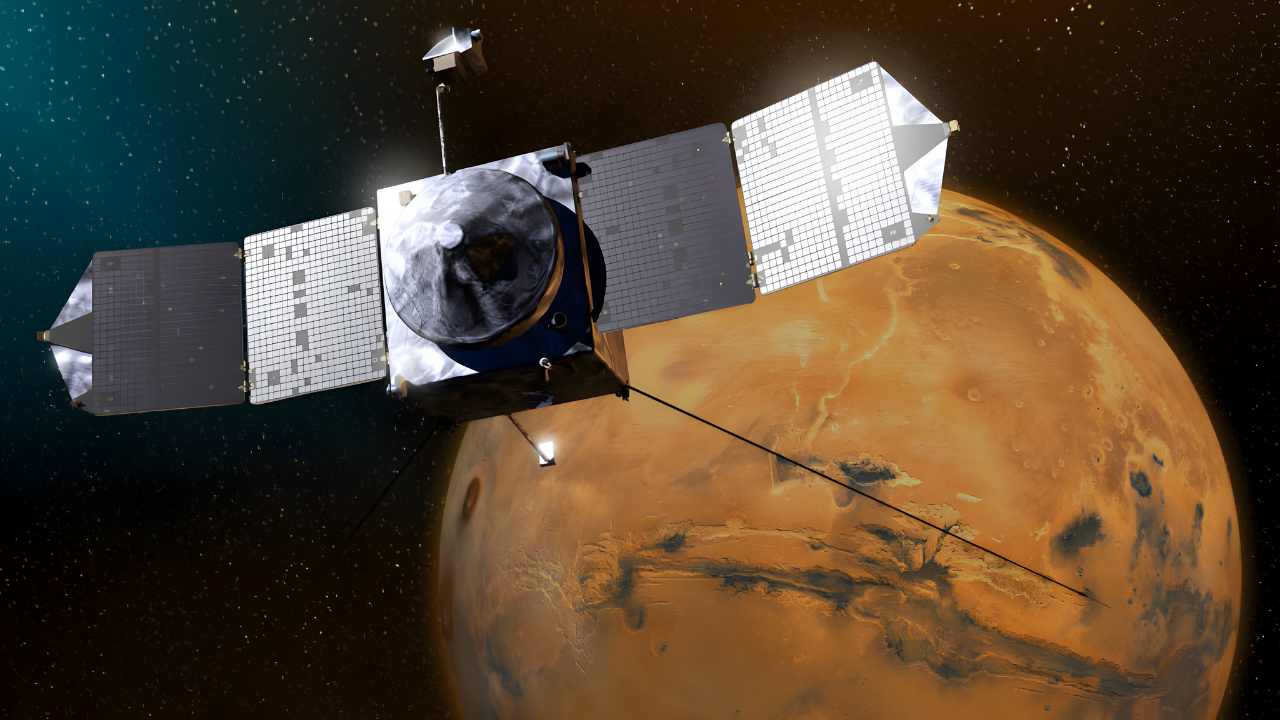
In late 2025, a remarkable series of events unfolded: NASA’s MAVEN orbiter lost contact after observing an interstellar visitor dubbed 3I/ATLAS during its close approach to Mars, prompting an unprecedented global planetary defense exercise. These developments mark a significant moment in space exploration and international cooperation.
MAVEN Contact Loss Following Historic Observations
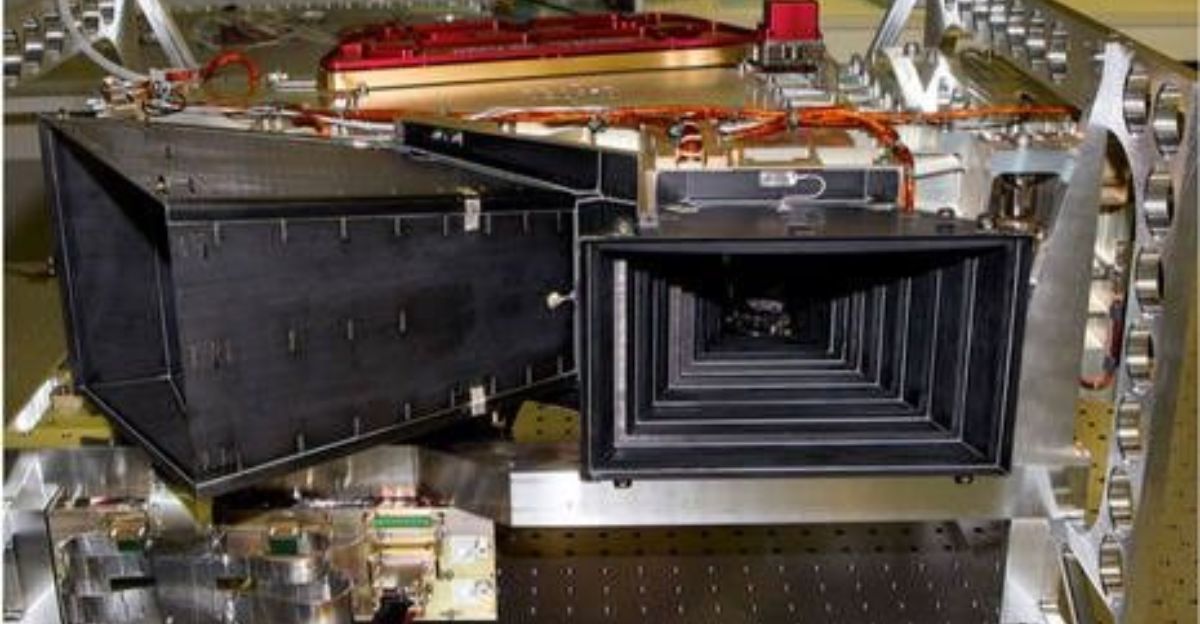
Since arriving at Mars in 2014, the Mars Atmosphere and Volatile EvolutioN spacecraft has methodically charted how solar wind eroded the planet’s ancient atmosphere. It relays data and aids communications for other missions, far surpassing its planned lifespan—a testament to careful engineering.
However, on December 6, 2025, NASA lost contact with MAVEN. Tracking data revealed the spacecraft was rotating in an unexpected manner when it emerged from behind Mars, and the frequency of the tracking signal suggested MAVEN’s orbit trajectory may have changed. This anomaly occurred approximately two months after MAVEN captured ultraviolet images of 3I/ATLAS between September 27 and October 9, 2025.
NASA teams continue recontact efforts ahead of solar conjunction, working to restore communications with the critical Mars relay. While signal blackouts during Mars occultations or antenna handoffs are routine, this event has been characterized by NASA as an anomaly requiring ongoing investigation.
3I/ATLAS: The Third Confirmed Interstellar Visitor

Astronomers had previously verified just two interstellar objects: 1I/’Oumuamua in 2017 and 2I/Borisov in 2019. On July 2, 2025, the Minor Planet Center officially designated 3I/ATLAS as the third confirmed interstellar object, marking a significant milestone in astronomy.
The ATLAS survey regularly spots long-period comets, most tracing back to the solar system’s distant Oort Cloud. Interstellar status demands rigorous proof of hyperbolic paths unbound by the sun—evidence that 3I/ATLAS provided through extensive orbital analysis. NASA maintains an official page documenting this rare visitor.
On October 3, 2025, 3I/ATLAS made its closest approach to Mars at approximately 30 million kilometers. ESA’s Mars orbiters—including ExoMars Trace Gas Orbiter and Mars Express—observed the comet during its October 1-7 passage, while MAVEN’s Imaging Ultraviolet Spectrograph captured unique views from its orbital vantage point.
The comet made its closest approach to Earth on December 19, 2025, providing unprecedented opportunities for ground-based observations and spacecraft monitoring from multiple vantage points across the solar system.
International Response: Unprecedented Defense Exercise
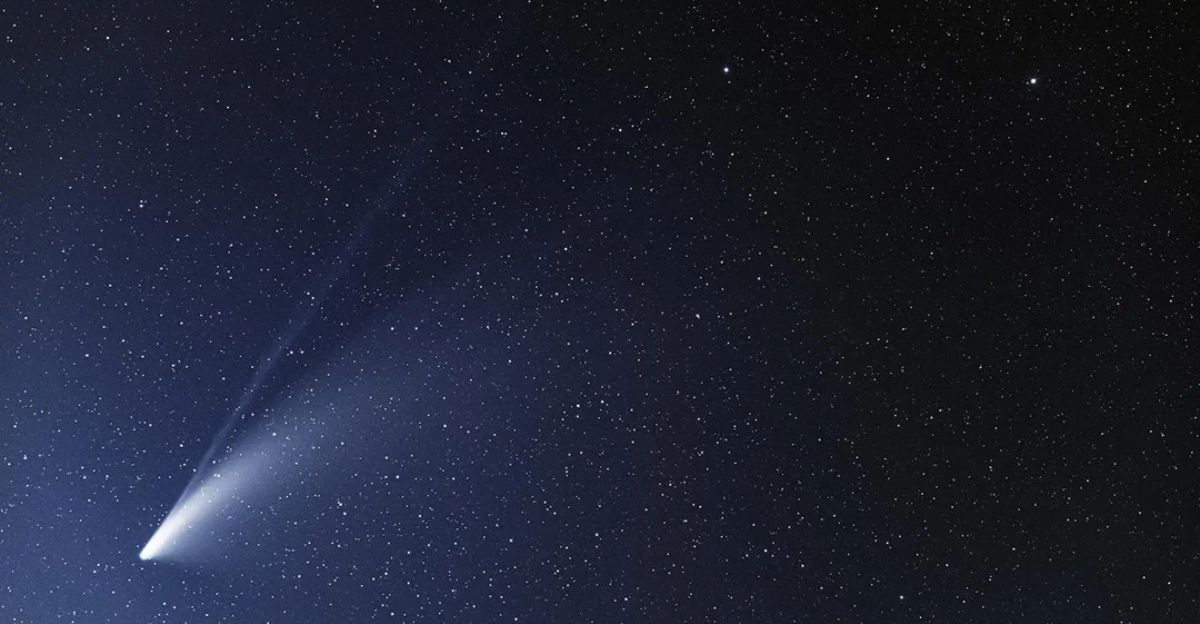
The arrival of 3I/ATLAS triggered the largest coordinated planetary defense response in history. On November 27, 2025, the International Asteroid Warning Network (IAWN) launched a formal planetary defense exercise involving over 23 nations, scheduled to run through January 27, 2026.
This marked a departure from typical simulations. International teams usually run planetary defense exercises yearly with fictional asteroids to hone tracking and communication protocols. However, the confirmed interstellar nature of 3I/ATLAS—combined with uncertainties about its composition and behavior—provided a unique opportunity to test real-world observation, data sharing, and coordination procedures.
Europe activated what officials described as “the largest planetary defence exercise ever conducted,” involving 27 nations coordinating through ESA, NASA, and UN-IAWN leadership. The exercise focused on refining detection networks, international communication channels, and response protocols using an actual celestial visitor rather than a simulated scenario.
Separating Facts from Speculation
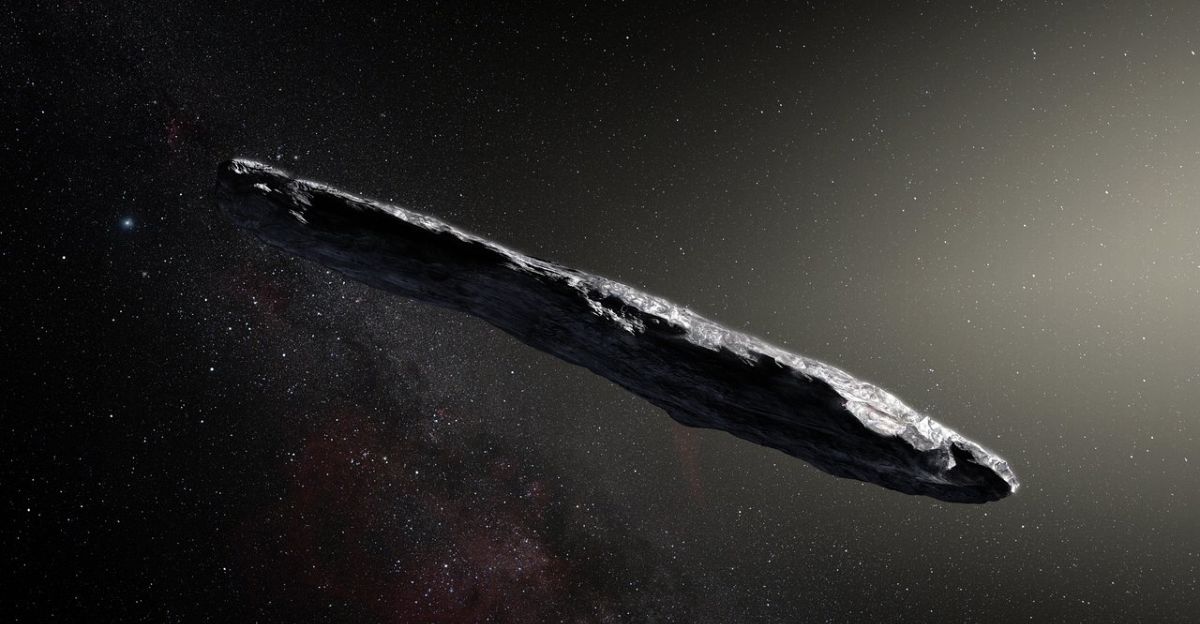
While the core events are confirmed, some interpretations have generated debate within the scientific community. Harvard’s Avi Loeb has urged deeper investigation into certain observational anomalies associated with 3I/ATLAS, including its unusual brightness variations and structural features. However, his views on potential non-natural origins remain hypotheses not supported by scientific consensus, with mainstream astronomers favoring conventional explanations.
Comet “anti-tails”—apparent tails pointing toward the Sun—have puzzled observers for decades but are well-explained by viewing geometry and dust particle physics, not anomalous propulsion. When Earth passes through a comet’s orbital plane, larger dust particles lagging behind the comet can create this optical illusion.
Cited approach distances of tens of millions of kilometers posed zero risk to Mars or Earth—vastly greater than routine Venus-Earth separations. The blurry appearance in some spacecraft images reflects instruments optimized for specific science wavelengths rather than sharp visual photography, while ground telescopes provide high-resolution optical views.
The temporal proximity of MAVEN’s observations of 3I/ATLAS and the subsequent communication loss has raised questions. However, NASA has not established any causal connection between the comet flyby and the spacecraft anomaly. The investigation continues as teams work to restore contact and determine the root cause of MAVEN’s unexpected behavior.
This episode highlights both the progress and challenges of space-age astronomy. Interstellar objects intrigue scientists for insights into other stellar systems’ planet-building processes. As space exploration accelerates and detection capabilities improve, distinguishing between verified observations, reasonable scientific hypotheses, and unsupported speculation remains essential.
The international community’s response demonstrates proactive vigilance—scheduled exercises building resilience against potential future threats while maintaining the scientific rigor that separates evidence-based analysis from unfounded alarm. The convergence of 3I/ATLAS’s arrival, MAVEN’s anomaly, and the multinational defense exercise represents an unprecedented chapter in planetary science and international space cooperation.
Sources:
“3I/ATLAS – Wikipedia” from Wikipedia
”Spotting New Interstellar Comet C/2025 N1 ATLAS” from Universe Today
“NASA’s MAVEN spacecraft is still silent at Mars” from Space.com
”Planetary defense drill launched with 3I/ATLAS approaching” from New York Post
”Comet 3I/ATLAS: Journey through the solar system” from Fox Weather
”NASA-backed researchers launch planetary defense probe to shield Earth from massive interstellar object” from New York Post