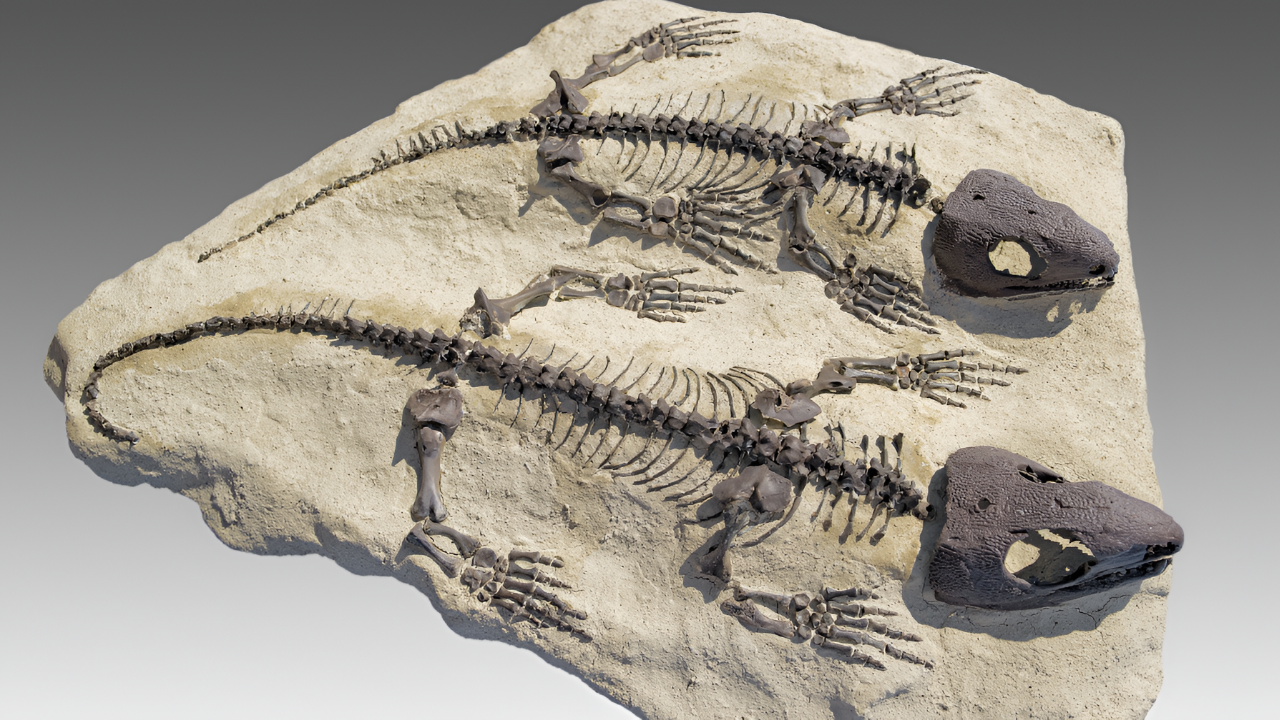
In a limestone cave beneath the oil fields of southwestern Oklahoma, scientists have uncovered something that should not have survived: a fingernail-sized patch of reptile skin that has remained three-dimensional and intact for about 290 million years. Preserved in the Richards Spur cave system near Lawton, the fragment is now recognized as the oldest known skin fossil on Earth, extending the record for such tissue by more than 130 million years and capturing a moment in evolution that predates the first dinosaurs.
A Cave That Became A Time Capsule
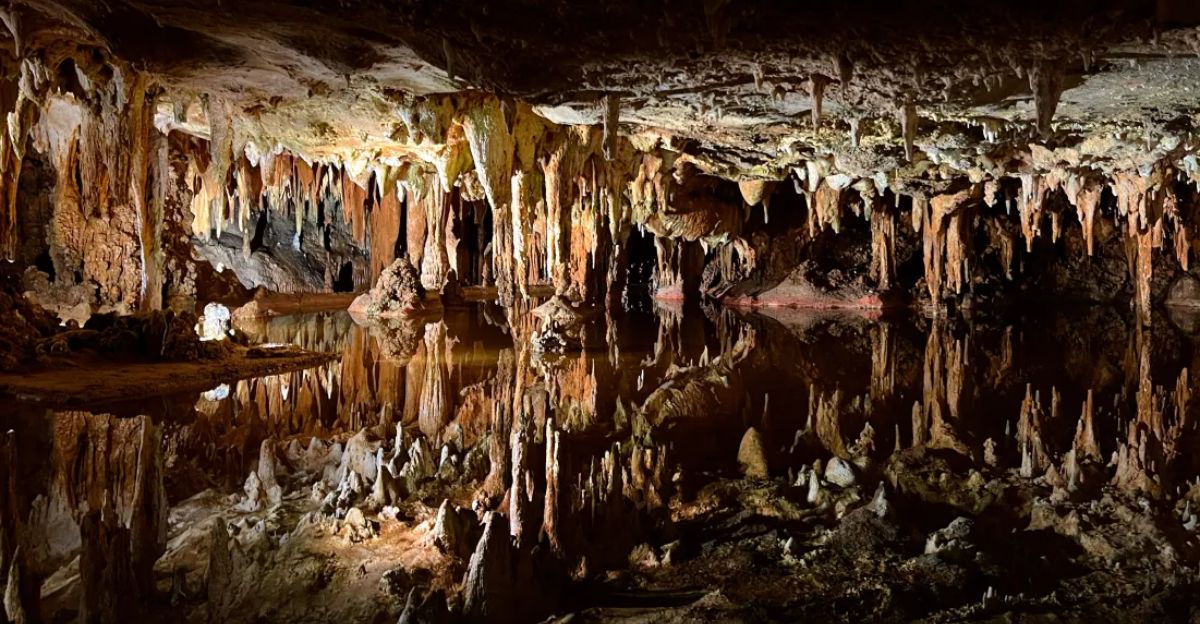
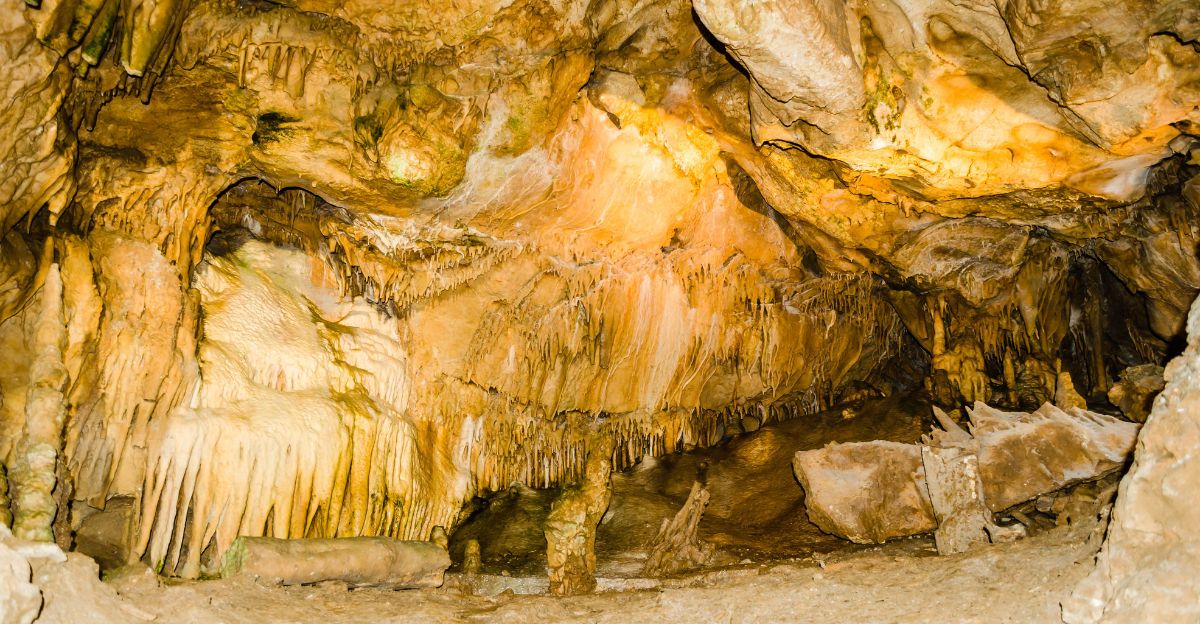
Richards Spur was an active limestone cave during the early Permian period, a maze of vertical shafts that acted as natural traps for small land animals. Creatures fell or were washed into the system, became buried in fine sediment, and were sealed off from air and scavengers. Over nearly 300 million years, this “upland” site accumulated an exceptional fossil archive not from swamps or coastal plains, but from hills and plateaus, offering a rare snapshot of life in a tropical highland ecosystem.
What makes this cave especially unusual is its chemistry. Petroleum from nearby Woodford Shale slowly seeped into the chambers, saturating sediments with oil and tar. That hydrocarbon-rich environment acted as a preservative, shutting out oxygen and bacteria and effectively “pickling” organic remains. The same geological processes that formed fossil fuel deposits created ideal conditions for delicate tissues that almost always rot away within days.
A Tiny Fragment With Outsize Significance
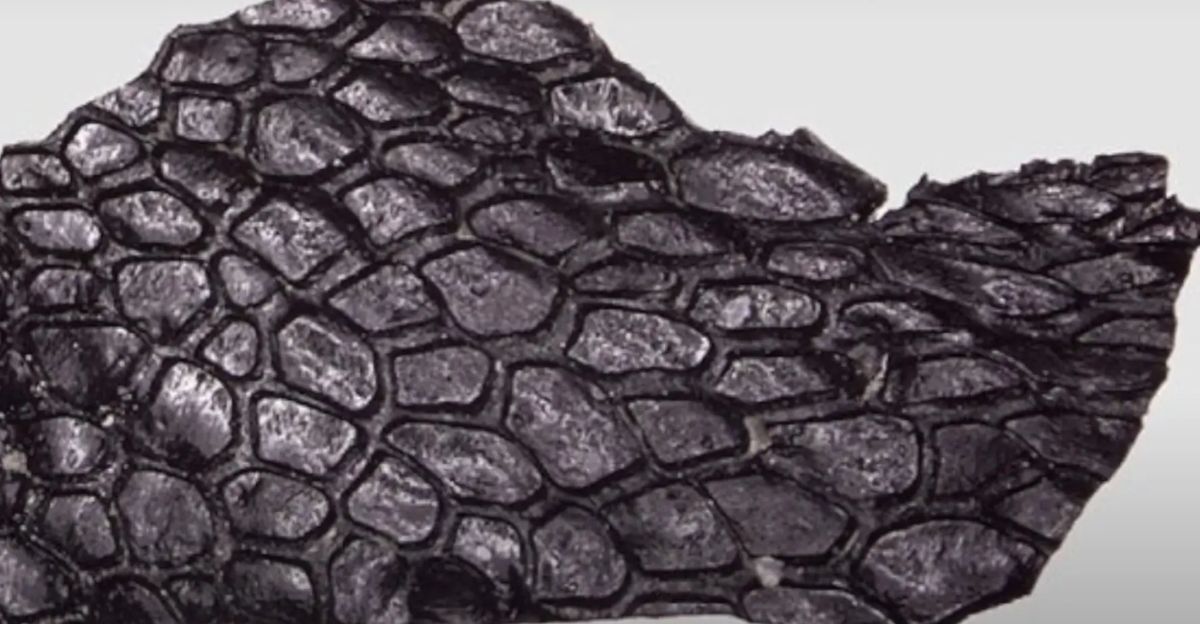
The skin fossil itself is easy to miss: a small, textured flake embedded in limestone, smaller than a human fingernail. Unlike most fossils, which are mineral copies of bone, this specimen preserves the three-dimensional microstructure of the outer body covering. High-resolution CT scans allowed researchers to examine it layer by layer, revealing distinct strata within the epidermis, including a tough outer layer made of keratin.
Based on nearby skeletal remains and the structure of the scales, paleontologists think the skin likely came from Captorhinus aguti, a small, lizard-like reptile common at Richards Spur. This early amniote, part of the broader group that later produced reptiles, birds, and mammals, was not a giant predator but a modest land-dweller that thrived in the early Permian landscape. While its bones have been collected in large numbers, seeing its preserved exterior turns a familiar skeleton into a more lifelike animal, with tangible armor and texture.
The surface of the fossil is pebbled and patterned in a way that closely resembles the scales of modern crocodiles. That similarity suggests that by 290 million years ago, the basic design of reptile skin—tough, keratinized, and water-resistant—was already established. The find implies that once this protective, moisture-retaining barrier evolved, it changed very little over hundreds of millions of years, underscoring how effective the structure has been for life on land.
The Biology Of Conquering Land
The discovery addresses a major gap in the fossil record of early terrestrial vertebrates. Scientists have long inferred that amniotes must have developed fully land-adapted skin by the Permian, but until now that conclusion rested largely on indirect evidence from bones and trackways. The new fossil provides direct physical proof: early reptiles possessed thick, layered, keratin-rich skin comparable to that of modern land vertebrates.
This type of epidermis acted as a biological “spacesuit,” allowing animals to move away from water sources without drying out. In the increasingly arid climate of Pangea’s interior, such skin would have been vital. The microscopic details of the scales show how they functioned as both armor against abrasion and a barrier against water loss, giving early amniotes the flexibility to occupy harsher, drier environments. In evolutionary terms, it confirms that the core “hardware” for permanent life on land was in place tens of millions of years before dinosaurs appeared.
Behind The Find And What Comes Next
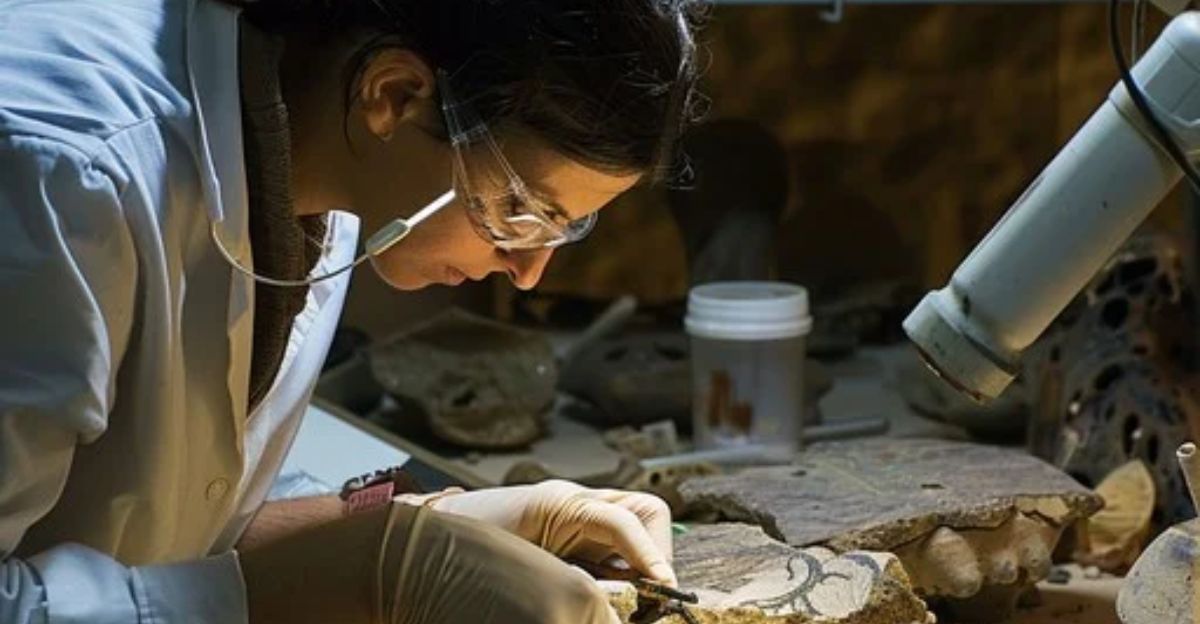
The fossil’s journey into the scientific record began not with a large institutional field team, but with two experienced hobby collectors, Bill and Julie May. Working in a commercial quarry at Richards Spur, they noticed unusual pebbled textures on small limestone blocks that others might have overlooked. Recognizing their potential importance, they donated the samples to researchers at the University of Toronto, where detailed analyses unfolded over several years.
From the initial discovery in 2018, it took six years of testing, imaging, and peer review before the findings were published in 2024. Researchers had to exclude alternative explanations—such as microbial structures or purely mineral growths—and confirm that the specimen preserved genuine soft tissue architecture. The combination of petroleum impregnation, rapid burial, low oxygen, and mineral replacement through processes such as phosphatization explains how something so fragile withstood geological time without collapsing into a simple carbon film.
Richards Spur itself has become one of the most important early Permian fossil localities in the world, yielding thousands of specimens from at least 30 tetrapod species. The diversity of animals suggests a thriving community in a tropical upland refuge that existed long before the catastrophic “Great Dying” mass extinction at the end of the Permian.
The Oklahoma discovery also raises broader questions. If oil-saturated cave systems can preserve skin in such detail, similar “oil trap” environments elsewhere might be hiding comparable fossils, many of them in rocks routinely discarded during resource extraction. For paleontology, that possibility hints at a new frontier in the search for vanished tissues. For evolutionary biology, the tiny scrap of reptile hide fixes a firm date for when land vertebrates acquired the protective barrier that still covers humans today, tying modern skin directly to a lineage that first conquered the continents nearly 300 million years ago.
Sources:
Paleozoic cave system preserves oldest-known evidence of amniote skin, Current Biology
Rare skin fossil is oldest by 130 million years, CNN
Fossilized, crocodile-like skin is oldest ever discovered, scientists say, NBC News
This is the oldest fossilized reptile skin ever found, Nature
Fossilized skin found in Oklahoma is the oldest in the world, The Oklahoman