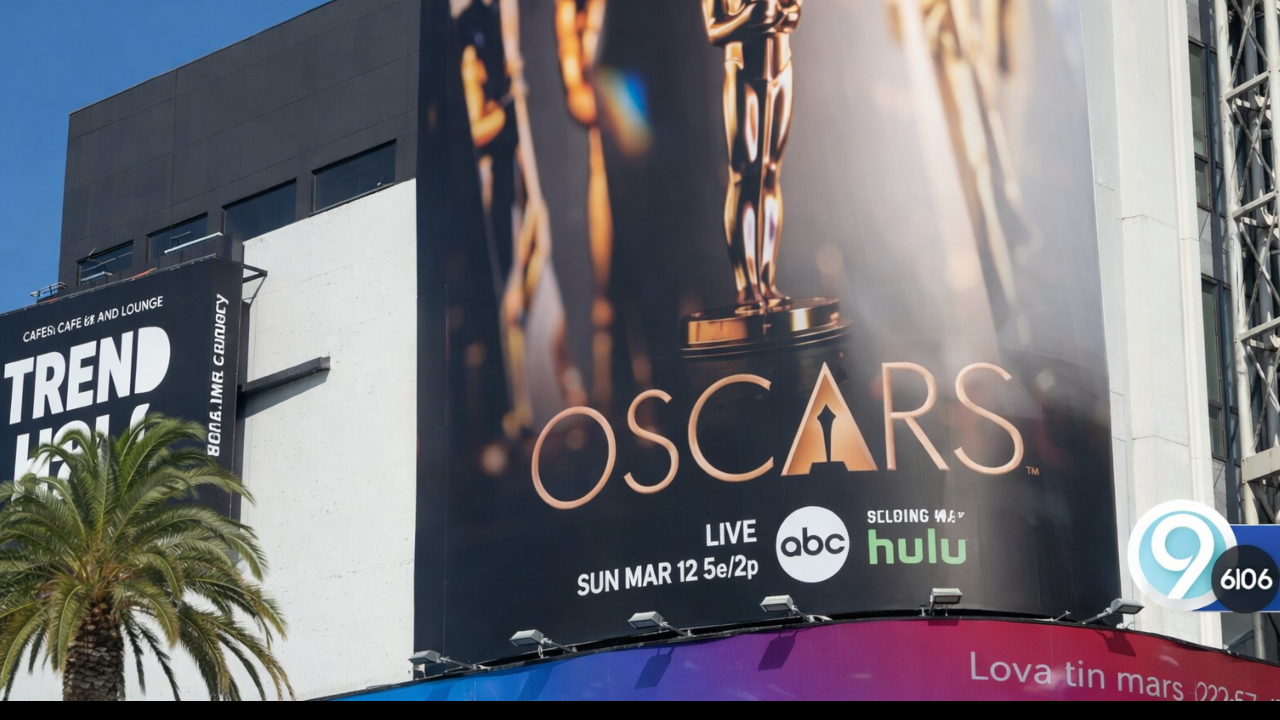
Your grandmother reaches for the remote on Oscar night and finds static. By 2029, this repeats across millions of American living rooms. The Academy of Motion Picture Arts and Sciences just ended a 50-year partnership with ABC. The Oscars are abandoning broadcast television entirely, moving exclusively to YouTube, where they’ll stream live and free to over 2 billion viewers worldwide.
Starting in 2029, the partnership runs through 2033. For tens of millions of Americans—especially those over 65—this isn’t innovation. It’s exile.
The Quiet Farewell No One Noticed
The Academy announced the partnership in December 2025 with measured language and corporate optimism. YouTube would broadcast live and free globally through 2033. But the real story is that ABC, which has aired the ceremony since 1976—nearly 50 years—was out. No dramatic farewell. No “final broadcast” special.
Just a quiet corporate transition, as if a press release could erase five decades of cultural ritual. The 2028 ceremony—the historic 100th Academy Awards—will be ABC’s swan song.
Ratings Revealed the Crisis
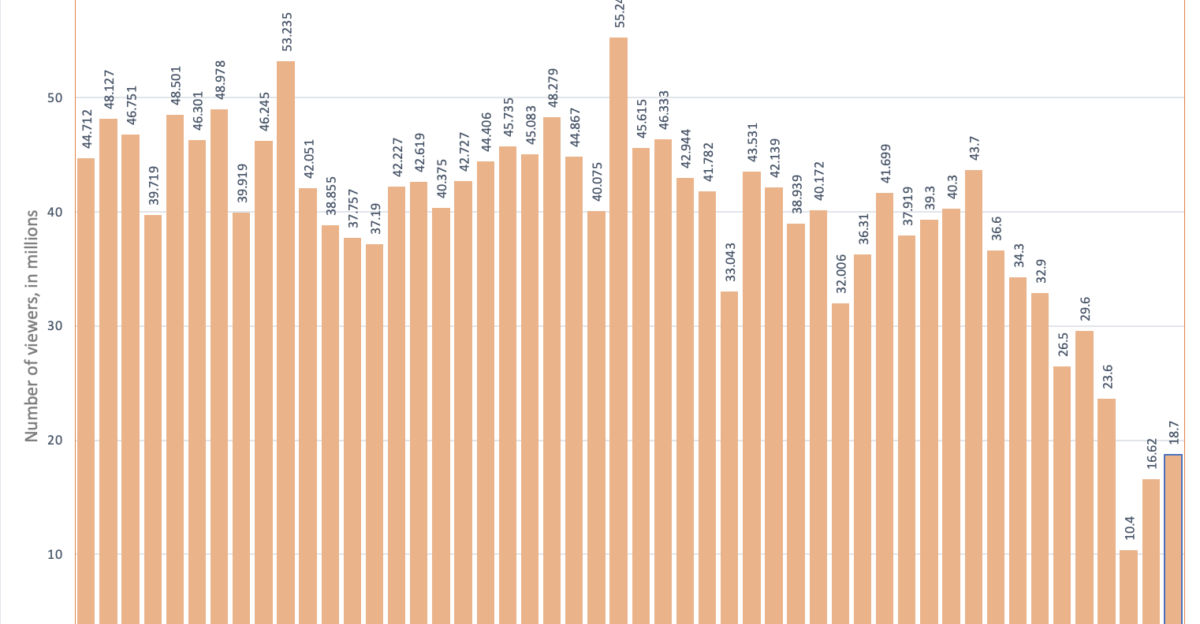
The numbers were brutal. The 2025 Oscars drew 18.1 million viewers—down 7% from 19.5 million the previous year. The 2021 ceremony reached a low of 10.4 million, a catastrophic decline. While 2022 and 2023 showed modest recovery, reaching 16.6 and 18.7 million, respectively, the 2025 slide proved that the decline wasn’t finished.
Golden Globes drew 9.3 million viewers. Grammy Awards: 15.4 million, down 9% from 2024. These weren’t just numbers—they were the Academy’s exit strategy laid bare in data.
ABC’s Negotiation Nightmare

Behind closed doors, ABC fought to keep the Oscars. Disney-owned ABC couldn’t justify paying what the Academy demanded—especially while hemorrhaging money to cord-cutting and streaming competition.
The Oscars generated an estimated $75 to $150 million annually in advertising revenue for ABC. Yet production costs, talent fees, and technical infrastructure were equally steep.
The Global Expansion Strategy
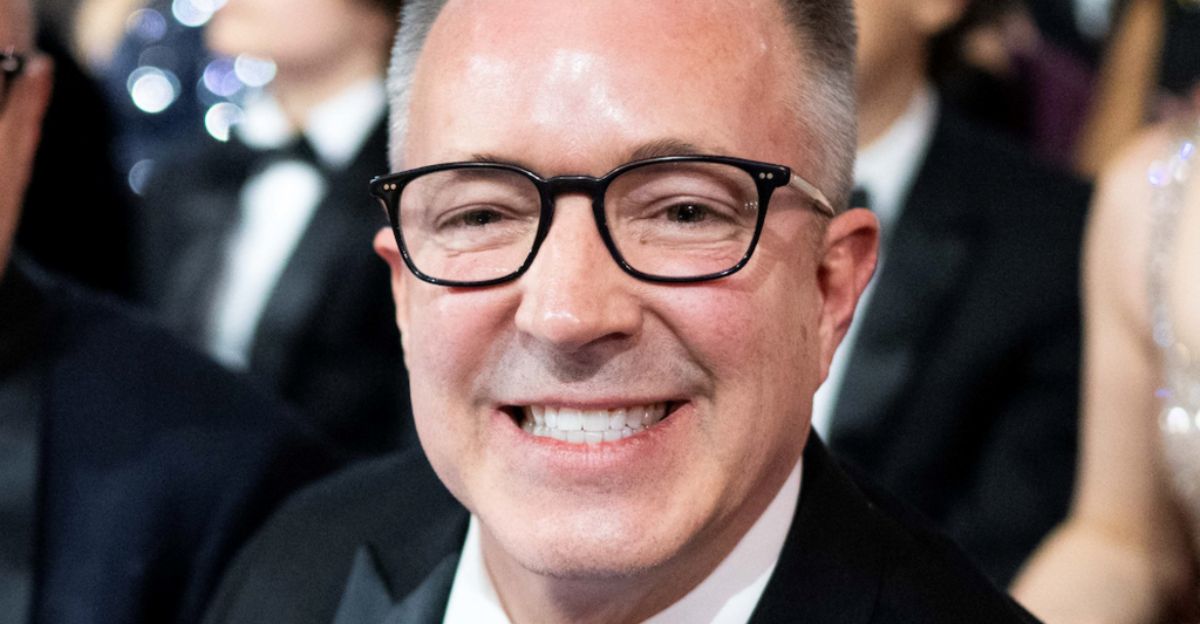
Bill Kramer, Academy CEO, explained: “This partnership will allow us to expand access to the work of the Academy to the largest worldwide audience possible.” Translation: the Oscars belong to the world, not just America.
YouTube operates in 200+ countries. ABC’s syndication footprint was relatively small by comparison, primarily limited to U.S. viewers. For an organization dedicated to honoring global cinema—featuring Indian directors, Japanese cinematographers, and Brazilian actors—being tied to an American broadcast network felt increasingly absurd.
What YouTube Actually Won
YouTube CEO Neal Mohan called it “a privilege” to steward the Oscars. The platform gains exclusive global rights to the ceremony, the red carpet pre-show, behind-the-scenes content, the Governors Awards, and the nominees’ luncheon.
YouTube will provide closed captions in multiple languages and audio descriptions for accessibility. The platform plans simultaneous livestreaming across regions, eliminating delayed broadcasts that plagued international viewers for decades
The Silent Technology Barrier

Here’s what the press releases don’t mention: roughly 50% of American households still rely primarily on traditional broadcast or cable television. They don’t have streaming devices. Many lack reliable broadband. For them, the Oscars just moved behind a technology wall—even though YouTube is free.
An estimated 30 to 40 million U.S. viewers accustomed to flipping to ABC will now need to navigate apps, connections, and unfamiliar platforms.
The Accessibility Crisis Nobody Mentions

A quiet tragedy is unfolding that data can’t capture. Grandparents who’ve watched the Oscars on ABC their entire lives suddenly face a learning curve. Digital literacy isn’t universal, and it shouldn’t be a prerequisite for watching your country’s most prestigious cultural event.
The Academy and YouTube assume everyone has the same technical fluency. They don’t. This migration is about who gets left behind.
The Death of Appointment Television
The Oscars’ move symbolizes something larger: the extinction of “appointment television.” For decades, certain events commanded the entire nation’s attention at a specific time on a specific channel. You had to watch live. You had to be there. That scarcity created cultural unity.
Now that scarcity is gone. Any event can be clipped, streamed on demand, and reduced to thirty seconds on social media.
The Measurement Problem
Here’s the trap nobody discusses: YouTube will never report Oscars viewership like Nielsen did for ABC. The platform doesn’t release specific audience numbers—it offers metrics like “views,” “engagement,” and “click-through rates,” which have a different meaning than traditional ratings.
When the 101st Academy Awards premiere on YouTube in 2029, the industry will have no way of knowing if viewership has grown or shrunk.
Hollywood’s Collapse Beneath the Ceremony
The Oscars’ exodus isn’t isolated. Hollywood itself is imploding. Warner Bros. Discovery, Paramount Global, and Sony Pictures are consolidating and cutting production. Netflix, Amazon, and Apple have become de facto studios, funding films competing for Oscar recognition.
Streaming killed the theatrical release schedule. Franchises and sequels dominate, while original films struggle to find distribution. Prestige cinema—the backbone of Oscar viewership—has contracted.
ABC’s Five-Decade Run Ends Quietly
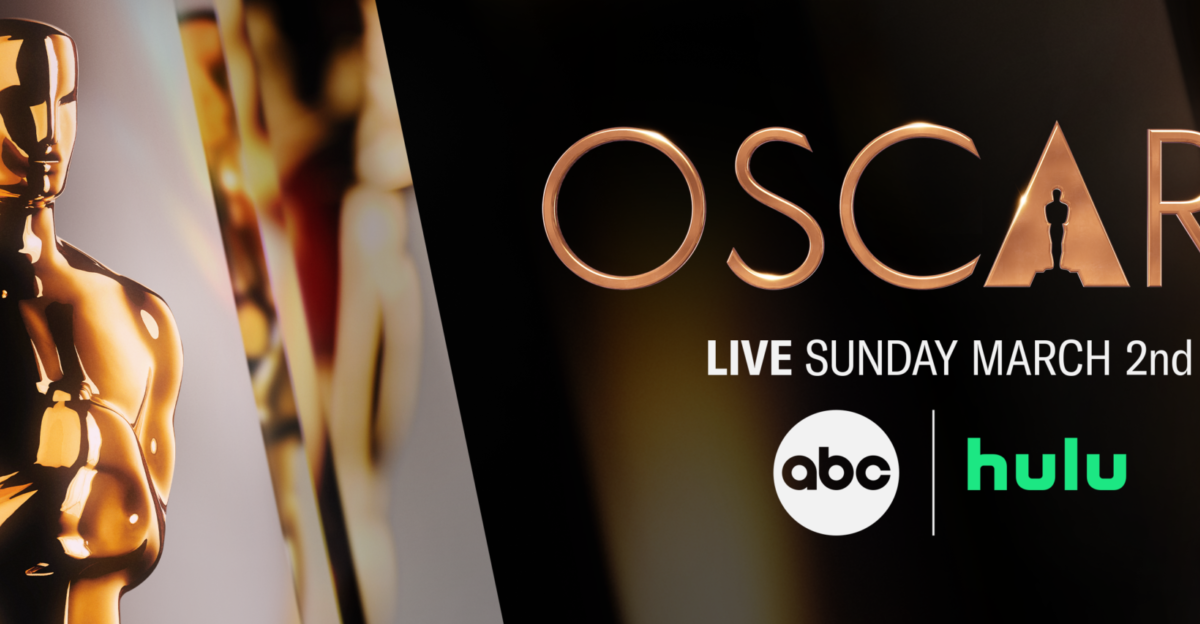
The Oscars debuted on NBC in 1953, bounced between networks for two decades before landing on ABC in 1976. For nearly 50 years, the ceremony became inseparable from the network’s identity. Producers calibrated broadcasts to ABC’s strengths.
Technical infrastructure evolved around network specifications. The cultural rhythm of award season centered on ABC’s schedule.
The Irony of YouTube’s New Role
There’s dark comedy in the Oscars’ new home. YouTube built its empire on user-generated content—makeup tutorials, vlogs, pranks, unboxing videos. It’s where internet culture thrives in chaos, where algorithms push obscure content to millions, where entertainment is ungoverned and anti-institutional.
Now it’s the official steward of cinema’s most prestigious night. The juxtaposition is absurd: the Oscars, symbol of formal elegance and tradition, now streaming alongside mukbang videos and conspiracy theories.
Three Final Years on Broadcast Television
There’s a reprieve, at least. The 2026, 2027, and 2028 Oscars will air on ABC. The 2028 ceremony—the historic 100th Academy Awards—will be ABC’s farewell, even if it’s accidental. Producers will likely lean into spectacle, knowing the audience is saying goodbye.
The Academy might explicitly acknowledge the transition, turning 2028 into a farewell to broadcasting.
What Gets Lost in Translation to Streaming
For all YouTube’s reach and technical sophistication, something intangible vanishes when a mass event moves from broadcast to streaming. Broadcast television created genuinely shared moments—millions watching simultaneously, experiencing the same surprises in real time, and engaging in water-cooler discussions grounded in a synchronous experience.
Streaming fragments that. Some viewers watch live, while others catch clips later; still others skip it and scroll through summaries.
The Financial Architecture Behind the Deal

Industry analysts speculate YouTube paid $75 to $150 million annually—substantially less than the prestige of owning the Oscars might suggest. That’s a sign YouTube didn’t need to overpay; the Oscars were available because they were desperate for attention.
ABC loses enormous advertising revenue but also sheds production costs and regulatory compliance headaches. For the Academy, YouTube’s payment provides predictable annual revenue independent of ratings fluctuations.
The Global Bet Against the American Audience

The Academy’s emphasis on “international” reveals the real strategy. By moving to YouTube, they gain instant, free distribution to 200+ countries simultaneously. That globalization could reshape how international films are valued in Hollywood—expanding beyond the Anglo-American lens that has historically dominated the ceremony.
Yet this global expansion comes at direct cost to American engagement, particularly among older, less technologically fluent viewers.
The Cascade Effect Across Awards Season
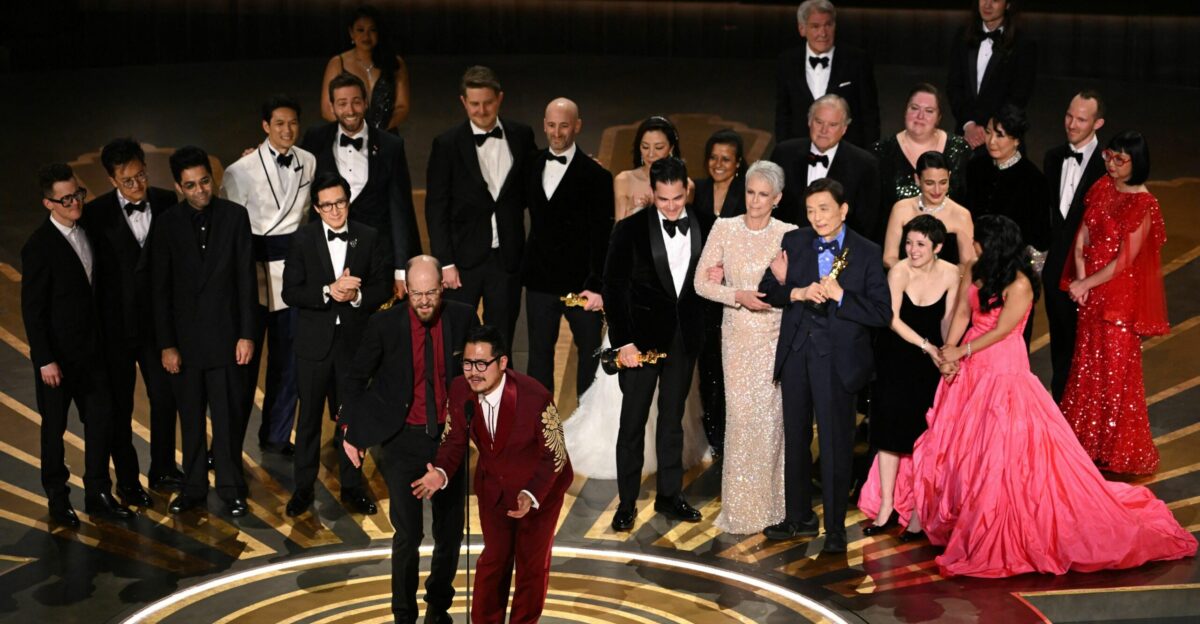
The Oscars’ move will ripple through the entire awards calendar. The Emmys, Golden Globes, Grammys, and SAG Awards—all are watching YouTube secure the Oscars and recalculating. NBC, CBS, and Paramount+ will face pressure to match what YouTube offered.
Some awards shows will follow to streaming; others will double down on broadcast, gambling exclusivity still carries value.
The Unanswered Question Haunting Everyone
Can YouTube actually save the Oscars through expansion, or will it accelerate their decline? The platform’s reach is undeniable—2 billion potential viewers. Closed captioning in multiple languages means global accessibility has never been possible.
Yet streaming viewership metrics are murky, intentionally opaque. We may never know if the switch reverses the decade-long decline or merely obscures it in harder-to-track data.
The End of an Era, the Beginning of What Comes After
When the 101st Academy Awards premiere on YouTube in spring 2029, something definitional shifts. Broadcast television loses another crown jewel. The Oscars—once synonymous with a must-watch, primetime ritual—become another event you stream when convenient, clip when needed, and ignore when you choose.
That flexibility is YouTube’s strength and the ceremony’s loss. Yet it’s unavoidable. The audience was already fragmenting; the Academy simply acknowledged reality. The Oscars’ relevance shifts to where cultural attention increasingly resides: online, global, asynchronous, and algorithmic.
SOURCES
Deadline – “Oscars Audience Up To 19.69 Million After Disney Adds Mobile & PC Viewing” (March 2025)
India Today – “Oscars 2021 records lowest-ever TV ratings, viewership drops to below 10 million” (April 2025)
Reddit/IMDb News – “2025 Oscars Score 18 Million Viewers, Down 7% From Last Year” (March 2025)
LA Times – “Golden Globes bring in 9.3 million viewers, down 2% from previous year” (January 2025)
New York Times – “Grammy Awards Audience Drops 9%” (February 2025)
Hollywood Reporter – “Film Academy Grows Oscars Revenue to $150 Million” (December 2025)