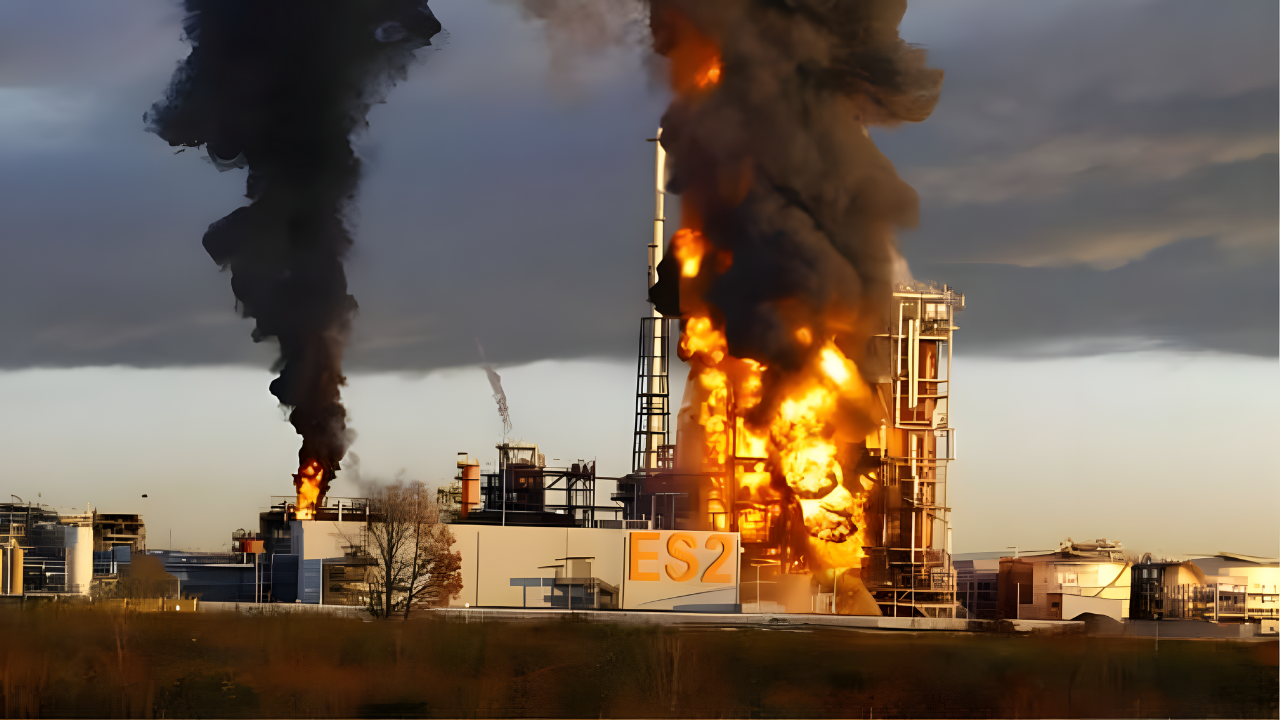
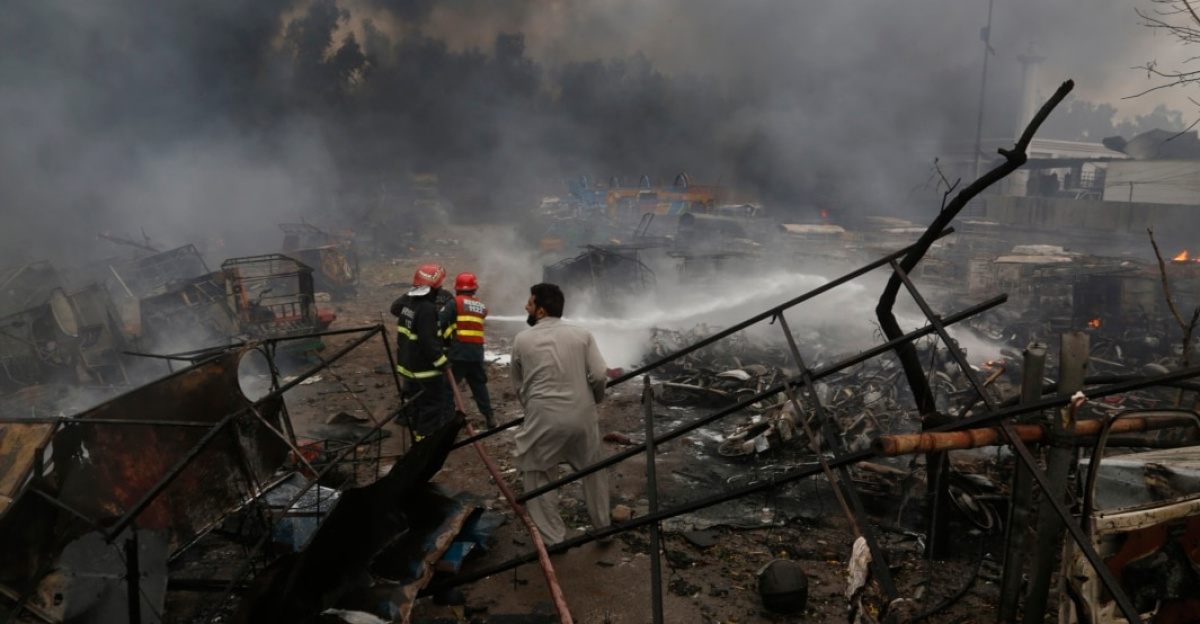
Flames rising from a chemical complex in Russia’s Stavropol Krai have highlighted how deeply the war now reaches into the country’s industrial heartland. Satellite imagery and regional reports point to a large blaze at Nevinnomyssk Azot, a major ammonia producer owned by EuroChem, following an overnight drone attack that Ukrainian officials say was aimed at a key supplier to Russia’s explosives industry.
The Industrial Target
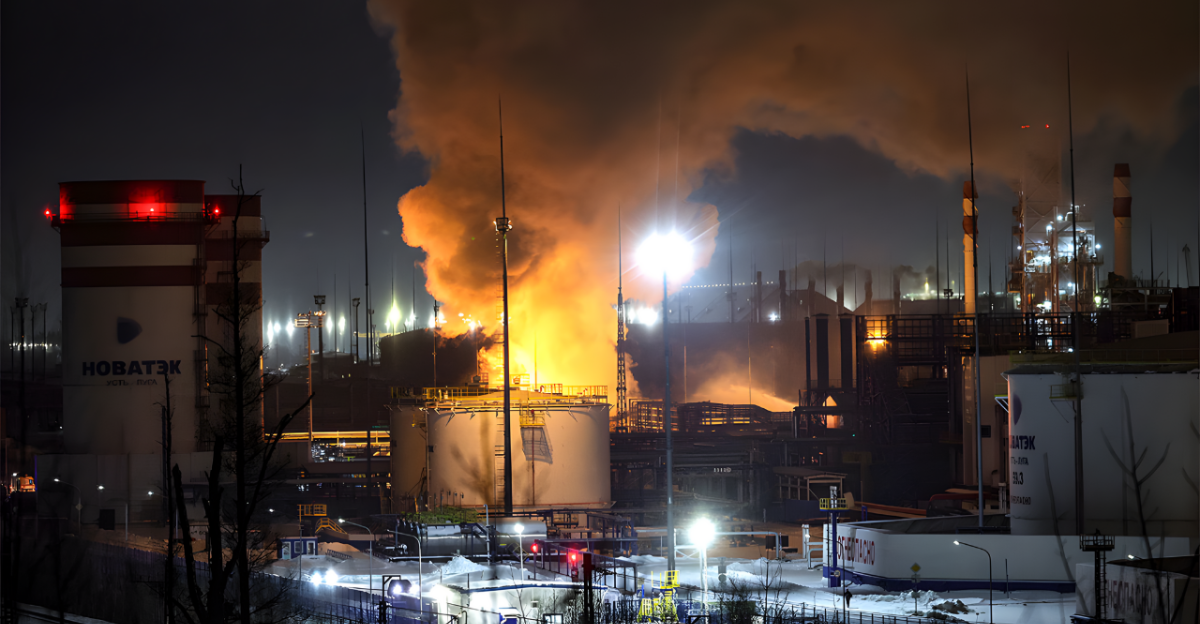
Nevinnomyssk Azot is one of Russia’s largest fertilizer plants, long known for producing ammonia and ammonium nitrate for agriculture and export. Despite its civilian profile, Ukrainian military statements and investigative reporting have described the facility as a dual-use site linked to the defense sector.
Situated in Stavropol Krai, approximately 250 kilometers from the Ukrainian border, the complex has been considered part of Russia’s secure rear area. Its tall processing units and extensive tank farms usually serve farming markets at home and abroad. The latest strike, however, left large sections of the plant scorched and inoperative, underscoring that distance from the battlefield no longer guarantees protection from long-range attacks.
Financial and Military Stakes
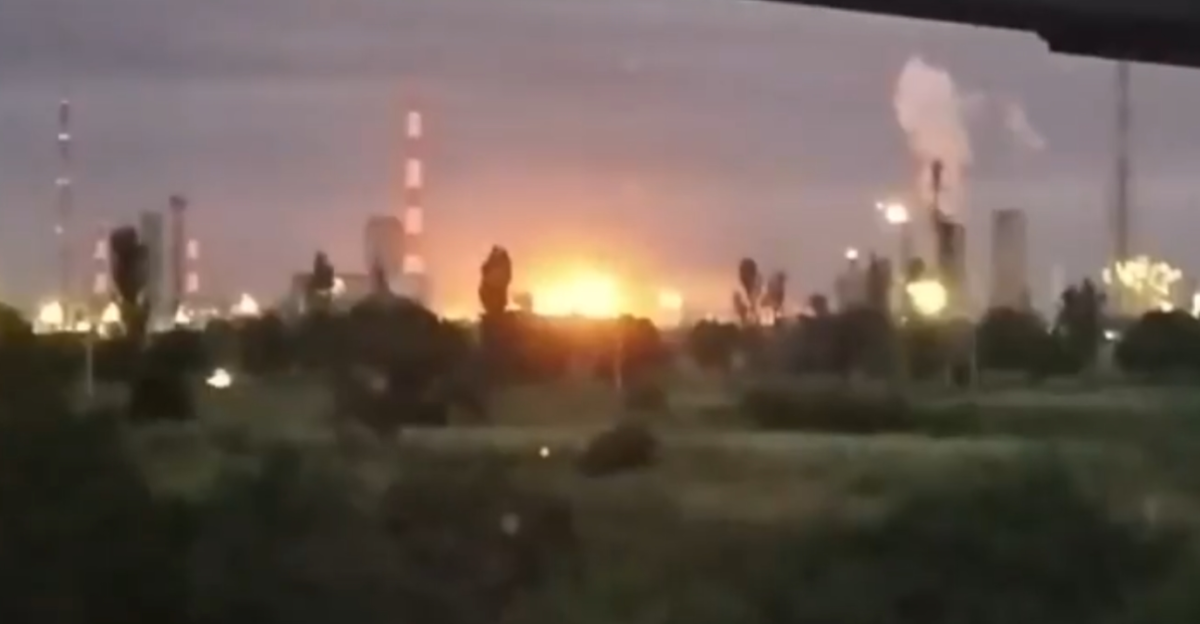
For an economy already constrained by sanctions, the loss of a high-value industrial asset and export earner adds to fiscal pressure.
Beyond the financial cost, the plant’s role in what some experts call “artillery chemistry” is central to the significance of the strike. Ammonium nitrate produced at Nevinnomyssk is a core ingredient in high explosives such as those used in artillery shells. By hitting this facility, Ukrainian forces aimed to disrupt the supply of chemical precursors needed for Russia’s munitions manufacturing.
Documented links have traced shipments of acids and nitrates from Nevinnomyssk Azot to the Sverdlov plant in Dzerzhinsk, a major producer of military explosives. These records have been cited by Ukrainian and independent investigators as evidence that the complex functions as a logistics node for the Russian defense industry, not just a civilian fertilizer plant.
Repeated Strikes and Operational Impact
The latest attack took place overnight between December 3 and 4, 2025, when multiple drones reportedly reached the site and struck processing units, triggering rapid ignition of volatile chemicals and a large-scale fire. Local authorities confirmed that production stopped across the complex as emergency crews responded.
This was at least the third time that Nevinnomyssk Azot has been targeted, following documented strikes in June and July 2025. The repeated strikes suggest a sustained effort to neutralize a specific bottleneck in Russia’s industrial supply chain for explosives. Persistently returning to the same site indicates that Ukrainian planners regard it as a high-value objective central to Russia’s ability to sustain intensive artillery operations.
Engineering assessments cited in regional and Ukrainian outlets point to a prolonged disruption of operations. Rebuilding damaged towers, high-pressure lines, and storage systems will require repair work complicated by contamination from burned chemicals and the need for safety checks before any restart. The disruption removes a significant share of Russia’s ammonia production capacity at a time when logistics are already strained by winter conditions and infrastructure demands.
Human and Environmental Toll
For plant workers and residents of Nevinnomyssk and surrounding communities, the attacks have turned a major local employer into a recurring danger zone. Employees have repeatedly had to seek shelter in on-site bunkers during alarms, underscoring how a civilian workplace has become exposed to wartime risks. Reports from the region describe growing anxiety and declining confidence among staff, with safety fears affecting daily routines and workforce stability.
The environmental consequences are also a serious concern. The combustion of large quantities of ammonium nitrate and related chemicals can release toxic gases and particulate matter, affecting air quality over a wide area. Emergency responders must manage both fire suppression and hazardous-materials containment, while monitoring for the risk of secondary blasts. These conditions complicate cleanup, raise immediate health questions for nearby residents, and may leave longer-term contamination issues around the site.
Strategic Repercussions
For EuroChem, the owner of Nevinnomyssk Azot, the attack raises complex strategic and commercial challenges. Damage to a flagship facility threatens its ability to meet international supply contracts for fertilizers, potentially pushing overseas buyers to seek alternative producers. It also highlights the exposure of corporate assets when they are perceived to be tied to a country’s military infrastructure.
On the military side, the strike illustrates Ukraine’s evolving ability to hit targets deep inside Russian territory with precision-guided drones. Each successful deep strike forces Russian commanders and industrial managers to reconsider how to allocate air defenses between frontline units and critical plants far from the front.
The damage at Nevinnomyssk Azot adds to an emerging pattern of attacks on Russia’s energy and chemical infrastructure. As unmanned systems become more capable and harder to intercept, similar dual-use facilities may face heightened risk. For Russia, the incident underscores the vulnerability of supply chains that connect civilian industry to defense production. For Ukraine, it demonstrates a strategy aimed at eroding Russia’s capacity to wage high-intensity, artillery-heavy warfare over the long term.
Looking ahead, the future of the Nevinnomyssk complex will be a test of how quickly Russia can repair and protect key industrial nodes under persistent threat. The outcome will influence not only local employment and environmental recovery, but also the resilience of Russia’s broader military-industrial system as the conflict continues.
Sources
“Drone Attack Sparks Massive Fire at Russian Chemical Plant.” Caspian Post, 10 Dec 2025.
“General Staff reports strike on Nevinnomysskiy Azot, key explosives component facility.” Odessa Journal, 3 Dec 2025.
“Fertilizer Stocks Gain as Ukraine Hits Russian Plants.” Bloomberg, 11 Dec 2025.
“Ukraine military says it hit large chemical plant in southern Russia.” Reuters, 4 Dec 2025.
“Drone attack sparks major fire at chemical plant in Russia’s Stavropol Krai.” RBC Ukraine, 10 Dec 2025.