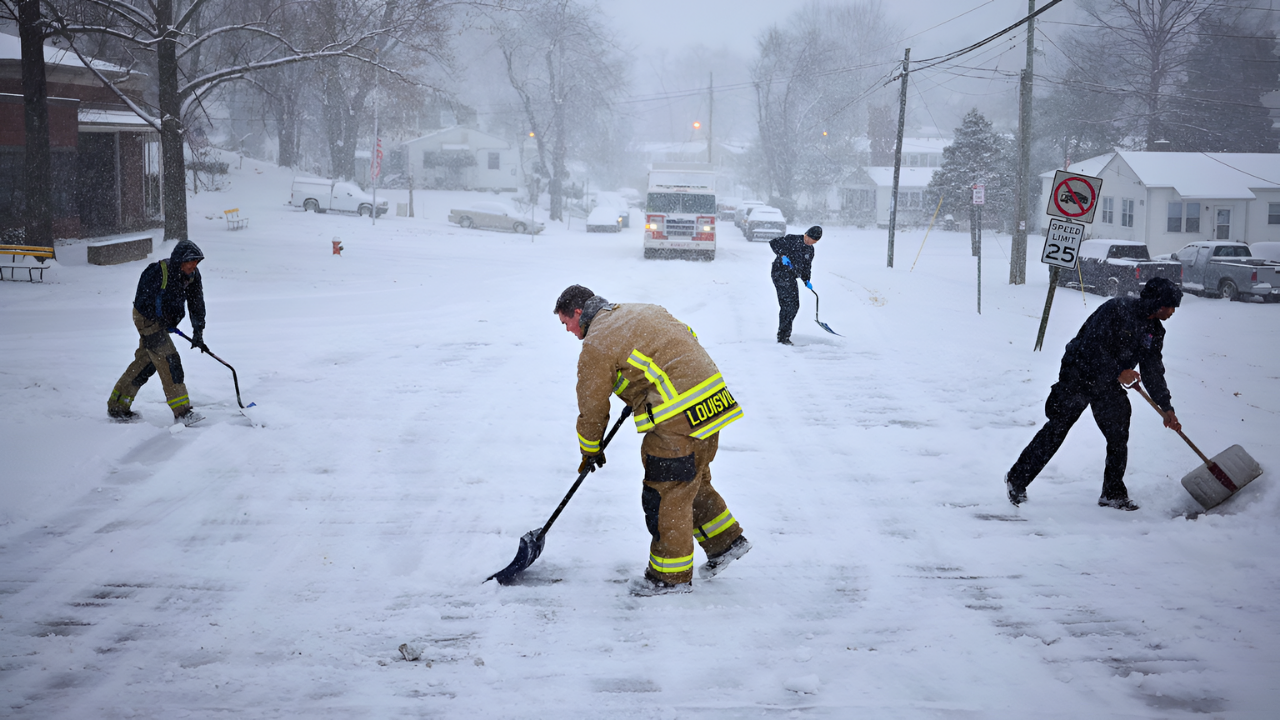
A mass of Arctic air split from the polar vortex and barreled into the eastern United States on Monday, December 15, 2025, plunging approximately 70 million people into life‑threatening cold and triggering one of the widest single‑day school disruptions in recent memory. Temperatures across the Midwest and Northeast fell 20 to 30 degrees below normal, with wind chills in many cities dropping into the single digits or far lower. The National Weather Service (NWS) issued Extreme Cold Warnings across multiple states, warning that frostbite could develop on exposed skin within 15 to 30 minutes.
Schools Lock Down as Black Ice Spreads
From Detroit to Philadelphia, school leaders confronted the same early‑morning decision: close buildings, delay the start of classes, or push ahead despite the conditions. In Pennsylvania, Philadelphia and Pittsburgh both opted for two‑hour delays, giving highway crews more time to treat streets coated in invisible ice. Cincinnati Public Schools closed outright.
Central Ohio saw some of the largest disruptions, with more than 100 districts closing or shifting to online learning. West Virginia reported closures or delays in 38 counties, while Indianapolis‑area districts in Indiana moved classes to remote instruction. Officials across the region emphasized that snow totals alone did not drive their decisions; rather, it was the rapid refreeze that left roads slick and treacherous at the very hours buses and parents would be on the move.
Storm, Refreeze, and Dangerous Wind Chills
The crisis followed a powerful winter storm that swept through central Ohio and the Mid‑Atlantic on Sunday, dropping 4 to 7 inches of snow. When the Arctic air mass surged in afterward, slush, standing water, and uncleared patches on highways quickly turned into sheets of black ice. Local meteorologists reported that the combination of fresh snow, sharply falling temperatures, and winds of 15 to 20 mph created ideal conditions for hazardous travel that would persist into the morning commute.
Across the Midwest and Northeast, wind chills fell into the single digits and teens, and in some rural pockets even lower. The NWS urged residents to minimize time outdoors, warning that exposed skin could freeze in under half an hour. Cities including Detroit, New York, Baltimore, and Washington, D.C., opened warming centers and expanded shelter options for people without housing, treating the conditions as comparable to those typically found near the Arctic Ocean.
Families, Rural Roads, and Remote Learning Strains
The cold snap’s human impact was especially visible in school districts and households. In the Philadelphia region, which encompasses approximately 200,000 public school students in the city’s system, a two‑hour delay rippled through families’ routines. Parents scrambled to arrange emergency childcare or adjust work schedules, while surrounding districts such as Lower Merion and Coatesville also announced delays or closures. The Catholic Archdiocese of Philadelphia pushed back opening times for its high schools and parish elementary schools, affecting thousands of families across the Philadelphia and Pittsburgh areas.
Rural districts faced an even starker calculus. In parts of West Virginia and eastern Ohio, where school buses navigate winding, sometimes unpaved mountain roads, conditions quickly became impassable. Nicholas, Wyoming, and Monroe county systems closed completely, while Greenbrier, McDowell, and Summers counties moved to three‑hour delays. Even treated highways remained slick as wind chills approached dangerously low levels; administrators chose full closure rather than risk accidents during morning pickups and afternoon drop‑offs.
More than 100 districts in Ohio and Indiana attempted to keep instruction going by switching to online classes. The pivot exposed familiar gaps. Some households lacked stable broadband connections, and teachers were forced to compress lesson planning into a few early‑morning hours. Specialized services, particularly for students who rely on in‑person support, were cancelled. Many children missed free breakfast and lunch, a critical part of the school day for low‑income families. In a handful of districts, technical problems led leaders to abandon remote plans midway through the day.
National Warnings, Transportation Paralysis, and a Strained Grid
The NWS coordinated its messaging through 122 regional offices, issuing a unified slate of Cold Weather Alerts, Wind Chill Advisories, and Extreme Cold Warnings across the affected region. Local bulletins repeatedly stressed that wind chills would be “dangerously cold” and that frostbite could occur within minutes on exposed skin. School systems and emergency managers used those alerts as the backbone of their closure and delay decisions, pointing to federal guidance when explaining disruptions to families and businesses.
The weather’s reach extended well beyond classrooms. Freight traffic slowed or stopped along key interstate corridors, including I‑70, I‑81, and I‑95 through parts of Ohio, Pennsylvania, and Virginia, as commercial drivers waited out the worst of the ice and wind. Airports in Pittsburgh, Philadelphia, and Columbus reported delays. Public transit agencies opened rail and bus stations as informal warming sites for people seeking shelter, even as they contended with schedule disruptions of their own. Meanwhile, utilities in Ohio, Pennsylvania, and Indiana logged record heating demand as households and businesses turned thermostats up to combat the penetrating cold.
Meteorologists later noted that computer models had disagreed about the exact track and intensity of the polar vortex disruption until about two to three days before the event, highlighting the inherent uncertainty in forecasting such extreme patterns. Once the models converged, however, conditions unfolded largely as predicted. By midday Monday, wind chills matched forecasts, traffic accidents multiplied on icy roads, and hospitals began seeing patients with frostbite, underscoring the value—and limits—of early warnings.
Climate scientists point to events like this one as part of a broader pattern in which a warming Arctic and shifting jet stream contribute to more frequent or more intense disruptions of the polar vortex. As districts in the storm zone weighed whether to reopen on Tuesday, they were already confronting questions that reach beyond a single weather system: how to adapt bus routes, school calendars, infrastructure, and emergency planning to conditions that increasingly diverge from historical norms. For the roughly 70 million Americans who spent the day under life‑threatening cold alerts, the episode raised the possibility that what once seemed rare may demand more permanent adjustments in the years ahead.
Sources:
Jagran Josh, List of School Closings and Delays Today Dec 15 2025, Dec 15 2025
FOX Weather, Polar Vortex blankets eastern US with extreme arctic air, Dec 15 2025
Newsweek, List of Schools Closed on Monday—Due to Severe Winter Weather, Dec 15 2025
National Weather Service, Winter Storm Warnings and Wind Chill Advisories – Multiple Regional Offices, Dec 15 2025
Wikipedia, December 13–15, 2025 North American winter storm, Dec 15 2025
CBS Philadelphia, School closings delayed openings in Philadelphia area, Dec 14 2025