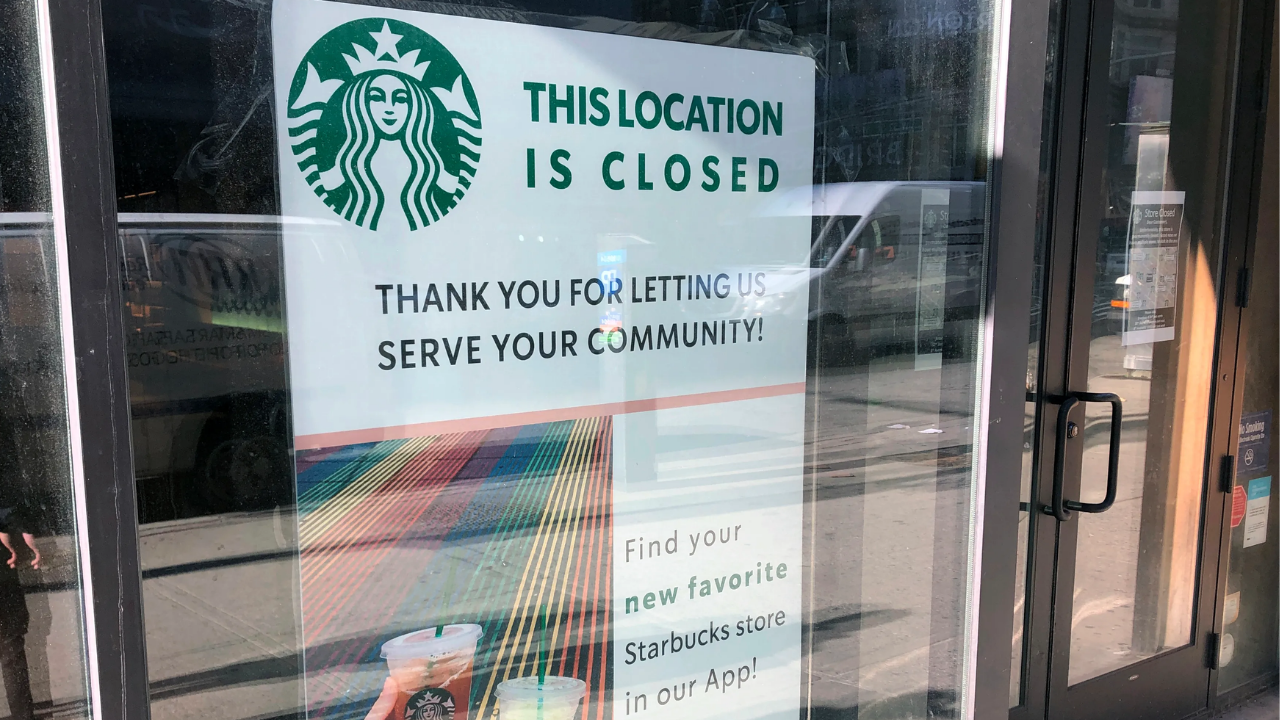
Starbucks is closing approximately 400 underperforming stores across the United States as part of a $1 billion restructuring plan under CEO Brian Niccol.
The closures primarily target dense urban markets including New York City, Los Angeles, Chicago, and San Francisco, marking a dramatic shift from the company’s decades-long strategy of urban clustering and omnipresence.
Dunkin’ Overtakes Starbucks in Manhattan
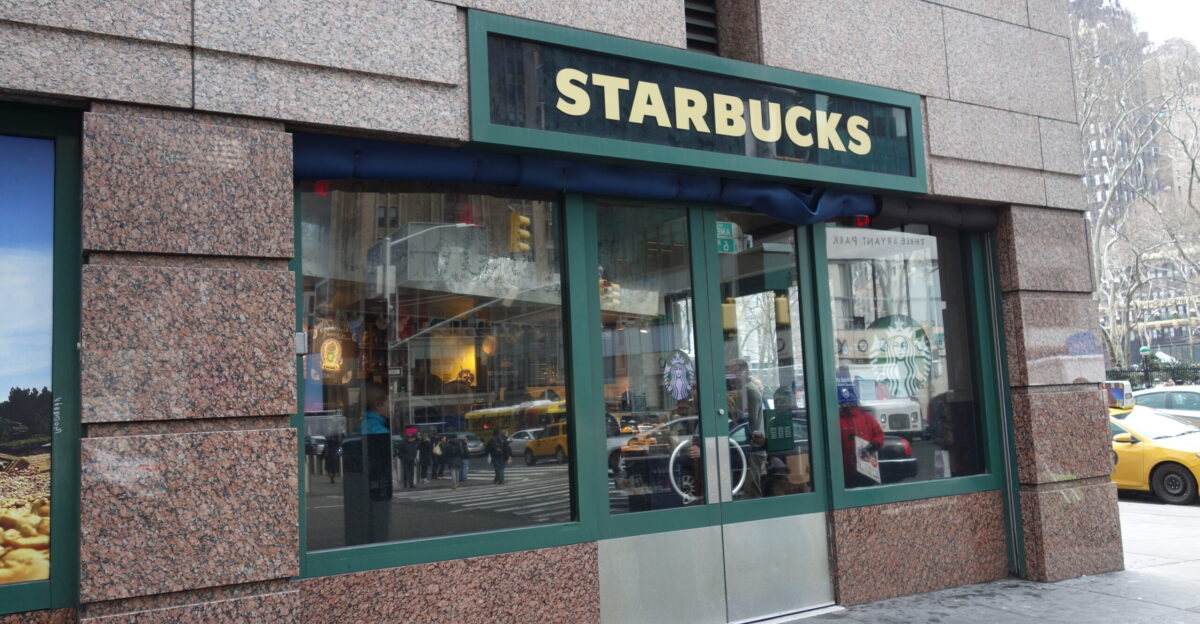
The impact is most visible in New York City, where Starbucks shuttered 42 locations—12% of its metropolitan footprint. For the first time in company history, Dunkin’ now operates more Manhattan locations than Starbucks, with 623 stores citywide compared to Starbucks’ diminished presence.
The symbolic power shift represents a significant blow in America’s most competitive coffee market.
Urban Economics No Longer Add Up

Urban stores face operating costs 1.5 to 2 times higher than suburban counterparts, with elevated rent, labor expenses, and fierce competition from independent coffeehouses eroding profitability. North America’s operating margin collapsed from 19.83% in 2024 to just 11.53% in 2025.
Arthur Rubinfeld, architect of Starbucks’ 1990s expansion strategy, acknowledged that competitive coffee shop openings have eaten away at urban store volume.
Suburban Drive-Throughs Become Growth Engine
While retreating from cities, Starbucks is aggressively pursuing suburban expansion centered on drive-through locations. In the fourth quarter of 2025, drive-through stores generated 35% more revenue than non-drive-through locations, and 65% of U.S. stores now offer drive-through service.
Suburban sites feature lower rent and labor costs while serving convenience-oriented customers less focused on the coffeehouse experience.
The “Back to Starbucks” Campaign
CEO Brian Niccol’s “Back to Starbucks” initiative aims to restore the company’s identity as a “third place”—a community gathering spot between home and work.
The company is investing over $500 million to increase staffing during peak hours, reintroduce coffee condiment bars, restore comfortable seating, and eliminate surcharges for non-dairy milk alternatives to improve customer experience.
$1 Billion Store Renovation Plan

Starbucks plans to complete approximately 1,000 café renovations by the end of fiscal 2026, representing 10% of its company-owned U.S. portfolio.
Each location will receive roughly $150,000 in upgrades featuring refreshed designs, improved lighting, restored seating removed during the pandemic, and traditional coffeehouse elements. The company is also testing a budget-friendly prototype with 30% lower construction costs.
Remote Work Permanently Reshapes Demand
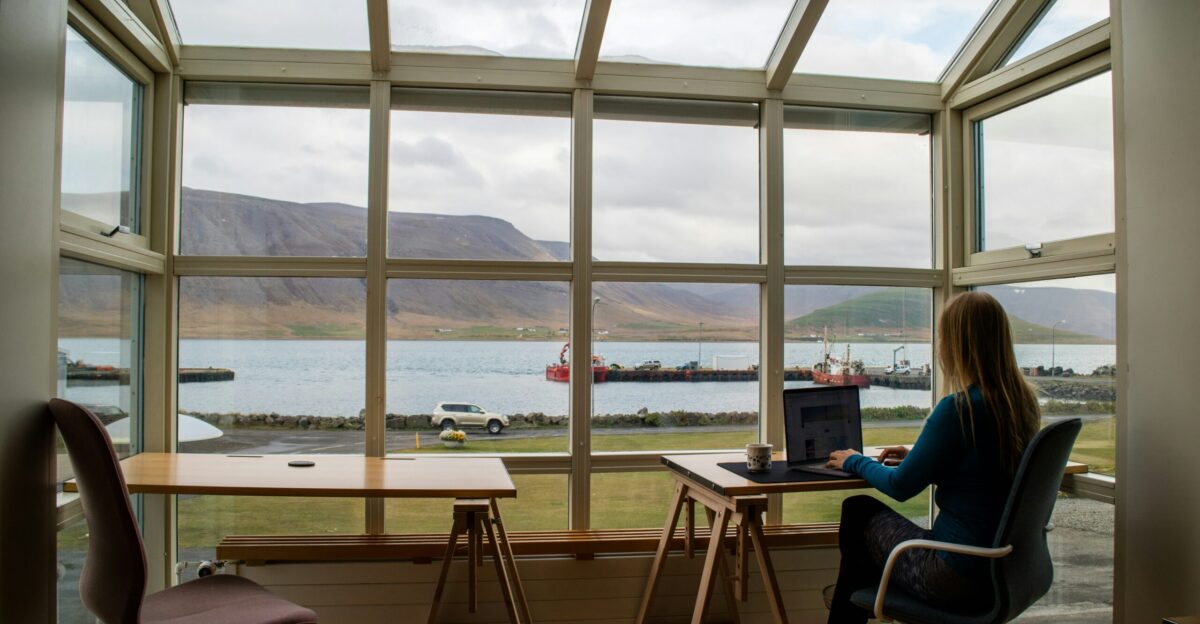
The shift to remote work represents the most enduring challenge to Starbucks’ urban footprint. Central business districts that once generated predictable morning commuter traffic have experienced sustained declines.
Multiple Los Angeles locations in downtown office building ground floors closed specifically due to remote work’s impact on daily office worker commutes, fundamentally altering urban store economics.
Safety Concerns Drive Policy Reversal
Starbucks reversed its open-door policy in January 2025, now requiring purchases for restroom access. The company grew weary of safety issues, with former CEO Howard Schultz acknowledging mental health crises affecting stores.
The policy shift followed years of operational challenges including needle disposal box installations and over a dozen store closures in 2022 citing safety concerns.
Financial Results Show Stabilization Signs

Fourth quarter 2025 results revealed global revenue rising 5.5% year-over-year to $9.6 billion, though net income plummeted 85% to $133 million due to restructuring costs.
Critically, Starbucks reported its first positive global comparable store sales growth in seven quarters at 1%, driven by successful fall menu launches. International same-store sales increased 3%, with China growing 2% despite intense local competition.
Restructuring Carries Heavy Costs
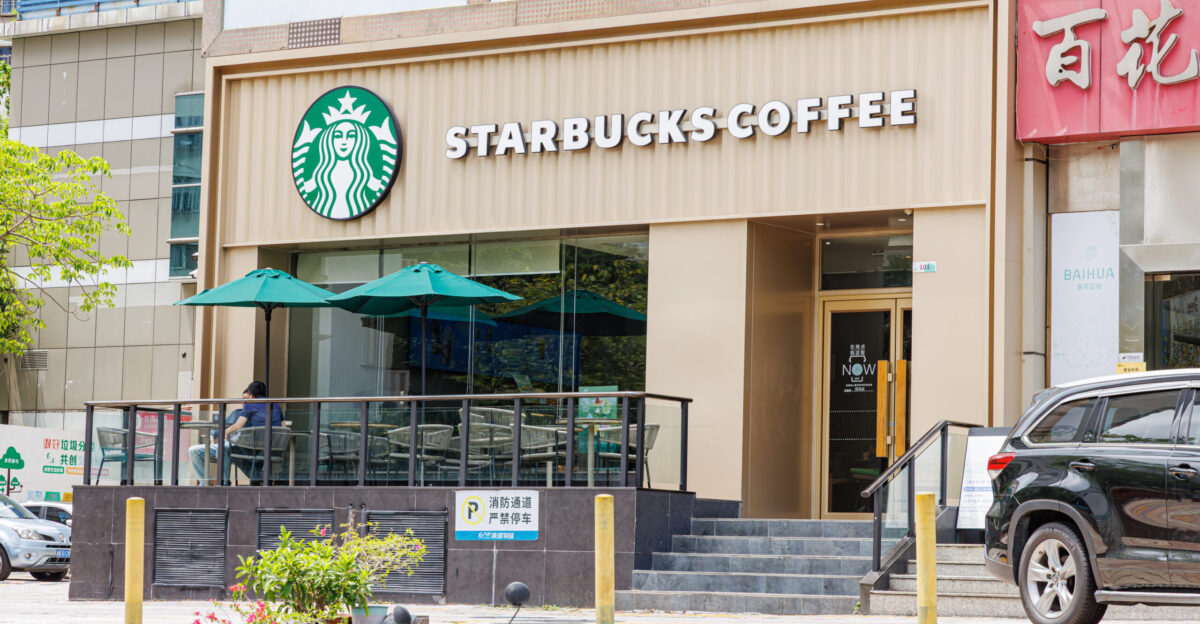
The $1 billion restructuring includes $150 million for employee severance, $400 million for store asset disposal and impairment, and $450 million for accelerated lease amortization and exit costs.
Starbucks eliminated approximately 900 non-retail employees in September 2025 following 1,100 corporate layoffs in February. The company also tightened its return-to-office mandate requiring four-day weekly in-office attendance.
Labor Strike Complicates Turnaround
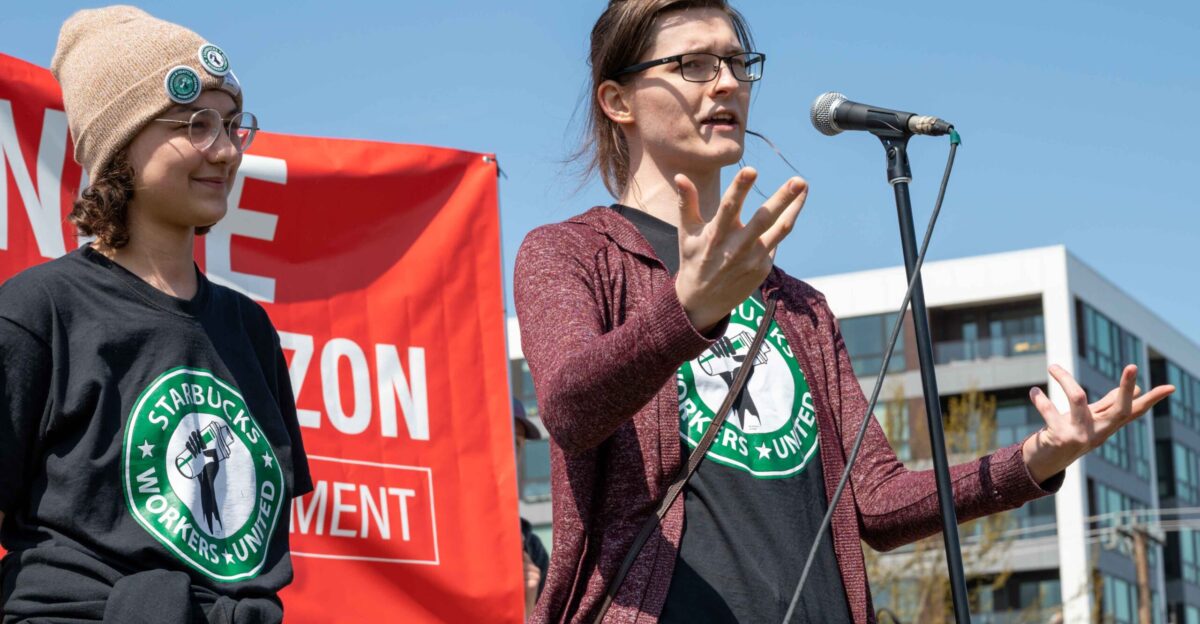
Starbucks Workers United launched the “Red Cup Rebellion” strike in November 2025, expanding to over 180 stores across 130 cities by mid-December—the longest work stoppage in company history.
The union representing approximately 11,000 baristas demands improved staffing, predictable scheduling, and higher wages. Surveys found 88% of baristas reported understaffing created unsustainable or unsafe conditions.
Wait Time Target Nearly Achieved
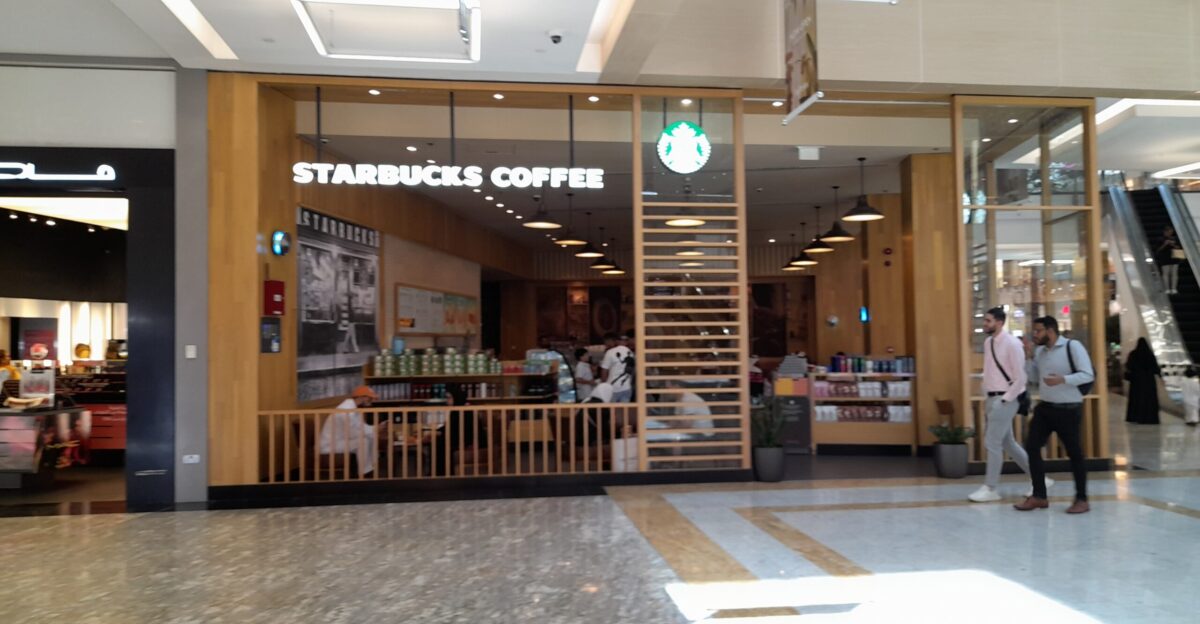
Starbucks’ operational investments aim to reduce wait times to four minutes or less—a target now achieved at over 80% of company-operated stores.
The company added assistant store manager positions and increased labor hours during peak periods. Extended operating hours at roughly half of U.S. locations ensure stores open consistently at or before 5 a.m., addressing customer accessibility concerns.
Location-Based Pricing Strategy Emerges
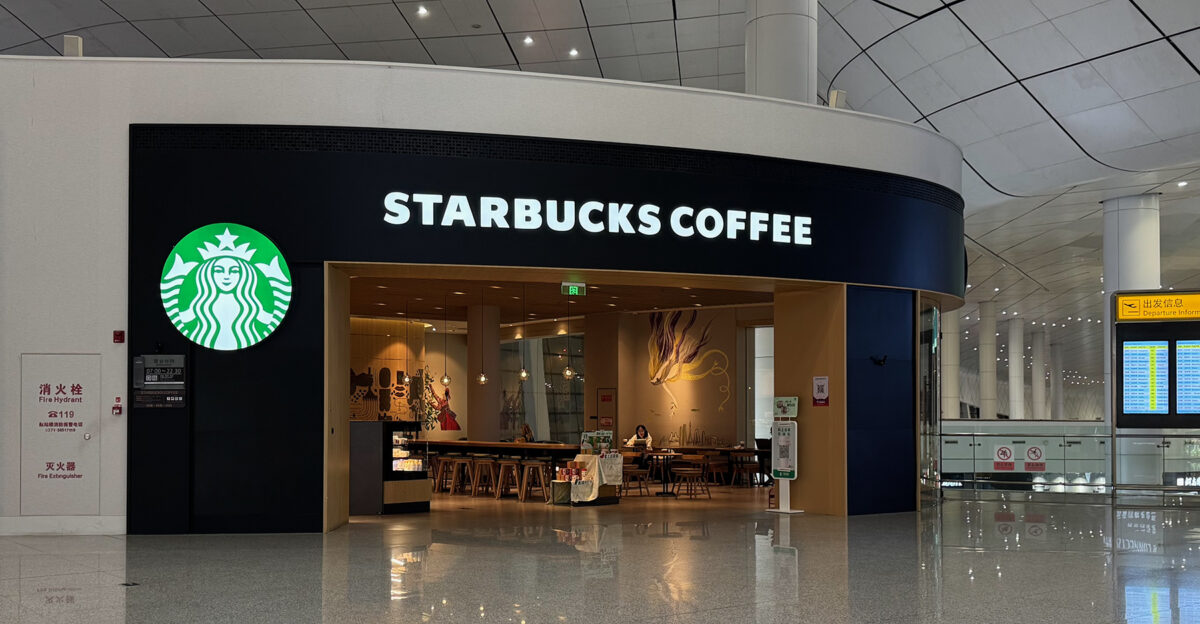
Starbucks implemented 4-6% price increases at urban airports and city center locations to offset elevated operating costs, while maintaining stable pricing in suburban markets.
This dual approach allows margin optimization without alienating price-sensitive suburban customers who represent the company’s primary growth reservoir. The strategy reflects fundamentally different economics between urban and suburban formats.
China Operations Under Strategic Review
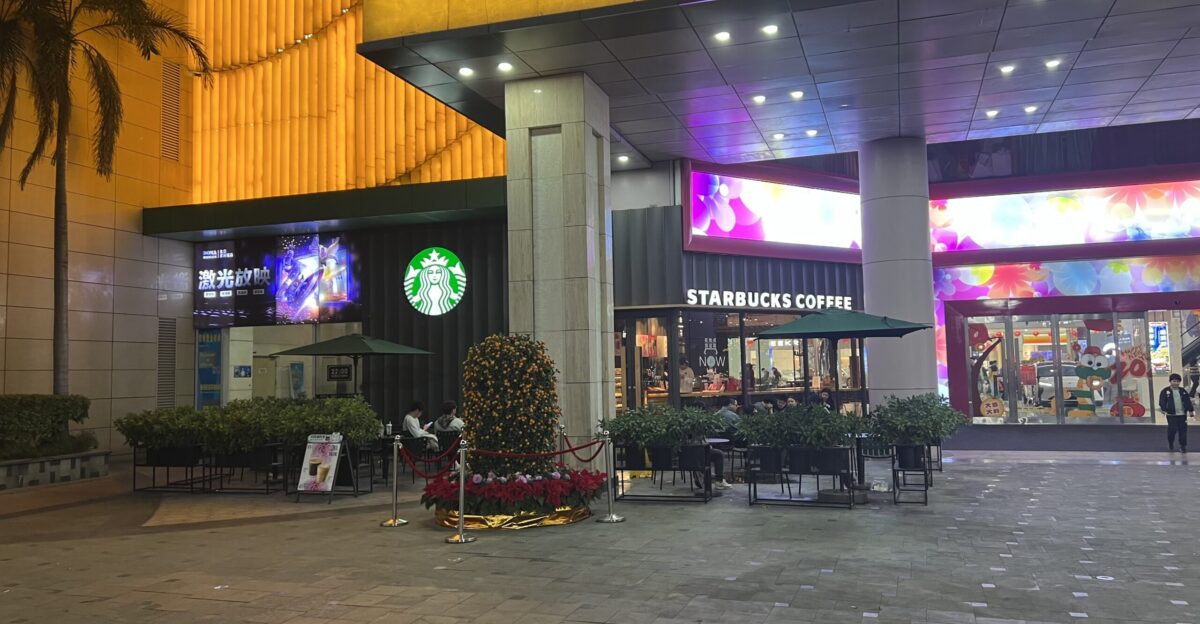
Niccol indicated Starbucks is exploring strategic partnerships for its China operations, noting “very strong interest from multiple high-quality partners” and estimating the business valuation exceeds $10 billion.
In China—Starbucks’ second-largest market—same-store sales rose 2% in the fourth quarter, supported by 9% traffic growth after the company reduced prices on iced beverages to compete with local rivals.
Recovery Timeline Extends Beyond Expectations

Starbucks shares declined approximately 6% in 2025, reflecting investor skepticism about recovery pace. The company suspended annual forecasts and will not provide projections until an investor day in late January 2026.
CFO Cathy Smith cautioned that “turnarounds are difficult to forecast” and “recoveries are not always linear,” tempering expectations for rapid improvement in struggling U.S. operations.
Sources:
“Starbucks doesn’t want to be on every street in New York and Los Angeles anymore.” CNN Business, 29 Dec 2025.
“Starbucks (SBUX) earnings Q4 2025.” CNBC, 29 Oct 2025.
“Starbucks announces $1 billion restructuring plan with store closures.” Investing.com, 25 Sep 2025.
“Dunkin Tops Starbucks in Manhattan as Chain Stores Contract in NYC.” Ground News, 16 Dec 2025.
“Starbucks plans 1000 store renovations by end of 2026.” Nation’s Restaurant News, 29 Oct 2025.
“Starbucks workers’ union takes month-long strike to more cities.” Reuters, 11 Dec 2025.