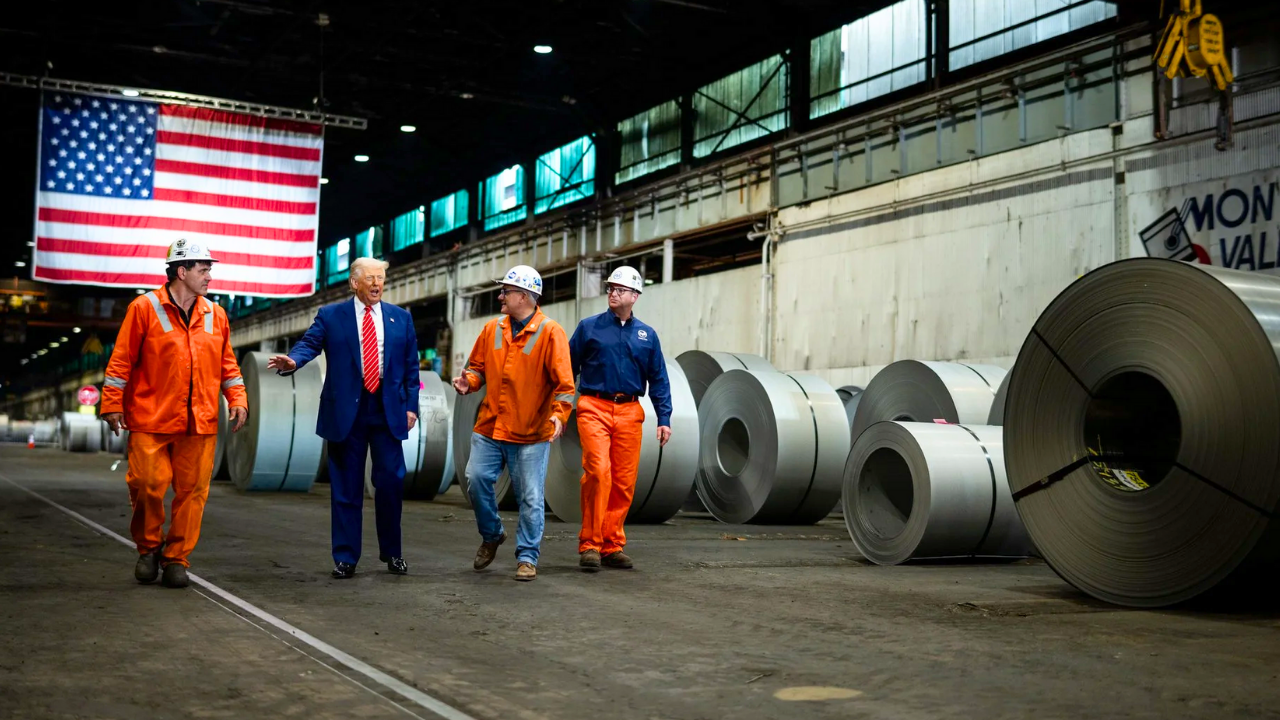
When the United States imposed broad tariffs on imported steel in 2018, the policy debate seemed far from everyday life in north St. Louis. Now, the liquidation of a major steel fabrication plant there has turned trade strategy into a local reckoning, as one of the city’s longstanding industrial players exits the fabrication business and sells off more than 1,000 pieces of equipment.
Steel Fabricator Shuts Down
Ben Hur Construction, a St. Louis-based firm with deep regional ties, is closing its Ben Hur Steel Worx fabrication operation at 5334 Shreve Avenue in north St. Louis and leaving steel fabrication altogether. The company has put the 22-acre Shreve Avenue property on the market with an asking price of $7.5 million and scheduled auctions to dispose of its heavy machinery and related assets.
According to an auction listing from the Branford Group, sales of more than 1,000 items of equipment – including welders, presses and cranes – are set to begin December 10 at auction locations including 5319 Shreve Avenue in St. Louis and 12555 Ronaldson Road in Baton Rouge, Louisiana. Company representatives have confirmed the closure of the fabrication unit, even as Ben Hur continues to pursue its broader construction work.
The move amounts to a full withdrawal from in-house steel production for Ben Hur. While the firm has not publicly spelled out every factor behind the decision, industry observers point to rising input costs and competitive pressures as central concerns.
A Long Industrial Legacy
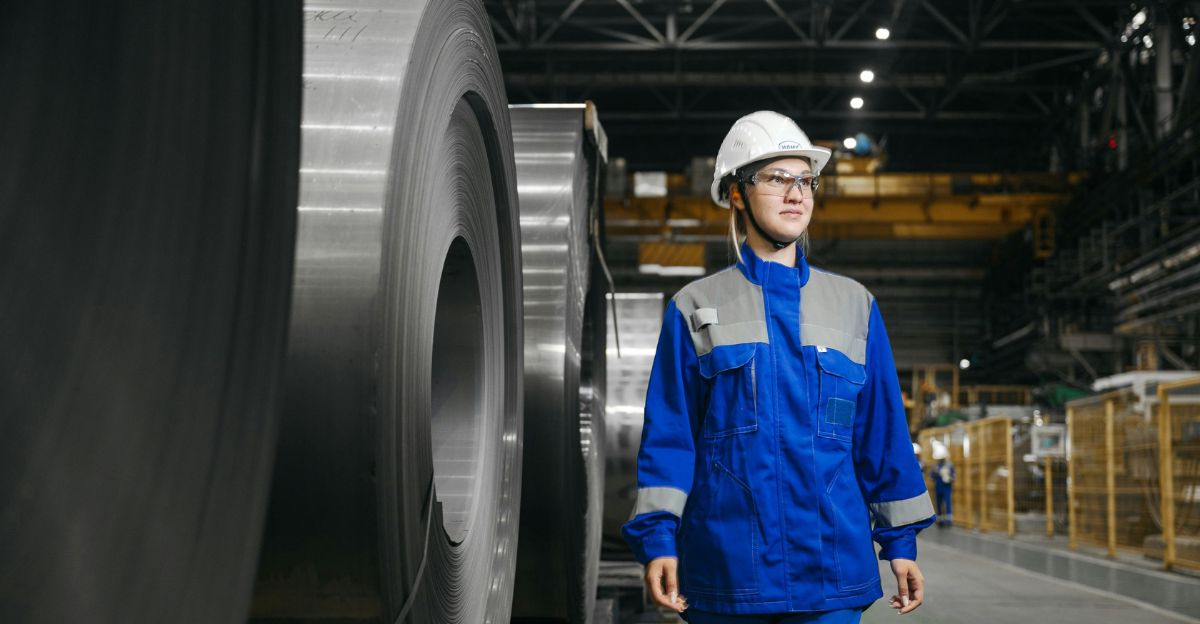
For decades, steel fabrication has been a cornerstone of St. Louis’s industrial landscape, supplying beams and custom components for buildings, bridges and infrastructure projects across the Midwest. Facilities like the Ben Hur plant in north St. Louis expanded after World War II, when demand for domestically produced steel surged during an era of rapid construction and manufacturing growth.
At its peak, the Shreve Avenue plant processed large volumes of steel, employing skilled tradespeople who welded, cut and assembled structural elements for major projects. The closure marks the end of one chapter in that history and highlights how legacy industrial operations are grappling with changing economic conditions and global trade dynamics.
The decision raises questions about the future role of traditional fabrication shops in regions where construction activity remains strong but production costs and competition have shifted. It also underscores the challenge for workers trained in specialized industrial trades as plants consolidate or close.
Tariffs and Tightening Margins
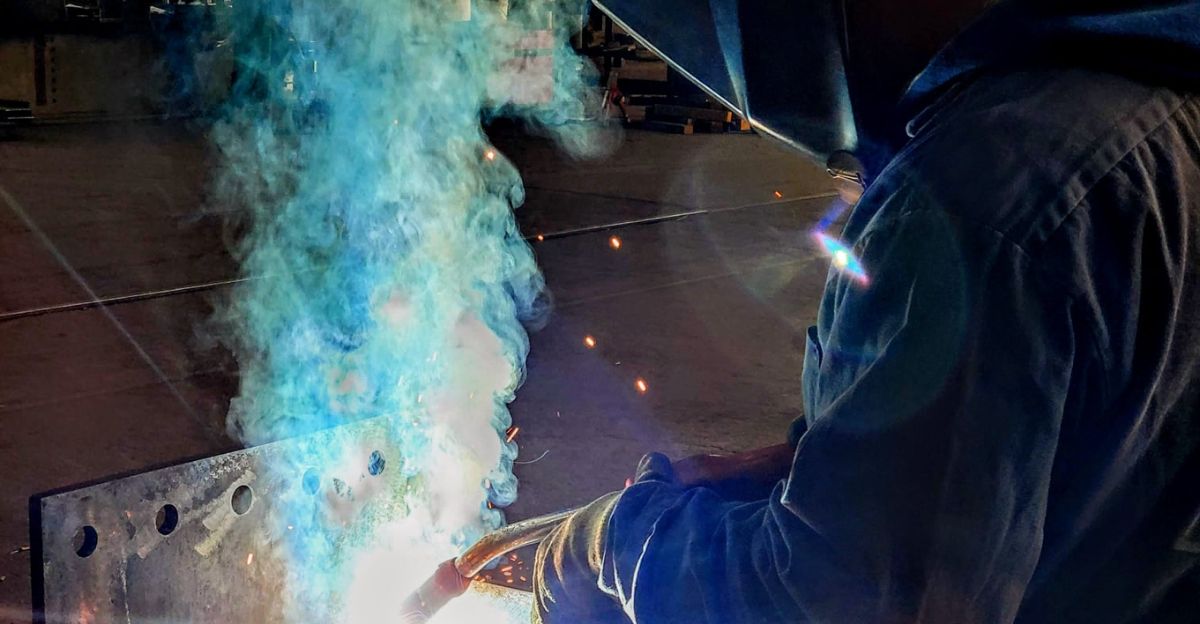
The policy backdrop to these changes is Section 232 of U.S. trade law, which the federal government used in March 2018 to impose a 25% tariff on most imported steel. The stated aim was to bolster American steel mills and reduce reliance on foreign suppliers. While the measures have been adjusted over time, the basic duty structure remains in place.
For integrated steel producers, the tariffs have offered protection from lower-cost imports. For downstream users such as fabricators, builders and manufacturers, they have meant higher prices for raw materials, whether sourced from abroad or domestically. Companies that cannot fully pass those higher costs on to customers may see margins narrow or projects become less viable.
Research on Section 232 steel actions has documented these trade-offs, noting that while mills benefited from the policy, downstream sectors like fabrication have faced significantly higher input costs. Fabricators in regions like the Midwest, which depend heavily on steel for construction and manufacturing, are particularly exposed to swings in prices and supply.
Industry analysts caution that tariffs are only one element in a complex picture that also includes labor, energy, transportation, and capital costs, as well as competition from larger firms. In Ben Hur’s case, the company has not explicitly blamed tariffs, but its shift away from fabrication fits a wider pattern of smaller or mid-sized operators reassessing their role in a reshaped market.
Ripple Effects in North St. Louis
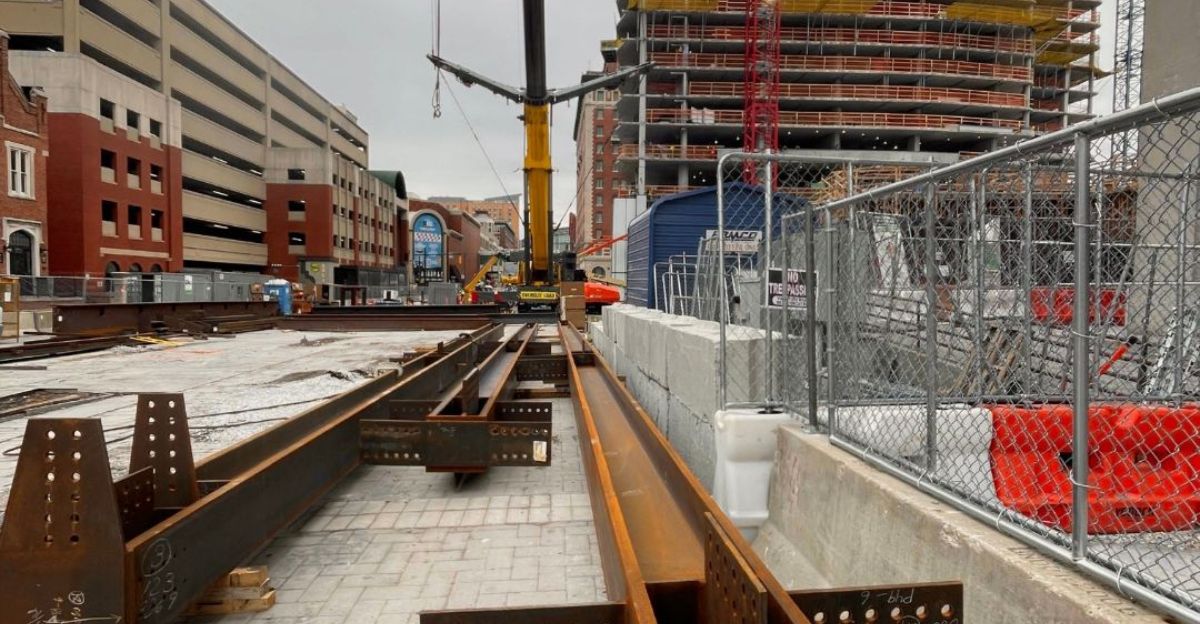
The shutdown of Ben Hur Steel Worx reverberates well beyond the plant gates. The 22-acre Shreve Avenue site has been a central node in north St. Louis’s industrial zone, feeding regional construction projects with custom steel parts and supporting a cluster of allied businesses and transport links.
Local leaders and residents now face the prospect of another large industrial property going dark, with concerns about job losses, reduced economic activity and the risk of long-term vacancy. While specific layoff figures have not been publicly released, operations of this size typically employ dozens of workers in skilled trades, from welding and machining to logistics and maintenance. Unions and workforce advocates are watching closely as employees weigh next steps in a labor market where similar opportunities may be limited nearby.
Developers, meanwhile, see potential in the Shreve Avenue parcel, given its scale and location. Possible future uses range from logistics and warehousing to more mixed configurations combining commercial activity with other functions. City incentives or planning initiatives could influence how quickly the property is reused and what kinds of jobs replace those tied to steel fabrication.
Shifting Strategy and Uncertain Outlook
For Ben Hur Construction, the divestment from fabrication signals a strategic pivot toward its core role in general contracting and construction management, without the overhead of running a steel plant. Proceeds from the property sale and equipment auctions are expected to support that transition, allowing the firm to operate more lightly while continuing to participate in building projects across the region.
The move reflects a broader recalibration in the U.S. steel economy. Section 232 tariffs have offered a measure of support to primary steel producers but have squeezed many smaller, downstream businesses with higher materials costs. Industry reports suggest increased consolidation is likely, with firms that lack scale or diversification under greater pressure to merge, specialize or exit certain activities.
In St. Louis, the end of fabrication at Ben Hur’s plant will force builders to adjust supply chains, turning to more distant suppliers for custom steel and potentially facing higher prices and longer lead times. At the same time, the large industrial site coming to market opens a window for reinvestment in a neighborhood that has pursued broader revitalization efforts.
How policymakers, business leaders and communities respond will shape whether this transition becomes a story of decline or reinvention. As equipment leaves the Shreve Avenue plant and the property’s future is debated, the outcome will offer a case study in how trade policy, industrial strategy and local development intersect on the ground.
Sources
St. Louis Business Journal, Steel fabricator Ben Hur Construction to close St. Louis plant
The Branford Group, Ben Hur Steel Worx Equipment Auction
Federal Register, Notice of Determination on Section 232 Tariffs
Congressional Research Service, IF10667: Section 232 Steel Tariffs
St. Louis Business Journal, North St. Louis industrial liquidation update
Congressional Research Service, IF10667: Section 232 Steel Tariffs