
California faces an unprecedented fiscal crisis as its wealthiest residents, including tech titans worth $2.2 trillion collectively, signal imminent relocation to escape a proposed one-time 5% wealth tax.
With the measurement date of January 1, 2026, already passed, billionaires have locked in their tax obligation regardless of future departures, yet the rush to set up new residency is already reshaping business decisions.
The $2.2 Trillion Pressure Point

California’s 186 billionaires control $2.2 trillion in collective wealth, or 27.8% of all U.S. billionaire assets. The proposed wealth tax targets this concentration with a one-time 5% levy on residents above $1 billion. Backers project $100 billion for healthcare. Yet relocation planning is accelerating, and the details of the proposal explain why.
What The Billionaire Tax Actually Does
The 2026 Billionaire Tax Act would levy a one-time 5% excise tax on accumulated wealth held by California residents with net worth exceeding $1 billion as of January 1, 2026. It covers stocks, bonds, business interests, intellectual property, and artwork, excluding real property and retirement accounts. Payment could be upfront or over 5 years, raising an obvious concern about timing.
The Date That Triggered A Scramble
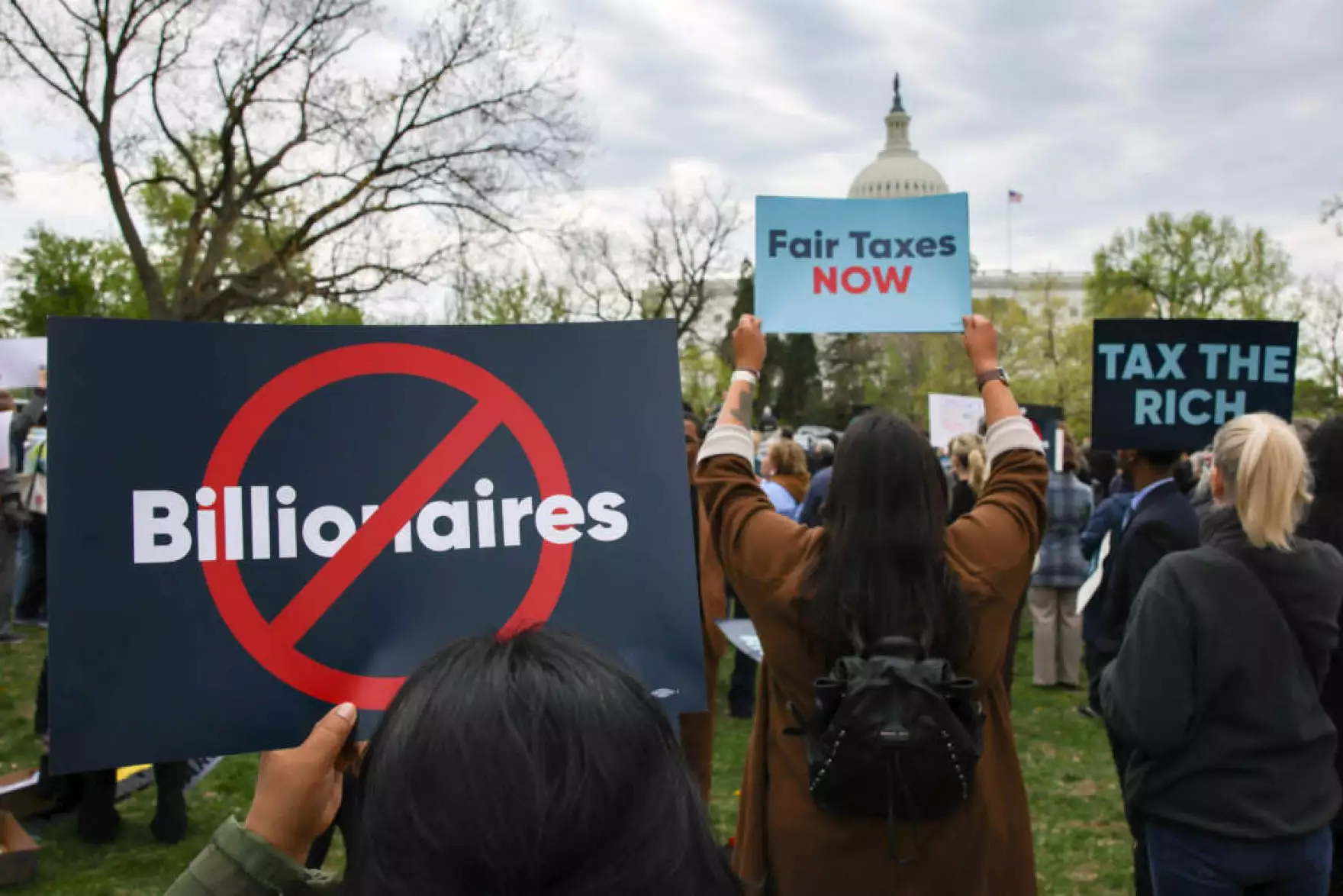
The measurement date of January 1, 2026 has already passed, locking in tax obligations for anyone who was a California resident billionaire on that specific date. That creates a paradox: leaving after the date does not erase the bill, but leaving before it could have. Did that narrow window spark a last-minute rush during December 2025?
Peter Thiel’s Miami Move Looks Timed

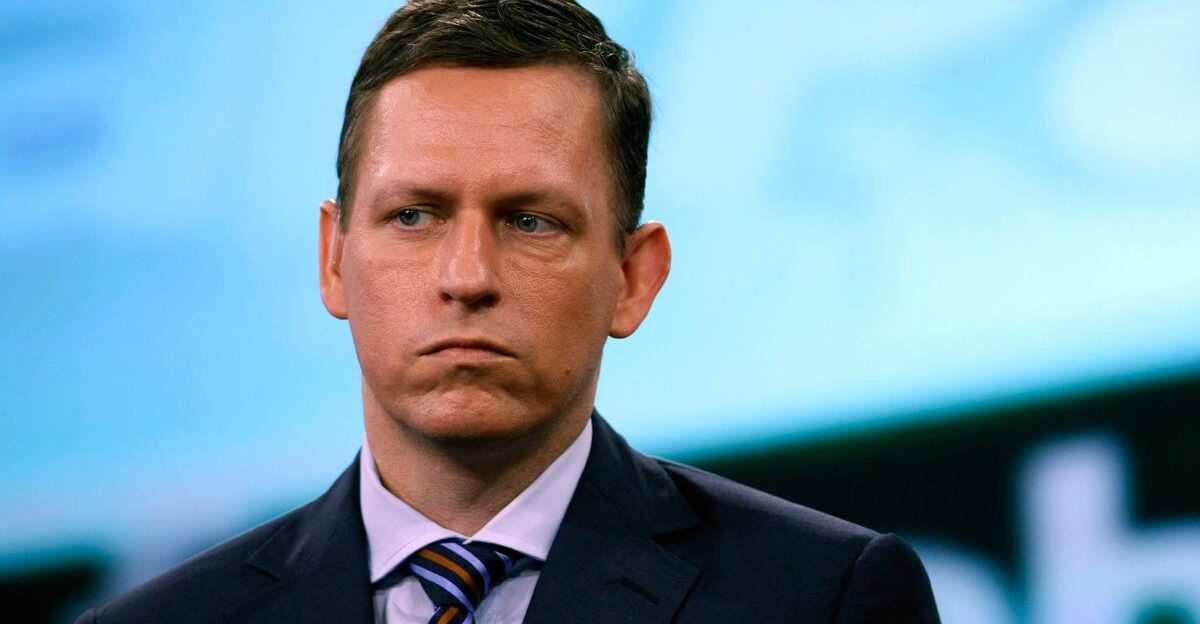
Venture capitalist Peter Thiel, worth approximately $27.5 billion, formalized his departure by opening a new Miami office for Thiel Capital on December 31, 2025, with the lease signed in December. He has maintained Miami residence since 2020 and registered to vote in Florida. Sources cited by The New York Times tied the timing to wealth tax threats, and another name followed.
Larry Page Starts Building Florida Paperwork
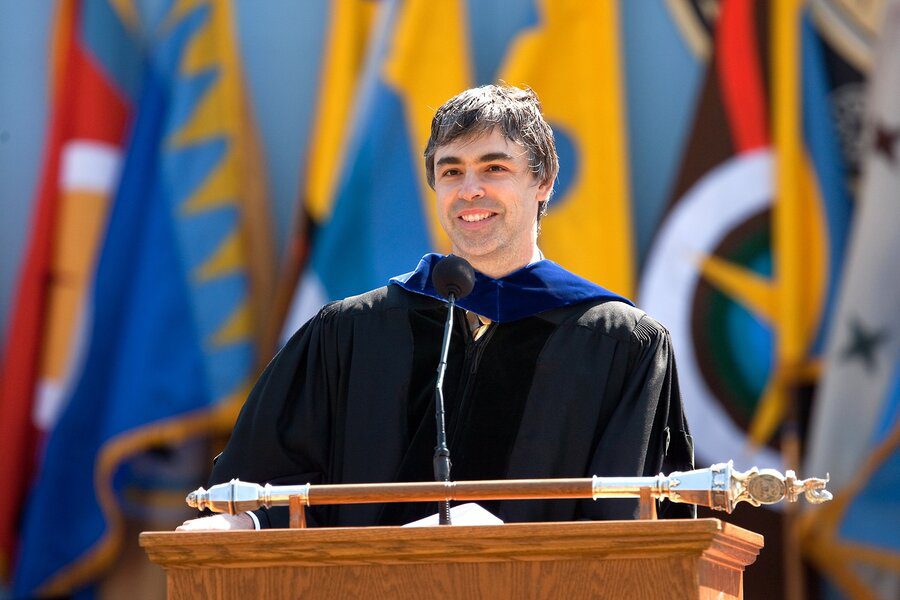
Google co-founder Larry Page, worth approximately $258 billion, would face a $12 billion tax bill if the measure passes. Three limited liability companies linked to Page filed incorporation documents in Florida in mid-December 2025, showing restructuring aimed at shifting wealth management. Page and his family office leadership have informed associates of plans to leave California by year-end 2025, and others soon echoed the warning.
More Tech Leaders Raise The Alarm

Palmer Luckey, co-founder of defense tech startup Anduril, valued at $30.5 billion, employing 6,000 people, warned the tax would force founders to sell “huge chunks” of their companies. Chamath Palihapitiya said he knew billionaires representing $500 billion who “scrambled and left California” before year-end 2025. David Sacks relocated Craft Ventures to Austin in December 2025, while Bill Ackman called California “on a path to self-destruction” if it advances.
Jobs And Investment Could Move With Them

Anduril Industries’ 6,000 employees face potential job losses if Palmer Luckey relocates due to wealth tax pressure. Venture capital firms shifting to Texas and Florida would reduce funding for California startups. The Bay Area alone concentrates more than 80 of California’s billionaires, so departures could shake the innovation ecosystem. The deeper question is what problem the tax is trying to solve right now.
The Federal Cut That Lit The Fuse

The Trump administration’s H.R. 1 legislation, enacted in July 2025, imposed unprecedented cuts to federal Medicaid funding, creating a $19-100 billion annual funding gap for California healthcare services. Rep. Ro Khanna said, “We cannot have a nation with extreme concentration of wealth in a few places but where 70% of Americans believe the American dream is dead,” backing the tax as an emergency response. That framing fueled a broader fairness argument.
Supporters Call It Equity Over Ideology

Proponents say billionaire wealth grew 633% since 2011, from $300 billion to $2.2 trillion, while Californians struggle with housing, healthcare, and education costs. They argue that billionaires pay about 24% of income in combined taxes, below the average American’s 30% effective rate. Senator Bernie Sanders endorsed the measure, saying billionaires should contribute “a modest wealth tax so working-class Californians have Medicaid.” Yet Silicon Valley resistance runs deep.
Newsom’s Warning Meets Constitutional Claims

Governor Gavin Newsom opposes the measure, warning, “You can’t isolate yourself from the 49 others. You gotta be pragmatic about it.” Attorney Alex Spiro argued it violates the Fifth Amendment taking clause, calling it “uncompensated confiscation of property.” Critics say state wealth taxes fail when the wealthy can move to Florida, Texas, Nevada, or Washington. Can one state tax wealth when rivals offer escape routes?
Legal Fault Lines Could Decide Everything

Legal experts question whether it survives constitutional scrutiny under the Takings Clause. Retroactive application targeting former residents who relocate after January 1, 2026, but before enactment raises due process concerns. No U.S. state has implemented a 5% wealth tax on billionaires, so enforceability is uncertain. Those questions may only be settled after passage in court, but rival states are already acting like they know the outcome.
The Welcome Mat In Zero-Tax States

Florida, Texas, Nevada, and Washington State offer zero state income tax, competing directly for California billionaires. Miami real estate agents reported being contacted by 5 California billionaires seeking Florida residency to escape the tax. One broker said, “If the wealth tax measure passes, this will be a very good thing for luxury Florida real estate.” Texas drew 52% of corporate relocations from California from 2020 to 2023, and housing markets are bracing.
Luxury Real Estate Could Swing Fast
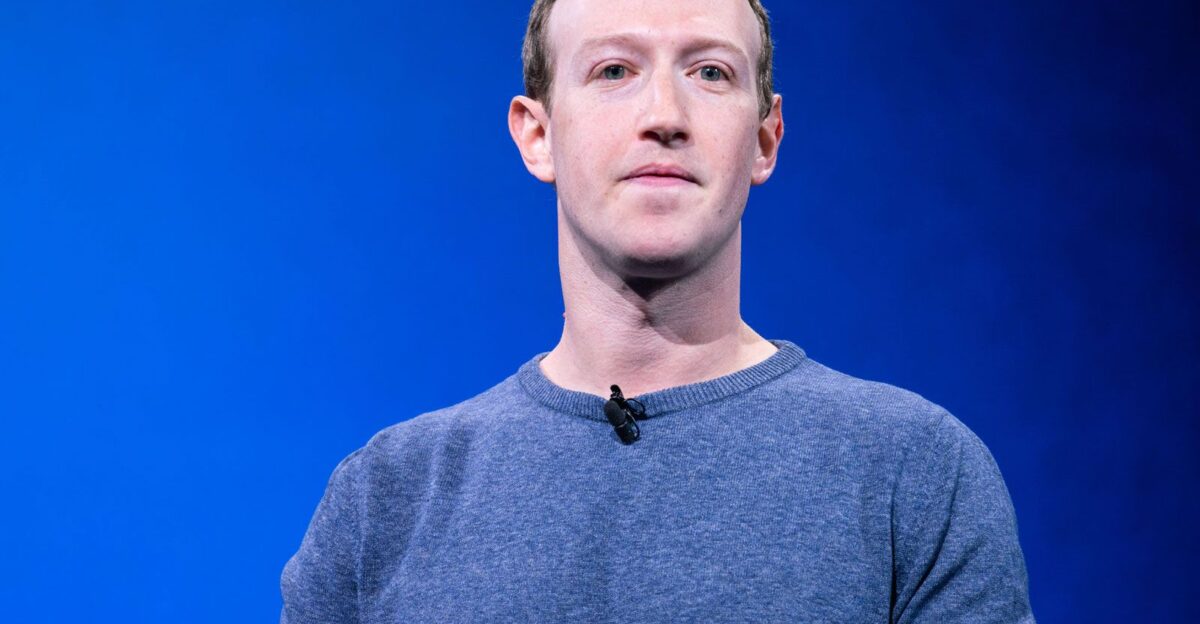
California’s ultra-luxury market depends on billionaire buyers, including Mark Zuckerberg’s $110 million compound of 11 Palo Alto properties, Sergey Brin’s $35 million Malibu estate, and Jensen Huang’s $55 million portfolio. If billionaires relocate, top-end prices could fall and ripple outward. Meanwhile, Miami and Austin could rise from in-migration, creating geographic arbitrage. But past tax fights show migration is not always predictable.
Past Examples Give Conflicting Clues
Massachusetts added a millionaire’s tax in 2022, yet millionaires did not flee; the millionaire class grew 38.6% by 2024, and wealth rose $580 billion in current dollars. But wealth taxes differ from income taxes and can create more substantial incentives to move. Sweden and Denmark saw wealth taxes correlate with wealthy resident migration and disappointing revenue. With no U.S. precedent for a billionaire wealth tax, the real risk may be something else entirely.
The Liquidity Problem Behind The Anger

Entrepreneurs like Palmer Luckey say their wealth is concentrated in operating companies, not cash, creating pressure to sell equity to pay $1 billion-plus obligations. That dilutes founder control and can destroy enterprise value. The measure includes deferral mechanisms, but still requires eventual payment. This illiquidity issue hits wealth creators harder than diversified investors, which helps explain the intensity of opposition, and it feeds into the campaign’s first real test.
Signature Gathering Is The First Gate

Proponents must gather 874,641 valid voter signatures by June 24, 2026 to qualify for the November 2026 ballot. Governor Newsom opposes the measure and is raising money through political committees to stop ballot qualification. The signature drive requires about 6 months of sustained effort and major spending. If it fails, the proposal ends without a vote, but if it succeeds, the money fight escalates quickly.
The $100 Billion Estimate Has Weak Spots

Analysts project $100 billion over 5 years, about $20 billion annually, but the estimate assumes 10% avoidance and evasion that may be too low. Constitutional litigation could block collections. Relocation before January 1, 2026 would shrink the base. If the tax drives major billionaires out, California loses ongoing income taxes too, creating a permanent hit larger than a one-time gain. That uncertainty sets up a high-stakes election moment.
The November 2026 Vote Becomes A Proxy War

If it qualifies, voters will decide in November 2026 whether to approve aggressive wealth taxation despite flight threats. The vote lands during midterms, shaping national arguments over inequality and taxation. Senator Bernie Sanders said he plans to introduce a national version, casting California as a testing ground. Other high-tax states like New York and Massachusetts could watch closely, because the real question is whether the exodus is real or overstated.
If Billionaires Leave, The Budget Math Changes

If the tax passes and major billionaires relocate successfully, California could face permanent revenue contraction. The state relies on wealthy residents for about 1/3 of income tax revenue, so losing top earners creates holes larger than the wealth tax. But if threats mirror past warnings that never materialized, the state could collect emergency revenue without a matching talent drain. Which version happens may depend on choices already in motion.
California’s Wealth Paradox Comes Due
California’s $2.2 trillion billionaire concentration is both opportunity and vulnerability, offering a way to fund healthcare, education, and social services while also creating dependence on a small group. January 1, 2026 has already passed, locking obligations for those who were resident billionaires that day. Now the state waits to see if wealth taxation delivers promised revenue or accelerates the capital flight that could undo it.
Sources
25-0024A1 (Billionaire Tax). California Department of Justice, December 2025
Peter Thiel and Larry Page Are Preparing to Flee California in Case the State Passes a Billionaire Wealth Tax. The New York Times, December 27, 2025
Expert Report On The California 2026 Billionaire Tax: Revenue Estimates and Economic Effects. UC Berkeley Goldman School of Public Policy, December 2025
California Billionaire Tax Act. Service Employees International Union–United Healthcare Workers West, 2025
H.R. 1 – 119th Congress (2025-2026): An Act to Provide for Reconciliation. United States House of Representatives, July 2025