Earlier this month, a factory in rural Pennsylvania became an unexpected symbol of the longest freight downturn in modern U.S. history. Great Dane, one of the world’s largest trailer manufacturers and a subsidiary of Berkshire Hathaway, informed workers at its Elysburg plant that up to 164 positions would be cut. The news arrived only months after the facility celebrated a major production milestone and just four years after a widely praised expansion.
The reversal highlights how deeply the prolonged freight slowdown is reshaping U.S. manufacturing communities. What once appeared to be a durable comeback story is now a cautionary tale. Here’s what’s happening and why the fallout reaches far beyond one factory floor.
From Milestone To Sudden Retrenchment
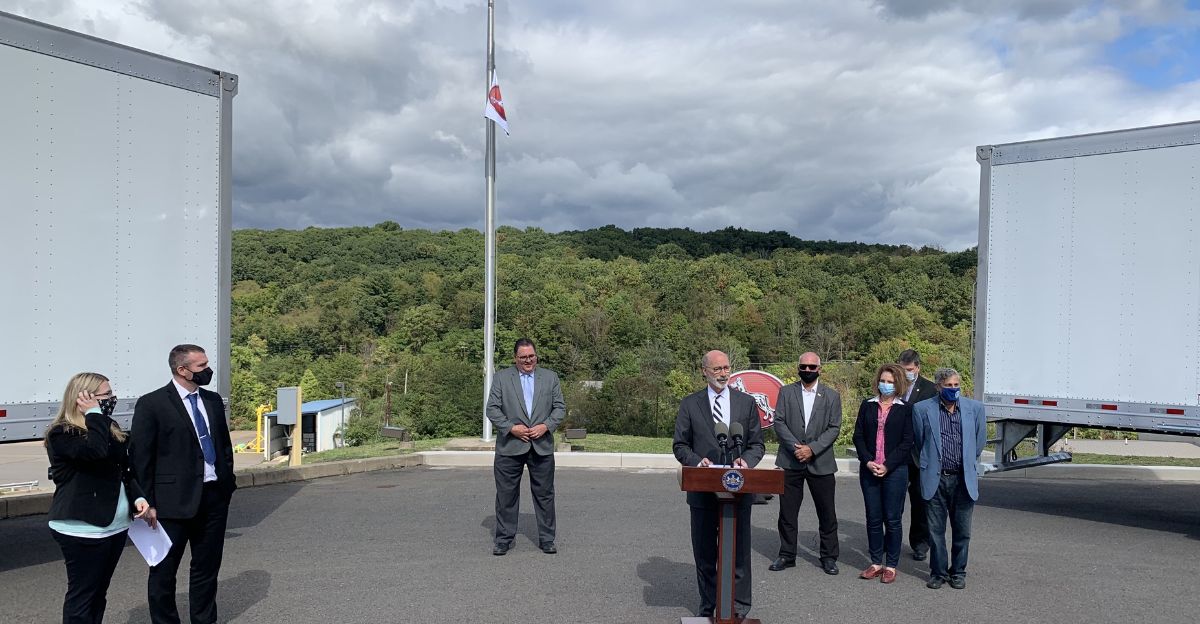
The Elysburg plant opened in 2016 and reached a symbolic high point in May 2025 when it produced its 25,000th Champion trailer. That unit went to Walmart, underscoring the facility’s importance to national retailers and large freight carriers that depend on reliable equipment supply.
Just weeks later, company leadership was still celebrating progress. In June 2025, Great Dane President and COO Rick Mullininx praised employees, calling the milestone “a testament to sustained effort over nine years of production.” At the time, the plant stood as a local example of manufacturing stability.
That optimism faded quickly. On December 8, Great Dane announced “up to 164” temporary layoffs. The move followed a $3.5 million expansion completed in 2021 that added capacity and about 200 jobs. In less than 4 years, much of that growth has now been erased.
The Economic Shock To A Small County
The layoffs affect production workers, support staff, and salaried employees. In Pennsylvania, manufacturing wages typically range from about $52,000 to $75,000 annually, meaning the cuts could remove an estimated $8.5 million to $12.2 million in yearly income from Northumberland County.
With a population of roughly 90,000, the county relies heavily on manufacturing. Motor vehicle body and trailer production ranked 13th among local industries by employment in late 2023. Losing that many paychecks creates ripple effects well beyond the plant gates.
Reduced income can strain property tax collections that support schools, dampen spending at local businesses, and reduce donations to community organizations. For a region that has already faced decades of plant closures and population loss, the sudden pullback at a relatively new facility raises renewed doubts about whether industrial growth can truly last.
Why A Berkshire Subsidiary Is Cutting Jobs
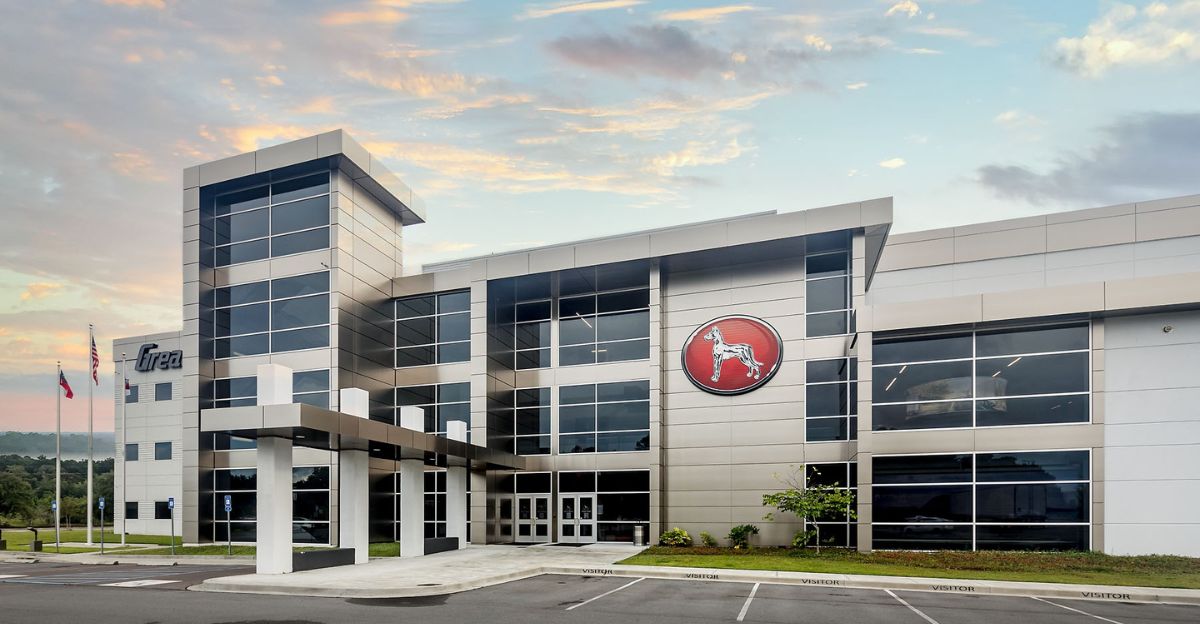
Great Dane’s retrenchment is not the result of company distress. The Chicago-based manufacturer generates about $1.6 billion in annual revenue and ranks among the top 3 trailer makers globally. Its parent company, Berkshire Hathaway, carried a market valuation near $790 billion in 2023.
Instead, the layoffs reflect a historic freight slump that began in April 2022 and has now stretched across 13 consecutive quarters. No freight recession since the 1970s has lasted this long. During the 2008–2009 financial crisis, freight volumes fell by about 24% but recovered within roughly 2 years.
The current downturn has been milder but far more persistent, with volumes down roughly 7% to 9%. Great Dane cited that “macroeconomic uncertainty remains high,” echoing national indicators showing falling truck tonnage and weakening shipment volumes through late 2025.
How Trailer Demand Collapsed Nationwide
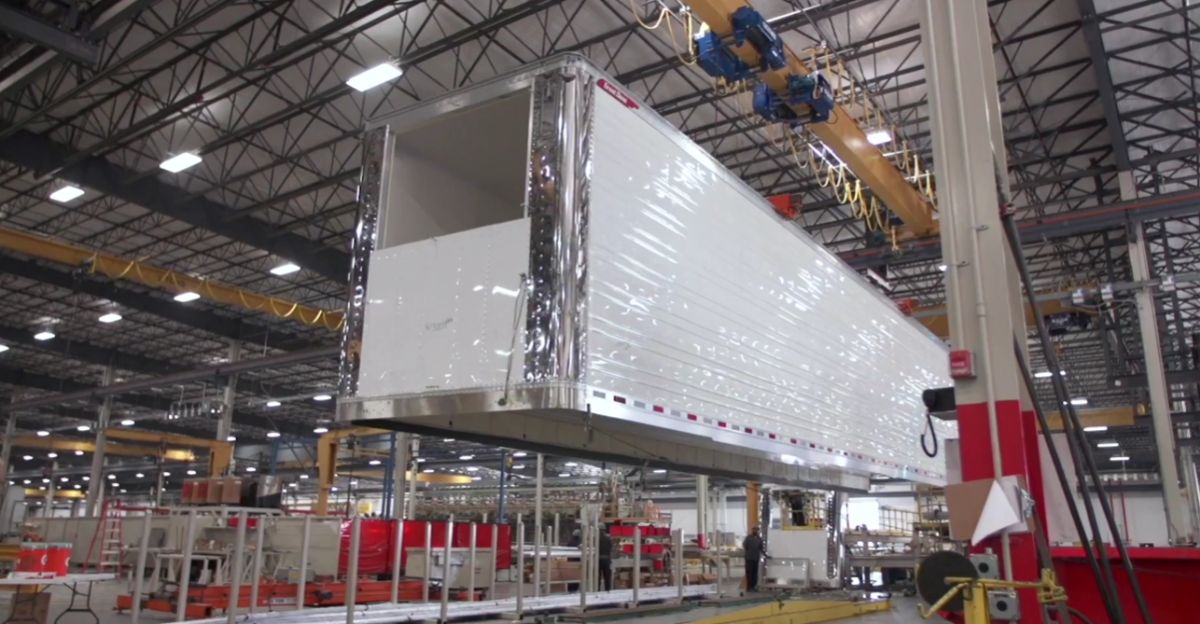
Trailer orders have fallen sharply alongside freight volumes. Across the United States, manufacturers booked about 13,000 units in November, down 37% from a year earlier. Orders from September through November dropped 28%, while cancellation rates remained above historical norms.
Industry backlogs have also thinned. The backlog-to-build ratio now sits near 5.4 months, below the healthier 8 to 10 months that support steady production. For Elysburg, expanded in 2021 to produce roughly 2,800 dry van trailers annually valued between $84 million and $140 million, demand no longer supports that scale.
Multiple forces converged. During the COVID-19 period, retailers overstocked and thousands of new trucking companies entered the market. As spending shifted back toward services, inventories were cut while excess trucking capacity remained. Freight rates dropped, leaving many carriers operating at an average margin of about negative 2.3% and delaying new equipment purchases.
A Workforce Waiting For A Way Back
Great Dane has described the Elysburg layoffs as temporary and said workers will be recalled when demand improves, but no timeline has been provided. Pennsylvania’s maximum weekly unemployment benefit of $706 replaces only about 42% of average manufacturing wages, forcing many families to manage on sharply reduced income.
Extended uncertainty creates additional risks. Skilled workers may seek permanent jobs elsewhere, making it harder for the plant to restart quickly. The slowdown also affects suppliers of steel, tires, and components, along with large customers like Walmart that rely on consistent trailer availability.
Industry data suggests this is part of a broader contraction. ACT Research has reported elevated trailer order cancellations across the sector, including at Wabash National and Hyundai Translead. For communities like Northumberland County, the shift from expansion to contraction in just 4 years underscores how closely local livelihoods are tied to freight markets still struggling to find balance.
Sources
“Great Dane Announces Layoffs At Elysburg Plant.” Eagle 107, December 8, 2025.
“Great Dane to Lay Off Up to 164 Workers at Elysburg Plant as Freight Slowdown Continues.” Fox 56, December 7, 2025.
“Truck Tonnage Index (TRUCKD11).” Federal Reserve Economic Data (FRED), December 9, 2025.
“Great Freight Recession 2025 – Grim Unprecedented.” Tank Transport, August 5, 2025.
“ACT: Preliminary Net Trailer Orders Underwhelm.” The Trucker, December 16, 2025.
“Cass Transportation Index Report: November 2025.” Cass Information Systems, December 15, 2025.