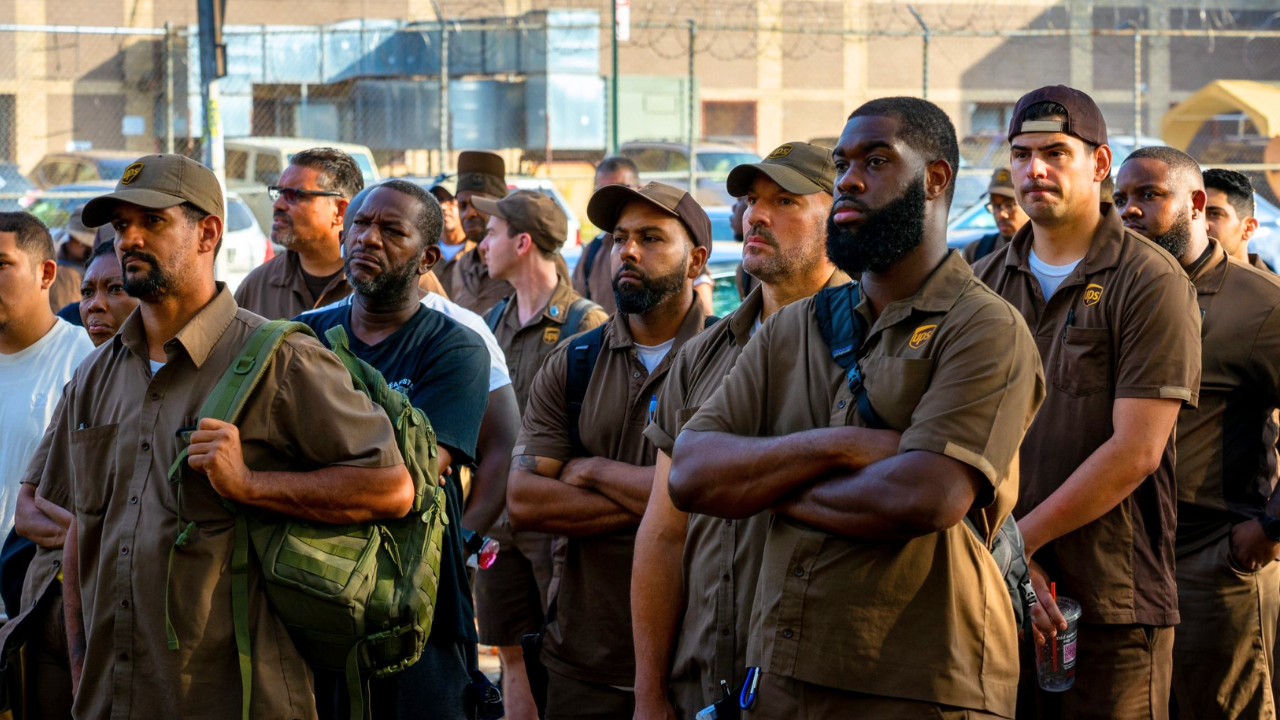
United Parcel Service has executed what CEO Carol Tomé describes as “the most significant strategic shift in company’s history” eliminating 48,000 positions and closing 93 facilities through the first 9 months of 2025. This restructuring pivots away from Amazon low-margin e-commerce toward healthcare and premium business, backed by a $9 billion automation plan and a 50% Amazon volume reduction by June 2026. The details show why.
A Logistics Giant Makes A Hard Turn
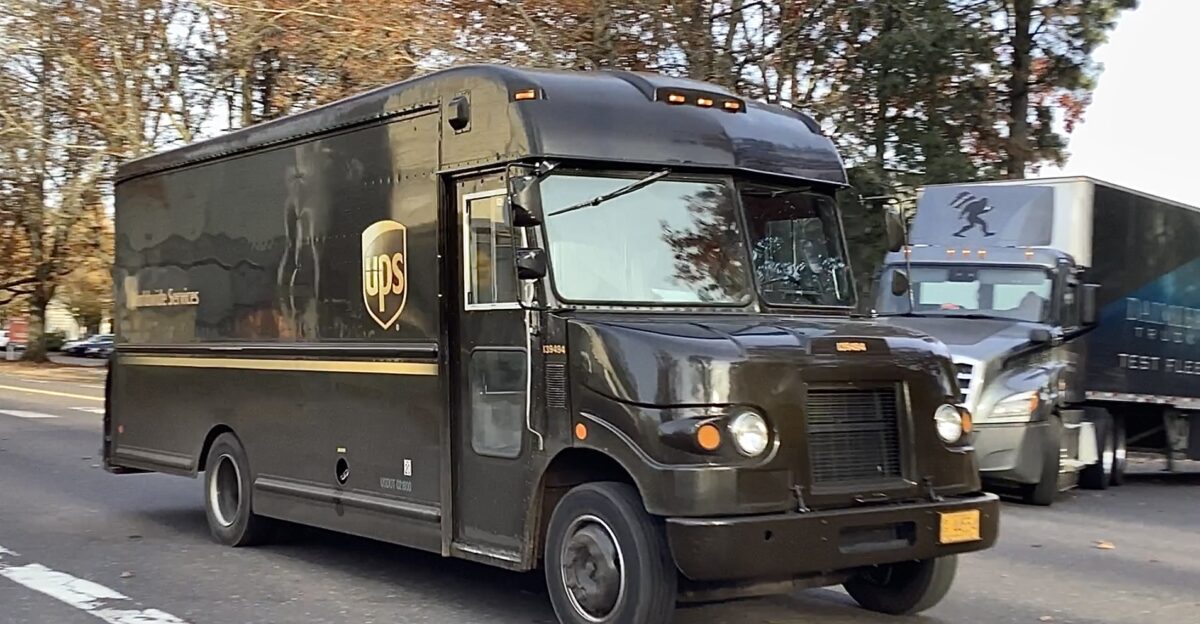
United Parcel Service announced the deliberate dismantling of relationships that built modern e-commerce. CEO Carol Tomé called it the most significant shift in the company’s 118-year history. By September 2025, nearly 50,000 employees had lost their jobs, not from collapse but strategy. Amazon, UPS’s biggest customer, was not profitable enough to keep. The Amazon math mattered.
When Big Revenue Still Hurts Margins
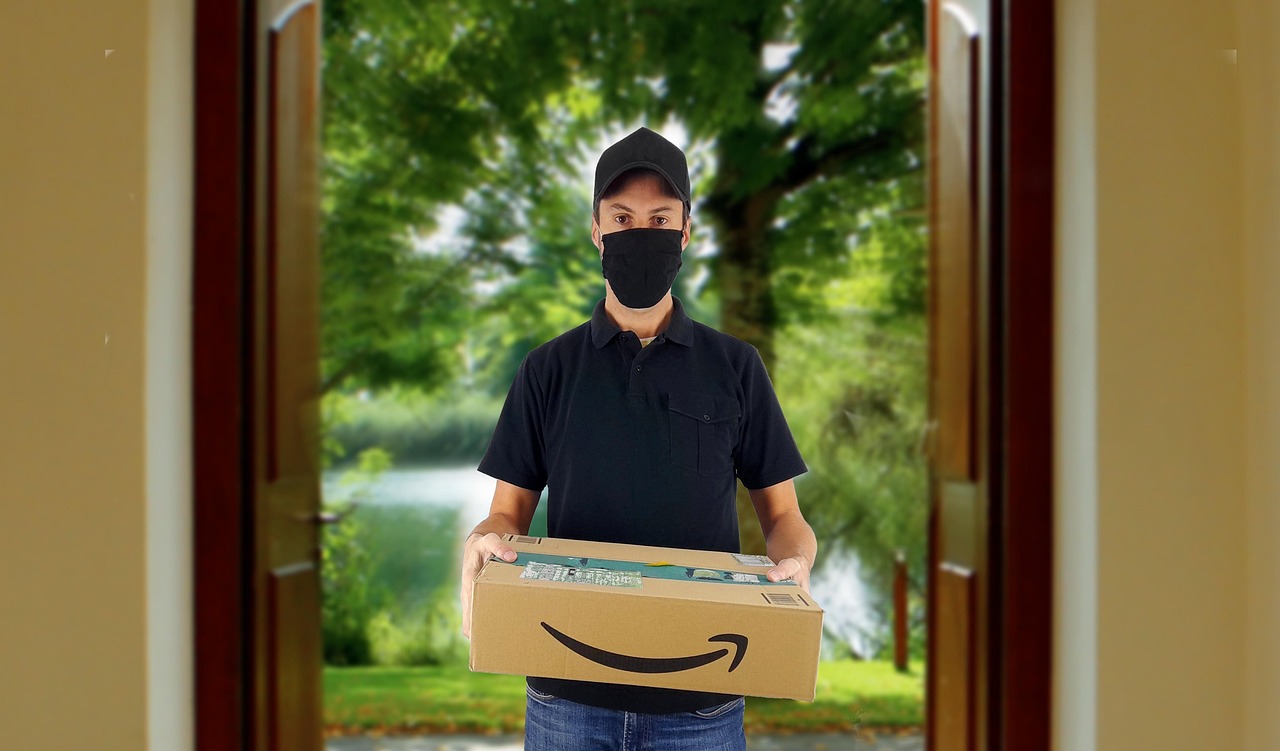
Amazon represented 11.8% of UPS’s $91.1 billion in 2024 revenue, roughly $10.7 billion. Yet Tomé said Amazon’s margins were “dilutive” to the business, meaning volume reduced profitability. The per-package return lagged healthcare logistics, small business deliveries, and international commerce. UPS confronted a risky idea: being worth more without its biggest shipper. Wall Street listened.
The 48,000 Job Reality In 9 Months
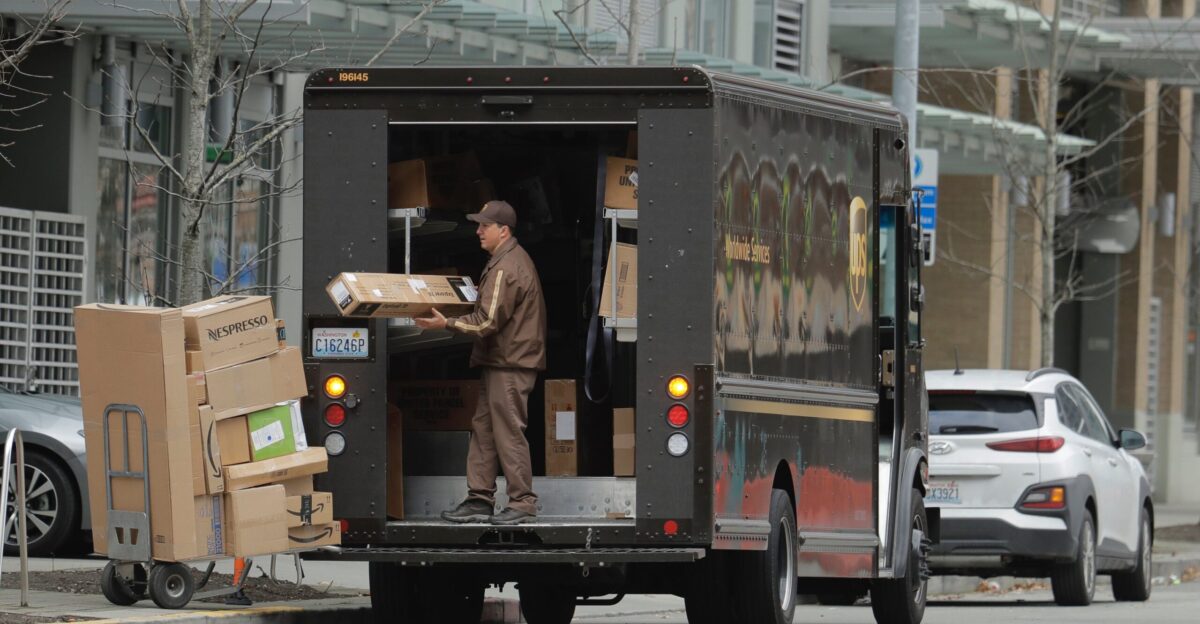
By September 2025, UPS eliminated 48,000 positions: 34,000 operational workers and 14,000 managers. UPS also closed 93 buildings, about 10% of its U.S. footprint. With roughly 490,000 employees globally, about 10% of the workforce disappeared in 9 months. The pace was deliberate, and changes were set to continue through 2027. The ground impact mattered.
Why $3.5 Billion Made It Inevitable
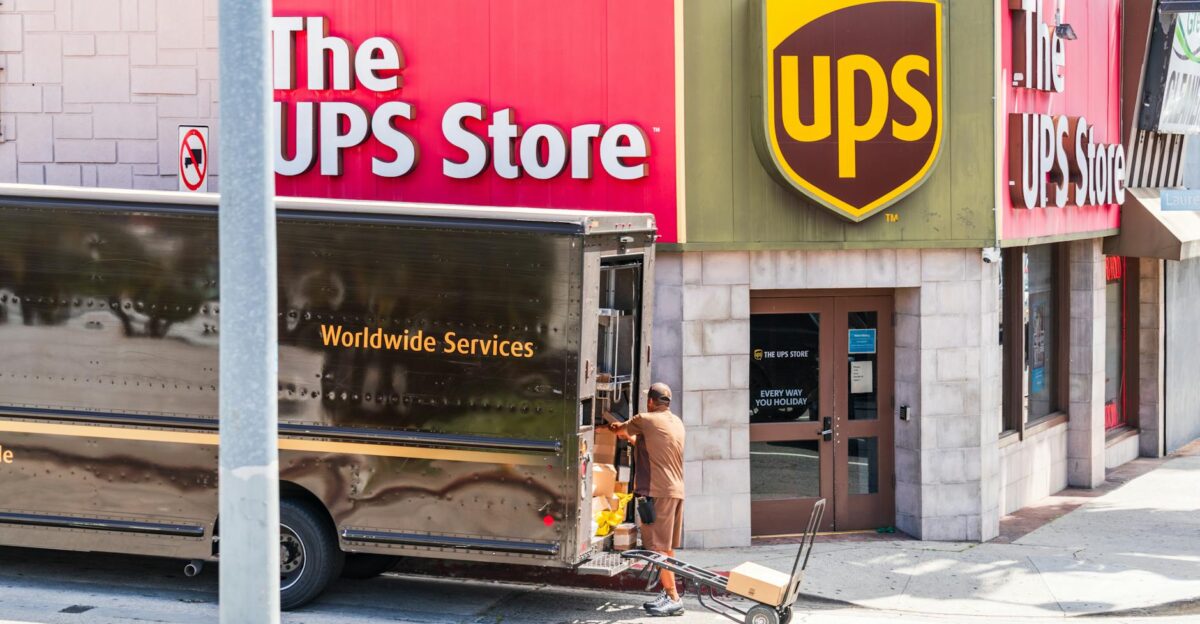
UPS reported $2.2 billion in cost savings by September 2025 and projected $3.5 billion in year over year savings by end of 2025. Adjusted operating margins climbed to 10% by Q3 2025. When earnings beat forecasts, UPS stock surged 12% at the open. Investors rewarded shrinking revenue if profits improved faster. Communities saw something else.
The Deal To Cut Amazon In Half
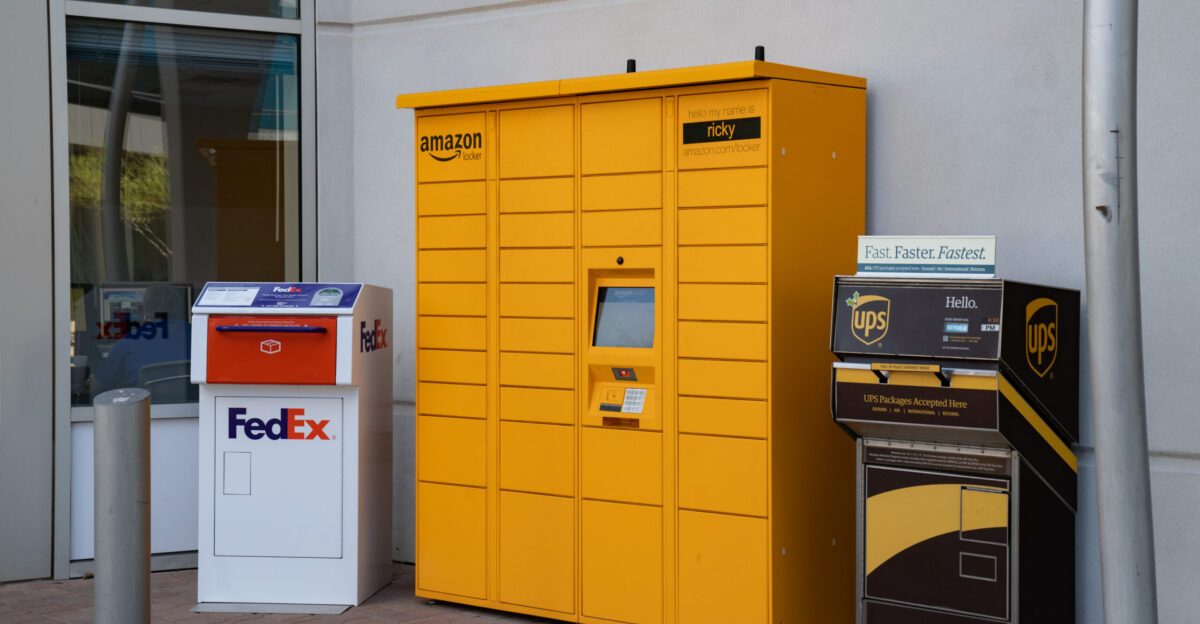
In January 2025, UPS and Amazon agreed in principle to reduce Amazon volumes by more than 50% by the second half of 2026. UPS kept higher-margin returns and small seller shipments while exiting fulfillment center outbound volume. Amazon said, “Due to their operational needs, UPS requested a reduction in volume and we certainly respect their decision.” The power balance flipped quietly.
Tomé’s Quote That Set The Tone

“We are executing the most significant strategic shift in our company’s history, and the changes we are implementing are designed to deliver long-term value for all stakeholders. With the holiday shipping season nearly upon us, we are positioned to run the most efficient peak in our history while providing industry-leading service to our customers for the eighth consecutive year,” said Carol Tomé on October 28, 2025. Workers heard a different message.
A Small City Learns The Plan Late
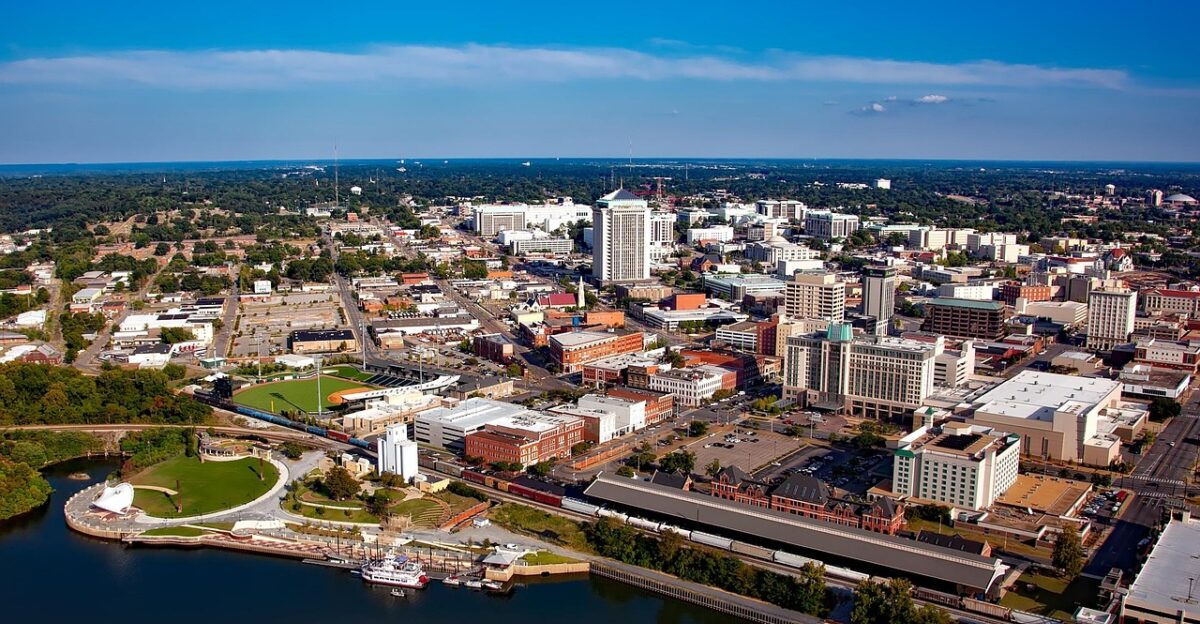
On December 23, 2025, UPS filed a WARN Act notice for Montgomery, Alabama: the facility would reduce the day shift affecting about 128 employees, with layoffs beginning February 23, 2026. Other shifts would remain, but roughly $6.4 million in annual payroll would vanish. Alabama launched rapid response support, yet long careers were challenging to replace. How many towns faced this?
A Buyout Offer With A Catch
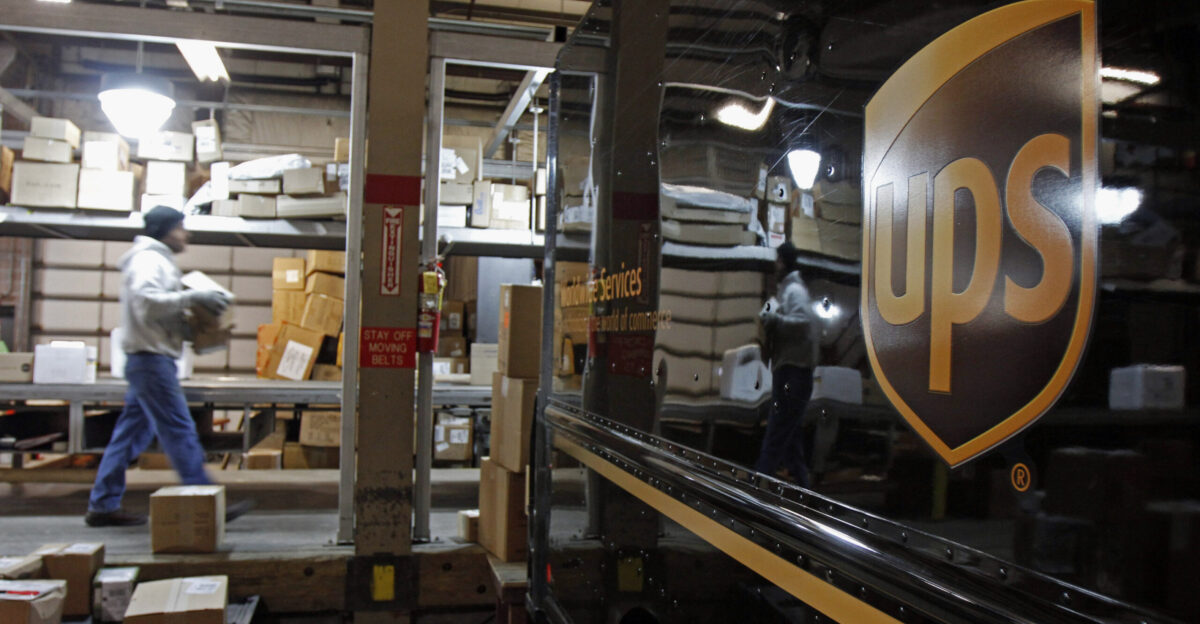
UPS rolled out the Driver Voluntary Severance Program, investing $175 million to encourage full-time drivers to leave. By August 31, 2025, about 90% of drivers had accepted. The Teamsters said buyouts were “far less” than contract earnings and did not guarantee retiree health insurance for those who took them. The buyout became a flashpoint. The union escalated.
“Profits Are Not More Important Than People”

“UPS is trying to weasel its way out of creating good union jobs here in America by dangling insulting buyouts in front of Teamsters drivers. It is an illegal violation of our national contract,” said Sean M. O’Brien on July 3, 2025. He added, “Profits are not more important than people, not at UPS or any other employer.” That fight collided with a different revolution.
Robots Arrive With A Clear Payback
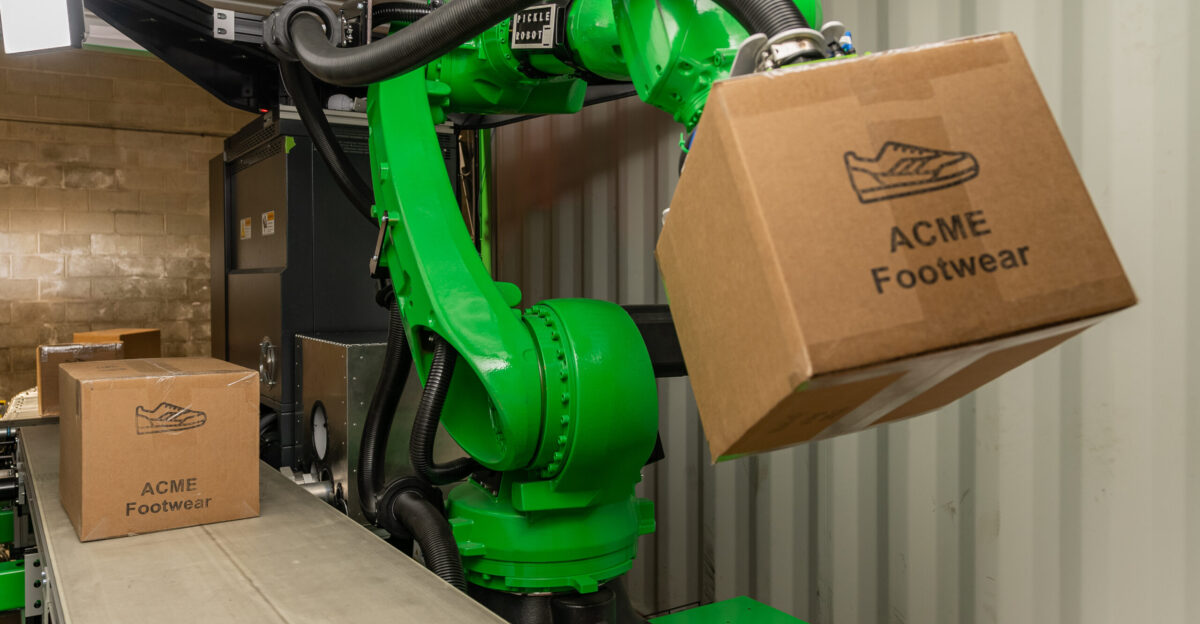
UPS committed $120 million to buy 400 robots from Pickle Robot Company. Each unit unloads trucks and containers, lifting boxes to 50 pounds using suction and placing them on conveyors. One robot can unload a typical truck in about 2 hours and pays for itself in about 18 months through labor savings. Deployment starts in late 2026. The bigger automation push was already underway.
Automated Hubs Take Over The Network
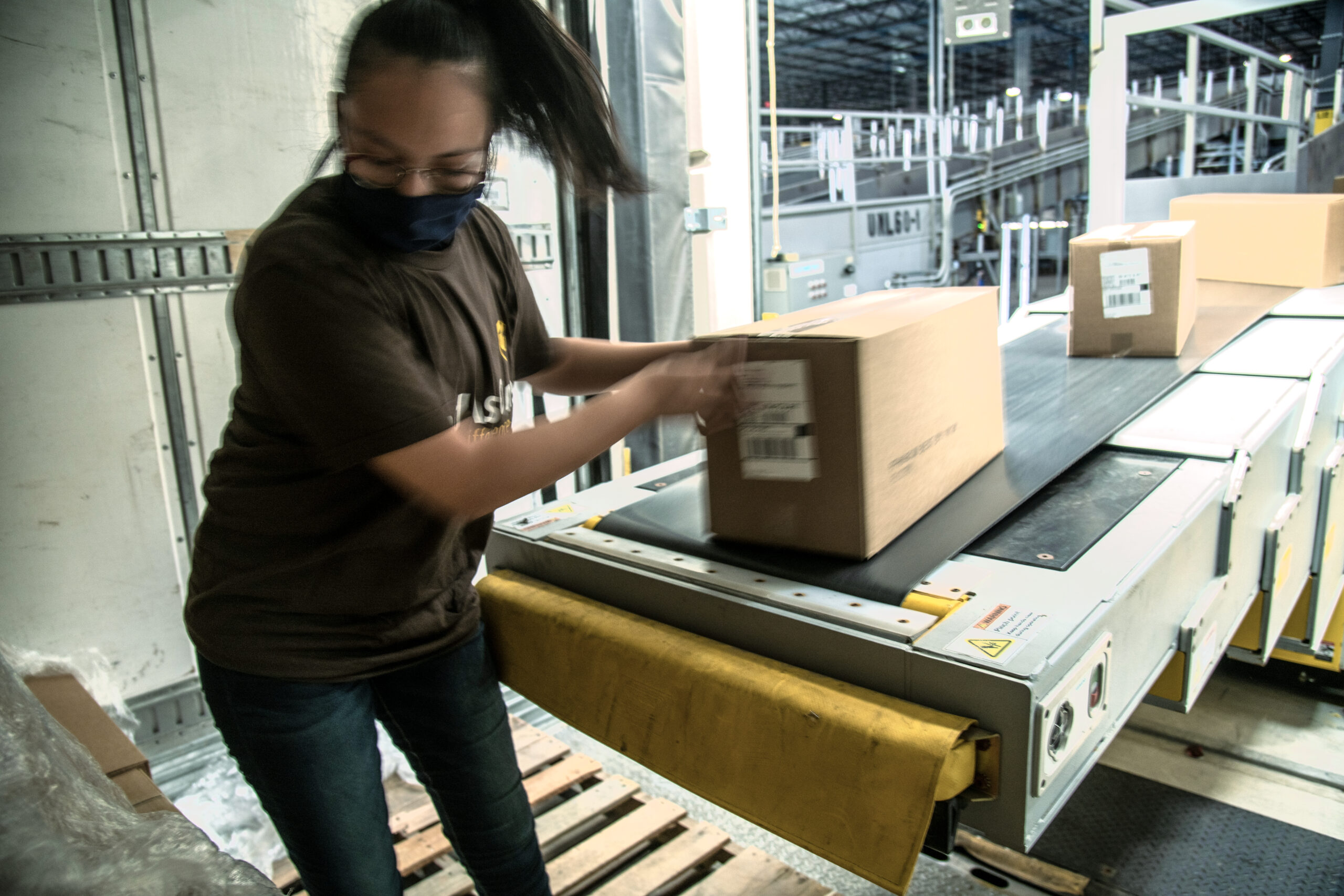
By Q3 2025, UPS had automated systems in 35 facilities. By Q4 2025, about 66% of U.S. volume moved through automated buildings, up from 63% a year earlier. UPS cited ORION route optimization savings of $300 million to $400 million annually. Automation was also the response to higher labor costs after the Teamsters deal. The wage-robot paradox intensified.
Cuts Win Praise Even As Revenue Falls

On October 28, UPS reported Q3 2025 revenue of $21.4 billion, down 3.6% year over year, but earnings per share of $1.74 beat the $1.30 estimate. Margins expanded, and UPS reaffirmed $3.5 billion in 2025 cost savings. Shares jumped 12% at the open. Edward Jones said cost controls and pricing drove the beat. Yet doubts lingered.
The Stock Drop That Haunted The Narrative

Even after the 12% jump, UPS stock had fallen nearly 37% over 12 months, hinting investors feared more than execution risk. Shrinking Amazon volume raised questions about whether premium segments could fully replace lost scale. A leaner network can be more profitable, but it can also be more fragile if demand shifts fast. Would healthcare and small businesses fill the gap quickly enough?
Healthcare And SMBs Become The New Core

“At UPS Healthcare, we are relentlessly focused on quality, improving patient outcomes and advancing healthcare delivery, and we are thrilled that Andlauer Healthcare Group, and its talented employees, share that focus,” said Kate Gutmann on November 3, 2025. UPS bought Andlauer Healthcare Group for about $1.6 billion. Meanwhile, UPS digital access serving 8+ million SMBs generated $2.8 billion in 9 months, up 20%. The industry reacted.
Amazon Builds, Rivals Restructure Too
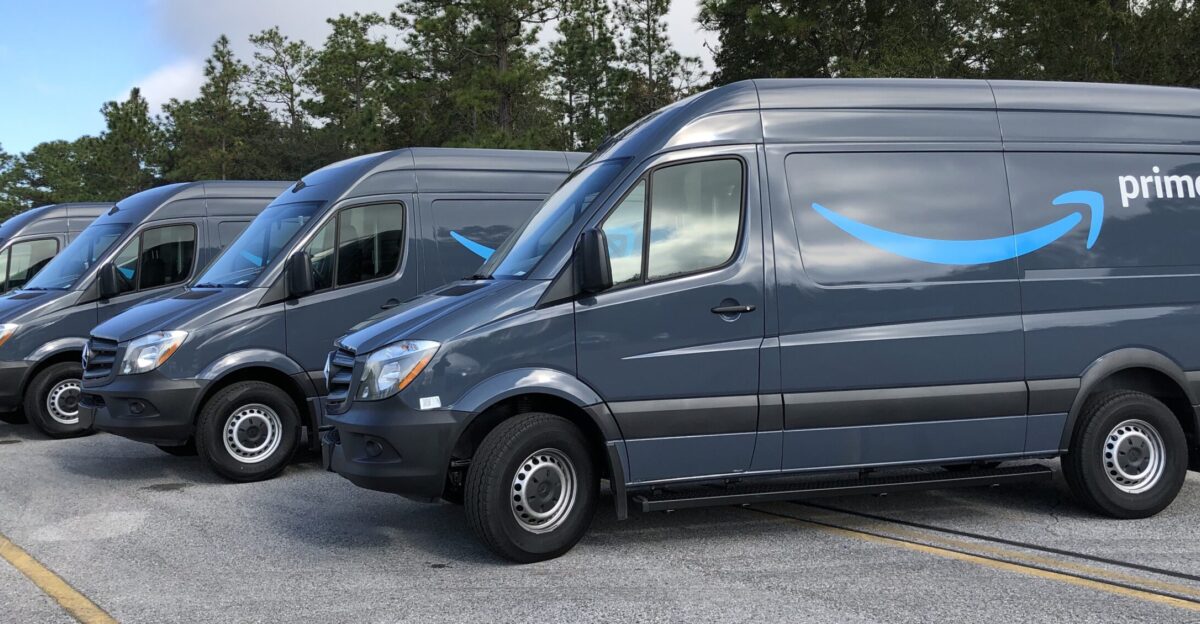
Amazon responded by expanding its own delivery network, announcing a $4 billion rural delivery investment to triple small-town coverage by end of 2026. With fleets, Delivery Service Partners, and dense fulfillment centers, Amazon kept scaling without UPS. The shift pressured peers: FedEx launched Network 2.0, cutting 481 jobs and closing 2 distribution centers. Logistics economics were being rewritten, opening gaps for smaller players.
Peak Season Looks Leaner Than Ever
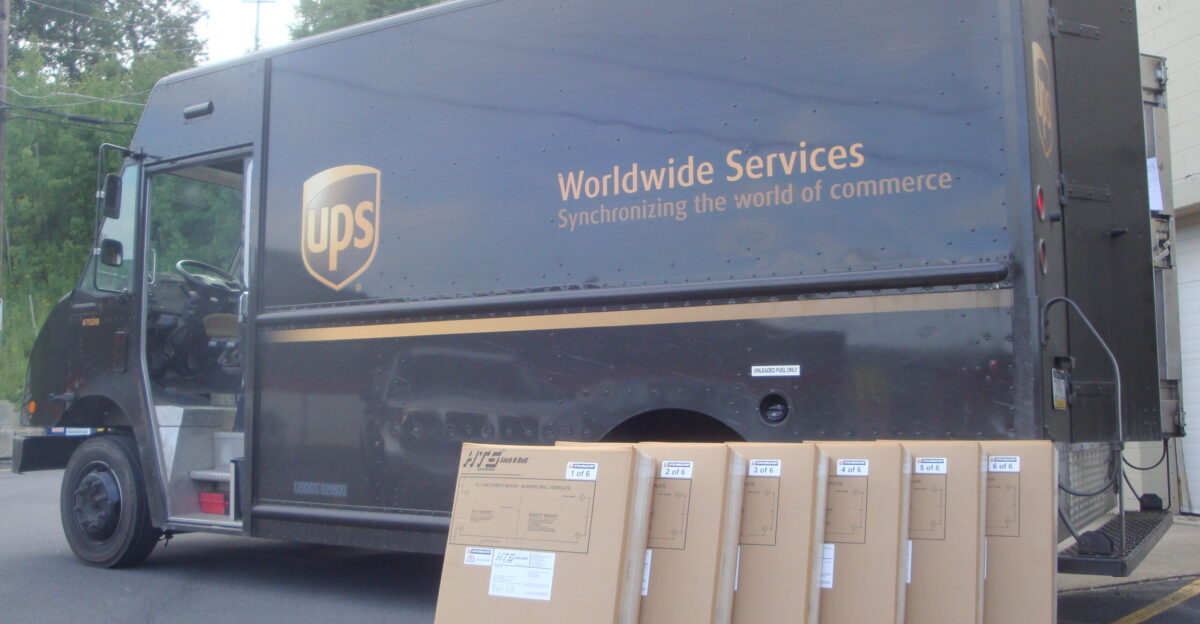
UPS treated peak season 2025 as proof of its new model. The company “significantly cut back on leased trailers, vehicles and aircraft compared to previous years” and reduced seasonal hiring. Tomé said automation powered much of the efficiency. UPS focused on its top 100 customers, which drive about 80% of peak surge volume, while shedding lower-margin work. The approach raised a question about resilience.
The 13% Margin Goal And Many Moving Parts
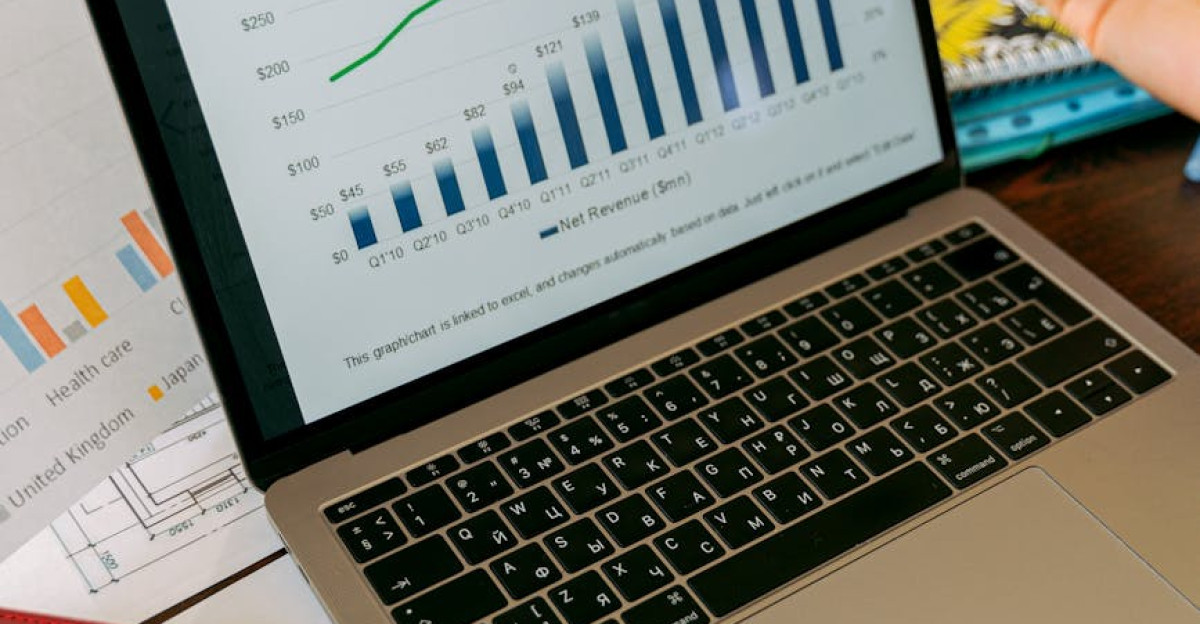
“For the full year 2025, on a consolidated basis, UPS expects revenue to be approximately $89.0 billion and operating margin to be approximately 10.8%,” UPS stated on January 30, 2025. Management projected 13% margins by 2026, with international targeting 18% to 19%. That depends on Amazon reductions by June 2026, major automation rollout, service quality, and premium customer retention. Execution risk is real. Workers live that risk daily.
Life After UPS Looks Uneven By Design

For the 48,000 cut workers, outcomes varied. Union employees could transfer with seniority protections, while managers faced reductions without that shield. Some relocated after facility closures like Kinston, moving to Greenville, Goldsboro, or Havelock. Buyouts meant early retirement, sometimes without clear health insurance protection. Rapid response teams offered retraining, but comparable wages were scarce as logistics contracted. Policymakers noticed the pressure.
Trade Policy Turmoil Becomes Convenient Cover
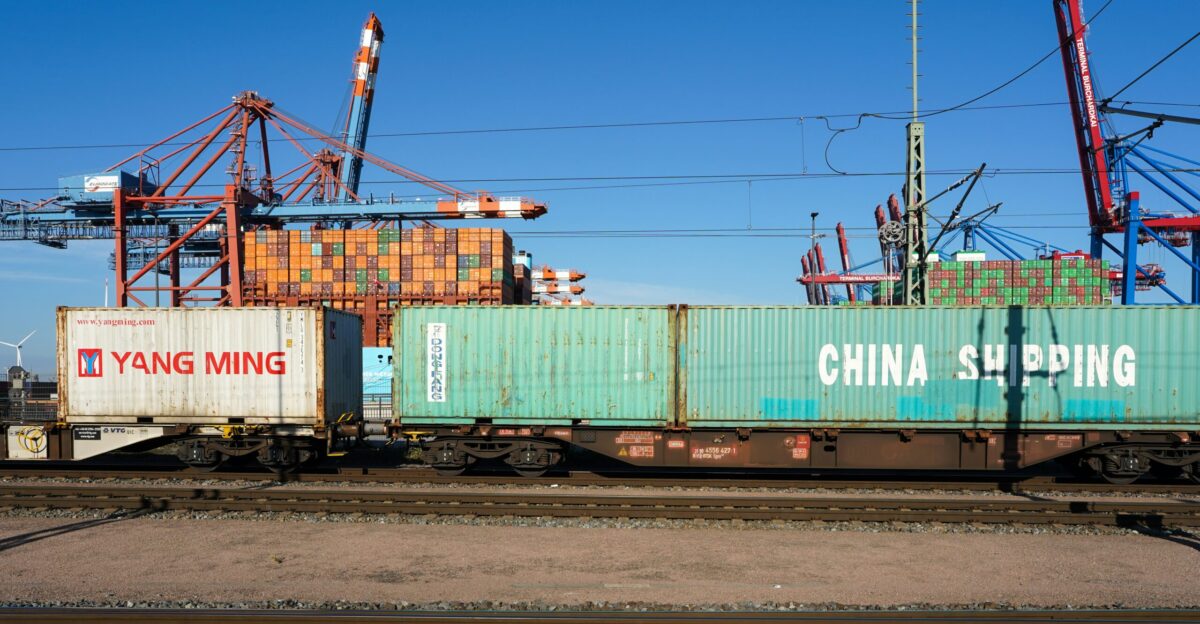
Tomé pointed to “the most profound shift in trade policy in a century” shaping 2025 conditions. Tariff changes, de minimis elimination, and reciprocal measures disrupted demand. China-to-U.S. trade volumes fell 34.8% in May-June 2025. That upheaval made facility closures and headcount cuts easier to frame as macro necessity, while also obscuring how much impact came from the Amazon pullback itself. Timing can change narratives. The layoff wave did too.
A Historic Cut Inside A Historic Layoff Year

UPS cut 48,000 jobs during a wider 2025 that saw 1,170,821 announced job cuts, the highest since 2020. Amazon cut 14,000, Intel planned 15,000, Nestlé announced 16,000, Accenture targeted 11,000, and Microsoft reduced headcount by 15,000. Companies pointed to AI and automation, with over 100,000 jobs tied to AI-driven restructuring. Logistics became a prime arena for the shift. The backlash was predictable.
Can Profits Without People Last?
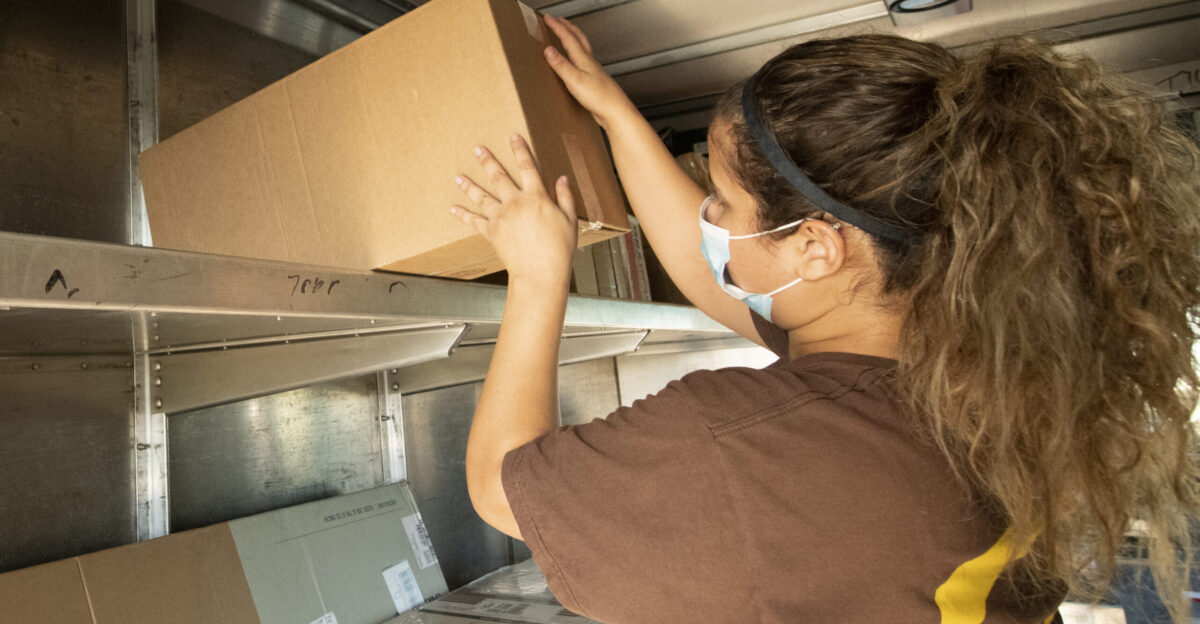
UPS chose margins over volume, automation over labor, and premium segments over scale. Markets rewarded it when Q3 earnings beat expectations and stock jumped 12%, even with lower revenue. Yet uncertainty remains: can a lean network handle a real supply chain crisis, and can healthcare and SMBs sustain premium pricing if service slips? The Teamsters signaled they will keep pushing on compliance. The final outcome will define more than UPS.
Sources:
UPS Releases 3Q 2025 Earnings. UPS Investor Relations, October 28, 2025
UPS Releases 4Q 2024 Earnings and Provides 2025 Guidance. UPS Investor Relations, January 30, 2025
UPS Violates Teamsters National Contract With Plan for Buyouts. International Brotherhood of Teamsters, July 3, 2025
UPS Acquires Andlauer Healthcare Group for $1.6 Billion. UPS Press Release, November 3, 2025
UPS Purchases 400 Robots to Unload Trucks in Automation Push. Transport Topics, December 2025