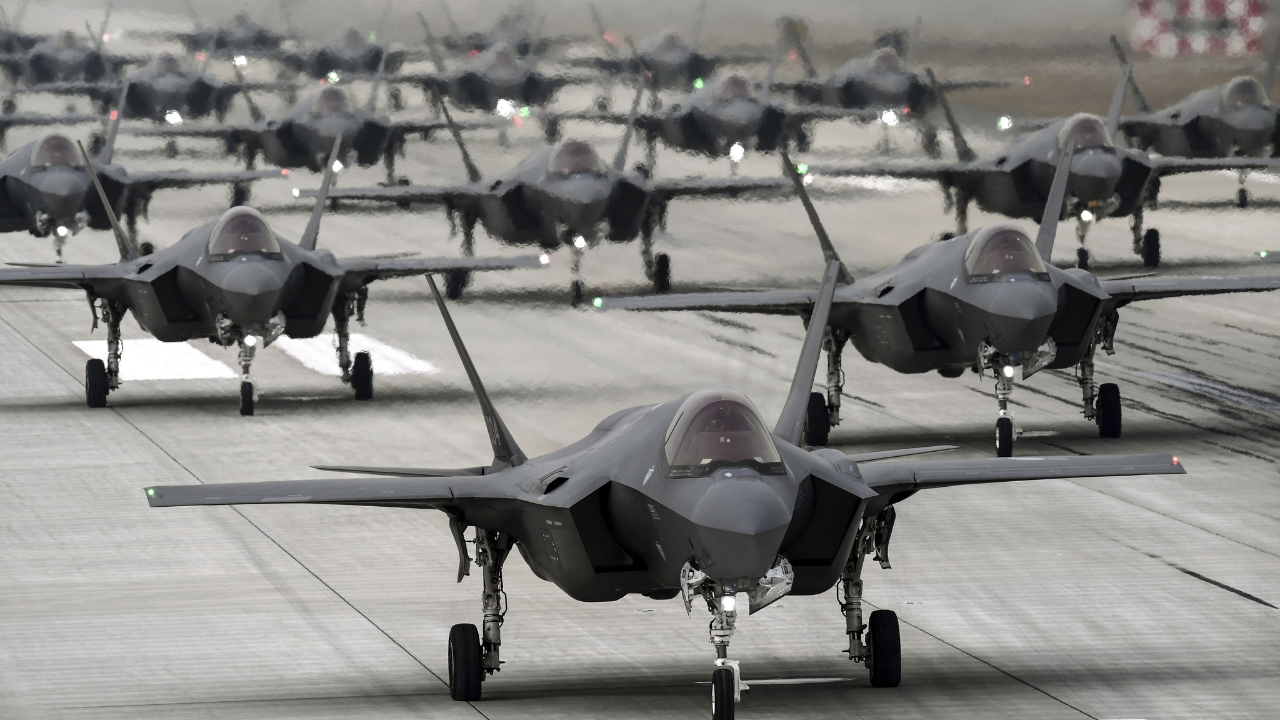
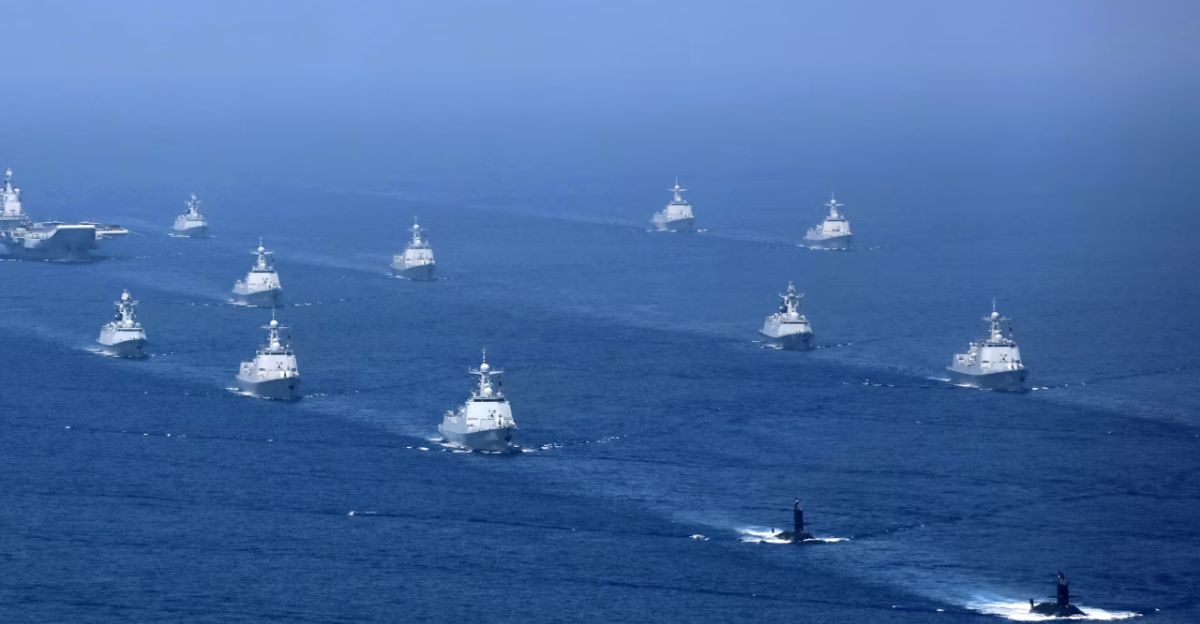
In early December 2025, China’s navy and coast guard sent over 100 ships into busy seas. These included the Yellow Sea, East China Sea, South China Sea, and Taiwan Strait. Reports from Defence Security Asia confirm this large peacetime operation. It challenged response times for Japan, South Korea, Taiwan, and U.S. forces. China tested regional boundaries with this coordinated move.
These waters carry one-third of global shipping. They transport oil tankers and semiconductor parts. Any blockade would disrupt supply chains from Asia to Europe. Tensions have already raised insurance costs and freight rates.
China’s Rapid Navy Growth
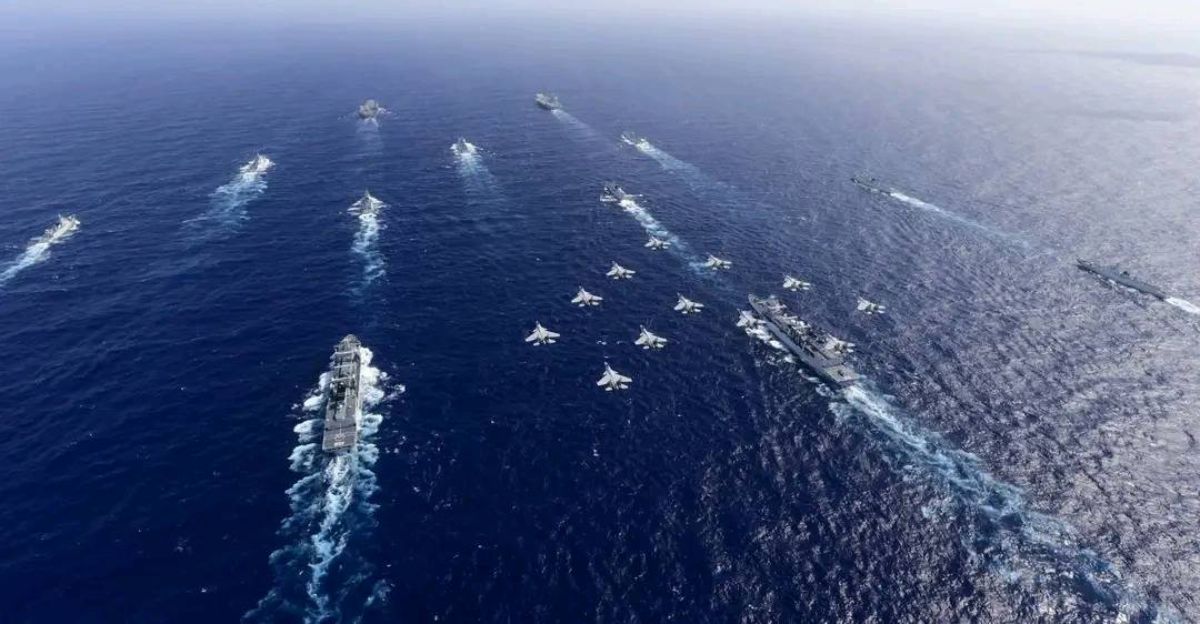
China’s fleet reached over 370 warships and submarines by 2025. This makes it the world’s largest by ship count, per USNI News estimates. Fast shipbuilding fueled this expansion.
The large fleet supports long operations far from China. It uses fortified artificial islands and supply bases in disputed areas. This extends China’s presence in regional waters. Neighboring countries are strengthening their defenses in response.
Ongoing Legal Clashes in the South China Sea
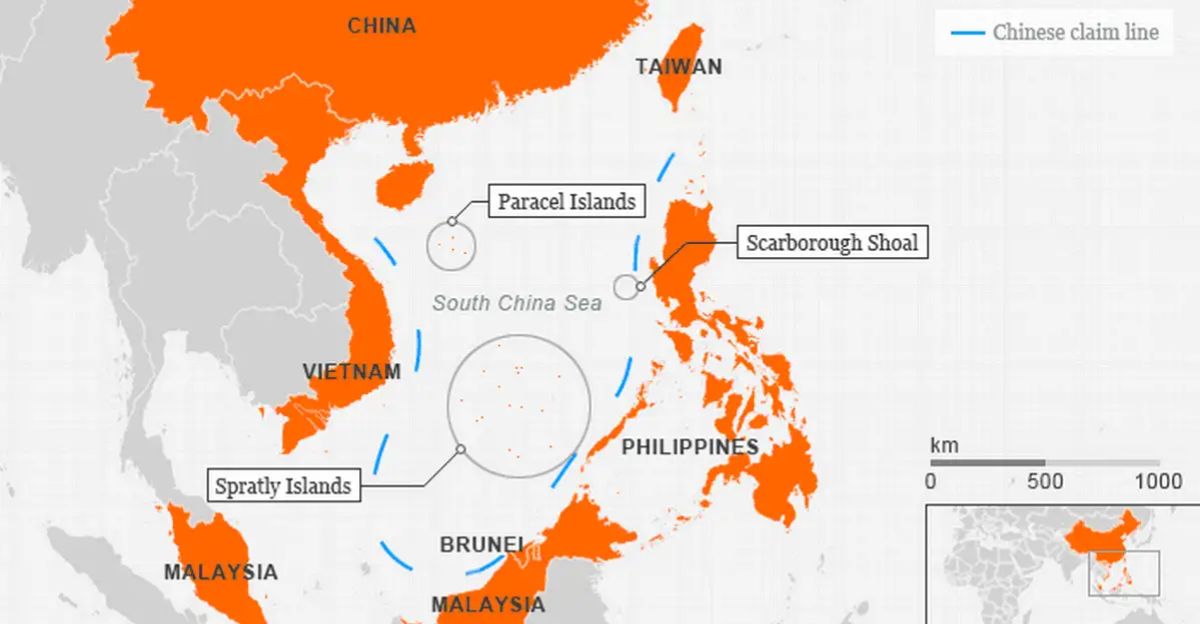
A 2016 ruling by the Permanent Court of Arbitration rejected China’s “nine-dash line” claims. The decision upheld the Philippines’ rights over areas like Mischief Reef in its exclusive economic zone.
China dismissed the ruling and kept building islands. The U.S. runs freedom of navigation patrols to contest this. China’s coast guard pursues fishing vessels. New deployments spark diplomatic tensions.
Scale of the 100-Ship Operation
Satellite images showed dense ship groups peaking around December 4. Over 90 vessels stayed active days later. These included Type 055 destroyers, Type 052D frigates, Type 075 amphibious assault ships, replenishment oilers, and large 12,000-ton coast guard cutters.
Operations spanned multiple areas. Ships patrolled the northern Yellow Sea. Others monitored the Spratly Islands. This exceeded typical exercises in size and coordination, as noted in Defence Security Asia reports.
Regional Responses and Rising Risks
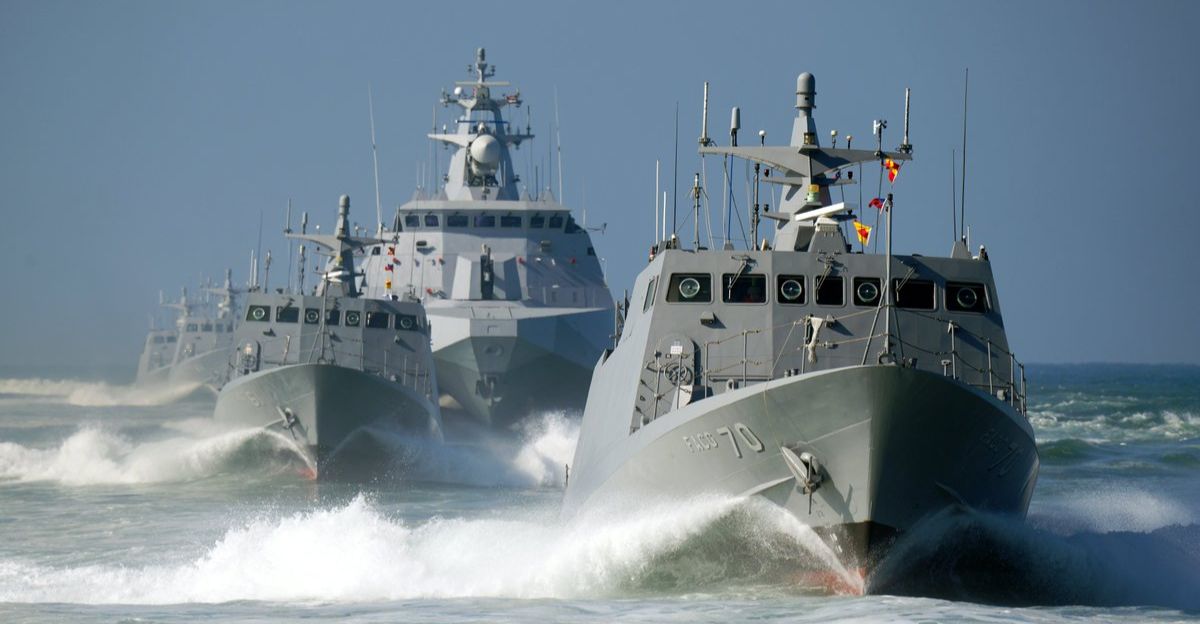
Taiwan raised alerts amid increased Chinese activity near the island. On December 3, Taiwan’s National Security Bureau chief Tsai Ming-yen described China as highly active with drills. He mentioned four naval groups in the Western Pacific. Officials called for vigilance against escalations.
The operations affect 150 to 200 million people in Japan, Taiwan, the Philippines, and South Korea. Risks include ship collisions, evacuations, or wider conflicts from errors.
U.S. Counter-Moves and Economic Ripples
The U.S. moved the USS Theodore Roosevelt carrier strike group to the Western Pacific, as tracked by USNI News. It includes cruisers, destroyers, submarines, and aircraft. USNI reports note carrier presence in the region amid tensions, countering China’s large fleet of over 100 ships. Daily operations cost more than $6 million for fuel, crew, flights, and supplies.
Markets showed strain from the tensions. Asia-Pacific freight rates and Brent crude oil prices rose. Shipping indices like the Baltic Dry Index climbed on fears of trade disruptions. While exact figures vary, these chokepoints handle vital global routes.
U.S. Indo-Pacific Command head Admiral Sam Paparo noted China’s fast shipbuilding. He pointed to U.S. edges in combat experience, surveillance, and alliances. China bolsters its outposts with radars, jammers, and sensors for better targeting.
This surge highlights a power contest. China leads in ship numbers. The U.S. holds tech and alliance advantages. Global trade and regional peace are at stake. Patrols raise blockade or clash risks, pushing for diplomacy to avoid escalation.
Sources:
DefenceSecurityAsia, China’s Naval Buildup in East Asian Waters, Dec 2025;
Politico, China’s New Military Muscle;
Permanent Court of Arbitration, South China Sea Arbitration Ruling;
USNI News, USNI News Fleet Tracker