
A WARN filing lands quietly, but its numbers are stark. Twenty-five jobs gone. An effective date already set. At a sprawling office complex in West Des Moines, another round of layoffs is added to a growing list—one more notice in a sequence that has become familiar to employees watching their workplace shrink.
There are no speeches, no press conference, no single dramatic moment. Just another reduction logged, another update posted. And yet this filing is not an endpoint. It is part of a much larger shift—one that has already erased hundreds of jobs locally and is still unfolding.
The Acceleration Begins

Since September 2025, layoffs at a single corporate campus in the Des Moines suburbs have arrived in successive waves. The latest filing—25 positions eliminated effective February 6, 2026—marks another step in an ongoing pattern.
These reductions are not isolated adjustments but part of a coordinated efficiency strategy. The Jordan Creek campus in West Des Moines has become the focal point of this shift. Each announcement lands with limited notice, reinforcing the sense that the restructuring is ongoing rather than temporary.
A Dominant Employer Fades

For decades, Wells Fargo anchored the Des Moines economy. In 2017, the bank employed roughly 14,500 workers across the metro area, making it the region’s largest private employer. These were stable, middle-class jobs with benefits and predictable career paths.
Entire suburban communities—particularly West Des Moines—grew around that payroll. Local budgets, school funding, and small businesses all reflected the bank’s assumed permanence. Few residents imagined how quickly that foundation could erode.
Mounting Pressures on the Institution

The roots of the contraction trace back to 2016, when Wells Fargo’s fake-accounts scandal triggered sweeping regulatory scrutiny. In February 2018, the Federal Reserve imposed a $1.95 trillion asset cap, sharply limiting growth. That cap remained in place for seven years.
When CEO Charlie Scharf arrived in 2019, he inherited a workforce of about 275,000 employees and a mandate to overhaul operations. Regulatory pressure demanded discipline. Scharf responded by prioritizing structural change, with workforce reduction central to that effort.
The Efficiency Mandate Revealed

By late 2025, Wells Fargo’s leadership had made efficiency the centerpiece of its transformation strategy. Since Scharf took over in 2019, the bank has eliminated approximately 65,000 positions nationwide. Total headcount declined from about 275,000 to roughly 210,000 by September 2025.
Automation and process consolidation accelerated the pace. While framed as modernization, the impact has been deeply felt in regions heavily dependent on banking employment—none more so than Des Moines.
Des Moines Metro Hemorrhages Jobs

WARN Act filings reveal the scale of the local impact. Since April 2022, Wells Fargo has announced the elimination of approximately 1,300 positions across the Des Moines metro area—around 10 percent of its local workforce. The reductions span multiple divisions and locations.
Significant layoffs have been concentrated at the Jordan Creek campus, compounded by the August 2025 sale of the downtown Des Moines office complex and consolidation into suburban facilities. Few metro areas have absorbed banking job losses at this pace.
A Community Loses Its Anchor
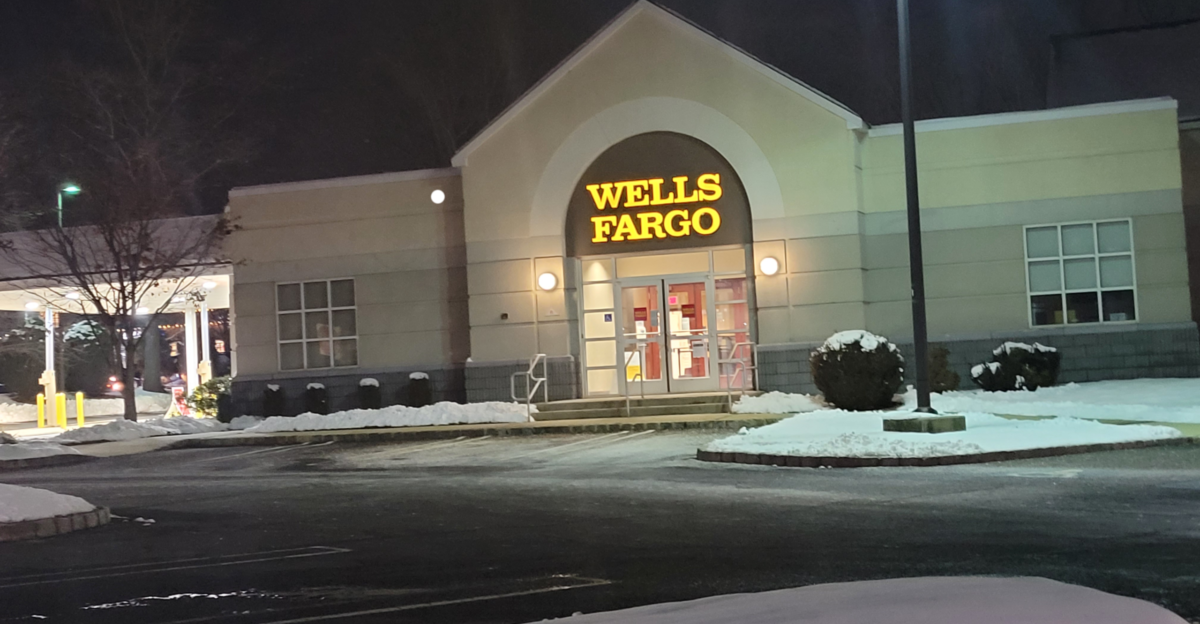
West Des Moines now absorbs repeated shocks from each new filing. The Jordan Creek campus once symbolized long-term stability and upward mobility. Teachers, contractors, restaurants, and retailers all relied on Wells Fargo salaries circulating through the local economy.
Today, uncertainty dominates. Families managing mortgages, childcare, and tuition face abrupt career disruption. The city’s tax base—long supported by corporate employment—faces pressure. The consequences extend beyond displaced workers to the broader civic fabric of the suburb.
Automation and AI Reshape Banking

Technology sits at the center of Wells Fargo’s restructuring. Automation and artificial intelligence now handle tasks once performed by large teams, from mortgage processing to customer service.
Scharf has noted that generative AI tools used internally have produced efficiency gains of roughly 30 to 35 percent in certain engineering functions.
While these technologies are spreading across the industry, Wells Fargo’s rapid deployment magnifies local effects. In Des Moines, long reliant on back-office banking roles, the shift is especially disruptive.
The Regulatory Cap Lifts, Cuts Continue
In June 2025, the Federal Reserve lifted Wells Fargo’s $1.95 trillion asset cap, signaling confidence in the bank’s reforms. The removal did not initiate layoffs—those were already underway—but it removed a significant constraint on restructuring.
Workforce reductions continued as part of the broader transformation strategy. Scharf has indicated that adjustments are ongoing, reflecting a regulatory environment that now permits aggressive operational change rather than limiting it.
Hy-Vee Replaces Banking at the Top

One statistic captures the shift: Hy-Vee has overtaken Wells Fargo as the Des Moines metro’s largest private employer. The grocery chain now employs more than 12,000 workers locally, compared with just over 11,000 at Wells Fargo.
The transition marks a fundamental change in the region’s economic identity. While Hy-Vee provides stability, grocery jobs generally offer lower wages and fewer benefits than banking roles. In less than a decade, the metro’s employment profile has been reshaped.
Suburban Banking Hubs Under Pressure

West Des Moines reflects a national pattern. Suburban banking hubs that flourished in the 1990s and 2000s now face structural decline as institutions consolidate and automate. Large banks increasingly favor fewer facilities or relocate work to lower-cost regions.
The suburban office park—once a symbol of white-collar security—is losing relevance. Communities built around a single corporate anchor now confront the urgent task of reinvention.
The Mortgage Division’s Retreat

Wells Fargo’s mortgage division, long concentrated in Des Moines, has contracted sharply. Rising interest rates reduced refinancing demand, shrinking revenues and staffing needs. Hundreds of local roles tied to loan processing and support disappeared as volumes declined.
Because mortgage lending is highly cyclical, further volatility remains possible. For Des Moines—where mortgage operations once provided a major employment base—the pullback has intensified economic vulnerability.
Leadership’s Efficiency Doctrine

Charlie Scharf’s leadership centers on eliminating bureaucracy and boosting efficiency. He has consistently framed headcount reduction as a natural outcome of simplifying processes and deploying technology.
Since 2019, this philosophy has guided restructuring decisions across the company. Public statements and filings indicate that workforce optimization remains a core component of Wells Fargo’s transformation. The board’s alignment with this strategy reinforces momentum for continued operational tightening.
Skepticism Around the Turnaround

Not all observers are convinced efficiency alone ensures long-term strength. Wells Fargo continues to rebuild trust after years of reputational damage. While competitors invest in automation, many maintain larger staffing footprints in key markets.
Critics warn that aggressive cuts may affect service quality and talent retention. Cost reduction improves near-term metrics, but sustaining competitiveness requires credibility, customer confidence, and institutional stability—factors not guaranteed by efficiency gains alone.
What 2026 May Bring

Looking ahead, Scharf has signaled that workforce reductions are expected to continue into 2026. The bank has not disclosed specific numbers or timelines, but the pattern of filings suggests further adjustments are likely.
For the Des Moines metro, that uncertainty complicates planning for workers, municipalities, and schools. The pace and scale of future cuts will shape the region’s economic trajectory in the coming year.
The Political Economy of Automation

Wells Fargo’s restructuring reflects broader national trends. Automation is eliminating middle-class roles faster than replacement jobs emerge in many regions. Des Moines illustrates how technological change collides with local dependence on legacy industries.
Policymakers face pressure to expand retraining, workforce transition programs, and economic diversification incentives. Yet federal responses have lagged behind the speed of disruption. Increasingly, states and cities must craft their own solutions.
Searching for New Economic Pillars
Local leaders are pursuing diversification to offset banking losses. Development agencies promote Des Moines’ skilled workforce and relatively low costs to attract employers in technology, healthcare, and advanced manufacturing.
But replacing more than 1,300 well-paid banking jobs will take years. Interim measures—retraining, small-business support, and workforce programs—are critical. The region’s response will determine whether this transition becomes a model for adaptation or a prolonged struggle.
Legal and Regulatory Questions

Wells Fargo has complied with WARN Act requirements, providing advance notice of mass layoffs. Still, the case raises broader questions about whether current regulations adequately balance corporate flexibility with community stability.
The Federal Reserve’s removal of the asset cap eliminated a key restraint on restructuring. As automation accelerates, policymakers may revisit how regulations address large-scale workforce transitions and corporate responsibility.
Shifting Employment Expectations

The layoffs reflect a generational shift in employment norms. Long-term corporate careers—once common in banking—are increasingly rare. Younger workers often expect mobility, while mid-career employees structured their lives around stability.
This mismatch intensifies the social impact of layoffs. Communities built on predictable corporate employment now face labor markets defined by flexibility and uncertainty, reshaping not only incomes but identity and belonging.
What This Signals About Banking’s Future

Wells Fargo’s efficiency drive underscores a broader transformation in American banking. The industry is consolidating, automating, and retreating from traditional regional employment hubs.
For mid-sized metros like Des Moines, banking is no longer a guaranteed source of middle-class stability. Strategic choices by corporate leadership accelerate this shift.
How communities respond—and how policymakers adapt—will shape whether technological progress translates into shared opportunity or prolonged displacement.
Sources:
“Wells Fargo Expects More Job Cuts, Will Roll Out AI Gradually.” Reuters, 9 December 2025.
“Federal Reserve Lifts Wells Fargo’s $1.95T Asset Cap.” The Mortgage Point, 3 June 2025.
“Iowa Worker’s Almanac: Layoffs and News Briefs for Nov. 14, 2025.” Iowa Starting Line, 14 November 2025.
“Wells Fargo Announces 14 More Layoffs in West Des Moines.” KCCI NewsChannel 8, 2 December 2025.